
Using Taxis in Korea for the First Time
Learning how to use taxis in Korea can make short transfers, luggage-heavy journeys, and trips beyond convenient public transportation routes easier to manage. The basic process is straightforward, but first-time international visitors may be unfamiliar with vacancy signs, taxi apps, meters, payment methods, and local door etiquette.
Preparing your destination in Korean is especially useful because multilingual service is not available in every taxi. You should also understand how to verify the vehicle, check the fare arrangement, pay correctly, and account for surcharges that may vary by city, time, route, and taxi type.
How Taxis in Korea Work

Most taxis in South Korea calculate the fare with a meter. The starting fare, distance and time charges, and possible surcharges differ by city and vehicle category, so a fare rule from Seoul should not be treated as a nationwide rule.
Regular taxis can generally be recognized by a yellow license plate and a roof sign marked “TAXI.” Deluxe taxis are commonly black and provide a higher-standard service at a different fare level. Vehicle appearance can still vary, so identification should not depend on color alone.
You can usually find a taxi at a designated stand, hail one from an appropriate roadside location, or request one through an app. Taxi stands are often located near transport terminals, major subway stations, and large shopping facilities.
Multilingual or international taxi services may be available in some areas. Seoul, for example, has international taxi services associated with airport and tourism travel. Language availability, reservation conditions, and fare arrangements should be confirmed before relying on such a service.
When Taking a Taxi Can Be Useful
A taxi can be practical when your accommodation or attraction is some distance from a station, when you have luggage, or when several transfers would make a short journey inconvenient. It may also be worth considering when public transportation is less frequent later in the day.
Taking a taxi is not automatically the fastest or least expensive choice. Road congestion, pickup availability, distance, and surcharges can affect the trip. Comparing the route with available subway, bus, or walking options can help you choose the most suitable mode for that particular journey.
Taxis can also help with the final portion of a trip from a railway or bus terminal. For an unfamiliar destination, however, prepare the address carefully rather than assuming that the driver will recognize an English business name.
What to Prepare Before Taking a Taxi
Save the destination in Korean
Keep the destination name and complete street address in Korean on your phone. If possible, also save the name of a nearby subway station, major intersection, or recognizable landmark. This gives the driver another reference if the destination name is unclear.
Choose how you will request the taxi
Decide whether you will use a taxi stand, hail a vehicle, or book through an app. An app can provide vehicle details and, depending on the service, an expected fare or in-app payment. App availability and features may change, so check the current service before your trip.
Review the route and possible cost
Look at the approximate route before departure. If an app displays an expected fare, treat it according to the app’s current terms rather than assuming it is a guaranteed final total. Tolls, waiting time, late-night charges, travel outside the operating area, or other applicable charges may affect the amount.
Prepare payment and a backup
Official visitor information indicates that taxis may accept cash, credit cards, or transportation cards. Acceptance can depend on the vehicle, card, and current system conditions, so carry a backup payment method. If an app charges you in advance, check the payment status before paying the driver separately.
Confirm special service requirements
If you need a multilingual driver, airport service, a larger vehicle, accessibility support, or an advance reservation, confirm the current conditions with the relevant app or operator. Do not assume that every taxi provides these options.
How to Hail or Book a Taxi
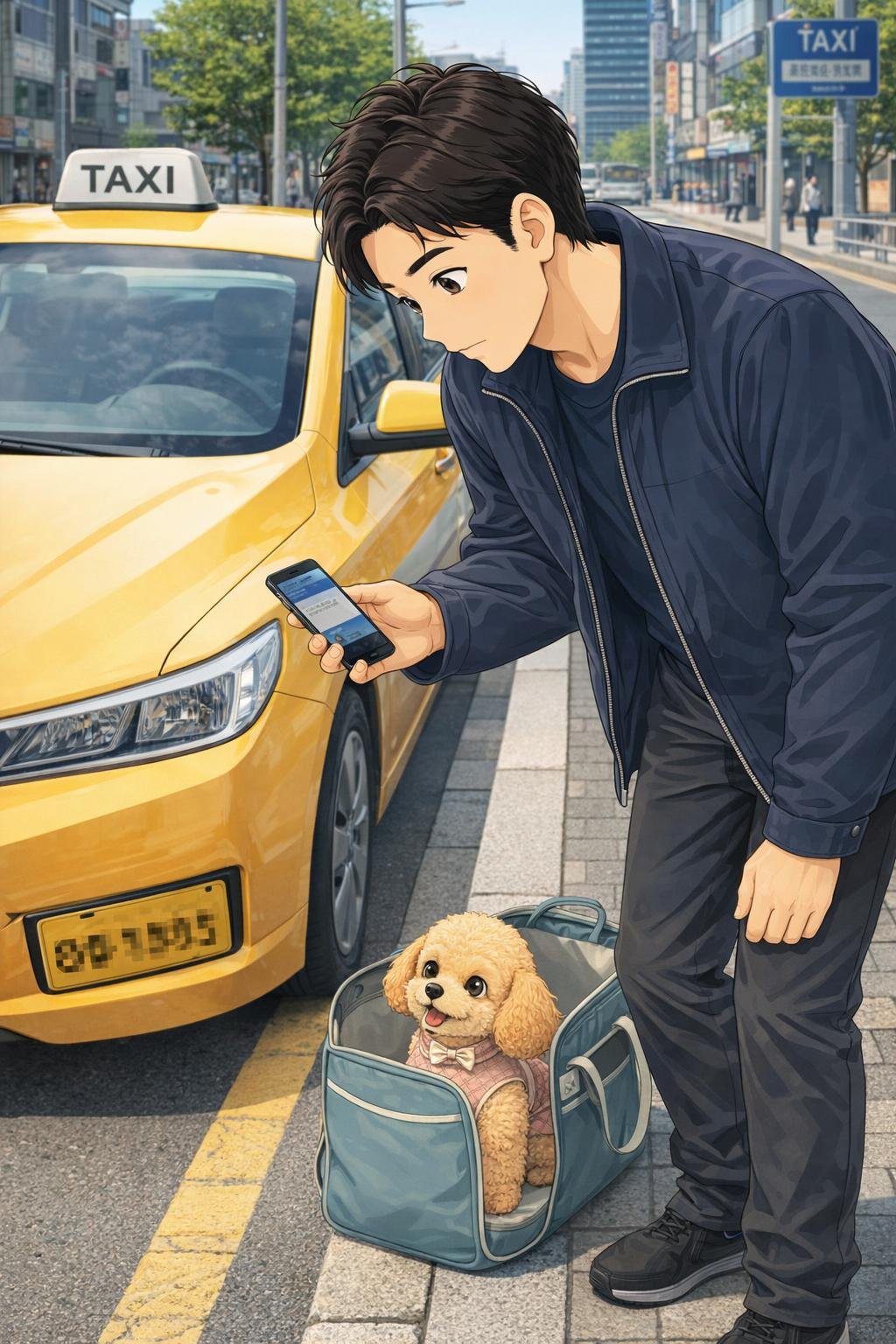
Hailing from the street or using a stand
Wait where a taxi can stop without blocking traffic or creating an unsafe pickup. You can also use a marked taxi stand near a station, terminal, or major facility. Avoid trying to enter a vehicle that is already reserved or carrying a passenger.
In Seoul, windshield signs generally show red “빈차” when a taxi is vacant and green “예약” when it is reserved. Sign colors and displays should be treated as Seoul-specific guidance rather than a rule for every city.
Using a taxi app
Verified visitor information identifies k.ride, Uber Taxi, and UT as options that may help international travelers. Their coverage and functions should be checked at the time of travel.
- k.ride: Visitor information describes support for English, Chinese, and Japanese, Google or Apple login, and overseas credit cards.
- Uber Taxi: The Uber app can be used to request taxis and provides automatic message translation.
- UT: Seoul guidance describes it as an international taxi-app option that does not require a Korean phone number or credit card, displays expected fares, and supports advance payment.
After an app assigns a vehicle, compare its full license plate with the details displayed on your screen. Similar-looking taxis may be nearby, so do not rely only on the vehicle color or model.
Meters, Fares, Surcharges, and Payment
Most taxis use a meter, and taxis generally charge according to that meter unless the trip uses a separately approved fare plan. Before the journey proceeds, check that the meter is operating or that you understand the approved fixed or app-based fare arrangement.
Fare levels differ by city and taxi type. Depending on the trip, additional charges may apply for late-night travel, travel outside a taxi’s operating area, international-passenger service, airport zones, or road tolls. Official tourism guidance notes that late-night rates generally apply from 22:00 to 04:00, but exact periods and rates should be checked for the relevant city and service.
As a time-sensitive Seoul example, one supplied Seoul Metropolitan Government source lists fixed Incheon Airport–Seoul fares of ₩70,000–₩95,000 for sedans and ₩100,000–₩140,000 for SUV, van, or deluxe taxis, depending on the Seoul zone. It also states that tolls may be collected separately. These are not nationwide prices and should be confirmed through current official information before travel.
The same Seoul source describes a 20% international-passenger surcharge for international taxis and notes that some sedan trips may combine it with late-night and outside-city surcharges. Because fare policies can change, confirm the service and total fare basis rather than relying on an older example.
Cash, credit cards, and transportation cards are identified as common payment options in official visitor guidance. Foreign-card acceptance should not be assumed for every card or vehicle. Tipping is generally not required, so pay the displayed or approved fare unless a separate legitimate charge applies.
How to Use a Taxi in Korea Step by Step

- Select the taxi. Use a recognizable taxi at a proper stand, hail an available vehicle, or request one through a suitable app.
- Check availability. Look for the local vacancy indication. In Seoul, red “빈차” generally means vacant, while green “예약” means reserved.
- Verify an app-booked vehicle. Match the complete license plate shown in the app with the arriving taxi before entering.
- Open the door yourself. Taxi doors in Korea are not automatic. Open the door carefully while checking for passing bicycles, motorcycles, and other traffic.
- Show the destination. Present the Korean destination name and full address. Use your saved landmark or nearby station if clarification is needed.
- Confirm the fare method. Check that the meter is running or that the trip is covered by an approved fixed, prepaid, or app-based fare plan.
- Monitor the journey if desired. You can follow the route on your phone, while recognizing that road conditions or required access points may affect the route.
- Pay once. Use the selected payment method and verify whether an app has already charged you before making another payment.
- Collect your belongings. Check the seat, floor, and door area before leaving. Retain the receipt or app trip record when you may need to identify the vehicle later.
- Exit safely. Look for approaching traffic, open the non-automatic door carefully, close it securely, and move away from the roadway.
K-Nana Family Guide
Illustrative example: The following family scene is fictional and is provided only to demonstrate practical visitor decisions. It is not a review of a taxi operator.
Dad: Dad first decides whether the pickup location is better suited to a taxi stand or an app request. After booking through an app, he compares the assigned license plate with the arriving vehicle instead of entering the first similar-looking taxi.
Mom: Mom keeps the destination name, complete Korean address, and nearby subway station on her phone. She checks the expected cost when available, reviews possible surcharges, and confirms whether the app has already processed payment.
Daughter: Daughter opens the taxi door carefully, keeps her belongings together, and avoids distracting the driver. During the ride, she follows the route on her phone without treating every change caused by traffic as a problem.
Nana: “Plate first, ride second!” Nana appears here only as the K-Nana Studio family mascot; this fictional scene does not imply that pets are accepted by real taxi operators.
Taxi Etiquette, Safety, and Common Mistakes

- Choose an appropriate pickup point. Wait where the driver can stop safely and legally rather than stepping into active traffic.
- Have the destination ready. Searching for the address after entering can delay the trip. A Korean address and nearby landmark reduce confusion.
- Do not expect multilingual service. Some specialized taxis offer multilingual drivers, but many drivers may not communicate in English.
- Speak calmly and show written information. A map pin and Korean address can be more effective than repeatedly pronouncing an unfamiliar place name.
- Handle the door yourself. Taxi doors are not automatic. Check surrounding traffic before opening them and close the door after exiting.
- Use available restraints. Wear the available passenger restraint and keep children or loose belongings appropriately secured.
- Avoid duplicate payment. If an app has processed or authorized the fare, review the trip screen before paying again inside the taxi.
- Check for belongings. Phones, passports, wallets, and small bags can be left on seats or floors. A receipt or app record may help identify the taxi.
- Record identifying details for a complaint. Seoul guidance advises recording the full license plate when reporting a service issue.
The 1330 Korea Travel Helpline provides visitor assistance in several languages and can be useful for broader travel support in Korea. For a taxi service problem within Seoul, the multilingual 120 Dasan Call Center can be reached at 02-120. The appropriate response and available assistance depend on the location and nature of the issue.
Quick Taxi Checklist
- Save the destination name and full address in Korean.
- Note a nearby landmark, intersection, or subway station.
- Keep a working phone and the chosen taxi app ready.
- Prepare an accepted payment method and a backup.
- Match the full license plate for an app-booked taxi.
- Confirm that the meter is running or understand the approved fare plan.
- Check whether late-night, out-of-region, airport, international-service, or toll charges may apply.
- Keep the receipt or app trip details when you may need a journey record.
- Check the seat and floor for belongings before exiting.
Frequently Asked Questions
Do taxis in Korea accept foreign credit cards?
Official guidance lists credit cards among common taxi payment methods, and k.ride is described as accepting overseas credit cards. A particular foreign card may still fail because of card, terminal, or network conditions, so keep a backup payment method.
Should I tip a taxi driver in Korea?
Tipping is generally not required. Pay the metered or otherwise approved fare, including any applicable tolls or surcharges.
How can I tell whether a taxi is available?
In Seoul, a red “빈차” windshield sign generally indicates a vacant taxi, while a green “예약” sign indicates a reservation. Displays may differ elsewhere, so use this as Seoul-specific guidance.
Do taxi drivers in Korea speak English?
You should not assume that a driver speaks English. Prepare the destination and address in Korean. Multilingual or international taxi services may be available, but their language coverage and booking conditions should be confirmed.
Which taxi apps can international visitors use?
Verified official visitor information mentions k.ride, Uber Taxi, and UT. Their login requirements, payment options, coverage, language support, and booking features may change, so review current app information before relying on one.
How do late-night taxi charges work?
Late-night surcharges may apply, and official tourism guidance says that late-night rates generally operate from 22:00 to 04:00. Exact hours and surcharge levels vary by city and taxi type and should be checked through current official information.
What should I do if I lose an item or have a service problem?
Keep your receipt or app trip record and note the full license plate. The 1330 Korea Travel Helpline can assist visitors with broader travel support, while Seoul taxi issues can be reported through the multilingual 120 Dasan Call Center at 02-120. Available procedures may differ outside Seoul.
Do international or tourist taxis require reservations?
Tourist taxi services may require advance reservations, while international taxi booking conditions depend on the operator and trip. Confirm current reservation requirements and multilingual availability before arranging the service.
Final Takeaway
The easiest way to prepare for a Korean taxi ride is to save your complete destination in Korean, choose between street hailing and a suitable app, and verify an app-assigned vehicle by its full license plate. Once inside, check that the meter is operating or that the trip follows an approved fare arrangement.
Fares, surcharges, app functions, and payment acceptance vary by location and service. Carry a backup payment method, avoid paying twice after app prepayment, and check your belongings before leaving. Confirm current official information when multilingual service, reservations, airport pricing, accessibility, or another important condition affects your journey.
References
- Taxi- VISITKOREA: https://english.visitkorea.or.kr/svc/contents/contentsView.do?menuSn=477&vcontsId=140661
- Taxi – Seoul Metropolitan Government: https://english.seoul.go.kr/service/movement/public-transportation/taxi/
- Taxi – Seoul Metropolitan Government: https://english.seoul.go.kr/policy/transportation/modes-of-transport/taxi/
These official sources provide the practical and fare-related evidence used in this guide.
Image Credits
K-Nana Studio original visual. Article visuals are illustrative and do not represent a verified taxi operator, an exact vehicle, or guaranteed passenger conditions.
Disclaimer
This article is provided for general travel, cultural, and educational information. Prices, opening hours, reservations, ingredients where relevant, payment methods, participation requirements, house rules, accessibility, photography rules, access conditions, taxi operating conditions, app features, passenger requirements, pickup rules, and operator or venue policies may vary or change.
Confirm important current information with the relevant official source, taxi app, or operator before travel. AI-generated images are illustrative visual aids and may not exactly represent real vehicles, facilities, operators, products, or visitor conditions. Nana is the K-Nana Studio family mascot, and her appearance in an illustrative scene does not imply that pets are permitted by any real taxi operator or activity.