
A Beginner’s Guide to Long-Distance Buses in Korea
Learning how to use intercity buses in Korea can make it easier to reach regional destinations that do not fit neatly into a rail itinerary. South Korea’s long-distance bus network includes express buses and intercity buses, but these services do not always use the same routes or terminals.
For a first-time international visitor, the main challenge is often not the ride itself. It is choosing the correct service, confirming the exact departure terminal, obtaining the right ticket, understanding how luggage will be handled, and reaching the platform before boarding closes.
This guide explains the process without assuming prior knowledge. Schedules, ticket availability, payment support, baggage conditions, and operator policies can change, so important trip details should always be checked through a current official booking service or the relevant bus operator.
Express Buses vs. Intercity Buses: What Is the Difference?


Express buses and intercity buses both connect cities and regions, but they generally serve different travel patterns.
| Bus type | General route pattern | When it may be useful |
|---|---|---|
| Express bus | Generally travels on expressways without intermediate city stops. | Direct travel between major cities or major terminals. |
| Intercity bus | May use expressways and national highways, make intermediate stops, and serve regional or smaller cities. | Routes involving smaller destinations or stops between major cities. |
The distinction matters because two buses traveling toward the same general region may have different stopping patterns. Check the destination terminal rather than relying only on the city name.
Express and intercity services may also depart from different terminals. A city can have several long-distance bus terminals, and Seoul is a notable example. Confirm the full terminal name and location shown on the booking before starting your journey to the terminal.
Why International Visitors Use Long-Distance Buses
Long-distance buses can be useful when a destination is served directly by road or when a rail journey would require an inconvenient transfer. Intercity services are particularly relevant for reaching regional and smaller cities because they may operate routes with intermediate stops.
A bus may also fit an itinerary in which the departure and arrival terminals are better positioned than the available railway stations. This depends on the specific route, so compare the actual terminal locations rather than assuming that a bus or train is always the better option.
Understanding the bus system is especially helpful for travelers planning journeys beyond the largest cities. The practical advantages depend on the route, schedule, ticket availability, and onward transportation at the destination.
Tickets, Terminals, Luggage, and Other Checks Before You Go

Confirm the route and exact terminal
Check the bus type, departure city, destination terminal, travel date, departure time, and exact departure terminal. Do not assume that every long-distance bus in a city leaves from one central location.
In Seoul, examples of major terminals include Seoul Express Bus Terminal, Central City Terminal, Seoul Nambu Terminal, and Dong Seoul Terminal. The correct terminal depends on the route. Use the location stated on the current ticket or booking service rather than selecting a terminal based only on familiarity.
Check current schedules and ticket availability
Schedules, routes, and availability can change. Confirm the trip close enough to the travel date to catch material changes, and check again if the journey is time-sensitive.
Tickets may be available through online booking services, terminal ticket offices, or kiosks. VISITKOREA identifies services such as Klook, Go Hanpass, Kobus, T-money, and Bustago among the possible online channels. Available languages, eligible routes, account requirements, and booking functions may differ by platform and can change.
Review payment and ticket-format requirements
Depending on the sales channel, payment options may include cash, credit card, or mobile payment. However, foreign-card acceptance should not be assumed for every website, app, kiosk, or operator. Carry a reasonable payment backup and check the current requirements of the channel you plan to use.
An online confirmation does not necessarily answer whether you can board directly. Check whether the booking provides a boarding code, mobile ticket, or another accepted format, or whether you must collect or print a ticket before going to the platform.
Check luggage and access conditions
Do not assume that every operator applies the same luggage dimensions, quantity limits, storage method, or restrictions. Confirm relevant conditions directly if you have oversized baggage, sports equipment, fragile items, or anything unusual.
Keep passports, money, medication, electronics, and other valuables with you rather than placing them in unattended storage. Label larger bags with contact information that does not expose unnecessary personal details.
Accessibility arrangements, mobility assistance, pet access, and other special conditions may vary by terminal, vehicle, and operator. Travelers who need specific assistance should confirm the available arrangements before booking or departure.
Plan to arrive early
Allow time to find the correct terminal building, collect or print a ticket if required, locate the platform, visit the restroom, and resolve any booking problem. The verified visitor guidance recommends boarding about 5–10 minutes before departure, so arriving at the terminal exactly at departure time is too late.
How to Use Express and Intercity Buses in Korea Step by Step
- Choose the correct service. Decide whether the route is an express or intercity service. Compare the destination terminal and stopping pattern, not just the destination city.
- Confirm the departure terminal. Record the full terminal name and check its location on a reliable map. If the city has several terminals, verify that your transportation plan leads to the correct one.
- Check the current departure. Confirm the travel date, departure time, destination, booking status, and any route changes through the relevant booking service or operator.
- Buy the ticket. Depending on the route and current availability, purchase online or use a terminal ticket office or kiosk. Review the passenger details and departure information before completing the transaction.
- Verify the accepted ticket format. Determine whether your mobile confirmation can be used for boarding or whether you need to collect or print a physical ticket.
- Arrive with enough time. Allow extra time for an unfamiliar terminal, especially if you need to buy a ticket, resolve a payment issue, or confirm luggage arrangements.
- Find the platform display. Match the displayed destination, departure time, and platform information with your ticket. Platform information can change, so check the live display rather than relying only on an earlier screenshot.
- Prepare your luggage. Keep valuables and essential travel items with you. Follow staff or driver instructions about where larger bags should be placed, and do not block aisles or boarding areas.
- Board 5–10 minutes before departure. Check that the vehicle corresponds to your route and time before handing over or scanning the ticket. Keep the ticket or booking information accessible during the journey.
- Plan for restroom needs. Long-distance buses generally do not have onboard restrooms. Mid- and long-distance routes may stop at service areas, but the timing and duration can vary.
- At a service-area stop, note the bus. Remember its location and identifying details, listen for instructions, and return before the stated departure time.
- Check your belongings on arrival. Retrieve stored luggage promptly and confirm that you have your passport, phone, wallet, and ticket before leaving the arrival area.
Following this sequence reduces the chance of reaching the wrong terminal, missing the boarding window, or discovering a ticket-format issue at the platform.
K-Nana Family Guide
Hypothetical example: The following family scene is illustrative storytelling, not a verified review of a terminal, booking platform, or bus operator.
Dad: Choose the route and terminal first
Dad finds two departures heading toward the same region. Instead of choosing only by departure time, he compares the bus type, final terminal, intermediate stops, and full departure-terminal name. He saves the terminal address separately from the ticket confirmation.
Mom: Check the practical conditions
Mom reviews the booking status, accepted ticket format, payment backup, luggage questions, and expected journey length. She keeps valuables and essential comfort items in a small bag that will remain with her.
Daughter: Watch the platform and travel respectfully
Daughter checks the live platform display and confirms that the destination and departure time match the ticket. During the ride, she keeps personal audio quiet, avoids obstructing the aisle, and follows any instructions given at a service-area stop.
Nana: Remember the two essentials
Nana’s tip: “Check the exact terminal and arrive early.” Nana appears only as the K-Nana Studio family mascot in this example; her presence does not mean pets are permitted by any real terminal or bus operator.
Bus Etiquette, Safety, and Common Mistakes
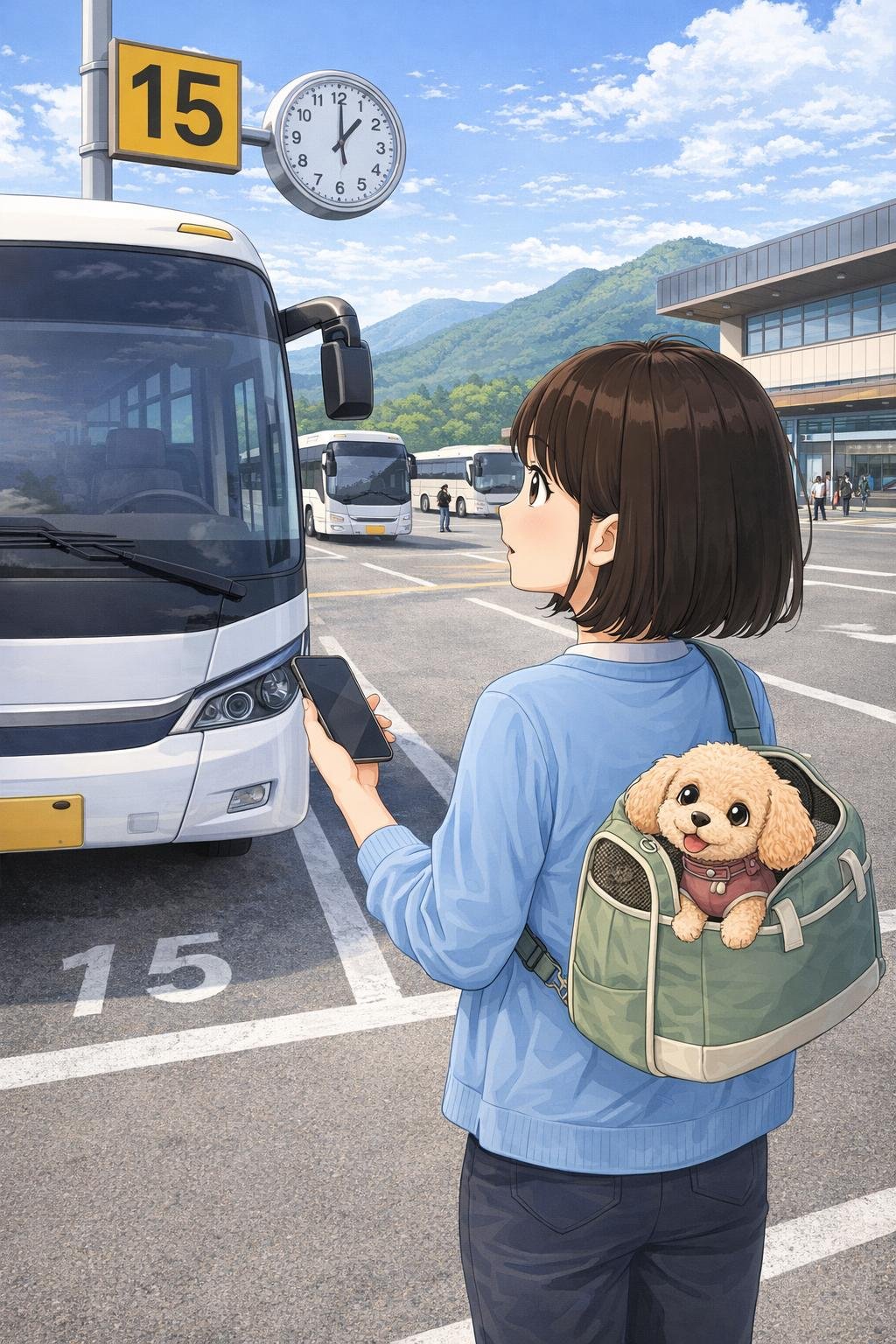
Confirm the vehicle before boarding
Check the destination and departure time before boarding. If anything is unclear, show the ticket to terminal staff or the driver rather than guessing. Follow current platform announcements and staff instructions if the platform changes.
Keep boarding areas and aisles clear
Prepare your ticket before reaching the boarding point and move luggage as directed. Avoid leaving bags where they obstruct passengers, doors, or aisles. These are general courtesy and safety practices; specific luggage instructions are determined by the operator.
Keep valuables under your control
Passports, wallets, phones, essential medication, and fragile electronics should remain with you. Check the seat area and any storage location before leaving the bus.
Respect other passengers
Keep calls and audio quiet, avoid strong-smelling or disruptive activities, and limit movement while the bus is traveling. Follow the driver’s instructions and any operator-specific rules displayed inside the vehicle.
Return promptly after a service-area stop
Listen for the return time and remember where the bus is parked. Service areas can have several similar vehicles, so note identifying route or vehicle details without relying solely on color.
Avoid common first-time mistakes
- Do not go to a terminal based only on the destination city.
- Do not assume that an online receipt is automatically a boarding ticket.
- Do not plan to arrive at the stated departure time.
- Do not assume that every booking channel accepts an overseas card.
- Do not rely on universal luggage limits or storage arrangements.
- Do not expect an onboard restroom.
- Do not wander far from the bus during a service-area stop.
General courtesy is widely useful, but ticket, baggage, boarding, access, and conduct requirements should be treated as operator-specific when stated by the relevant service.
Pre-Departure Bus Checklist
- Confirm the express or intercity bus type.
- Check the route and exact destination terminal.
- Verify the full departure-terminal name and location.
- Recheck the current date, departure time, availability, and booking status.
- Confirm whether your mobile confirmation is sufficient or a printed or collected ticket is required.
- Prepare a payment backup if foreign-card support is uncertain.
- Check the live platform display at the terminal.
- Confirm luggage conditions if carrying large, unusual, or fragile items.
- Keep valuables and essential items in your personal bag.
- Plan to board approximately 5–10 minutes before departure.
- Use the restroom before boarding and prepare for possible service-area stops.
Complete these checks before leaving for the terminal whenever possible, then verify the live platform information after arrival.
Frequently Asked Questions
What is the difference between an express bus and an intercity bus?
An express bus generally uses expressways without intermediate city stops. An intercity bus may use expressways and national highways, make intermediate stops, and serve more regional or smaller cities. The services may use different terminals.
Where can international visitors buy bus tickets?
Depending on the route, tickets may be sold through online services, terminal ticket offices, or kiosks. Current availability and eligible routes should be checked for the specific journey.
Are multilingual booking options available?
VISITKOREA identifies multilingual options for international travelers, including Klook and Go Hanpass, and also lists services such as Kobus, T-money, and Bustago. Language support and booking functions may differ or change, so check the current platform before relying on it.
Must an online bus ticket be printed?
Not always, but an online confirmation should not automatically be treated as a boarding ticket. Check whether the operator accepts the displayed mobile ticket or code, or requires collection or printing.
When should I board?
Verified visitor guidance recommends boarding about 5–10 minutes before departure. Arrive at the terminal earlier than that to find the platform and complete any ticket or luggage steps.
How do I know which Seoul bus terminal to use?
Use the exact terminal named on the booking. Major examples include Seoul Express Bus Terminal, Central City Terminal, Seoul Nambu Terminal, and Dong Seoul Terminal, but the correct choice depends on the route. Confirm the terminal address and current route information before traveling there.
Do express and intercity buses have restrooms?
Long-distance buses generally do not have onboard restrooms. Mid- and long-distance routes may stop at service areas, but stop timing and duration can vary. Use the terminal restroom before boarding.
Can I pay with a foreign credit card?
Foreign-card acceptance can vary by website, app, kiosk, ticket office, and operator. Check the chosen sales channel and prepare an alternative payment method rather than assuming that a particular card will work.
How can I verify luggage rules?
Review the current information provided by the booking service or operator. Contact the relevant service directly if you have oversized, numerous, fragile, or unusual items, because luggage limits and storage arrangements should not be assumed to be universal.
When an answer affects whether you can board, confirm it through the relevant current official source rather than relying only on general travel guidance.
Final Takeaway
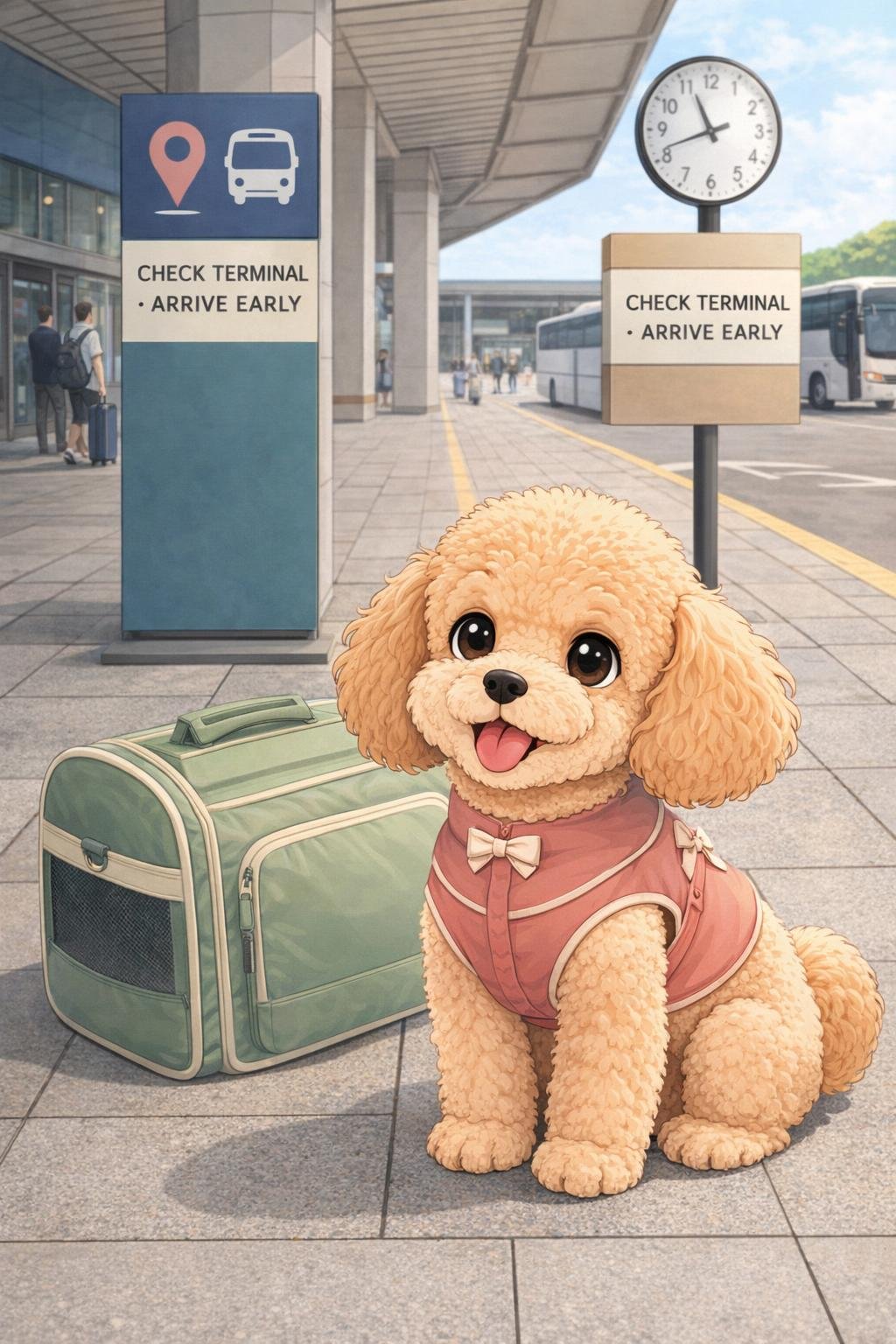
The essential process is straightforward: choose the correct express or intercity service, verify the exact departure terminal, obtain the accepted ticket format, check relevant luggage conditions, and board early.
The most avoidable errors are traveling to the wrong terminal, arriving at departure time, assuming that an online confirmation always replaces a ticket, and relying on unverified payment or baggage assumptions. Before traveling, confirm current schedules, availability, route changes, payment support, access needs, and operator policies.
References
- Discover Every Corner of Korea by Bus Promotion with Klook and Go Hanpass- VISITKOREA — https://english.visitkorea.or.kr/svc/contents/contentsView.do?menuSn=177&vcontsId=1590419
- Express Bus & Intercity Bus- VISITKOREA — https://english.visitkorea.or.kr/svc/contents/contentsView.do?vcontsId=140657
The references support the general practical guidance used in this article; travelers should still check current operational details before departure.
Image Credits
K-Nana Studio original visual. Any illustrative family scenes are not verified depictions of a specific terminal, operator, vehicle, or pet-access policy.
Disclaimer
This article is provided for general travel, cultural, and educational information. Prices, schedules, operating conditions, reservations, payment methods, luggage requirements, accessibility arrangements, photography rules, access conditions, and operator policies may vary or change. Confirm important current information with the relevant official booking service, terminal, or bus operator before traveling.
AI-generated images are illustrative visual aids and may not exactly represent real terminals, buses, facilities, products, or visitor conditions. Nana is a K-Nana Studio family mascot, and her appearance in an illustrative scene does not imply that pets are permitted by any real bus operator or terminal.