
What Is K-Pop?
K-Pop commonly refers to Korean popular music and the broader performance, media, artist, and fan culture associated with it. Although the term is widely used around the world, K-Pop is not defined by one musical style alone.
For many international fans, K-Pop is an experience that combines music, choreography, stage performance, visual concepts, artist development, digital content, albums, live events, and active fan communities.
That is why understanding K-Pop involves looking beyond the songs themselves. The music is at the center, but the systems and culture surrounding it are also important parts of the story.
Is K-Pop Just Korean Pop Music?
Not exactly.
K-Pop can include influences from many styles of music, including pop, hip-hop, R&B, electronic music, rock, and other genres. There is no single sound that every K-Pop song must follow.
What makes modern K-Pop especially recognizable is often the larger experience built around the music. Choreography, music videos, stage performances, visual concepts, albums, promotional content, and communication with fans can all become part of a release.
This also means that not every form of Korean music should automatically be described as K-Pop. Korea has many other musical genres and traditions, including ballads, hip-hop, rock, indie music, trot, and traditional Korean music.

What Makes K-Pop Different?
A K-Pop release can involve much more than listening to a new song.
Fans may watch music videos, follow choreography and performance videos, watch promotional stages, collect physical albums, discover behind-the-scenes content, attend concerts, or participate in online fan communities.
Performance is particularly visible in modern K-Pop. Singing, dancing, choreography, styling, stage production, and visual concepts can work together to create a distinctive presentation for a new release.
However, there is no rule saying that every K-Pop artist must work in exactly the same way. Groups, soloists, bands, and other performers can have very different musical styles and promotional approaches.
It is therefore more useful for beginners to think of K-Pop as a broad cultural ecosystem rather than a single rigid musical formula.
The K-Pop Idol System
One of the most visible parts of modern K-Pop is the K-Pop Idol System.
Entertainment companies may recruit potential performers and provide training before debut. Depending on the artist and company, preparation can include singing, dancing, stage performance, language skills, media training, and other areas.
Some trainees eventually debut as members of groups or as solo artists, while others may leave or follow different paths.
However, K-Pop and the idol system are not exactly the same thing. The idol system is an important part of the modern K-Pop industry, but K-Pop is broader than any single training or management model.
K-Nana Studio covers the idol system and trainee system separately so that each topic can be explained in more detail.
Comebacks, Albums and Music Shows
New K-Pop fans quickly encounter words and customs that may sound unfamiliar at first.
Comeback: In K-Pop, “comeback” usually refers to an artist returning with new music or beginning a new release cycle. It does not necessarily mean the artist had been away for a long time.
K-Pop album: A physical K-Pop album can contain more than the music itself. Depending on the release and version, a package may include items such as a photobook, photocards, posters, stickers, or other inclusions.
Music show: Korean music shows are television programs where artists can perform and promote current music. Participation systems, schedules, audience procedures, and rules vary by broadcaster and program.
These topics may look complicated to a beginner, but they become much easier once they are explored one at a time.
Why Fandom Matters in K-Pop
Fans are an important part of the K-Pop ecosystem.
Depending on the artist and fandom, fans may follow new releases, attend concerts and fan events, collect albums and photocards, use light sticks, participate in fan chants, vote in certain music-related activities, and communicate through online communities.
These activities are part of the wider K-Pop Fandom Culture, but no individual fan needs to participate in all of them.
Digital platforms also allow fans in different countries to discover content and communicate across geographic and language barriers.
Each fandom can have its own traditions and practices. New fans, however, do not need to learn every custom immediately. Enjoying the music is enough to begin.
How Did K-Pop Become Global?
Korean popular music has developed over many decades, while the international reach of modern K-Pop expanded through a combination of music distribution, online video, social media, global performances, digital fan communities, and cultural exchange.
Online access made it easier for people outside Korea to discover songs, choreography, music videos, performance clips, interviews, and other artist content without being physically present in Korea.
International fandoms then became active participants in sharing and discussing that content across borders.
K-Pop’s global development cannot be reduced to a single artist, company, platform, or moment. Different generations of performers, producers, creators, companies, media platforms, and fans have all contributed to its international growth.
What International Fans Should Know
K-Pop has many terms that can initially seem unfamiliar. Debut, comeback, fandom, bias, light stick, photocard, fansign, fan meeting, and music show are only a few examples.
You do not need to memorize them before enjoying K-Pop. Learn the terms naturally as you encounter them.
If you need a quick explanation, use the K-Pop Glossary for Beginners as the central starting point for K-Pop terminology.
It is especially important to distinguish evergreen cultural information from information that can change quickly.
Concert schedules, ticket prices, fan-event rules, music-show attendance procedures, merchandise availability, store hours, and artist activities can change. Always check the latest official announcement when planning an actual purchase, event, or visit.
K-Nana Family Guide
Dad: Starts with the beginner question: “Is K-Pop simply pop music from Korea?”
Mom: Notices that albums, merchandise, concerts, tickets, and fan events are also part of the wider K-Pop experience.
K-Nana Daughter: Explains how music, choreography, performance, digital content, and fandom connect with one another.
Nana: Keeps the lesson simple: start with the music you enjoy and discover the rest step by step.
Practical Tips for K-Pop Beginners
- Start with songs and performances that genuinely interest you.
- You do not need to understand every K-Pop term immediately.
- Use official artist and entertainment-company channels for current artist information.
- Check official venue, organizer, broadcaster, and authorized ticketing information before attending an event.
- Check the exact contents and seller information before buying albums or merchandise.
- Remember that concert, fansign, fan meeting, and music-show rules can change.
- Respect other artists and fandoms even when you have your own favorite performers.
FAQ
What does K-Pop mean?
K-Pop commonly refers to Korean popular music and the broader performance, media, artist, and fan culture associated with it. The term is widely used internationally, but K-Pop is not defined by one musical style alone.
Is all Korean music K-Pop?
No. Korea has many musical genres and traditions outside what is commonly described as K-Pop.
Do I need to understand Korean to enjoy K-Pop?
No. Many international fans first discover K-Pop through songs, choreography, performances, and visual content. Learning Korean can add another layer to the experience, but it is not required to begin enjoying K-Pop.
What is a K-Pop idol?
A K-Pop idol generally refers to a performer working within the Korean idol entertainment system, often as a member of a group or as a solo artist. Training, management, and career structures can differ between artists and companies. The K-Pop Idol System guide explains this structure in more detail.
What does “comeback” mean in K-Pop?
In K-Pop, “comeback” usually refers to an artist returning with new music or beginning a new release cycle. It does not necessarily mean the artist had been away for a long time. Read What Is a K-Pop Comeback? for the full explanation.
Why are light sticks and photocards popular?
They are familiar parts of modern K-Pop fan culture. Light sticks are commonly used for fan participation at concerts and other performances, while photocards are collectible items often included with physical albums or sold through official merchandise releases.

Final Takeaway
K-Pop begins with music, but the experience can extend much further. Performance, choreography, artist development, albums, digital content, live events, and fandom all contribute to the culture that audiences around the world recognize today.
If you are new to K-Pop, there is no need to understand everything at once. Start with the music, enjoy the performances, and explore each part of the culture at your own pace.
Continue Exploring K-Pop
Continue with the K-Pop Idol System and K-Pop Trainee System to understand how the artist-development side of K-Pop can work before debut.
Then explore K-Pop Comebacks and K-Pop Fandom Culture to understand two major parts of the modern K-Pop experience.
For albums and collecting, continue with K-Pop Albums, K-Pop Photocards, and K-Pop Light Sticks.
For television performance culture, read Korean Music Shows.
For unfamiliar terminology, use the K-Pop Glossary for Beginners as the central reference hub.
References
- Korea.net — K-Pop, Now Here: Understanding K-Pop Beyond a Single Musical Style
- Korea.net — The Structure and Activities of K-Pop Fandoms
- Korea.net — Music Shows and Fan Support Culture
- Ministry of Culture, Sports and Tourism — 2025 Global Hallyu Trend Analysis
Image Credits
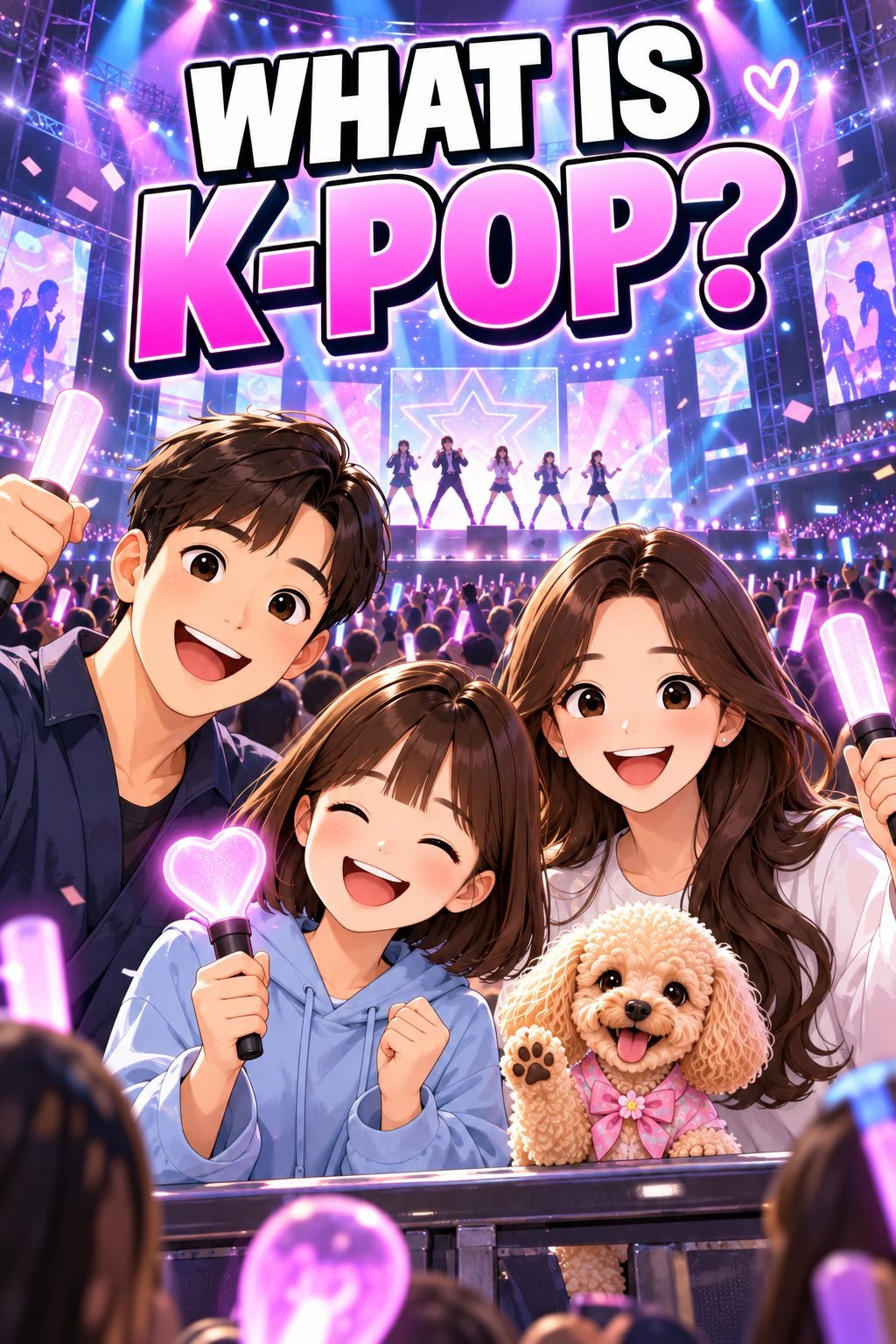
What Is K-Pop? family concert visual with Dad, Mom, K-Nana daughter, and Nana discovering the atmosphere of a K-Pop performance together — K-Nana Studio original visual.
K-Pop beginner visual with Dad and Nana exploring why K-Pop can mean more than Korean pop music alone — K-Nana Studio original visual.
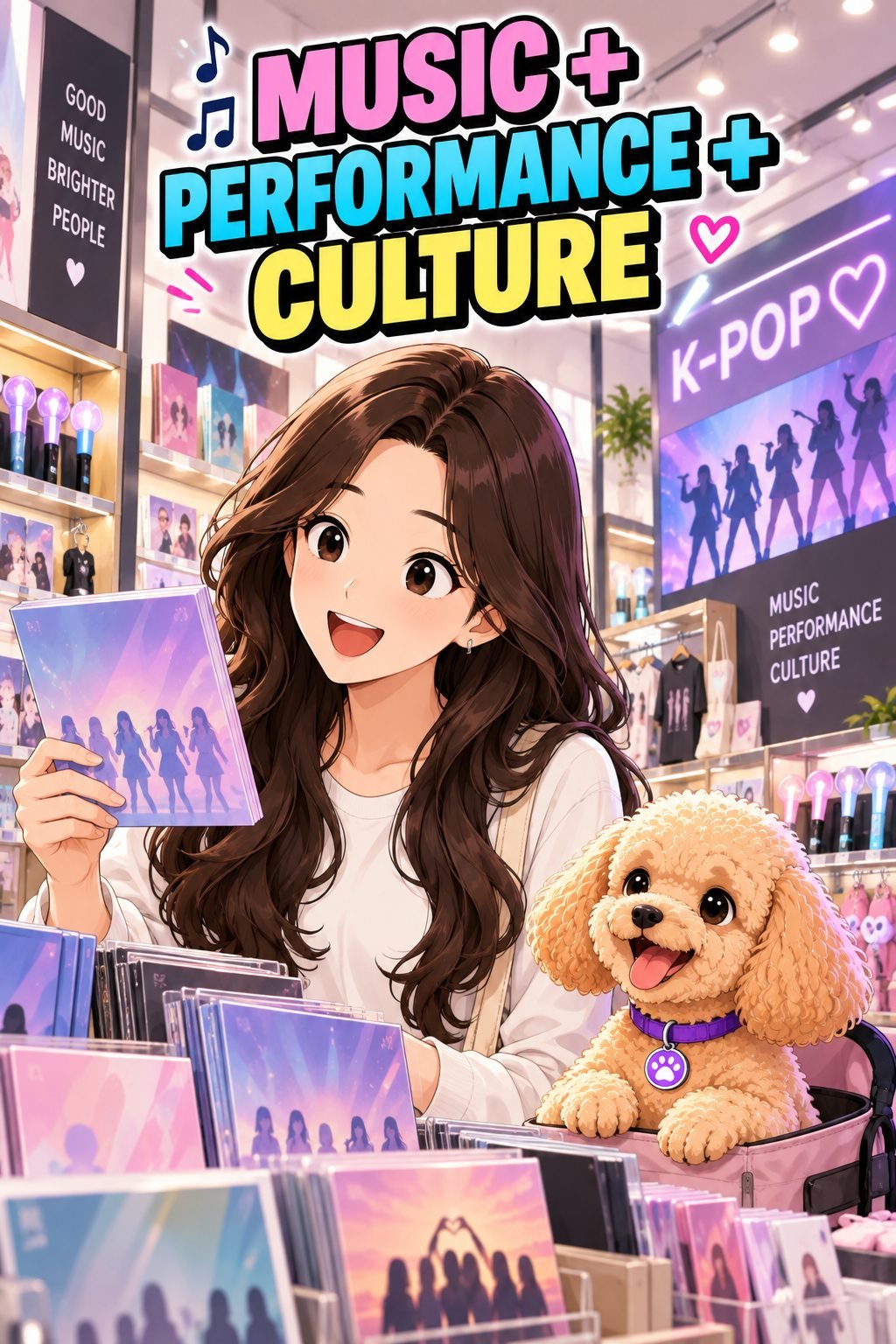
K-Pop culture visual with Mom and Nana exploring the connection between music, performance, albums, and fan culture — K-Nana Studio original visual.
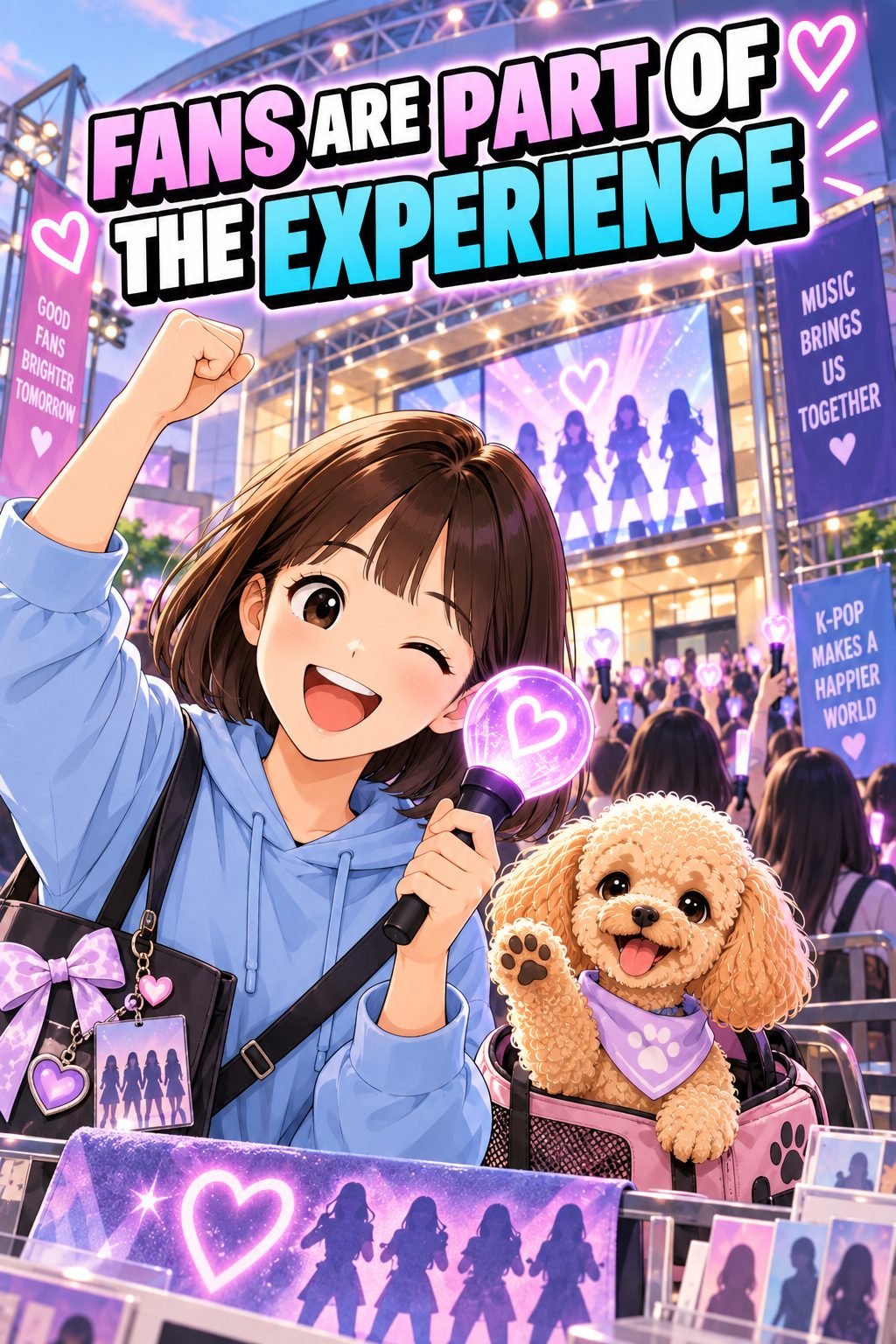
K-Pop fandom visual with K-Nana daughter and Nana exploring how fans and fan participation can become part of the wider K-Pop experience — K-Nana Studio original visual.
Nana as the K-Nana Studio K-Pop mascot introducing K-Pop as a global culture shaped by music, performance, media, and international fan communities — K-Nana Studio original visual.
Disclaimer
This article is provided for general cultural, educational, and travel-planning information. K-Pop terminology, entertainment-industry practices, artist activities, fan-event rules, music-show participation procedures, concert schedules, ticketing systems, merchandise availability, and venue policies can change over time.
K-Nana Studio is not affiliated with or endorsed by any K-Pop artist, entertainment company, broadcaster, concert organizer, ticketing service, fandom, or merchandise retailer mentioned or discussed in this guide. References to K-Pop culture and industry practices are provided for informational purposes only.
Before purchasing tickets or merchandise, attending concerts or fan events, visiting music shows, or making travel plans related to K-Pop activities in Korea, check the latest information from the relevant official artist, agency, broadcaster, venue, organizer, or authorized ticketing service.
All K-Nana family and Nana illustrations used in this article are K-Nana Studio original visuals created for educational and editorial use. They are not intended to depict or reproduce any specific real K-Pop artist, group, official logo, album artwork, photocard, light stick, or other protected official design.