
Bulgogi is one of Korea’s best-known meat dishes, recognized for thinly sliced meat cooked with a savory-sweet seasoning and often combined with ingredients such as onion, green onion, and mushrooms. Unlike thick cuts of meat that are grilled and seasoned mainly at the table, bulgogi commonly begins with the flavor already worked into the meat before cooking.
The name “bulgogi” is often translated as “fire meat,” but the modern dish can be prepared in several ways. Depending on the restaurant, region, recipe, and equipment, the seasoned meat may be cooked on a grill, a wide pan, or another heated surface. Some versions are relatively dry and grilled, while others retain more cooking liquid and become softer and juicier.
For international visitors, bulgogi can be an approachable introduction to Korean food because the familiar flavor balance often combines soy-based seasoning, sweetness, garlic, sesame, and the natural richness of meat. At the same time, there is no single universal bulgogi recipe, so sweetness, saltiness, texture, vegetables, and cooking style can vary considerably.
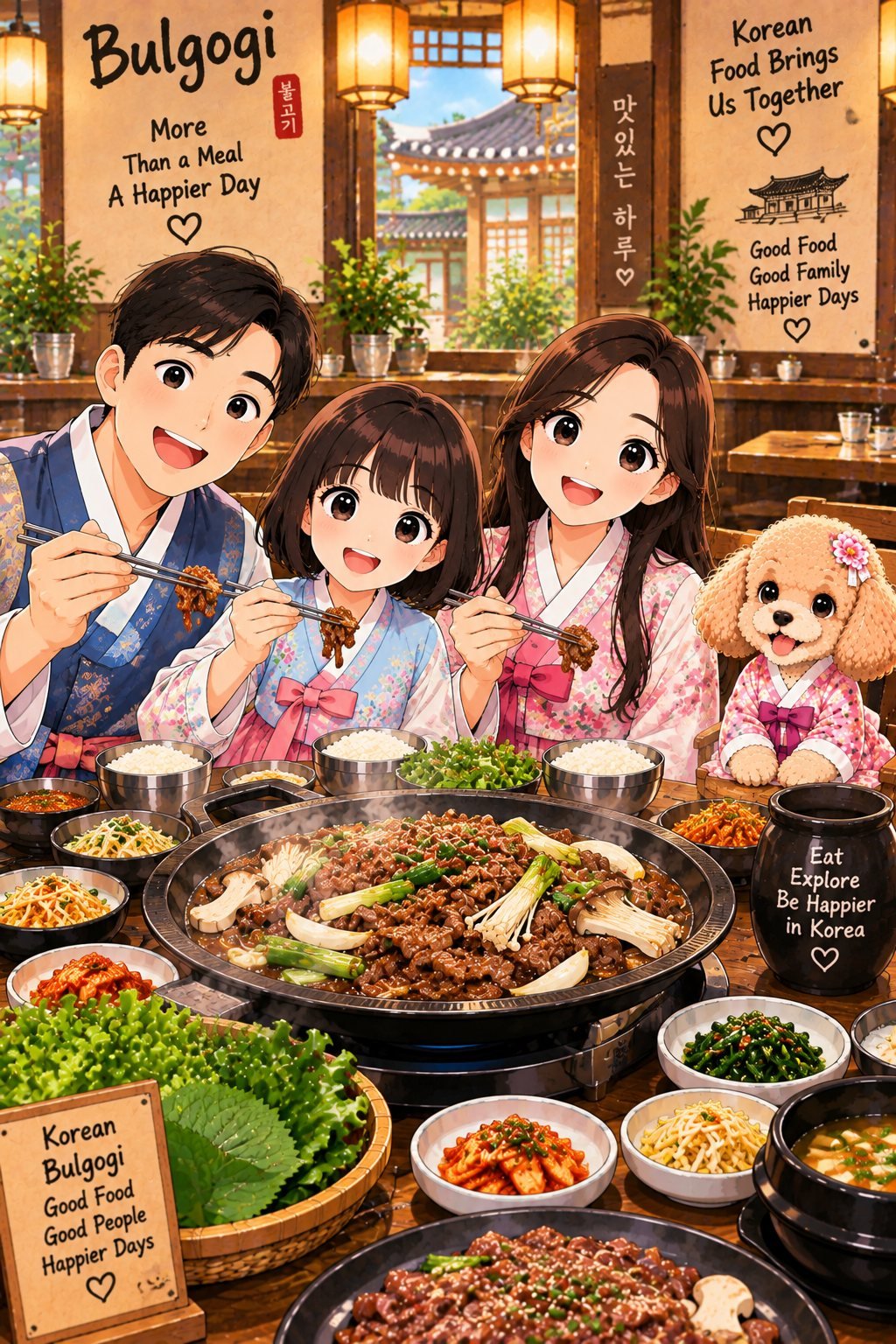
Bulgogi brings thinly sliced meat, savory-sweet seasoning, vegetables, rice, fresh greens, and Korean side dishes together around one welcoming table.
Quick Guide
| Korean name | 불고기 |
| Food type | Seasoned and cooked meat dish |
| Common meat | Beef is widely associated with bulgogi, although other variations exist |
| Flavor profile | Typically savory and mildly sweet, with recipe-dependent garlic and sesame notes |
| Common vegetables | Onion, green onion, mushrooms, and other recipe-dependent vegetables |
| Common accompaniments | Rice, lettuce, banchan, kimchi, and dipping or wrapping condiments depending on the meal |
| Useful for first-time visitors | Expect the flavor, sweetness, amount of liquid, and cooking style to vary by restaurant |
What Is Bulgogi?
Bulgogi refers to seasoned meat prepared for cooking, with beef bulgogi being one of the most familiar versions. The meat is generally sliced thinly so the seasoning can coat a large surface area and the pieces can cook relatively quickly.
The thin slices distinguish the experience from thicker Korean barbecue cuts such as Samgyeopsal. Samgyeopsal places much of the focus on grilling pork belly and combining the cooked meat with sauces, vegetables, and side dishes afterward. Bulgogi usually receives much of its characteristic flavor before or during cooking through its seasoning mixture.
The finished texture depends on the cut of meat, thickness, marinade, cooking method, and cooking time. Some pieces can develop browned edges, while other preparations remain softer because they cook with vegetables and liquid.
Why Is Bulgogi Sliced Thin?
Thin slicing changes both cooking and seasoning. A thin piece has more surface area relative to its thickness, allowing the seasoning to coat the meat efficiently.
Thin meat also cooks quickly. This is useful when bulgogi is prepared together with vegetables such as onion, green onion, and mushrooms, which release their own moisture and flavor as they heat.
The exact thickness is not standardized. Restaurant style, meat cut, and recipe can all influence whether the pieces are extremely thin, moderately thin, or slightly more substantial.
What Goes into Bulgogi Seasoning?
A familiar beef bulgogi seasoning can include soy sauce, a sweetening ingredient, garlic, sesame-related ingredients, and other seasonings. Onion, green onion, or fruit-based ingredients may also appear in some recipes.
However, bulgogi should not be treated as one fixed formula. Home recipes, restaurants, packaged sauces, and regional or family traditions can use different ingredient combinations and proportions.
This explains why one bulgogi can taste noticeably sweeter than another. Some recipes emphasize soy and savory flavors, while others have a more pronounced sweetness or garlic character.
For travelers with food allergies or dietary restrictions, the seasoning deserves particular attention because ingredients may not be obvious once they have been mixed into the meat.
Marinating Bulgogi
Seasoning the meat before cooking is one of the defining steps in many bulgogi preparations. The thin slices are mixed with the seasoning so the surface of the meat becomes evenly coated.
Vegetables can be added during this stage or introduced later during cooking, depending on the recipe. Onion and green onion are especially familiar, while mushrooms can add another texture and absorb some of the surrounding flavor.
The amount of time the meat remains in the seasoning varies. Longer is not automatically better: recipes are designed around different meat thicknesses, seasoning strengths, and desired textures.
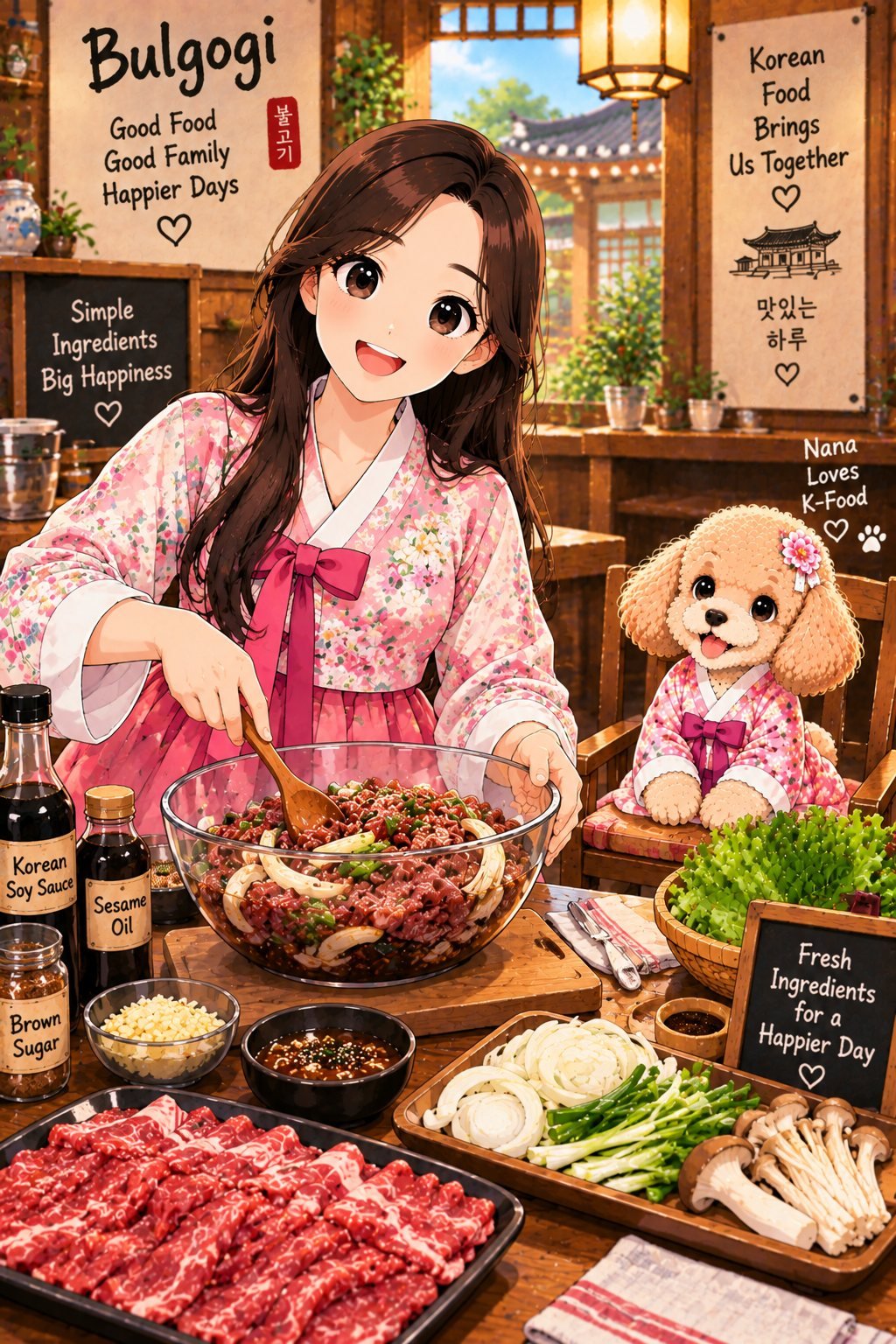
Thinly sliced meat is coated with seasoning before cooking, helping create the savory-sweet character associated with many familiar styles of bulgogi.
Why Bulgogi Can Taste Sweet
Sweetness is a familiar part of many modern bulgogi recipes, but the intensity varies. Sugar or other sweetening ingredients can balance the saltiness of soy-based seasoning and the savory flavor of the meat.
Some recipes also use fruit or vegetable ingredients that contribute sweetness or affect the overall character of the marinade. The specific ingredients are not identical across restaurants or households.
Travelers who prefer less-sweet foods should therefore avoid assuming that every bulgogi will have the same flavor balance. The difference between two restaurants can be significant.
Cooking Bulgogi
Once seasoned, bulgogi can be cooked on different heated surfaces. A grill can create more direct browning, while a pan or wide cooking plate may retain more liquid released by the meat, seasoning, and vegetables.
The thin pieces should be separated and moved during cooking so that folded or overlapping meat does not remain undercooked. Vegetables mixed with the meat also need space to soften and cook.
As the meat heats, the seasoning becomes more concentrated and aromatic. Onion softens, green onion cooks down, and mushrooms can absorb some of the savory cooking liquid.
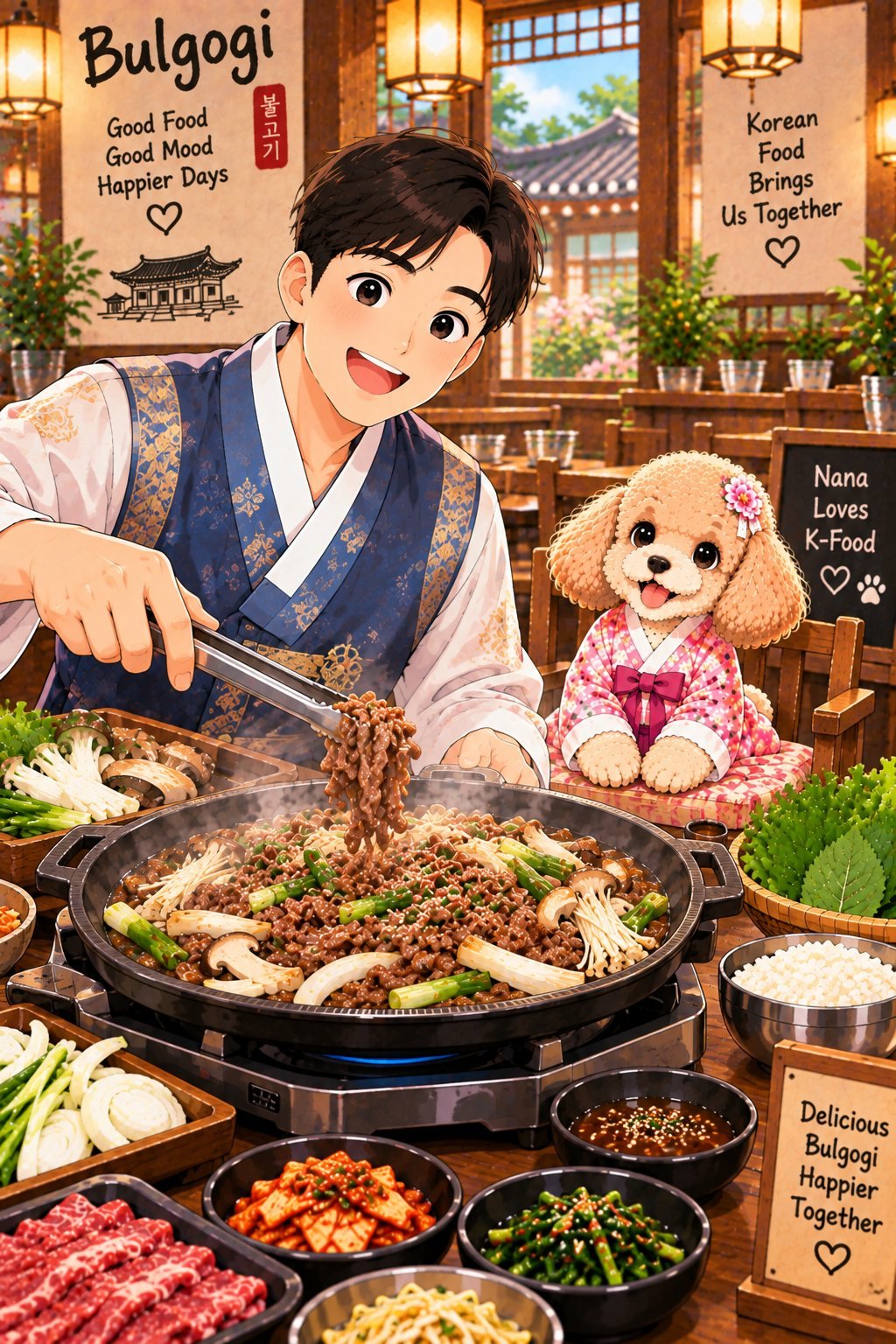
Cooking seasoned beef together with onion, green onion, and mushrooms develops the aroma, texture, and savory-sweet flavor of bulgogi.
Grilled Bulgogi vs. Juicier Bulgogi
Visitors may notice that bulgogi does not always arrive with the same appearance. Some versions emphasize browned meat and have relatively little visible liquid, while others are cooked with vegetables and enough moisture to create a noticeably juicier dish.
Neither appearance alone defines all bulgogi. Cooking equipment, recipe, meat cut, vegetable quantity, and seasoning mixture can all affect the final result.
This variation is useful to understand before ordering. A traveler who expects only dry grilled beef may be surprised by a softer, more liquid-rich version, while someone expecting a saucy dish may encounter a more intensely grilled style.
Bulgogi vs. Samgyeopsal
Bulgogi and samgyeopsal can both appear in Korean meat-focused meals, but they provide very different experiences.
Bulgogi commonly uses thinly sliced meat that has already been seasoned before cooking. Its flavor is closely connected to the marinade and the vegetables cooked with it.
Samgyeopsal is pork belly that is commonly grilled without a strong marinade and then combined with ssamjang, garlic, kimchi, leafy vegetables, rice, and other accompaniments according to the diner’s preference.
K-Nana Studio’s Samgyeopsal Guide explains the pork belly experience in detail, including grilling, scissors, ssam, ssamjang, grilled kimchi, and garlic.
Bulgogi vs. Korean BBQ
Korean BBQ is a much broader category than bulgogi. It can include beef and pork, marinated and unmarinated cuts, thick and thin pieces, and many different tabletop grilling styles.
Bulgogi can be part of this broader meat culture, but it also exists as a dish with its own preparation methods and serving styles. Not every bulgogi meal involves diners personally grilling individual pieces over an open tabletop grill.
For the broader shared-grill experience, K-Nana Studio’s Korean BBQ Guide explains tabletop grilling, ssam, sauces, banchan, and different meat styles.
How to Eat Bulgogi with Rice
One of the simplest ways to enjoy bulgogi is with warm rice. Because the meat is already seasoned, a small amount of bulgogi can provide plenty of flavor when paired with relatively plain rice.
The cooking juices and softened vegetables can also become part of the meal. Onion, green onion, mushrooms, and seasoned liquid can be placed over rice together with the meat, creating a different texture from eating a piece of bulgogi by itself.
There is no requirement to combine everything immediately. First-time visitors can taste the bulgogi alone, try it with rice, and then add banchan or fresh vegetables to understand how each accompaniment changes the flavor.
Can Bulgogi Be Eaten as Ssam?
Bulgogi can also be enjoyed with leafy vegetables when they are provided. Lettuce creates a fresh and crisp contrast to the soft seasoned meat, while perilla leaves can add a much more distinctive aroma.
A wrap does not need many ingredients. Bulgogi and one leaf may be enough, or diners can add rice, garlic, a condiment, or another available accompaniment according to preference.
Because bulgogi is already seasoned, additional sauces should be used carefully. Strong condiments can easily cover the flavor of the marinade.
Bulgogi, Rice & Banchan
A Korean bulgogi table often becomes more varied through the side dishes surrounding the meat. Kimchi, seasoned vegetables, pickled foods, soups, and other banchan can provide spicy, sour, fresh, salty, or fermented contrasts.
The exact selection depends on the restaurant. Banchan should therefore be understood as part of the dining experience rather than a fixed list that always accompanies bulgogi.
A simple sequence for first-time visitors is to taste the bulgogi alone, then with rice, then with one side dish, and finally as part of a vegetable wrap if greens are available.
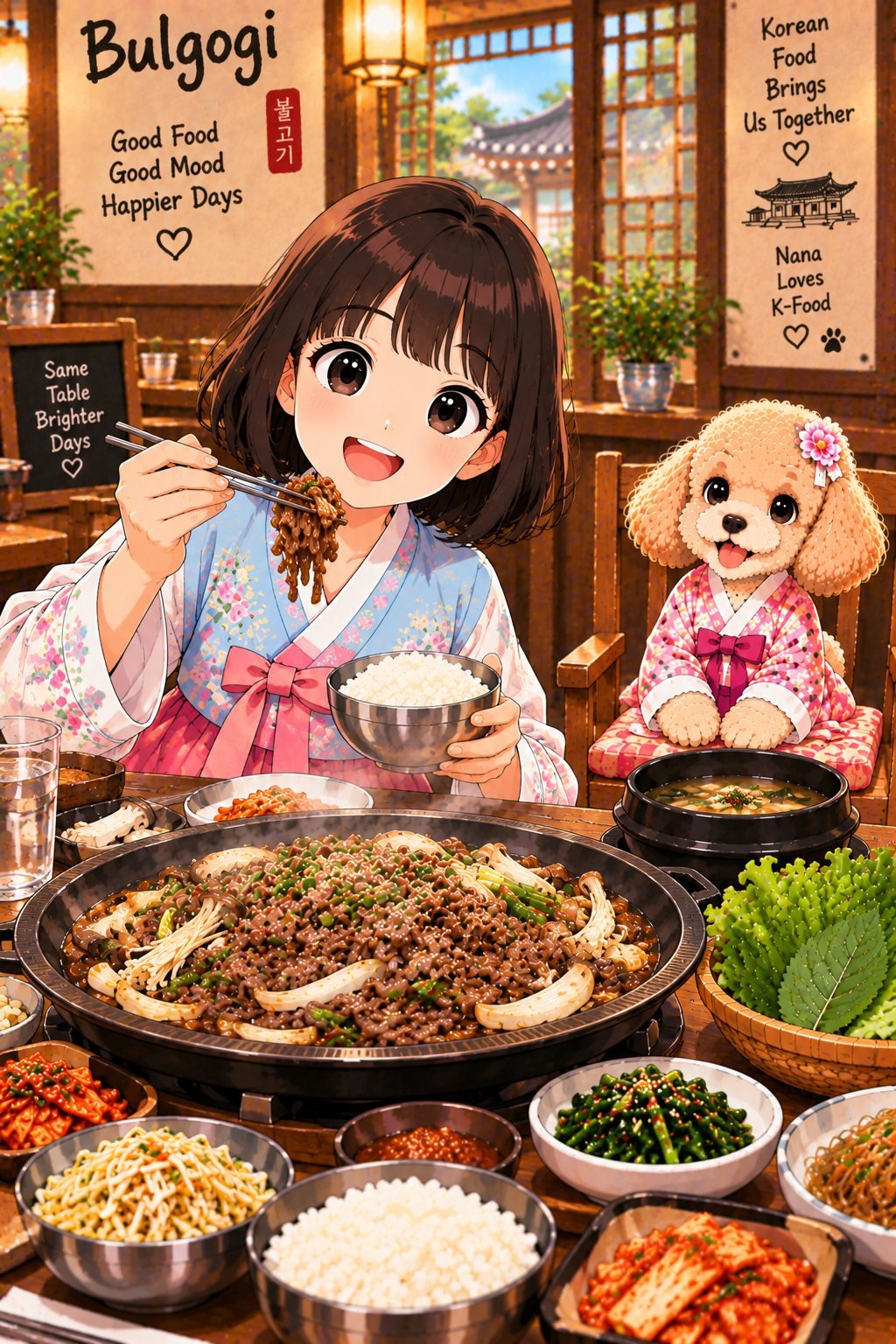
Warm rice, fresh greens, kimchi, and different banchan allow one serving of bulgogi to become several different combinations during the same meal.
How to Order Bulgogi
Bulgogi can appear on menus in several formats. It may be listed as a main meat dish, included in a set meal, served from a shared cooking plate, or presented in another restaurant-specific style.
Before ordering, check what type of meat is being used, how many people the portion is intended to serve, whether rice is included, and which side dishes or additional items come with the order.
Some restaurants specialize in shared portions, while others provide individual meals. Travelers should therefore avoid assuming that the word “bulgogi” always represents the same portion size or dining format.
Beef Bulgogi & Other Variations
Beef is strongly associated with the word bulgogi for many diners, but Korean menus can also use bulgogi-related names for other seasoned meats and preparations.
Pork-based versions, spicy preparations, and restaurant-specific variations may use different marinades and cooking methods. A dish labeled with “bulgogi” should therefore be checked carefully when the type of meat matters for dietary, religious, or personal reasons.
The seasoning can also change significantly between variations. A familiar soy-based beef bulgogi should not be assumed to have the same ingredients as a spicy pork preparation.
What Is Ttukbaegi Bulgogi?
Travelers may encounter the name “ttukbaegi bulgogi.” Ttukbaegi refers to an earthenware pot commonly used for serving hot Korean dishes.
In this style, bulgogi can arrive with more broth or cooking liquid than a relatively dry grilled version. Vegetables and other ingredients may cook together with the meat inside the hot vessel.
The result can feel quite different from bulgogi cooked on a wide grill or pan. Instead of emphasizing browned surfaces, a ttukbaegi-style preparation can emphasize tender meat, hot liquid, vegetables, and a comforting one-pot presentation.
Recipes and restaurant styles vary, so the name should not be treated as a guarantee of one exact ingredient list.
Dry-Grilled vs. Brothy Bulgogi
The difference between a relatively dry bulgogi and a liquid-rich version demonstrates why appearance alone cannot define the dish.
A grill-focused preparation can develop more browning and concentrated surfaces. A pan or pot preparation may retain more liquid released by the marinade, meat, onion, mushrooms, and other vegetables.
Both can express the familiar savory-sweet character associated with bulgogi while providing noticeably different textures.
First-Time Bulgogi Tips
- Check the meat — beef is common, but do not assume every bulgogi-named dish uses the same meat.
- Expect sweetness to vary — restaurant marinades can range from mildly sweet to noticeably sweeter.
- Try the meat alone first — this makes the seasoning easier to understand.
- Add rice next — plain rice provides a useful contrast to seasoned meat.
- Use extra sauces carefully — bulgogi already carries significant seasoning.
- Try the cooked vegetables — onion, green onion, and mushrooms can absorb the marinade and meat juices.
- Check the serving format — bulgogi can be shared, individually served, grilled, pan-cooked, or presented in a hot pot.
- Ask about ingredients when necessary — marinades can contain ingredients that are difficult to identify visually.
Bulgogi as a Shared Korean Meal
Bulgogi works naturally as a shared dish because the cooked meat can be placed in the center of the table and combined with rice, vegetables, and banchan according to each diner’s preference.
Unlike a meal in which every person receives an identical finished plate, a shared Korean table allows people to build different combinations from the same central dish.
One person may prefer bulgogi with rice, another may use lettuce, and another may alternate the meat with kimchi and other banchan. This flexibility connects bulgogi with the broader shared-table character of Korean food culture.
The Complete Bulgogi Table
A complete bulgogi table can bring together several contrasts: tender seasoned meat, warm rice, fresh leafy vegetables, fermented kimchi, seasoned banchan, mushrooms, onions, and soup.
The bulgogi remains the main dish, but the surrounding foods prevent every bite from tasting identical. The diner decides whether the next bite will be simple, wrapped in greens, paired with rice, or balanced with a sharper side dish.
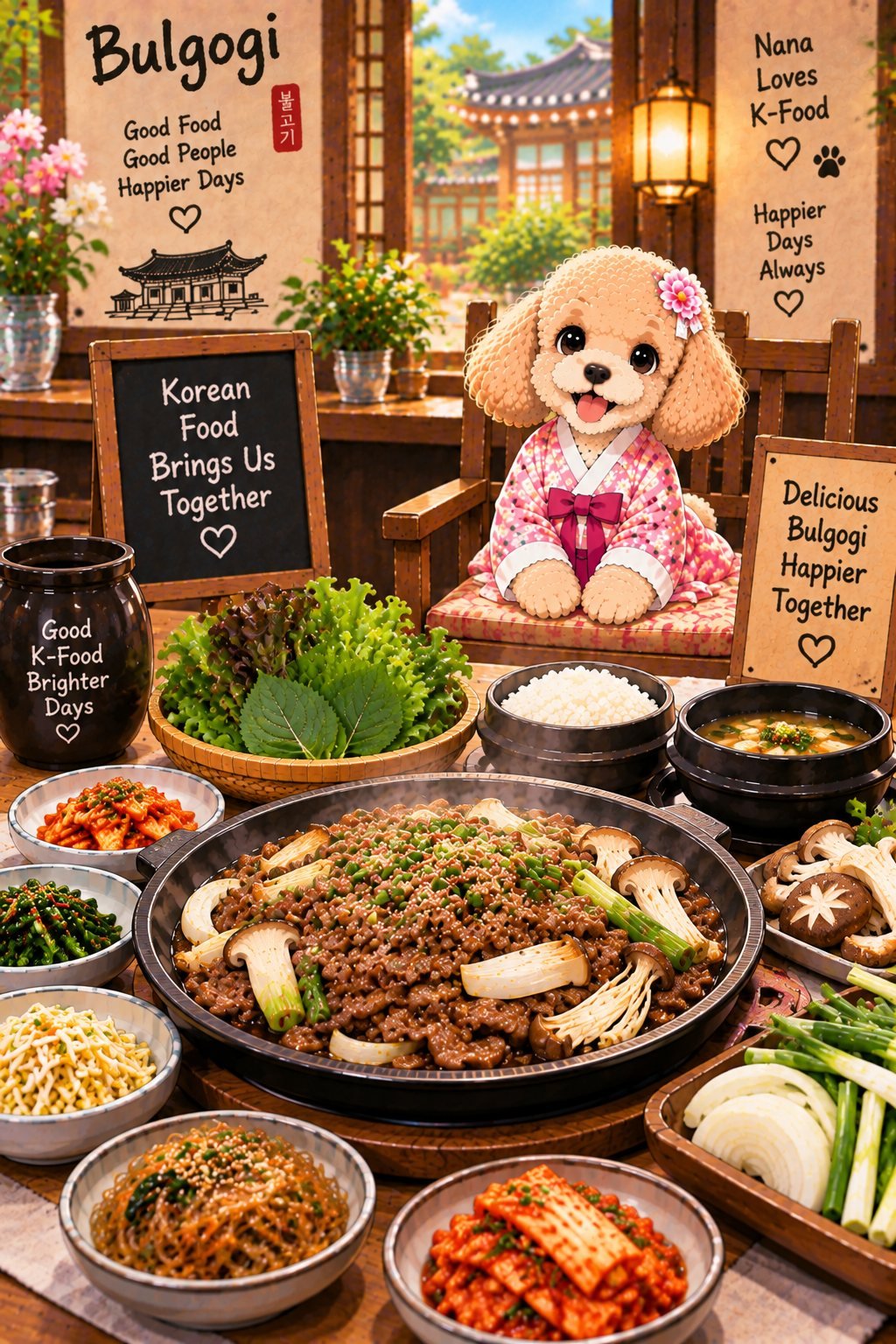
Bulgogi becomes a complete Korean dining experience when seasoned meat is surrounded by rice, fresh greens, vegetables, kimchi, soup, and colorful banchan.
How Bulgogi Connects with Other K-Food
Bulgogi adds another distinct style to K-Nana Studio’s growing K-Food collection.
Samgyeopsal focuses on unmarinated pork belly, tabletop grilling, ssamjang, grilled kimchi, and garlic. Bulgogi shifts the emphasis toward thinly sliced meat that receives much of its flavor from seasoning before or during cooking.
The broader Korean BBQ Guide explains shared tabletop grilling across different meat styles, while bulgogi demonstrates that Korean meat culture also includes pan-cooked and more liquid-rich preparations.
Kimchi provides a fermented contrast to the savory-sweet meat, while Bibimbap shows a different way of combining rice, vegetables, protein, egg, and gochujang into a single mixed bowl.
For more casual contemporary food culture, Tteokbokki introduces rice cakes and bunsik, while Korean Fried Chicken explores fried, yangnyeom, and soy garlic chicken together with takeout and delivery culture.
Bulgogi & a Korea Travel Day
Bulgogi is flexible enough to fit into different travel schedules because it can appear in traditional-style restaurants, Korean barbecue establishments, set meals, and other dining formats.
Travelers exploring Insadong can combine a Korean meal with traditional streets, crafts, tea houses, and cultural sightseeing.
Bukchon Hanok Village provides another connection to traditional architecture and Seoul’s historical atmosphere, while nearby areas can be combined into a broader cultural itinerary.
For a busier contemporary evening, Hongdae offers a very different environment built around youth culture, cafés, shopping, music, restaurants, and nightlife.
FAQ
What is bulgogi?
Bulgogi is a Korean meat dish commonly made with thinly sliced meat seasoned before cooking. Beef is one of the most familiar versions, and the seasoning often creates a savory-sweet flavor that can include soy-based ingredients, garlic, sesame, and other recipe-dependent seasonings.
Is bulgogi always made with beef?
No. Beef bulgogi is widely recognized, but bulgogi-related names can also be used for pork and other seasoned meat preparations. The meat, seasoning, and cooking method should be checked when dietary or religious requirements are important.
Is bulgogi spicy?
Familiar soy-based beef bulgogi is not necessarily spicy. Its flavor is often more savory and sweet than chili-hot. However, spicy bulgogi variations exist, so travelers should check the menu rather than assuming every dish has the same seasoning.
Why does bulgogi taste sweet?
Many bulgogi marinades contain a sweetening ingredient to balance soy-based seasoning and the savory flavor of the meat. Some recipes may also use fruit or vegetables that contribute additional sweetness. The level of sweetness varies considerably between recipes and restaurants.
What vegetables are commonly cooked with bulgogi?
Onion, green onion, and mushrooms are familiar additions, but there is no fixed vegetable list. Restaurants and home recipes can use different combinations depending on their preferred cooking style.
What is ttukbaegi bulgogi?
Ttukbaegi bulgogi is a style of bulgogi served in a hot earthenware pot. It can contain more broth or cooking liquid than a relatively dry grilled preparation, creating a softer and more soup-like eating experience. Ingredients vary by restaurant.
What is the difference between bulgogi and samgyeopsal?
Bulgogi commonly uses thinly sliced seasoned meat, while samgyeopsal refers to pork belly that is often grilled without a strong marinade. Samgyeopsal is commonly combined with ssamjang, garlic, kimchi, and leafy vegetables after grilling, while much of bulgogi’s characteristic flavor comes from its seasoning before or during cooking.
Where to Try Bulgogi
Bulgogi can be found in many parts of Korea and is not limited to one famous restaurant or neighborhood. It may appear at traditional Korean restaurants, barbecue restaurants, set-meal restaurants, and establishments specializing in particular meat dishes.
When comparing restaurants, check the type of meat, serving size, cooking style, amount of cooking liquid, included side dishes, and whether rice is part of the meal. A restaurant serving grilled beef bulgogi can provide a noticeably different experience from one specializing in ttukbaegi bulgogi.
Travelers interested in combining food with traditional Korean culture can explore Insadong, where cultural attractions, traditional-style streets, crafts, tea houses, shops, and restaurants can be combined within one itinerary.
Bukchon Hanok Village provides another connection to Seoul’s hanok architecture and historical atmosphere, while Gyeongbokgung Palace can be included in a broader day focused on Korean history and traditional culture.
Related K-Nana Guides
For another Korean meat experience, the Samgyeopsal Guide explains pork belly, tabletop grilling, ssam, ssamjang, grilled kimchi, garlic, and banchan.
The broader Korean BBQ Guide introduces shared grilling culture, different meat styles, sauces, vegetables, and the experience of cooking around the same table.
The Kimchi Guide explores fermentation and kimjang, while the Bibimbap Guide explains how rice, namul, vegetables, protein, egg, and gochujang come together in one mixed bowl.
For casual Korean food culture, continue with the Tteokbokki Guide for rice cakes and bunsik or the Korean Fried Chicken Guide for fried, yangnyeom, and soy garlic chicken, chicken mu, takeout, and delivery culture.
For travel connections, explore Insadong, Bukchon Hanok Village, Gyeongbokgung Palace, and Hongdae for different sides of Seoul’s traditional and contemporary culture.
Food & Allergy Notes
Bulgogi seasoning can contain several ingredients that are difficult to identify by appearance alone. Soy sauce and other seasonings may introduce soy and wheat, while sesame oil, sesame seeds, garlic, sweeteners, fruit-based ingredients, and other flavorings can also appear depending on the recipe.
Commercial bulgogi sauces, restaurant marinades, and homemade recipes are not identical. Ingredient information from one restaurant or packaged sauce should therefore not be assumed to apply to another.
Banchan, kimchi, soups, dipping sauces, and other foods served with bulgogi may contain additional allergens such as soy, wheat, sesame, egg, milk, nuts, fish, shellfish, or other ingredients.
Travelers with allergies, intolerances, medical conditions, religious dietary restrictions, or other specific requirements should confirm both the meat and the marinade directly with the restaurant. Checking only the visible ingredients on the finished plate is not sufficient.
Raw Meat & Cooking Safety
When bulgogi is cooked from raw meat at the table, raw meat, cooked food, vegetables, rice, and ready-to-eat banchan can be present within the same dining area.
Use the restaurant’s designated utensils appropriately and avoid transferring cooked food back onto plates or surfaces that previously held raw meat unless the restaurant provides a safe setup for doing so.
Thin slices can cook quickly, but folded or overlapping pieces may require additional time. Separate the pieces during cooking and make sure the meat is properly cooked before eating.
When restaurant staff handle the cooking, follow their instructions and avoid interfering with the cooking process or moving unfamiliar equipment unnecessarily.
Hot Pan & Tabletop Cooking Safety
Grills, pans, burners, earthenware pots, and metal cooking surfaces can remain extremely hot throughout the meal and for some time afterward.
Hot cooking liquid can also bubble or splash, particularly in pan-cooked or ttukbaegi-style preparations. Keep hands, clothing, phones, bags, and other personal items away from hot equipment.
Children should be supervised carefully around tabletop cooking equipment, and diners should allow restaurant staff to handle hot pans, grill plates, burners, or earthenware vessels when assistance is required.
Image Credits
Korean bulgogi family dining experience with seasoned beef, onion, green onion, mushrooms, rice, lettuce, and banchan with the K-Nana family and Nana in hanbok visual — K-Nana Studio original visual.
Bulgogi seasoning preparation with Mom in hanbok mixing thinly sliced beef, soy-based seasoning, onion, green onion, and other ingredients while Nana watches from a separate seat visual — K-Nana Studio original visual.
Bulgogi cooking experience with Dad in hanbok cooking seasoned beef, onion, green onion, and mushrooms on a hot cooking plate while Nana watches from a separate chair visual — K-Nana Studio original visual.
Korean bulgogi table with K-Nana daughter in hanbok enjoying cooked bulgogi, warm rice, lettuce, and Korean banchan while Nana sits separately without touching the food visual — K-Nana Studio original visual.
Nana in pink floral hanbok seated separately as a K-Food mascot beside a Korean bulgogi table with seasoned beef, onion, green onion, mushrooms, rice, lettuce, soup, and banchan visual — K-Nana Studio original visual.
Disclaimer
This article is provided for general food, travel, and cultural information. Bulgogi ingredients, meats, marinades, sauces, vegetables, side dishes, allergens, cooking methods, restaurant practices, portion sizes, and dietary suitability can vary. Raw meat requires appropriate handling and thorough cooking, and grills, pans, burners, cooking liquids, and earthenware pots can become extremely hot. Always follow restaurant instructions and confirm ingredients and preparation directly with the restaurant when allergies, medical conditions, religious restrictions, or other dietary requirements are relevant.