
Tteokbokki is one of Korea’s most recognizable street foods, known for chewy rice cakes coated in a bold red sauce that is commonly spicy, savory, and slightly sweet. It is frequently served with fish cakes, green onion, boiled eggs, and other ingredients, creating a simple but highly distinctive dish that visitors can encounter in markets, street-food areas, and casual snack restaurants across Korea.
For international visitors, tteokbokki offers an easy introduction to Korean bunsik culture — the casual world of affordable foods such as rice cakes, fish cakes, fried snacks, and kimbap. The experience can be as memorable as the dish itself: a large pan of red sauce bubbling at a market stall, steam rising into the air, and customers eating together only a few steps from where the food is being cooked.

Chewy rice cakes, spicy red sauce, fish cakes, eggs, and the energy of a Korean market make tteokbokki one of Korea’s most recognizable street-food experiences.
Quick Guide
| Korean name | 떡볶이 |
| Food type | Korean street food and bunsik |
| Main ingredient | Rice cakes, commonly cylindrical tteok |
| Common sauce | Red sauce often made with gochujang and other seasonings |
| Common additions | Fish cake, green onion, boiled egg, cabbage, and other ingredients |
| Often eaten with | Eomuk, twigim, kimbap, and other bunsik foods |
| Useful for first-time visitors | Spice levels vary, so start carefully if you are sensitive to spicy food |
What Is Tteokbokki?
Tteokbokki is a Korean dish centered on tteok, or rice cakes, cooked in sauce. The familiar modern street-food version usually features cylindrical rice cakes simmered until chewy and coated with a red sauce commonly associated with gochujang.
Fish cakes are another familiar ingredient. They absorb some of the sauce while adding a softer texture and savory flavor. Green onion, cabbage, boiled eggs, and other ingredients may also be included depending on the stall, restaurant, or recipe.
Not every tteokbokki follows the same formula. Sauce thickness, sweetness, heat, rice-cake texture, ingredients, and portion size can differ considerably, so trying the dish at two different places may produce noticeably different experiences.
Why Is Tteokbokki So Popular?
Tteokbokki combines several qualities that work particularly well for casual eating. The rice cakes provide a distinctive chewy texture, while the sauce delivers a strong flavor that can be enjoyed with several inexpensive companion foods.
It is also closely connected with bunsik restaurants, markets, and street-food stalls. Tteokbokki can be eaten as a quick snack, shared between friends, or combined with fish cakes, fried foods, and kimbap to create a larger casual meal.
For travelers, this makes tteokbokki different from a formal restaurant experience. Eating it at a busy market stall can provide a direct look at everyday Korean snack culture as well as the food itself.
Korean Market & Street Food Culture
Traditional markets are among the most natural settings for experiencing Korean street food. Large pans, open cooking areas, closely packed stalls, shared seating, and many different foods within a small area create an atmosphere that is difficult to reproduce in a conventional restaurant.
K-Nana Studio’s Gwangjang Market guide introduces one of Seoul’s best-known traditional market environments. Visitors can combine market sightseeing with an exploration of Korean food culture and see how different snacks and dishes are prepared and served in a busy public setting.
Markets are also useful because visitors can encounter several foods during the same trip. Tteokbokki may appear alongside eomuk, kimbap, twigim, dumplings, pancakes, and other foods, although the exact selection differs from stall to stall.

Tasting freshly cooked tteokbokki at a busy market stall connects one of Korea’s favorite snacks with the sights, sounds, and energy of Korean street-food culture.
What Goes Into Tteokbokki?
The basic structure of tteokbokki is simple, but the finished dish can contain several ingredients. Rice cakes provide the signature chewy texture, while sauce gives the dish most of its recognizable flavor and color.
Fish cakes, green onion, cabbage, and boiled eggs are common additions. Some versions may include noodles, dumplings, cheese, sausages, seafood, or other ingredients, particularly in restaurant-style tteokbokki designed for sharing.
The type and texture of the rice cake can also vary. This means that two dishes called tteokbokki may look similar but differ in chewiness, sauce thickness, heat, sweetness, and additional ingredients.
How Tteokbokki Is Made
A familiar preparation begins by heating a seasoned liquid or sauce and adding rice cakes so they can cook and soften. Fish cakes and vegetables may then be added as the sauce develops and coats the ingredients.
The mixture is simmered until the rice cakes reach the desired texture and the sauce becomes concentrated enough to cling to them. Boiled eggs can be added so they absorb some of the sauce, while green onion is often used for additional flavor and color.
Recipes vary widely, so there is no single cooking method that represents every tteokbokki stall or restaurant.
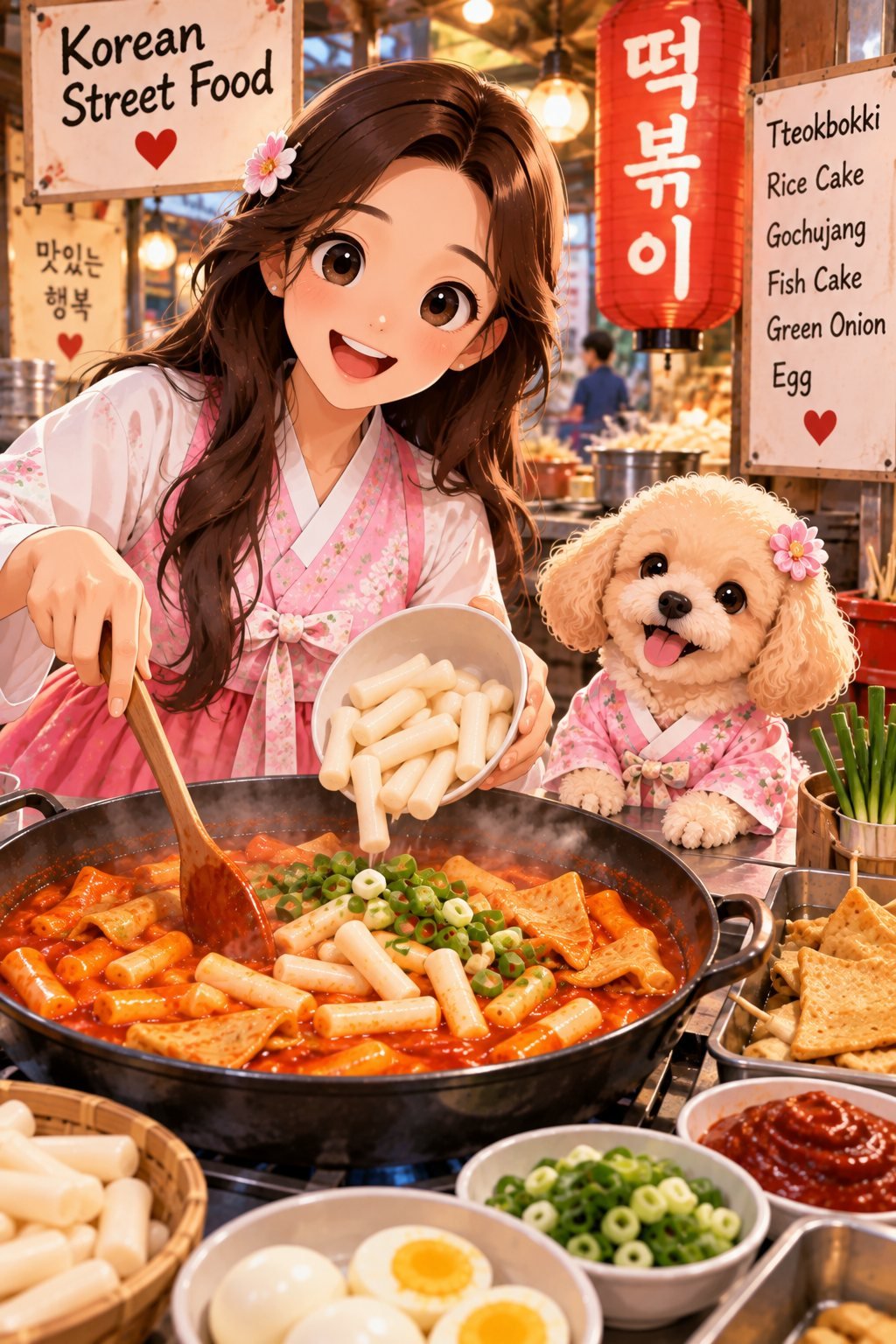
Rice cakes, red sauce, fish cakes, green onion, and eggs come together in a large simmering pan to create the familiar market-style tteokbokki experience.
Gochujang & the Red Sauce
Gochujang, a Korean fermented red chili paste, is commonly associated with the familiar red version of tteokbokki. It can contribute heat, sweetness, saltiness, color, and fermented depth to the sauce.
However, the finished sauce usually reflects more than one ingredient. Recipes can include additional seasonings and sweeteners, and each restaurant or stall may create its own balance.
The bright red appearance should not be used as an exact measure of heat. Some tteokbokki is relatively mild and sweet, while other versions can be considerably hotter.
Eomuk & Boiled Eggs
Eomuk, or Korean fish cake, is one of the most familiar companions to tteokbokki. Pieces of fish cake may be cooked directly in the sauce, where they absorb its flavor while contributing a softer texture beside the chewy rice cakes.
Boiled eggs are another common addition. Breaking an egg into the sauce creates a milder combination and gives diners another texture to enjoy alongside the rice cakes.
At street-food stalls, eomuk can also be sold separately on skewers, often with warm broth. This makes it easy to combine several different bunsik foods during one visit.
The Bunsik Combination
Tteokbokki is closely associated with bunsik, a casual Korean food culture that includes inexpensive and convenient dishes such as eomuk, twigim, and kimbap.
One popular combination is to dip pieces of fried food into the tteokbokki sauce. Kimbap provides rice and vegetables with a different texture, while fish-cake broth can offer a warm savory contrast to the stronger red sauce.

Tteokbokki, eomuk, twigim, and kimbap show why bunsik is often enjoyed as a table of different snacks rather than just one dish.
Different Styles of Tteokbokki
The familiar spicy red version is only one form of tteokbokki. Recipes have continued to change, and restaurants now serve many variations with different sauces and additional ingredients.
Some versions add cheese to soften the perception of heat and create a richer texture. Others include ramen noodles, dumplings, sausages, seafood, or combinations designed to be cooked and shared at the table.
There are also tteokbokki styles that do not rely on the familiar red chili-based sauce. This variety means that travelers who find one version too spicy or too sweet may still enjoy another style.
A Korean Street-Food Table
Seeing several bunsik foods together helps explain why tteokbokki works so naturally as street food. Its strong sauce and chewy texture can be alternated with fried foods, rice-based dishes, fish cakes, and pickled vegetables.

Tteokbokki becomes part of a wider Korean street-food experience when rice cakes, fish cakes, fried snacks, kimbap, eggs, and other bunsik favorites share the table.
First-Time Tteokbokki Tips
- Check the spice level — different stalls and restaurants can make tteokbokki at very different levels of heat.
- Start with one rice cake — the chewy texture can be unfamiliar to first-time visitors.
- Try the fish cake — eomuk absorbs the sauce and provides a different texture from rice cake.
- Add a boiled egg — it can provide a milder contrast to a strongly seasoned sauce.
- Try twigim with the sauce — dipping fried foods into tteokbokki sauce is a familiar combination.
- Order several bunsik foods to share — tteokbokki, eomuk, twigim, and kimbap work naturally together.
- Eat carefully when freshly served — both the sauce and rice cakes can remain very hot.
Tteokbokki & Korean Market Culture
Tteokbokki is closely connected with the atmosphere of Korean markets and casual food streets. Visitors can often watch the food cooking in large pans while ordering directly from the stall.
For a traditional market experience, K-Nana Studio’s Gwangjang Market guide provides a useful introduction to one of Seoul’s most recognizable food-market environments.
Mangwon Market offers another perspective on neighborhood market culture, while Seogwipo Maeil Olle Market connects a market visit with a wider Jeju itinerary.
Tteokbokki & K-Culture
Tteokbokki has become familiar internationally through Korean dramas, entertainment programs, online food content, and travel videos, but its cultural appeal is closely tied to its everyday accessibility in Korea.
It represents a different side of Korean dining from the shared tabletop grilling experience described in K-Nana Studio’s Korean BBQ Guide. Tteokbokki is casual, fast, inexpensive in many settings, and strongly associated with markets and bunsik restaurants.
It also introduces gochujang, one of the fermented seasonings that appears across Korean cuisine. Together with Kimchi and Bibimbap, tteokbokki helps show international visitors how fermented seasonings, rice-based foods, vegetables, and strong flavor contrasts appear in very different Korean meals.
FAQ
What is tteokbokki?
Tteokbokki is a Korean dish made primarily with rice cakes cooked in sauce. The familiar street-food version commonly uses a red gochujang-based sauce and can include fish cakes, green onion, cabbage, and boiled eggs.
Is tteokbokki very spicy?
It can be, but spice levels vary considerably. Some versions are relatively sweet and mild, while others can be very hot. Ask about the spice level when possible if you are sensitive to chili.
What does tteokbokki taste like?
The familiar red version often combines spicy, savory, and sweet flavors. The rice cakes themselves have a relatively mild flavor and a distinctive chewy texture, allowing the sauce to provide much of the overall taste.
What is the difference between tteokbokki and rice cake?
Tteok is the Korean term for rice cake and includes many different foods. Tteokbokki is a specific dish in which rice cakes are cooked with sauce and other ingredients.
What should I eat with tteokbokki?
Eomuk, twigim, kimbap, and boiled eggs are familiar companions. Fried foods can also be dipped into the tteokbokki sauce for a different combination of textures.
Where can travelers try tteokbokki?
Tteokbokki is widely available in markets, bunsik restaurants, street-food areas, and other casual dining settings throughout Korea. Traditional markets such as Gwangjang Market can also provide a broader Korean street-food experience.
Where to Experience Korean Street Food
Travelers do not need to find one specific famous stall to experience tteokbokki. Different markets and neighborhoods can provide their own versions and atmosphere.
Explore Gwangjang Market for a large traditional market experience or Mangwon Market for a neighborhood market environment connected with everyday food and shopping.
Visitors traveling on Jeju can combine local market food with sightseeing through Seogwipo Maeil Olle Market.
Related K-Nana Guides
Continue the K-Food collection with the Kimchi Guide for fermentation and kimjang, the Bibimbap Guide for rice, namul, and gochujang, and the Korean BBQ Guide for samgyeopsal, ssam, and tabletop grilling culture.
For food-focused travel, explore Gwangjang Market, Mangwon Market, and Seogwipo Maeil Olle Market.
Food & Allergy Notes
Tteokbokki recipes vary by restaurant and stall. Sauces, fish cakes, broths, fried foods, kimbap, and other accompanying dishes may contain fish, seafood-derived ingredients, soy, wheat, sesame, egg, meat products, or other ingredients relevant to allergies and dietary restrictions.
Rice cakes themselves may appear simple, but sauces and cooking liquids can contain ingredients that are not immediately visible. Fish cakes commonly contain fish and may also include wheat or other ingredients depending on the product.
Cross-contact can occur when street-food stalls or restaurants prepare several foods using shared cooking equipment, utensils, oil, or surfaces. Ask the seller or restaurant directly when an allergy, intolerance, religious restriction, medical condition, or other dietary requirement is important.
Image Credits
Tteokbokki and Korean traditional market street-food experience with the K-Nana family and Nana in hanbok visual — K-Nana Studio original visual.
Korean market tteokbokki experience with K-Nana daughter and Nana in hanbok visual — K-Nana Studio original visual.
Tteokbokki preparation with rice cakes, sauce, fish cakes, green onion and eggs with Mom and Nana in hanbok visual — K-Nana Studio original visual.
Korean bunsik table with tteokbokki, eomuk, twigim and kimbap with Dad and Nana in hanbok visual — K-Nana Studio original visual.
Nana in pink floral hanbok with tteokbokki, fish cakes, boiled eggs, twigim, kimbap and Korean street-food favorites visual — K-Nana Studio original visual.
Disclaimer
This article is provided for general food, travel, and cultural information. Tteokbokki recipes, ingredients, sauces, spice levels, allergens, preparation methods, restaurant practices, and dietary suitability can vary. Always confirm ingredients and preparation directly with the restaurant or seller when allergies, medical conditions, religious restrictions, or other dietary requirements are relevant.