
Woljeonggyo Bridge is one of Gyeongju’s most striking traditional-style landmarks, stretching across the Namcheon stream with a long covered wooden structure, colorful architectural details, and large gate-like pavilions at both ends. The bridge is especially memorable in the evening, when warm illumination reflects across the water and creates one of the city’s distinctive night landscapes.
For international visitors, Woljeonggyo adds another dimension to Gyeongju’s Silla heritage journey. Bulguksa Temple introduces Buddhist culture, Donggung Palace & Wolji Pond explores royal palace heritage, Daereungwon Tomb Complex focuses on royal tombs, Cheomseongdae adds ancient astronomy, and Hwangnidan-gil shows contemporary Gyeongju culture. Woljeonggyo brings traditional bridge architecture, riverside walking, and illuminated reflections into the collection.
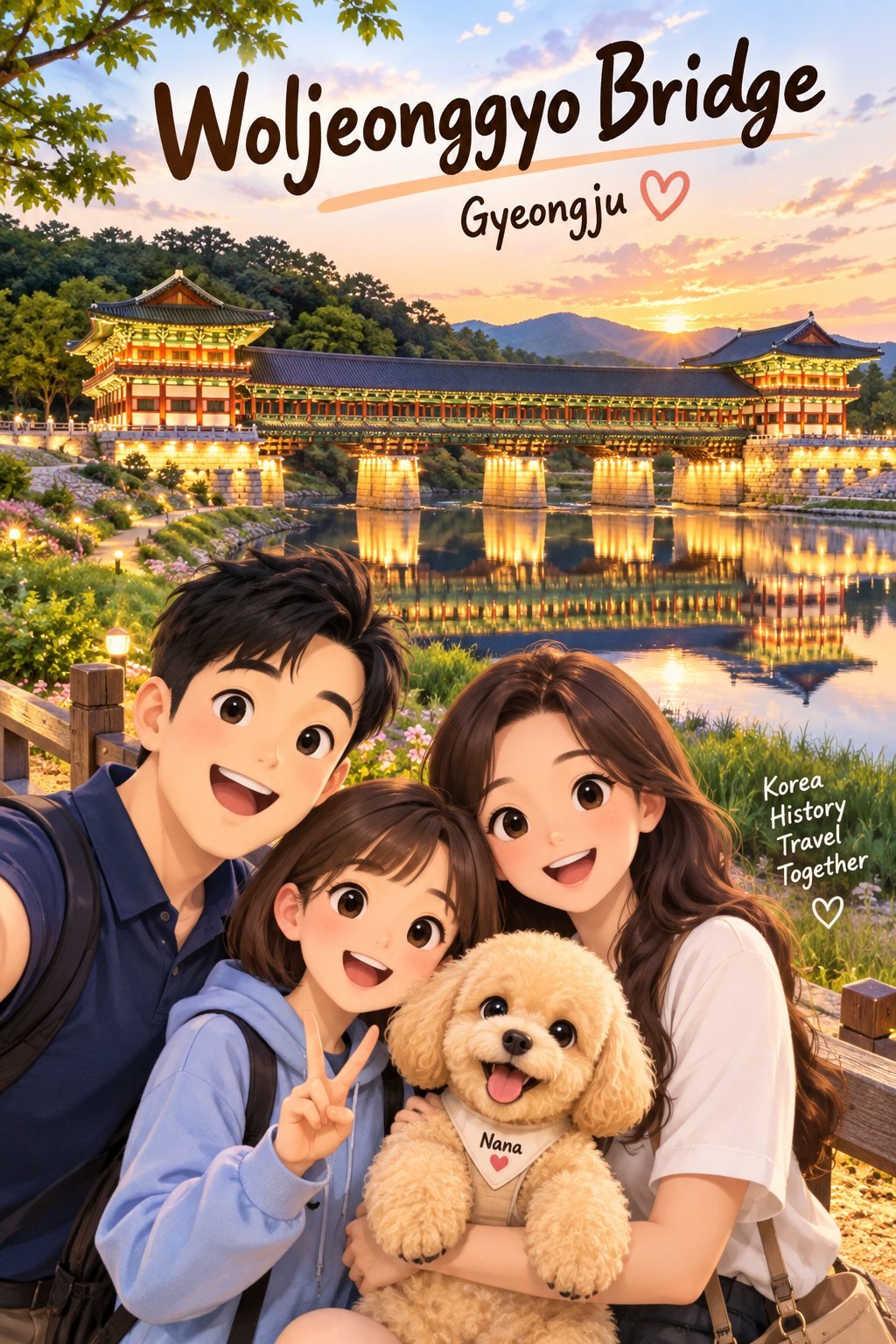
Woljeonggyo Bridge combines traditional-style architecture, the Namcheon waterfront, and historic Gyeongju scenery within one memorable landscape.
Quick Guide
| Location | Central Gyeongju, southeastern South Korea |
| Best for | Traditional architecture, riverside walks, evening scenery, reflections, photography, Gyeongju heritage |
| Recommended time | About 1–2 hours, longer when combining the bridge with nearby historic areas |
| Main experience | Walking across and around the bridge while enjoying its architecture and riverside views |
| Best atmosphere | Late afternoon through evening for changing light and illuminated scenery |
| Good to combine with | Cheomseongdae, Daereungwon Tomb Complex, and Hwangnidan-gil |
What Is Woljeonggyo Bridge?
Woljeonggyo is a reconstructed traditional bridge connected with the history of Silla-period Gyeongju. Historical records indicate that a bridge existed in this area during the ancient kingdom, while the structure visitors see today reflects modern reconstruction based on historical and archaeological research.
The bridge crosses the Namcheon stream and is distinguished by its covered wooden passage, tiled roof, painted architectural details, and substantial pavilion-like structures. Rather than functioning only as a river crossing, it has become an important part of the historic landscape experienced by modern visitors.
This distinction between the ancient bridge and the present reconstructed structure is important. Woljeonggyo allows visitors to visualize an aspect of Gyeongju’s historic transportation and urban landscape while recognizing that the visible bridge is not an untouched original surviving continuously from the Silla period.
Why Visit?
- Experience one of Gyeongju’s most distinctive reconstructed traditional bridges.
- Walk through a covered wooden structure with traditional architectural details.
- Enjoy peaceful views along the Namcheon riverside.
- See the bridge illuminated after sunset and reflected across the water.
- Photograph the bridge from both inside and from surrounding riverside viewpoints.
- Combine the visit naturally with Cheomseongdae and other central Gyeongju heritage sites.
- Continue toward Hwangnidan-gil for cafés, food, shopping, and contemporary Gyeongju culture.
Traditional Bridge Architecture
Walking through Woljeonggyo provides a different experience from viewing the bridge only from the riverbank. Wooden columns, roof structures, painted decorative details, long interior perspectives, and openings toward the surrounding landscape become much easier to appreciate from inside.
The covered passage also creates a strong sense of rhythm as repeated columns and beams extend along the length of the bridge. Looking outward between structural elements reveals changing views of the stream, riverside paths, vegetation, and surrounding historic district.
Traditional decorative painting and architectural forms contribute to the visual character of the reconstruction. Visitors interested in Korean architecture can compare these details with the temple buildings and dancheong seen at Bulguksa Temple.
Access arrangements, interior areas, operating conditions, and preservation rules can change. Follow current signs and staff guidance when walking through or around the bridge.

Inside Woljeonggyo, repeated wooden columns, painted roof details, and long covered walkways reveal another side of Gyeongju’s traditional architectural landscape.
Namcheon Riverside Walk
The riverside around Woljeonggyo provides a quieter way to experience the bridge and the surrounding historic landscape. Walking beside the Namcheon allows visitors to see the full length of the structure from a distance rather than focusing only on its interior architectural details.
Different positions along the water reveal changing combinations of the bridge, stone supports, traditional rooflines, vegetation, walking paths, and reflections. The riverside setting also provides open space that contrasts with the more enclosed experience of walking through the covered bridge.
Late afternoon is particularly useful for a riverside walk because visitors can enjoy the bridge in natural light before remaining as the evening illumination becomes more visible.
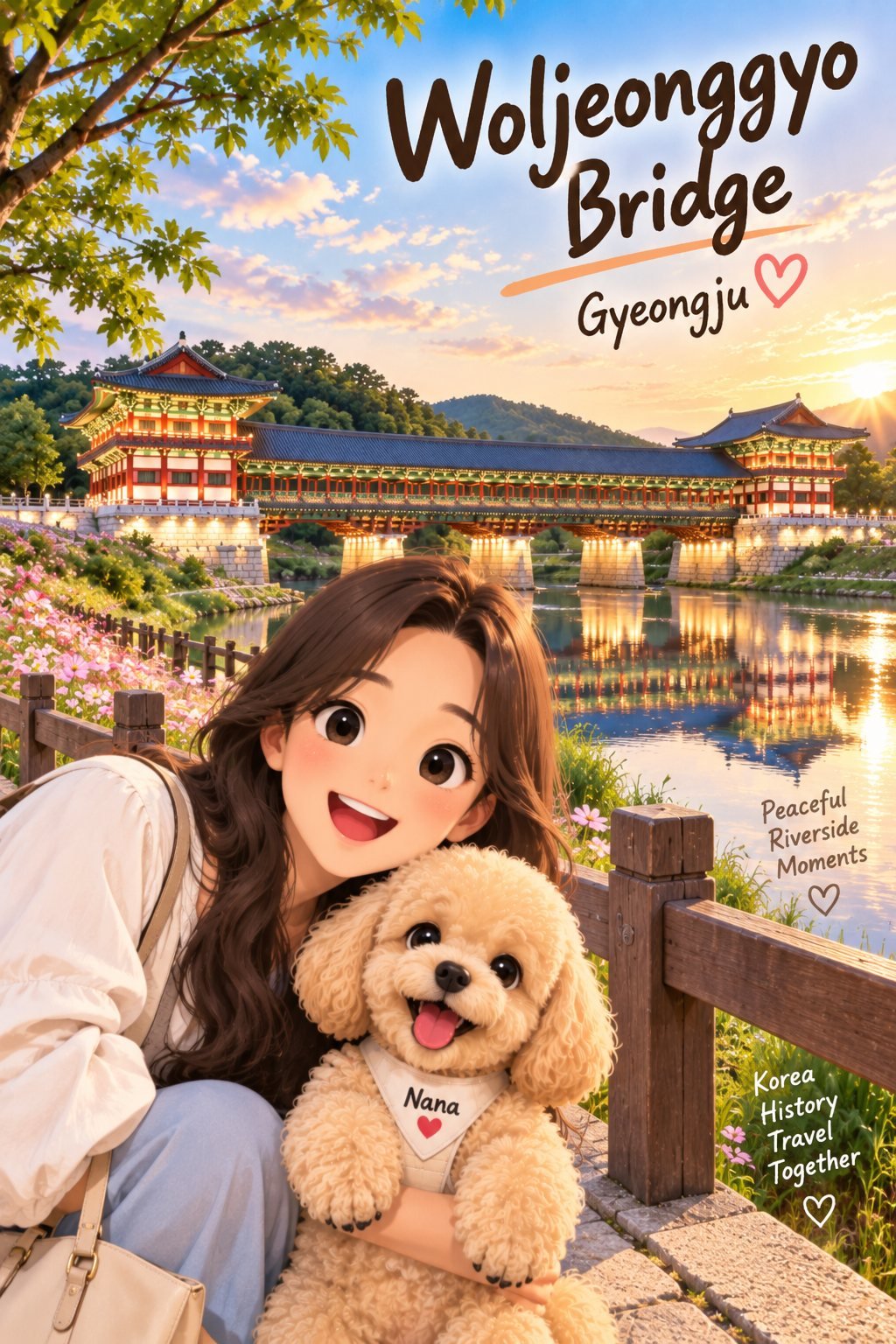
The Namcheon riverside provides peaceful walking routes and broad views of Woljeonggyo Bridge within Gyeongju’s historic landscape.
Woljeonggyo at Night
Woljeonggyo becomes especially striking after sunset when architectural lighting emphasizes the bridge’s long roofline, gateways, columns, and decorative details.
The illuminated bridge creates a different experience from daytime sightseeing. Warm light stands out against the darker river and evening sky, while the surrounding waterfront becomes part of the overall night landscape.
Visitors who arrive before sunset can experience this transition gradually. The bridge changes from a clearly visible architectural landmark in daylight into a glowing focal point as the sky becomes darker.
Lighting schedules, operating hours, access conditions, and seasonal arrangements can change, so visitors planning specifically for the illuminated view should check current information before their trip.
Night Photography & Reflections
One of the most memorable views of Woljeonggyo comes from across the water, where the illuminated bridge can be reflected on the surface of the Namcheon.
The quality of the reflection depends on water conditions, wind, weather, lighting, and viewing position. Calm water can create clearer mirrored shapes, while ripples transform the lights into longer patterns of color across the river.
Wide photographs can capture the full bridge together with its reflection, while closer compositions can focus on illuminated gateways, rooflines, structural details, or individual patterns of light on the water.
Blue hour can be especially attractive because the sky may retain deep blue tones while the bridge lighting is already visible. As darkness increases, the contrast between the illuminated architecture and surrounding landscape becomes stronger.
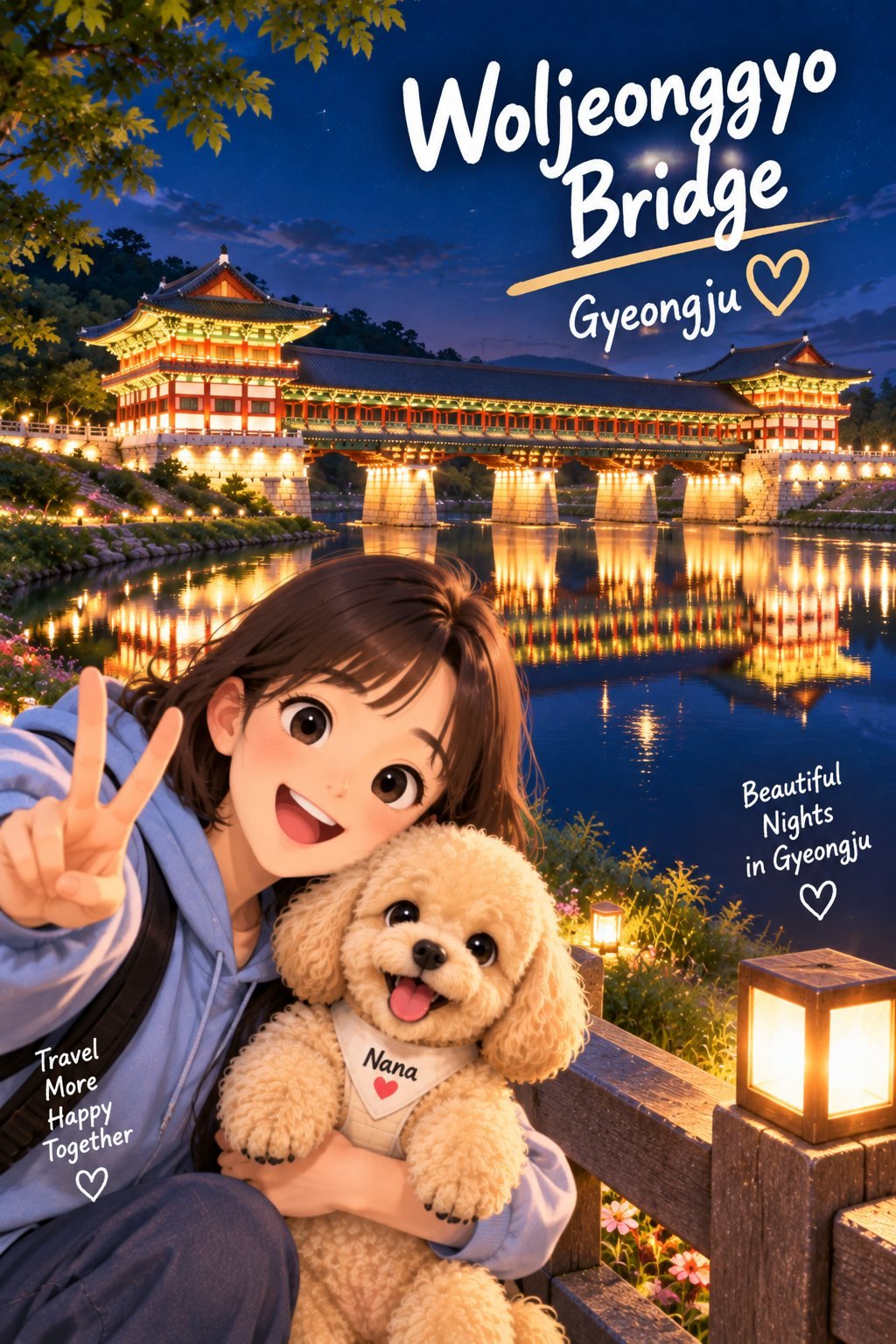
Golden illumination reflected across the Namcheon makes Woljeonggyo Bridge one of Gyeongju’s distinctive evening photography settings.
Gyeongju Evening Route
Woljeonggyo works particularly well as part of a late-afternoon and evening route through central Gyeongju. Travelers can spend the daytime exploring ancient monuments before gradually moving toward riverside and illuminated attractions.
A practical itinerary can begin around Daereungwon Tomb Complex, continue to Cheomseongdae, include cafés, food, or shopping around Hwangnidan-gil, and then reach Woljeonggyo as daylight begins to fade.
Visitors who want to continue their night sightseeing can also include Donggung Palace & Wolji Pond, creating an evening focused on two very different illuminated landscapes: a traditional covered bridge across a river and a royal palace site reflected across a historic pond.
Walking distances, transportation, operating hours, sunset time, weather, and personal pace should all be considered when combining several locations in one evening.
Woljeonggyo at Blue Hour
Blue hour is one of the most atmospheric times to experience Woljeonggyo Bridge. Shortly after sunset, the sky can retain deep blue tones while the bridge begins to glow with warm architectural lighting.
This combination creates a strong contrast between the illuminated wooden structure, the darker surrounding landscape, and reflections across the Namcheon. Visitors can also watch the scene change gradually rather than arriving only after the sky is completely dark.
The exact appearance depends on sunset time, clouds, weather, water conditions, and current illumination. Arriving before sunset provides more flexibility for finding a comfortable viewpoint and experiencing both daylight and evening scenery.
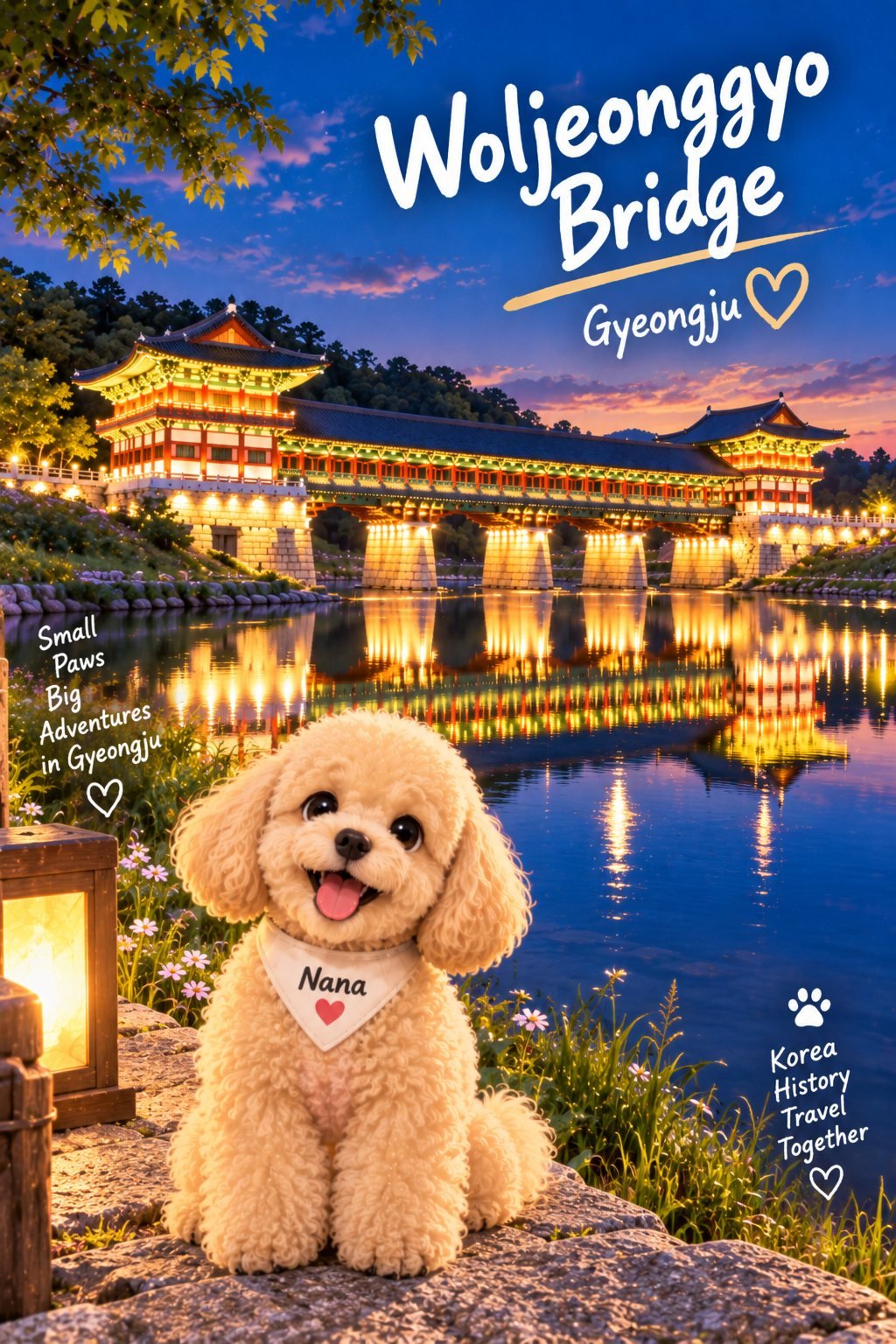
Blue evening skies, golden bridge lighting, and reflections across the Namcheon create a memorable ending to a day of exploring historic Gyeongju.
Best Time to Visit
Woljeonggyo Bridge can be experienced during the day or evening, but late afternoon through nighttime provides the widest range of scenery for many first-time visitors.
Daylight makes it easier to observe the wooden structure, rooflines, painted details, and surrounding riverside landscape. Arriving before sunset also allows visitors to walk along the Namcheon before the bridge illumination becomes more prominent.
Evening provides the strongest atmosphere for reflections and night photography. Sunset times, illumination schedules, operating hours, weather, and seasonal conditions can change, so check current information when the nighttime view is an important part of your visit.
How Long to Spend
About 1–2 hours works well for many first-time visitors who want to walk around the bridge, explore the riverside, experience changing light, and take photographs.
A shorter visit can focus on the main bridge views, while visitors interested in photography, blue hour, riverside walking, or both daylight and nighttime scenery may want additional time.
Woljeonggyo also works naturally as part of a longer central Gyeongju itinerary because several historic and contemporary attractions can be combined before or after the bridge.
Getting to Woljeonggyo Bridge
Woljeonggyo Bridge is located within Gyeongju’s wider central historic area and can be combined with several nearby attractions.
Visitors may arrive by public transportation, taxi, rental vehicle, walking, or another suitable option depending on their accommodation and itinerary. Walking can be particularly enjoyable when connecting the bridge with nearby heritage landscapes in suitable weather.
Bus schedules, parking arrangements, pedestrian routes, road access, operating conditions, and transportation services can change. Check current navigation and visitor information on the day of your trip.
First-Time Visitor Tips
- Consider arriving before sunset to experience both daylight and illuminated views.
- Walk along the riverside as well as across the bridge for different perspectives.
- Check the current sunset time and illumination information when planning night photography.
- Wear comfortable shoes if combining Woljeonggyo with other central Gyeongju attractions on foot.
- Take extra care around the riverside and darker walking areas after sunset.
- Stay on designated paths and follow barriers, signs, and preservation guidance.
- Allow extra time during weekends, holidays, festivals, and popular evening periods.
- Remember that wind and moving water can change the appearance of reflections.
- Check current access conditions if entering or crossing the bridge itself is important to your visit.
What to Do Nearby
- Cheomseongdae — discover Silla astronomy, ancient stone architecture, seasonal scenery, and Gyeongju’s open historic landscape.
- Daereungwon Tomb Complex — walk among monumental Silla royal tombs and explore Cheonmachong and ancient burial heritage.
- Hwangnidan-gil — enjoy hanok cafés, Korean food, desserts, shopping, souvenirs, and contemporary Gyeongju culture.
- Donggung Palace & Wolji Pond — experience Silla royal palace heritage, illuminated pavilions, and reflections across Wolji Pond.
- Gyeongju National Museum — explore Silla gold, archaeological artifacts, Buddhist art, the Bell of King Seongdeok, and other cultural treasures from the ancient capital.
- Bulguksa Temple — experience Silla Buddhist heritage, historic stonework, traditional architecture, Dabotap, and Seokgatap.
Gyeongju K-Culture Connection
Woljeonggyo Bridge adds traditional bridge architecture and riverside scenery to K-Nana Studio’s Gyeongju collection. Its reconstructed wooden form helps visitors imagine another element of the ancient capital while the illuminated modern visitor experience connects that history with contemporary travel.
The seven Gyeongju guides now reveal different sides of the city. Bulguksa Temple introduces Buddhist heritage, Donggung Palace & Wolji Pond explores royal palace culture, Daereungwon Tomb Complex focuses on royal tombs and archaeology, Cheomseongdae adds astronomy and scientific heritage, and Hwangnidan-gil introduces contemporary cafés, food, shopping, and lifestyle culture. Woljeonggyo adds traditional bridge architecture, riverside walking, illumination, and reflections, while Gyeongju National Museum connects these landscapes with Silla artifacts, archaeology, royal treasures, and Buddhist art.
For international visitors, these connections help turn Gyeongju from a list of separate attractions into a continuous cultural landscape. Ancient monuments, reconstructed heritage, rivers, walking routes, cafés, museums, archaeological sites, and modern city life can all become part of the same journey.
Woljeonggyo is especially effective as the transition between daytime sightseeing and Gyeongju at night, when traditional architecture and the surrounding landscape take on a completely different visual character.
FAQ
What is Woljeonggyo Bridge known for?
Woljeonggyo Bridge is known for its long covered wooden structure, traditional-style architecture, colorful decorative details, riverside setting, evening illumination, and reflections across the Namcheon. It has become one of Gyeongju’s distinctive places for walking and nighttime photography.
Is Woljeonggyo Bridge an original Silla-period bridge?
The bridge visitors see today is a modern reconstruction connected with the location and history of a bridge from the Silla period. Historical records and archaeological research have contributed to understanding the earlier bridge, while the reconstructed structure allows visitors to experience how a major bridge could have formed part of the landscape of ancient Gyeongju.
How long should I spend at Woljeonggyo Bridge?
About 1–2 hours works well for many first-time visitors. This allows time to view the bridge from the riverside, explore different perspectives, walk through or around the structure when access is available, and enjoy the changing light without rushing.
When is the best time to visit Woljeonggyo Bridge?
Late afternoon through evening works especially well because visitors can experience the bridge in daylight, watch the sky change around sunset, and remain for illuminated nighttime scenery. Current lighting schedules, access conditions, operating hours, and sunset times should be checked when evening views are a priority.
Where can I photograph Woljeonggyo Bridge reflections?
Riverside viewpoints along the Namcheon can provide broad views of the bridge and its reflection on the water. The appearance of reflections changes according to wind, water movement, weather, lighting, and viewing position, so conditions will differ from one visit to another.
Can I visit Woljeonggyo Bridge and Donggung Palace & Wolji Pond on the same evening?
Yes. Woljeonggyo Bridge and Donggung Palace & Wolji Pond can form an evening itinerary focused on illuminated historic scenery. Allow enough time for transportation, walking, current operating hours, and your preferred photography stops.
Related K-Nana Guides
Continue exploring Gyeongju with Bulguksa Temple for Silla Buddhist heritage, Donggung Palace & Wolji Pond for royal palace history and illuminated reflections, Daereungwon Tomb Complex for royal tombs and archaeology, Cheomseongdae for ancient astronomy and scientific heritage, Hwangnidan-gil for hanok cafés, food, shopping, and contemporary Gyeongju culture, and Gyeongju National Museum for Silla gold, archaeology, Buddhist art, and ancient treasures.
Together, these guides connect Woljeonggyo Bridge with Gyeongju’s Buddhist heritage, royal palaces, burial culture, ancient science, contemporary streets, and museum collections.
Official Information
Woljeonggyo Bridge is part of Gyeongju’s historic visitor landscape, and access conditions, interior opening hours, evening illumination, walking routes, riverside areas, parking, public transportation, photography conditions, events, maintenance, and visitor facilities can change. Weather, water conditions, preservation work, and safety requirements may also affect particular areas or experiences. Check current official information when bridge access, evening illumination, a specific route, or facility is important to your visit, and always follow posted signs, barriers, and staff instructions.
Image Credits
Woljeonggyo Bridge, Namcheon riverside, traditional architecture, and Gyeongju family travel visual — K-Nana Studio original visual.
Woljeonggyo Bridge wooden interior and traditional architecture with Dad and Nana visual — K-Nana Studio original visual.
Woljeonggyo Bridge and peaceful Namcheon riverside scenery with Mom and Nana visual — K-Nana Studio original visual.
Woljeonggyo Bridge night illumination and river reflections with K-Nana daughter and Nana visual — K-Nana Studio original visual.
Nana enjoying Woljeonggyo Bridge blue-hour scenery, golden illumination, and Namcheon reflections visual — K-Nana Studio original visual.