
Daereungwon Tomb Complex is one of Gyeongju’s most distinctive historic landscapes, where large grass-covered burial mounds rise directly beside peaceful walking paths and trees in the center of the ancient Silla capital. Rather than viewing royal history only through museum displays, visitors can walk among monumental tombs that have shaped Gyeongju’s landscape for centuries.
For international visitors, Daereungwon offers an easy and visually memorable introduction to Silla royal heritage. The smooth green mounds, pine trees, historic paths, archaeological significance, and accessible Cheonmachong tomb create an experience that feels very different from the Buddhist architecture of Bulguksa Temple or the palace-and-pond scenery of Donggung Palace & Wolji Pond.
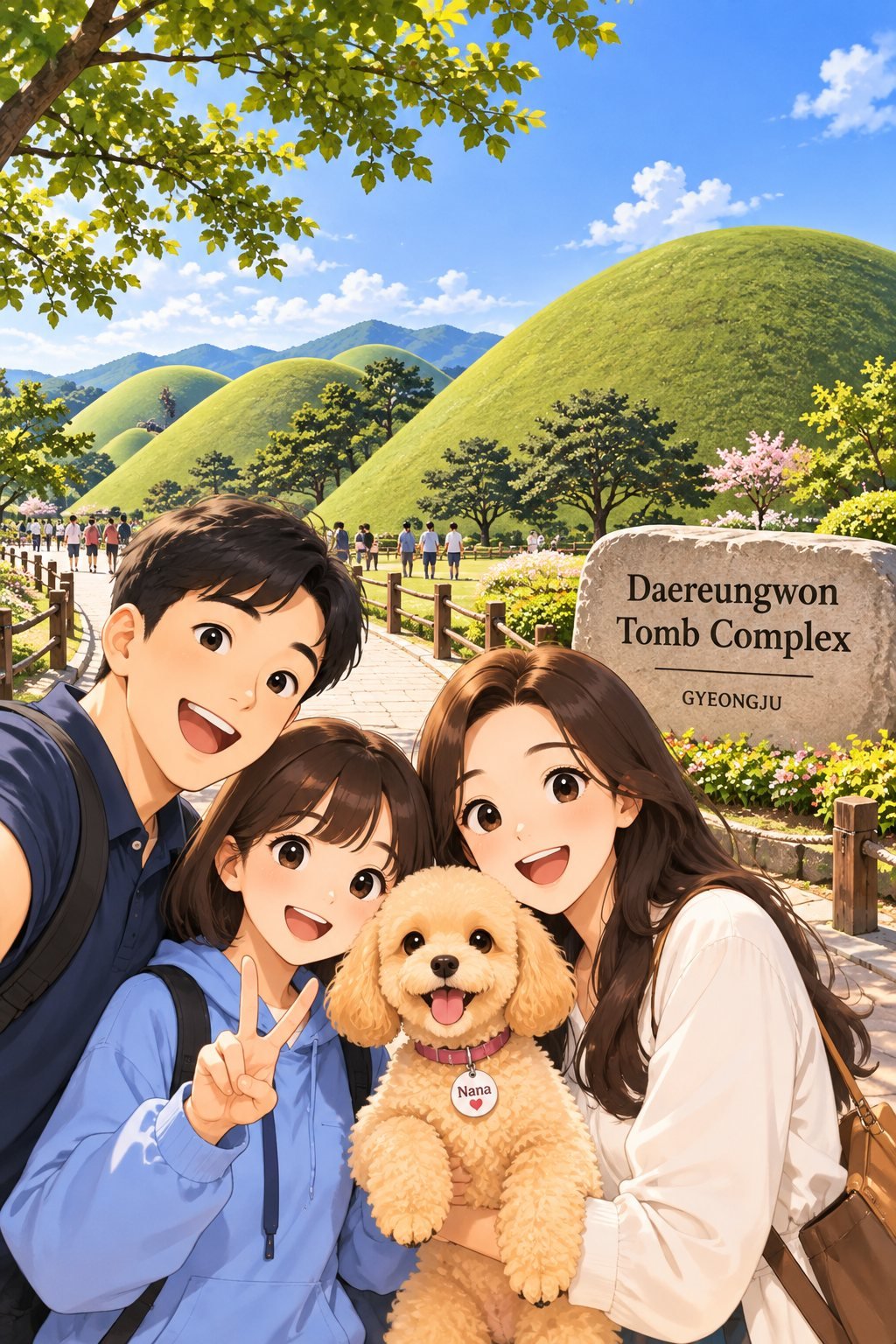
Large grass-covered royal tombs create one of Gyeongju’s most recognizable landscapes and provide a direct visual connection with the ancient Silla capital.
Quick Guide
| Location | Central Gyeongju, southeastern South Korea |
| Best for | Silla history, royal tombs, archaeology, walking, photography, historic landscapes |
| Recommended time | About 1.5–2.5 hours |
| Main experience | Walking among large Silla burial mounds and exploring Cheonmachong |
| Atmosphere | Historic, peaceful, green, and park-like |
| Good to combine with | Donggung Palace & Wolji Pond and other central Gyeongju heritage attractions |
What Is Daereungwon Tomb Complex?
Daereungwon Tomb Complex is a group of large ancient burial mounds associated with the royal and elite society of the Silla kingdom. The rounded grass-covered tombs are among the most recognizable physical reminders that Gyeongju once served as the capital of Silla.
From the outside, the tombs appear as smooth green hills. Beneath these monumental mounds are burial structures connected with people of high status, along with archaeological evidence that has helped researchers understand Silla society, craftsmanship, burial customs, and royal culture.
The complex is especially valuable because history remains visible within the modern city landscape. Visitors can walk between ancient tombs while remaining close to other central Gyeongju attractions, cafés, traditional streets, archaeological sites, and cultural destinations.
Why Visit?
- Walk among some of Gyeongju’s most recognizable Silla royal tombs.
- Experience ancient history within a peaceful green landscape rather than only inside a museum.
- Explore Cheonmachong and learn more about Silla burial culture and archaeological discoveries.
- Photograph the distinctive curves of large grass-covered burial mounds.
- Enjoy an easy walking experience in the center of Gyeongju’s historic district.
- Compare Silla royal tomb heritage with the Buddhist culture of Bulguksa Temple.
- Continue later to Donggung Palace & Wolji Pond for Silla palace history and evening scenery.
Walking Among the Royal Tombs
One of Daereungwon’s strongest features is the unusual scale of the burial mounds. Some rise high above the surrounding paths, while others appear together as a sequence of rounded green forms across the landscape.
Walking between the tombs allows visitors to appreciate their size much more clearly than viewing them from a distance. Trees, lawns, traditional-style elements, and changing seasonal vegetation soften the archaeological landscape and create a calm park-like atmosphere.
The experience is intentionally slower than visiting a single monument. Instead of moving directly toward one viewpoint, visitors can follow the paths, observe the tombs from different angles, and notice how their shapes change depending on distance and perspective.
These are protected historic burial sites, so visitors should remain on designated paths, respect barriers, and never climb onto the burial mounds.
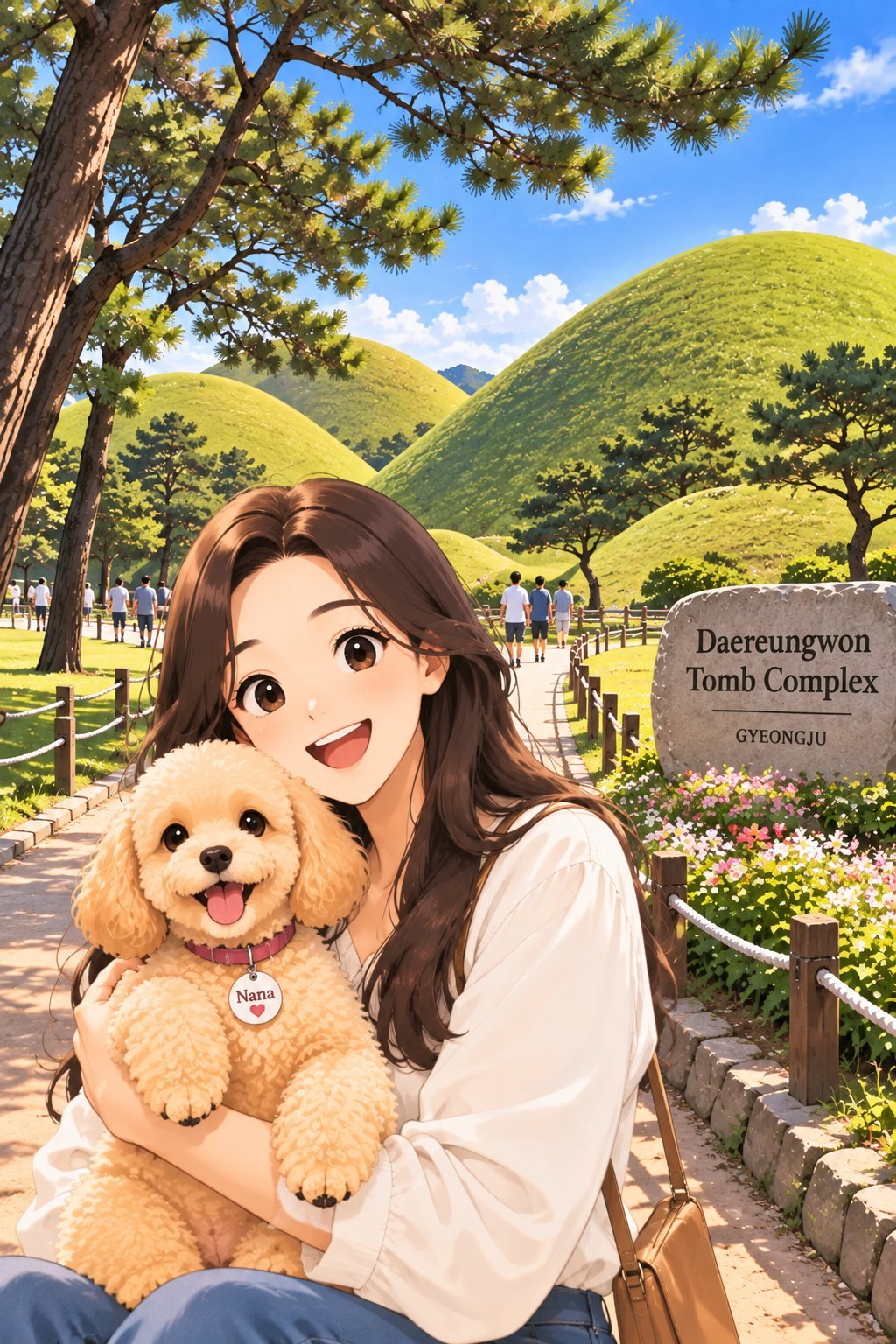
Quiet walking paths, pine trees, and monumental green burial mounds give Daereungwon a peaceful atmosphere in the heart of historic Gyeongju.
Cheonmachong
Cheonmachong is one of the most important places for first-time visitors to understand what lies beneath Gyeongju’s large grass-covered burial mounds. Unlike most tombs that are viewed only from the outside, Cheonmachong allows visitors to enter a reconstructed interior space and learn about the structure of a Silla burial.
The tomb became especially famous because of archaeological discoveries associated with the excavation, including valuable objects that provide insight into the wealth, craftsmanship, beliefs, and burial customs of Silla’s elite society.
For international visitors, Cheonmachong helps connect the peaceful landscape outside with the history hidden beneath the mounds. After walking among the green tombs, entering the exhibition space makes it easier to understand that these hills are monumental burial structures rather than natural features.
Exhibition arrangements, interior access, operating conditions, and visitor routes can change, so follow current signs and official information during your visit.
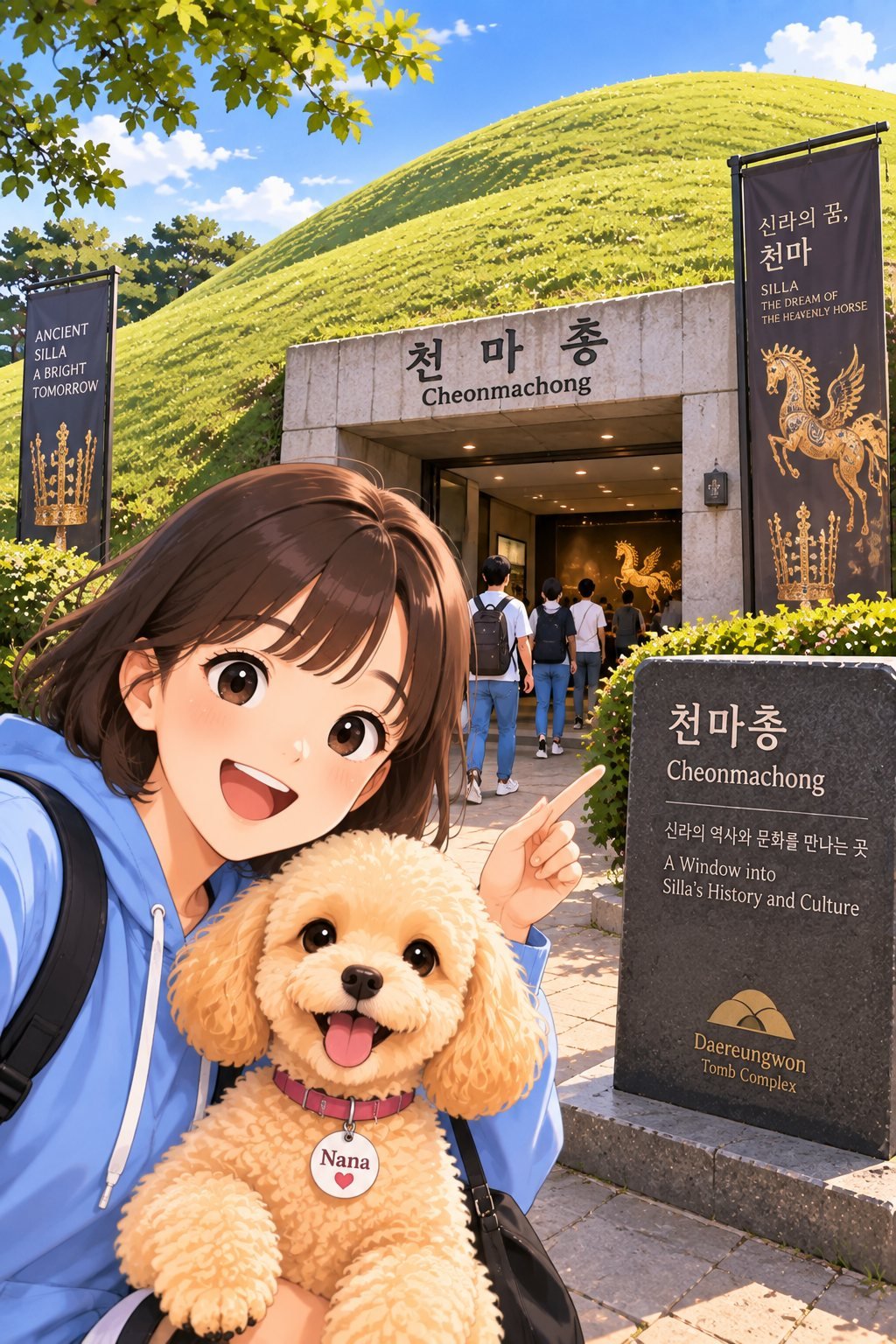
Cheonmachong gives visitors a closer look at the burial culture, archaeology, and craftsmanship hidden beneath Gyeongju’s monumental Silla tombs.
Silla Royal Heritage
Daereungwon represents another important side of the Silla story already introduced through Bulguksa Temple and Donggung Palace & Wolji Pond.
Bulguksa focuses on Buddhist culture and religious architecture, while Donggung Palace and Wolji Pond introduces palace life and royal landscapes. Daereungwon adds the burial traditions of Silla’s royal and elite society, allowing visitors to see how different forms of heritage reveal different parts of the ancient kingdom.
The scale of the tombs also reflects the importance of royal burial within Silla society. Their presence throughout central Gyeongju means that ancient history remains visible as part of the modern city rather than existing only within museums or archaeological displays.
Archaeology & Ancient Treasures
Archaeological excavations of Silla tombs have revealed objects that help researchers understand the people buried within them and the society in which they lived. Gold ornaments, jewelry, weapons, pottery, horse equipment, decorative objects, and other artifacts provide evidence of craftsmanship, status, trade, and burial practices.
These discoveries are important because written records alone cannot explain every aspect of ancient Silla. Archaeological evidence provides another way to study clothing, technology, artistic styles, social hierarchy, international connections, and ceremonial traditions.
Visitors interested in seeing a wider collection of Silla artifacts can also include the Gyeongju National Museum in their itinerary. Combining archaeological landscapes with museum collections can make the history of the ancient capital easier to understand.
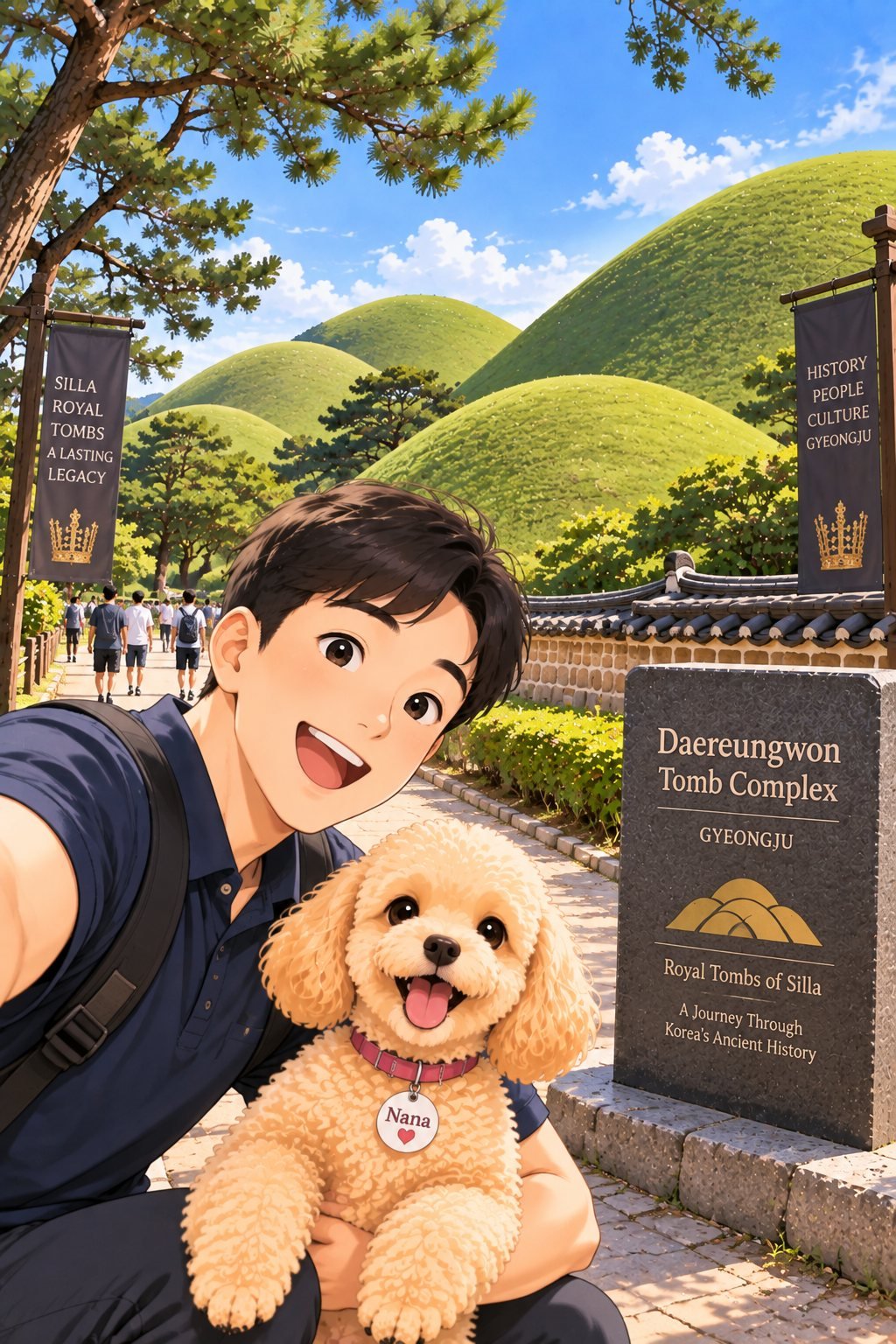
The monumental burial mounds of Daereungwon preserve a visible connection with the rulers, elite society, archaeology, and royal heritage of ancient Silla.
Photography & Historic Landscape
Daereungwon is especially distinctive for photography because the burial mounds create simple but powerful shapes across the landscape. Their smooth curves change appearance according to viewpoint, sunlight, season, trees, and the surrounding sky.
Wide photographs can emphasize several tombs rising together, while closer compositions can combine a single mound with pine trees, traditional walls, walking paths, flowers, or seasonal vegetation.
Spring greenery and blossoms can create a bright atmosphere, summer produces deep green landscapes, autumn changes the surrounding trees, and winter reveals a quieter and more restrained side of the complex.
Photography should always respect the archaeological site. Remain on permitted paths and viewpoints, avoid crossing barriers, and never climb onto burial mounds for a photograph.
Daereungwon at Sunset
Late afternoon brings a softer atmosphere to Daereungwon as warm light moves across the grass-covered burial mounds, trees, and walking paths. The rounded shapes of the tombs can become especially noticeable when lower sunlight creates gentle shadows across their slopes.
Sunset conditions vary according to season, weather, clouds, and viewing position. Even when the sun itself is not directly visible from every part of the complex, changing evening light can give the historic landscape a quieter and more dramatic appearance.
Visitors staying later should check current operating hours and allow enough time to complete their walk comfortably. Daereungwon can also work well as a late-afternoon stop before continuing to Donggung Palace & Wolji Pond for illuminated evening scenery.
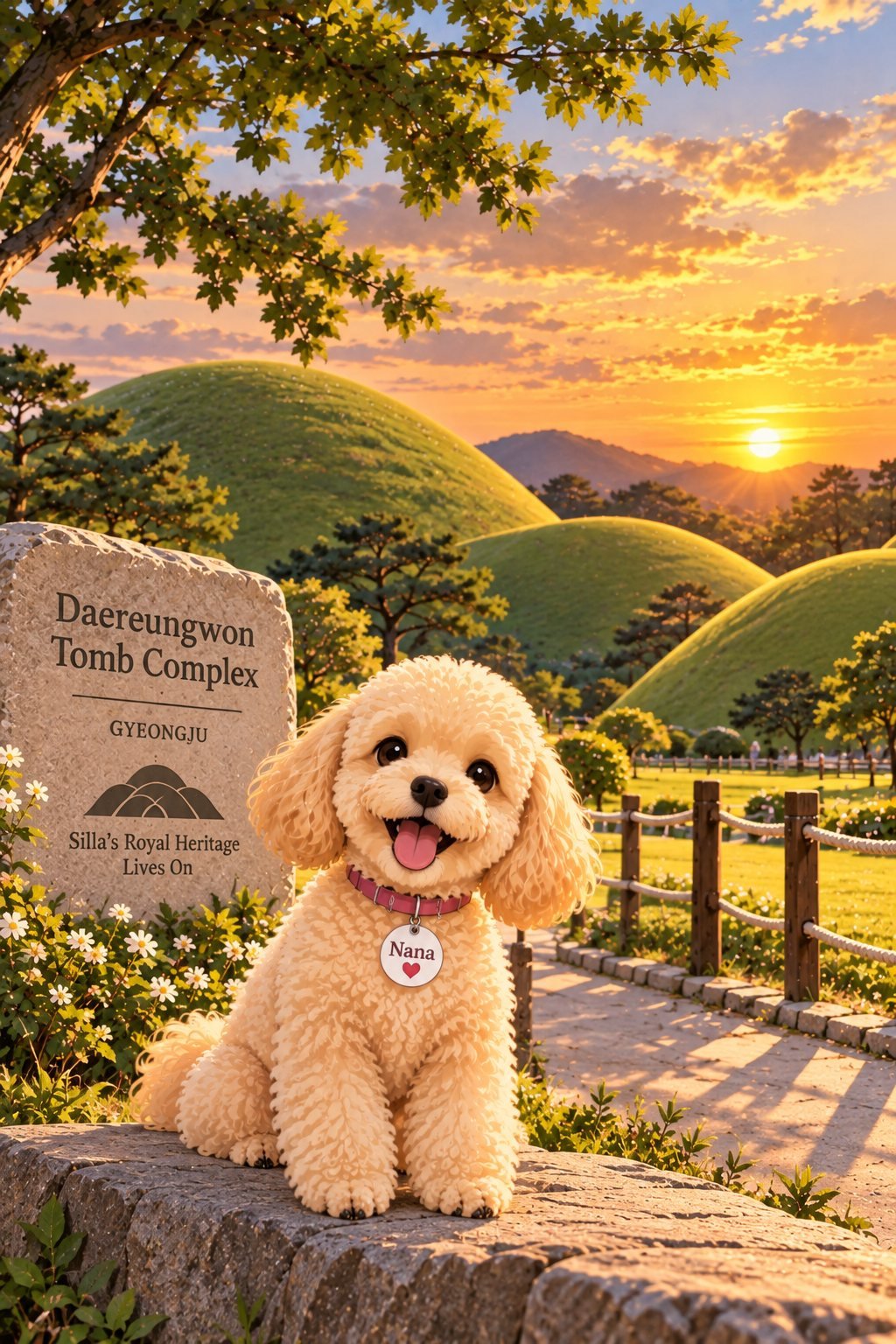
Warm evening light across Daereungwon’s green burial mounds creates a peaceful transition from Gyeongju’s daytime heritage sites into the city’s evening scenery.
Best Time to Visit
Daereungwon Tomb Complex can be visited throughout the year, and the appearance of the landscape changes noticeably with the seasons.
Spring brings fresh greenery and seasonal blossoms, summer creates deep green burial mounds, autumn adds warmer colors to the surrounding trees, and winter provides a quieter landscape with fewer leaves and more restrained tones.
Morning can be comfortable for relaxed walking, while late afternoon provides softer light and can fit naturally into an itinerary that continues into Gyeongju’s evening attractions. Weekends, holidays, and popular seasonal periods may bring larger crowds.
How Long to Spend
About 1.5–2.5 hours works well for many first-time visitors who want to walk among the burial mounds, explore Cheonmachong, enjoy the landscape, and take photographs without rushing.
A shorter visit can focus on the main walking areas and exterior views, while visitors interested in archaeology, photography, seasonal scenery, or Cheonmachong may want additional time.
Because Daereungwon is located within central Gyeongju’s wider historic area, it can also be combined efficiently with nearby heritage sites, cafés, traditional streets, and evening attractions.
Getting to Daereungwon Tomb Complex
Daereungwon Tomb Complex is located in central Gyeongju, making it convenient for an itinerary focused on the city’s historic district.
Visitors may arrive by public transportation, taxi, rental vehicle, walking, or another suitable option depending on their accommodation and wider itinerary. Several central Gyeongju attractions can be connected through walking routes when weather and personal mobility allow.
Bus schedules, parking arrangements, road access, admission procedures, operating hours, and transportation conditions can change. Check current navigation and official visitor information on the day of your visit.
First-Time Visitor Tips
- Wear comfortable shoes because walking is a major part of the Daereungwon experience.
- Allow time for Cheonmachong rather than viewing only the exterior burial mounds.
- Stay on designated paths and never climb onto the protected tombs.
- Follow barriers, preservation rules, and staff instructions throughout the complex.
- Visit earlier or later in the day if you prefer softer light for photography.
- Check current operating hours and Cheonmachong access before visiting.
- Prepare for sun and heat during warmer months because parts of the walking route are exposed.
- Expect larger crowds during weekends, holidays, festivals, and popular travel periods.
- Allow extra time if combining Daereungwon with several central Gyeongju attractions on foot.
What to Do Nearby
- Cheomseongdae — continue through Gyeongju’s historic district to one of Korea’s best-known ancient astronomical structures.
- Hwangnidan-gil — combine ancient history with cafés, restaurants, shops, traditional-style buildings, and contemporary Gyeongju travel culture.
- Donggung Palace & Wolji Pond — experience Silla royal palace heritage, illuminated traditional architecture, pond reflections, and one of Gyeongju’s signature evening landscapes.
- Gyeongju National Museum — explore archaeological objects and cultural material that provide additional context for Silla history and discoveries from the ancient capital.
- Woljeonggyo Bridge — enjoy illuminated traditional architecture and another atmospheric evening setting in central Gyeongju.
- Bulguksa Temple — explore Silla Buddhist heritage, Dabotap and Seokgatap, historic stonework, dancheong, and traditional temple architecture.
Gyeongju K-Culture Connection
Daereungwon Tomb Complex introduces the royal burial culture of Silla and adds another important layer to K-Nana Studio’s Gyeongju journey. The enormous green tombs show how the history of Korea’s ancient capital remains physically visible within the landscape of the modern city.
For international visitors, the Gyeongju collection now reveals several clearly different parts of Silla heritage. Bulguksa Temple introduces Buddhist culture and religious architecture, while Donggung Palace & Wolji Pond focuses on royal palace culture and nighttime scenery. Daereungwon adds royal tombs, burial traditions, archaeology, and ancient treasures, while Cheomseongdae, Hwangnidan-gil, Woljeonggyo Bridge, and Gyeongju National Museum extend the journey into ancient science, contemporary culture, traditional bridge architecture, and Silla artifacts.
This combination helps show why Gyeongju is often experienced as a historic landscape rather than as a city with only a few isolated monuments. Tombs, temples, palace sites, archaeological discoveries, traditional streets, and ancient structures remain distributed across the wider city.
Daereungwon also connects ancient history with contemporary travel. Visitors can walk quietly among royal tombs, learn about archaeological discoveries, continue into nearby cafés and streets, and finish the day beside illuminated historic architecture elsewhere in central Gyeongju.
FAQ
What is Daereungwon Tomb Complex known for?
Daereungwon Tomb Complex is known for its large grass-covered burial mounds associated with Silla royalty and elite society. The peaceful green landscape, archaeological significance, and Cheonmachong make it one of the most recognizable historic areas in central Gyeongju.
How long should I spend at Daereungwon Tomb Complex?
About 1.5–2.5 hours works well for many first-time visitors. This allows time to walk among the burial mounds, explore Cheonmachong, enjoy the historic landscape, and take photographs without rushing.
Can I go inside a tomb at Daereungwon?
Cheonmachong provides visitors with an opportunity to enter a reconstructed tomb interior and learn more about Silla burial structures and archaeological discoveries. Access arrangements and exhibition conditions can change, so check current visitor information during your trip.
What is Cheonmachong?
Cheonmachong is a Silla-period tomb within Daereungwon that became famous through archaeological excavation and important discoveries. Its exhibition helps visitors understand royal and elite burial culture, ancient craftsmanship, and the history hidden beneath Gyeongju’s grass-covered tombs.
Can I walk on the burial mounds?
No. The burial mounds are protected historic and archaeological sites. Visitors should remain on designated paths, respect barriers, follow preservation rules, and never climb onto the tombs for sightseeing or photography.
Can I visit Daereungwon and Donggung Palace & Wolji Pond on the same day?
Yes. Daereungwon works well as a daytime or late-afternoon destination, followed by Donggung Palace & Wolji Pond in the evening for illuminated palace architecture and pond reflections. The combination introduces both Silla royal burial heritage and palace culture within the same Gyeongju itinerary.
Related K-Nana Guides
Continue exploring Gyeongju with Bulguksa Temple for Silla Buddhist heritage, Donggung Palace & Wolji Pond for royal palace history and night scenery, Cheomseongdae for ancient astronomy and scientific heritage, Hwangnidan-gil for hanok cafés, food, shopping, and contemporary Gyeongju culture, Woljeonggyo Bridge for traditional bridge architecture and evening scenery, and Gyeongju National Museum for Silla gold, archaeology, Buddhist art, and ancient treasures.
Together, these guides connect Daereungwon’s royal burial heritage with Gyeongju’s temples, palace sites, ancient science, traditional architecture, museum collections, and contemporary travel culture.
Official Information
Daereungwon Tomb Complex is a protected historic and archaeological destination. Opening hours, admission procedures, Cheonmachong access, exhibitions, walking routes, parking, public transportation, photography rules, preservation areas, visitor facilities, events, and individual services can change. Weather, maintenance, archaeological conservation, and safety requirements may also affect particular areas. Check current official information when a specific operating time, tomb exhibition, route, event, or facility is important to your visit, and always follow posted signs, barriers, preservation rules, and staff instructions.
Image Credits
Daereungwon Tomb Complex, green Silla royal tombs, and Gyeongju family travel visual — K-Nana Studio original visual.
Daereungwon walking paths, pine trees, and royal tomb scenery with Mom and Nana visual — K-Nana Studio original visual.
Cheonmachong and Silla royal tomb heritage with K-Nana daughter and Nana visual — K-Nana Studio original visual.
Daereungwon royal burial mounds and Silla historic landscape with Dad and Nana visual — K-Nana Studio original visual.
Nana enjoying Daereungwon green royal tombs and peaceful Gyeongju sunset scenery visual — K-Nana Studio original visual.