
Udo Island is a small island off the eastern coast of Jeju, known for its clear blue water, volcanic shoreline, beaches, green fields, coastal roads, villages, and relaxed island atmosphere. Its compact size allows visitors to experience several different Jeju landscapes within a relatively short trip.
For international visitors, Udo offers a different perspective from Jeju’s larger attractions. Rather than focusing on a single landmark, the experience comes from moving around the island and discovering beaches, black volcanic rocks, farmland, small communities, ocean viewpoints, cafés, and changing coastal scenery along the way.
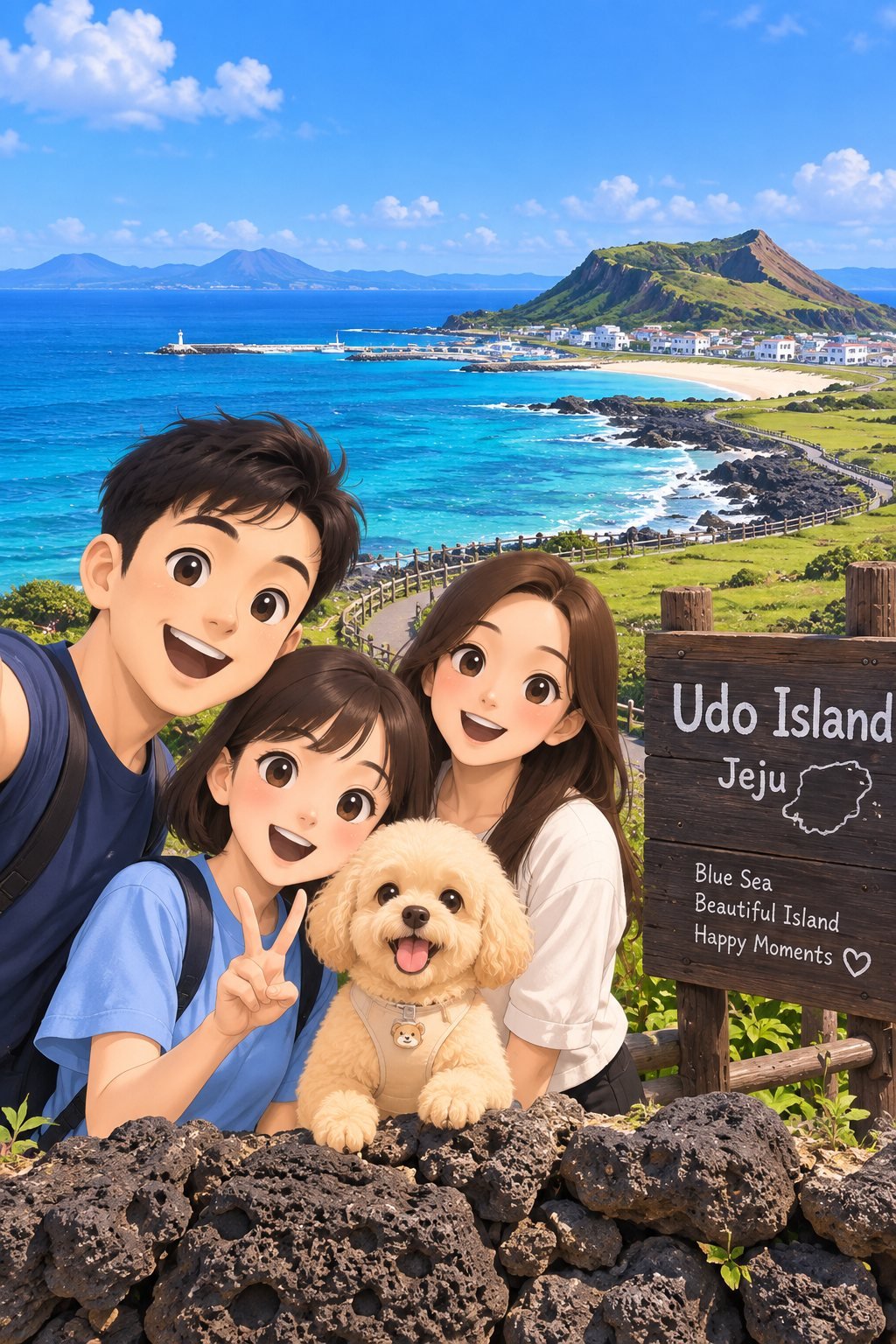
Clear water, volcanic coastline, green fields, villages, and coastal roads give Udo Island its distinctive Jeju character.
Quick Guide
| Location | Off the eastern coast of Jeju Island |
| Best for | Beaches, coastal scenery, volcanic landscapes, cycling, photography, island villages |
| Recommended time | About 4–6 hours for many first-time visitors |
| Main experience | Exploring the island’s coastline, beaches, roads, fields, and villages |
| Access | Ferry access from the Seongsan area, subject to current schedules and weather conditions |
| Good to combine with | Seongsan Ilchulbong and other eastern Jeju destinations |
What Is Udo Island?
Udo is a small inhabited island located off Jeju’s eastern coast. The island is surrounded by the sea and contains a mixture of volcanic terrain, beaches, farmland, low-rise villages, coastal roads, and scenic viewpoints.
Its name is commonly associated with the island’s shape, which has traditionally been compared to a cow lying down. Today, Udo is one of the best-known side trips from eastern Jeju and is often combined with the nearby Seongsan area.
Unlike a destination centered on one major attraction, Udo is best experienced as a journey around the island. The scenery changes repeatedly as visitors move between beaches, rocky shoreline, fields, villages, harbors, cafés, and open ocean views.
Island Landscape
Udo’s landscape reflects the volcanic character of the wider Jeju region. Dark lava rock appears along sections of the shoreline and in traditional stone walls, creating a strong contrast with green fields and bright blue water.
Small roads pass through farmland and villages before returning to the coast. In some areas, visitors can see open sea in one direction and agricultural landscapes in another, making the island feel both coastal and rural.
Weather and season can change the character of Udo considerably. Clear days emphasize turquoise water and distant views, while clouds, wind, and stronger waves can create a more dramatic island atmosphere.
Why Visit?
- Experience a small island within the larger Jeju Island journey.
- See clear coastal water, beaches, black volcanic rock, and green fields.
- Explore coastal roads and changing ocean viewpoints.
- Experience Jeju’s rural and village landscapes at a slower pace.
- Enjoy photography, walking, cycling, cafés, and coastal sightseeing.
- Combine Udo naturally with Seongsan Ilchulbong.
- Discover another side of Jeju beyond its larger volcanic landmarks.
Beaches & Clear Water
Udo is particularly memorable for the changing colors of the sea around its coastline. Depending on sunlight, weather, water depth, and the surrounding seabed, sections of the coast can appear deep blue, turquoise, or almost transparent.
Beaches and rocky coastal areas provide very different scenery within the same island trip. Pale sand and clear water can appear close to sections dominated by dark volcanic rock, creating some of Udo’s strongest visual contrasts.
Swimming conditions, designated water areas, safety rules, seasonal facilities, and beach access can change. Visitors planning water activities should always check current local conditions rather than assuming every coastal area is suitable for swimming.
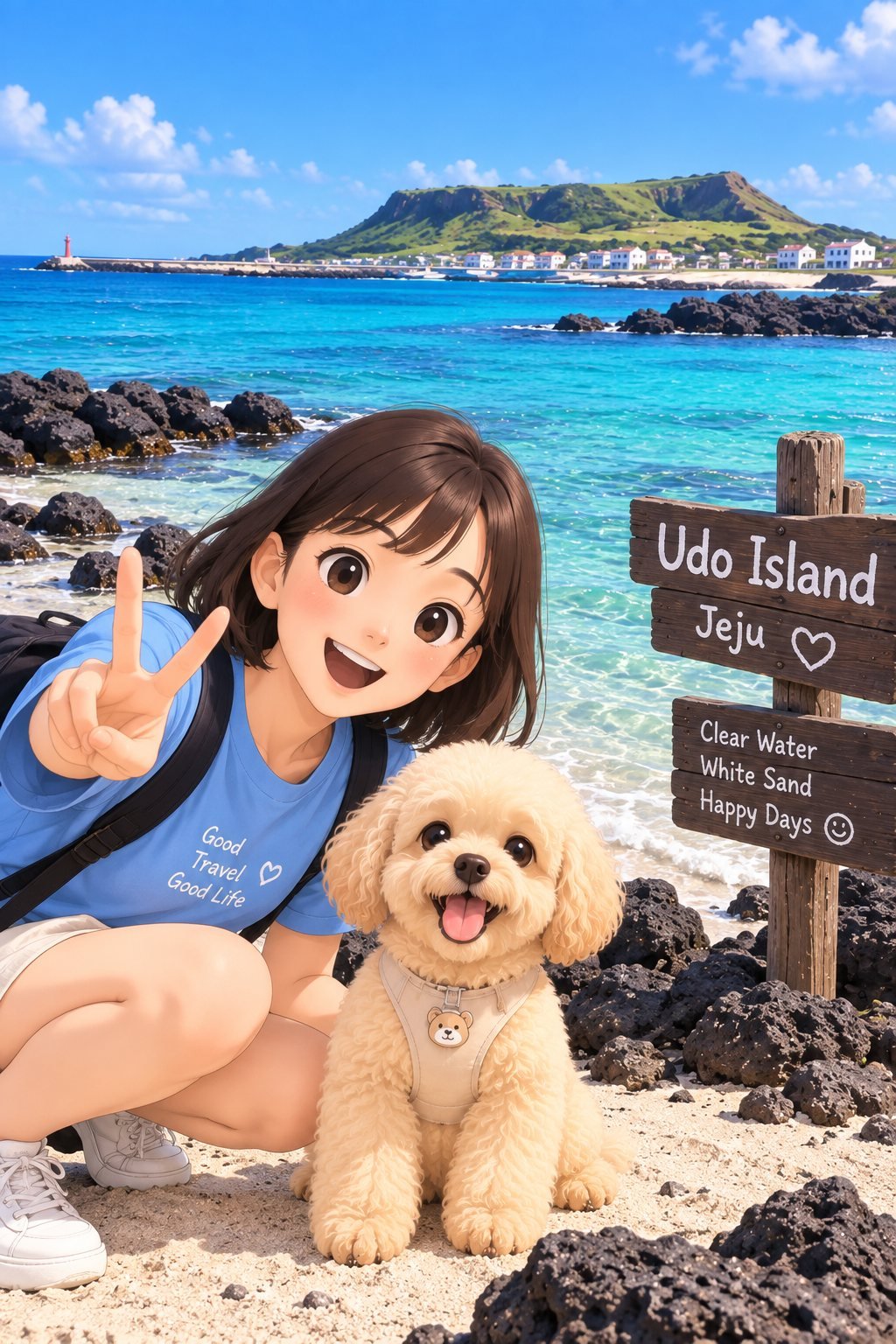
Clear turquoise water, pale sand, and black volcanic rock create some of Udo Island’s most memorable coastal scenery.
Exploring Udo by Bicycle
Cycling is one way to experience Udo’s compact island landscape at a slower pace. Moving along the coastal roads allows visitors to notice changes between beaches, volcanic shoreline, farmland, villages, cafés, and open sea views.
A bicycle can provide more flexibility than moving directly between major stops, but visitors should consider weather, wind, traffic, road conditions, physical fitness, and the amount of time available before choosing this option.
Rental conditions, eligible riders, equipment, operating hours, prices, and traffic rules can change. Check current local information before renting a bicycle or other mobility option, and always follow road and safety regulations.
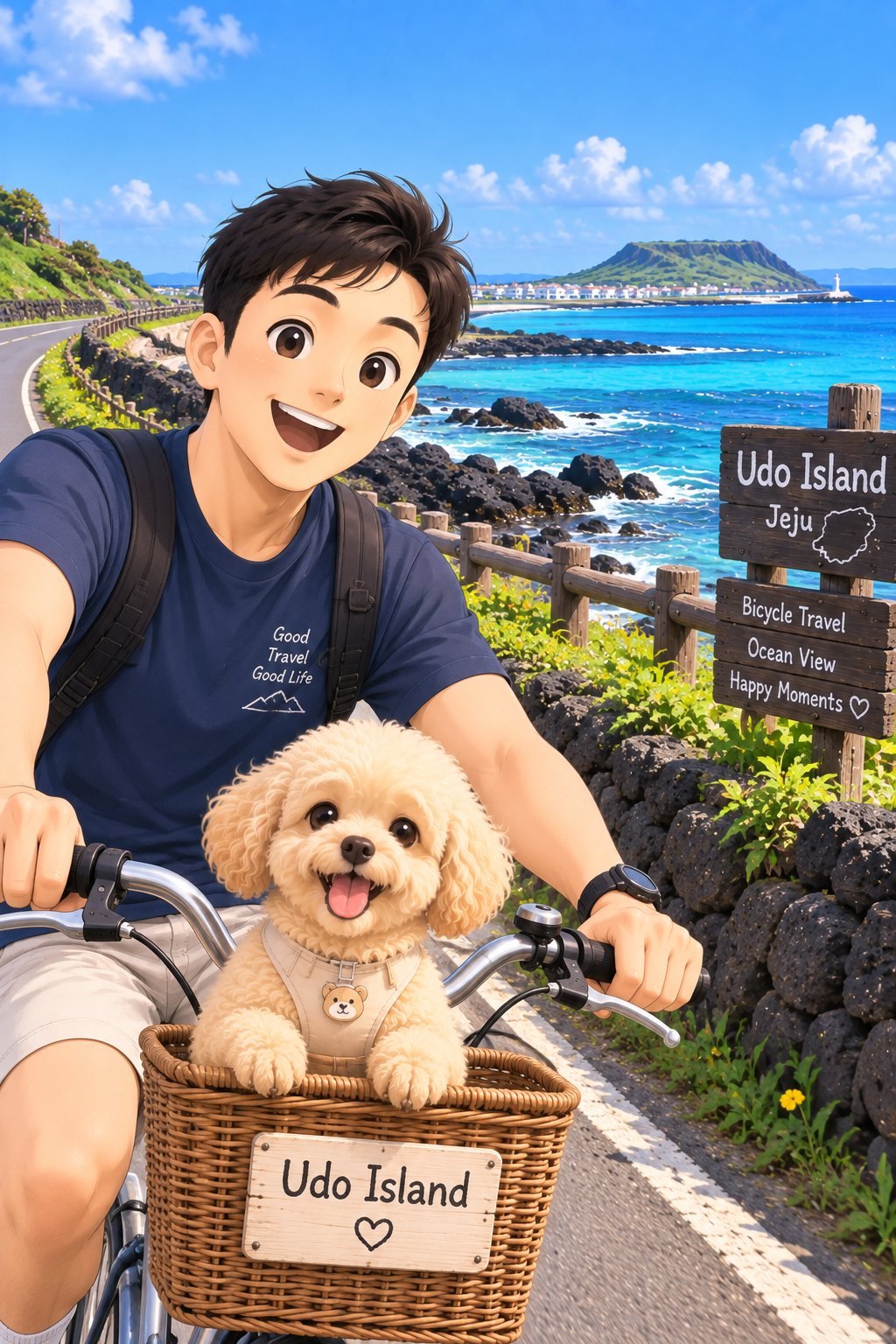
Coastal roads make it possible to experience Udo’s blue sea, volcanic shoreline, fields, and villages as part of one continuous island journey.
Coastal Roads
Udo’s coastal roads are an important part of the island experience. Rather than treating the road only as transportation between attractions, visitors can enjoy changing views of the sea, black volcanic rocks, small harbors, beaches, fields, and surrounding islands along the way.
Some sections feel open and rural, while others pass through villages, cafés, restaurants, and busier visitor areas. This variety allows a relatively small island to offer many different scenes within a single trip.
Strong wind, rain, summer heat, traffic, and seasonal crowds can affect travel conditions. Visitors walking or cycling should remain aware of vehicles and use appropriate routes whenever available.
Island Villages & Stone Walls
Udo is not only a sightseeing destination but also an inhabited island with working communities. Homes, farms, small businesses, local roads, harbors, and agricultural areas form part of the landscape visitors encounter while traveling around the island.
Dark volcanic stone walls are one of the visual details that connect Udo with the wider Jeju landscape. These walls appear beside fields, roads, and village areas and create a strong contrast with green vegetation and bright coastal scenery.
Visitors should remember that many roads, buildings, fields, and paths are part of residents’ everyday environment. Avoid entering private property, blocking local roads, or treating residential areas only as photo locations.
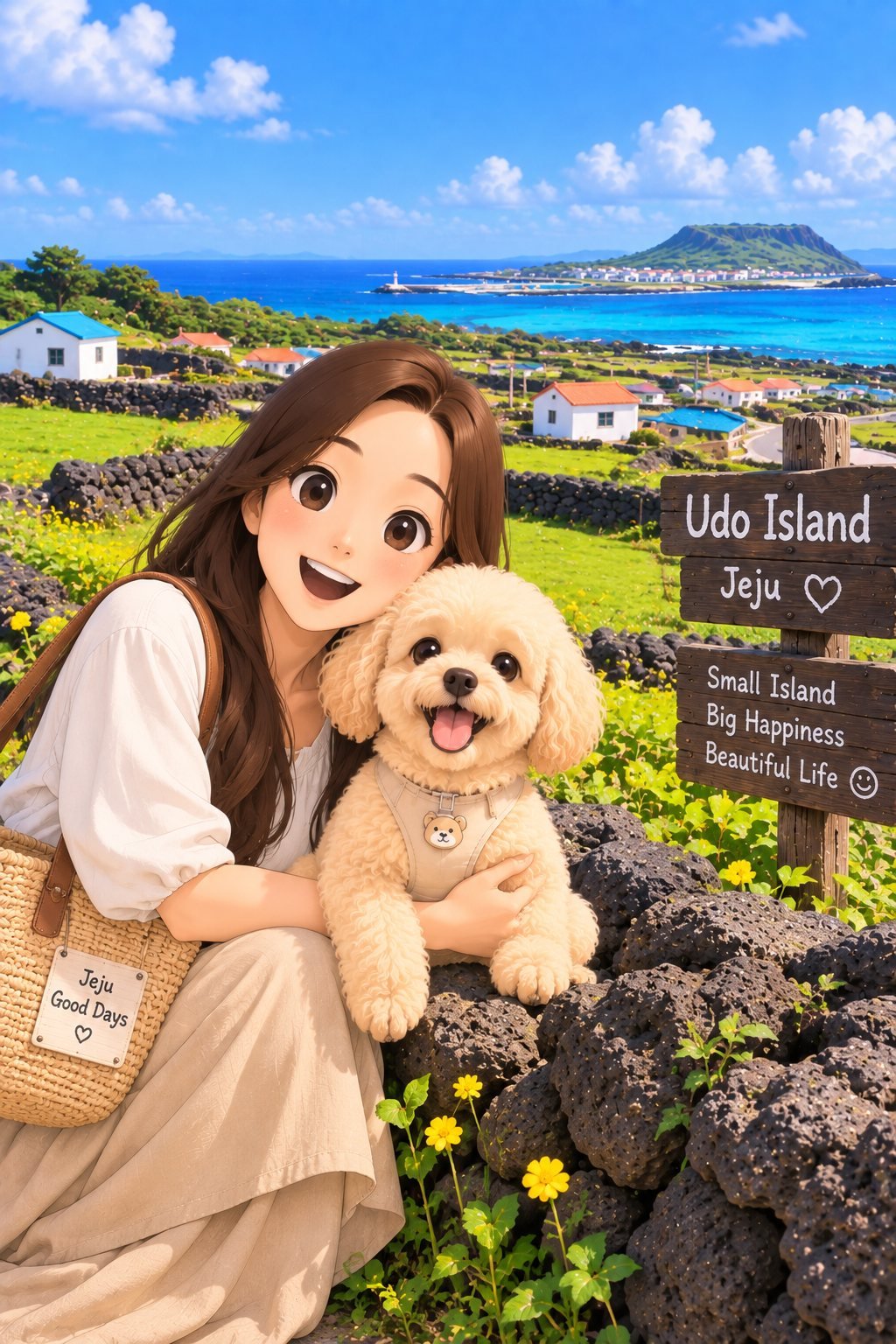
Green fields, volcanic stone walls, small villages, and the surrounding sea reveal Udo’s quieter everyday island landscape.
Local Island Atmosphere
Part of Udo’s appeal comes from the contrast between popular coastal viewpoints and quieter everyday landscapes. A short journey can move from a busy beach or café area into fields, stone walls, village roads, and small harbor scenery.
This slower rhythm distinguishes Udo from destinations centered on a single monument or observation point. The experience comes from the sequence of places encountered while moving around the island.
Cafés, restaurants, shops, rentals, and other visitor businesses operate independently, so opening hours and seasonal availability can vary. Avoid building an itinerary that depends entirely on one specific business without checking current information.
Photography on Udo Island
Udo provides a wide range of photography settings, including turquoise water, pale beaches, black volcanic rocks, green fields, stone walls, coastal roads, small villages, harbors, and distant views toward Jeju.
Wide coastal views work well when the weather is clear, while closer photographs can focus on volcanic textures, waves, flowers, fields, village details, and traditional stone walls.
Morning and late afternoon can provide softer light, while changing clouds and coastal weather create different colors throughout the day. Wind can be strong in exposed areas, so take extra care with phones, cameras, tripods, and other equipment.
When photographing villages or farmland, respect private property and residents. Stay on public routes and designated visitor areas rather than entering fields, yards, rooftops, or private paths for a photograph.
Udo & Seongsan Ilchulbong
Udo and Seongsan Ilchulbong form a natural eastern Jeju combination because the two destinations face each other across the surrounding sea.
Seongsan Ilchulbong focuses on a dramatic volcanic crater, climbing, elevated viewpoints, UNESCO natural heritage, and sunrise scenery. Udo provides a different experience based on moving around a small inhabited island with beaches, coastal roads, fields, villages, and volcanic shoreline.
Visiting both helps travelers experience eastern Jeju from two perspectives: looking outward from one of the island’s most famous volcanic landmarks and then traveling across the water to explore the smaller island visible from the Seongsan area.
Udo at Sunset
Late afternoon brings a different atmosphere to Udo as warmer light spreads across the sea, volcanic rocks, fields, villages, and coastal roads.
Sunset scenery varies depending on the season, weather, cloud cover, and location around the island. Black volcanic rocks can create a particularly strong contrast with orange evening light and reflections across the water.
Visitors hoping to remain later in the day must pay close attention to return transportation. Ferry schedules and operating conditions can change, so sunset plans should never be made without checking the final available ferry and current weather conditions.
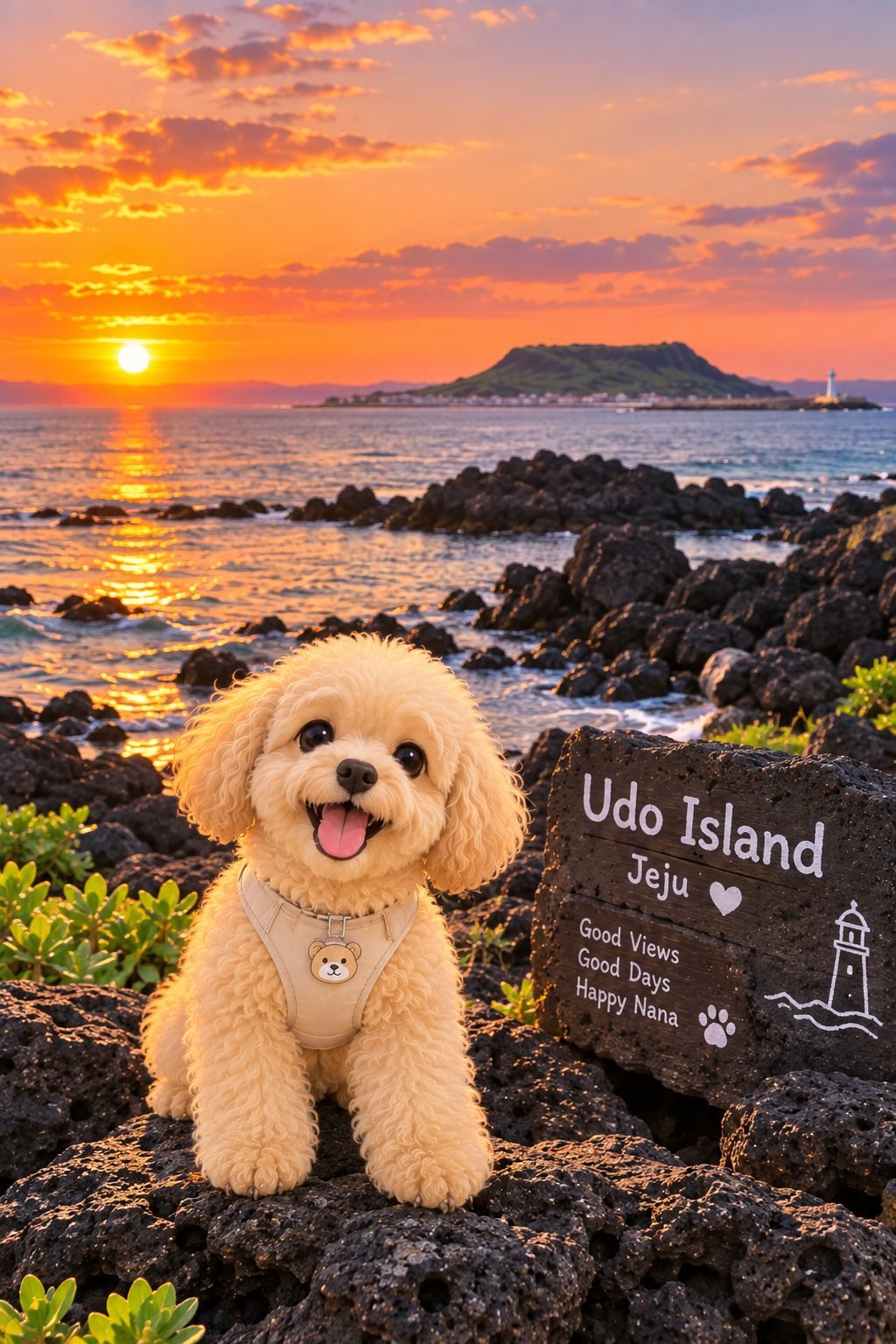
Warm evening light, black volcanic rocks, and the surrounding sea create a peaceful ending to a day on Udo Island.
Best Time to Visit
Morning is a practical time to begin a Udo trip because it provides more flexibility for ferry travel and allows visitors to explore the island without feeling rushed by the return schedule.
Spring and autumn are generally comfortable for cycling, walking, and coastal sightseeing. Summer provides bright coastal colors but can be hot and humid, while winter may bring stronger winds and colder conditions around exposed sections of the island.
Weather is especially important because ferry operations and outdoor activities can be affected by wind, waves, rain, and other sea conditions. Check the forecast and current transportation information before traveling.
How Long to Spend
About 4–6 hours works well for many first-time visitors who want to explore several coastal areas, beaches, villages, viewpoints, and cafés without moving too quickly.
A shorter trip is possible if you focus on only a few locations, while visitors planning a slower bicycle journey, multiple café stops, photography, or extensive coastal exploration may want most of the day.
Always include ferry boarding and return times in your schedule rather than calculating your visit only from the time spent on the island.
Getting to Udo
Udo is reached by ferry from the eastern Jeju area, making it a natural destination to combine with Seongsan Ilchulbong.
Ferry schedules, boarding locations, ticket procedures, passenger requirements, vehicle restrictions, and operating conditions can change. Weather and sea conditions may also cause delays, schedule changes, or cancellations.
Check current official transportation information on the day of travel and allow enough time for ticketing and boarding. Visitors should also confirm the final return option before beginning a longer island itinerary.
First-Time Visitor Tips
- Check ferry schedules and weather conditions before leaving for Udo.
- Confirm the final return ferry before planning a late-afternoon itinerary.
- Allow enough time for ticketing, boarding, and transportation on both sides of the ferry journey.
- Wear comfortable shoes for beaches, volcanic surfaces, village roads, and coastal walks.
- Use sun protection and carry water during warmer months.
- Consider wind and weather conditions before choosing a bicycle.
- Follow current traffic and rental rules when using bicycles or other mobility options.
- Respect farms, homes, stone walls, and other private property throughout the island.
What to Do Nearby
- Seongsan Ilchulbong — Jeju’s famous volcanic crater and sunrise destination located directly across the surrounding sea.
- Seopjikoji — explore open grasslands, volcanic cliffs, coastal walking paths, and panoramic views across eastern Jeju.
- Seongsan coastal area — cafés, restaurants, harbor scenery, and coastal views that can be explored before or after a Udo trip.
- Hamdeok Beach — enjoy turquoise water, beach walks, Seoubong views, and coastal cafés farther along northeastern Jeju.
- Eastern Jeju coastal roads — scenic routes connecting villages, farmland, beaches, volcanic landscapes, cafés, and ocean viewpoints.
Jeju K-Culture Connection
Udo shows a quieter and more local side of Jeju culture. The island’s character comes from the relationship between the sea, volcanic land, farming, small villages, coastal roads, local businesses, and everyday island life.
For international visitors, this provides a different Korean travel experience from Seoul’s dense neighborhoods or Busan’s large urban waterfronts. Udo replaces high-rise skylines with fields, stone walls, low-rise villages, volcanic rocks, beaches, and open ocean horizons.
Udo now forms part of a wider K-Nana Studio Jeju journey. Travelers can connect the island with Seongsan Ilchulbong and Seopjikoji in eastern Jeju, experience mountain scenery at Hallasan National Park, relax beside the turquoise water of Hamdeok Beach, explore waterfall-and-ocean scenery at Jeongbang Waterfall, and discover local food and everyday market culture at Seogwipo Maeil Olle Market.
FAQ
How do I get to Udo Island?
Udo is reached by ferry from the eastern Jeju area. Ferry schedules, boarding locations, ticket procedures, passenger requirements, vehicle restrictions, and operating conditions can change, so check current official transportation information before traveling.
How long should I spend on Udo Island?
About 4–6 hours works well for many first-time visitors who want to explore several beaches, coastal areas, villages, viewpoints, and cafés. A slower bicycle trip or additional photography stops can extend the visit.
Can I explore Udo by bicycle?
Cycling is one way to explore Udo’s coastal roads and island scenery. Weather, wind, traffic, rental conditions, rider requirements, prices, and local rules can affect whether cycling is suitable for your visit, so check current information before renting.
What is Udo Island known for?
Udo is known for its clear coastal water, beaches, black volcanic rocks, green fields, stone walls, coastal roads, small villages, cafés, and relaxed island scenery. Traveling around the island allows visitors to experience several different Jeju landscapes within one trip.
Can I visit Udo and Seongsan Ilchulbong on the same day?
Yes. Udo and Seongsan Ilchulbong can be combined naturally because both are located in eastern Jeju. Allow enough time for the Seongsan visit, ferry boarding, transportation around Udo, and the return ferry.
What should I check before visiting Udo?
Check the weather, sea conditions, ferry schedule, boarding requirements, and final return ferry before traveling. These are especially important because ferry operations can be affected by changing weather and sea conditions.
Related K-Nana Guides
Continue exploring Jeju with Seongsan Ilchulbong for volcanic scenery and sunrise, Seopjikoji for grasslands and volcanic cliffs, Hallasan National Park for mountain hiking and Baengnokdam, Hamdeok Beach for turquoise water and coastal cafés, Jeongbang Waterfall for waterfall and ocean scenery, and Seogwipo Maeil Olle Market for street food, seafood, local products, and everyday Jeju market culture.
Official Information
Udo is an inhabited island reached by ferry, and transportation and visitor conditions can change according to weather, sea conditions, season, safety requirements, and local operations. Ferry schedules, boarding locations, ticket procedures, passenger requirements, vehicle restrictions, bicycle and mobility rentals, beach facilities, businesses, transportation services, and individual attractions may change. Check current official information before traveling when a particular ferry, rental option, activity, beach, or facility is important to your visit, and confirm your return transportation before beginning a longer island itinerary.
Image Credits
Udo Island coastline and Jeju family travel visual — K-Nana Studio original visual.
Udo Island beach and turquoise sea with K-Nana daughter and Nana visual — K-Nana Studio original visual.
Udo Island coastal bicycle journey with Dad and Nana visual — K-Nana Studio original visual.
Udo Island fields, volcanic stone walls, and village scenery with Mom and Nana visual — K-Nana Studio original visual.
Nana enjoying Udo Island sunset, volcanic rocks, and coastal scenery visual — K-Nana Studio original visual.