
Hanji is traditional Korean paper, valued for its distinctive texture, strength, and connection to everyday Korean culture. At a Korean hanji craft workshop, travelers can turn this material into a lamp, box, tray, flower, picture frame, ornament, or another small decorative object.
The activity is usually beginner-friendly, but the booking process and craft steps vary considerably. Some programs focus on decorating a prepared object, while others include paper dyeing, weaving, or traditional sheet-making. International visitors should confirm the project, language support, completion time, and collection arrangements before reserving.
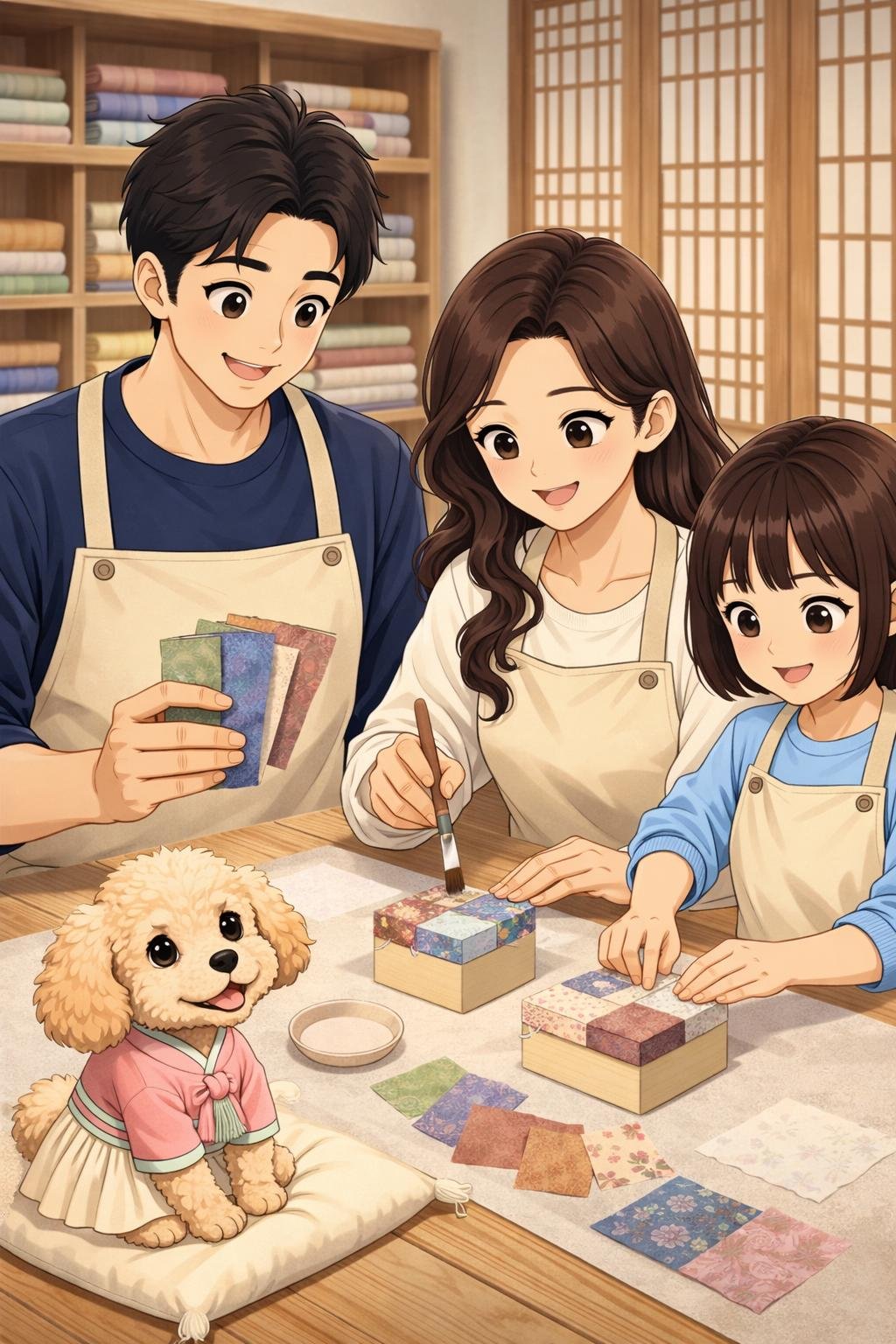
What Is a Korean Hanji Craft Workshop?
A Korean hanji craft workshop is a hands-on cultural activity using hanji, paper traditionally made from the inner bark of the paper mulberry tree. Hanji can be cut, folded, layered, twisted into cord, dyed, or attached to a frame.
Workshops advertised in English may offer very different experiences:
- Decorating a prepared object: Participants apply colored or patterned hanji to a box, tray, mirror, pencil holder, or frame.
- Hanji flower making: Paper is shaped into petals and assembled into a flower or ornament.
- Hanji lamp making: Paper is attached to a prepared frame to create a small decorative light.
- Paper cord craft: Strips of hanji are twisted into cord and woven into a small object.
- Traditional paper making: Participants learn how fibers are prepared and form a sheet using water and a screen.
Do not assume that every “hanji experience” includes making paper from raw fiber. Many short visitor programs use finished hanji as the craft material. Check the project description carefully if traditional sheet-making is your main interest.
Why Try Hanji Craft in Korea?
Hanji craft offers a practical way to learn about Korean material culture while making a souvenir that has personal meaning. It can also be easier to fit into a city itinerary than a full-day cultural program.
The experience is particularly suitable for travelers who enjoy:
- Traditional design and decorative arts
- Slow, seated activities
- Small handmade souvenirs
- Learning through demonstration rather than a long lecture
- Indoor activities during hot, cold, or rainy weather
Hanji also connects naturally with other Korean arts. Travelers interested in brushwork may enjoy a Korean calligraphy and seal-engraving experience, while those who prefer shaping a three-dimensional object can compare it with a Korean pottery workshop.
Where Can You Find a Hanji Workshop?
Hanji programs may be offered by craft studios, cultural centers, museums, traditional villages, public experience facilities, and temporary festival programs. Availability and booking procedures vary by location and season.
Seoul
In Seoul, traditional culture districts are a practical place to begin looking. Insadong is known for crafts, galleries, cultural goods, and visitor-oriented activities. Workshops may also appear around hanok neighborhoods or cultural institutions, but they are not necessarily available every day.
Jeonju
Jeonju has a strong association with traditional culture and hanji. A craft session can fit naturally into a visit to Jeonju Hanok Village. Some local programs focus on simple visitor crafts, while others provide more detailed instruction or paper-making demonstrations.
Other Korean cities
Regional museums, heritage centers, and craft villages may run hanji activities. These can be excellent options, but English information may be limited and programs may operate only on selected dates. Confirm the address, operating day, reservation method, and language arrangements before making a special trip.
Step 1: Choose the Right Workshop
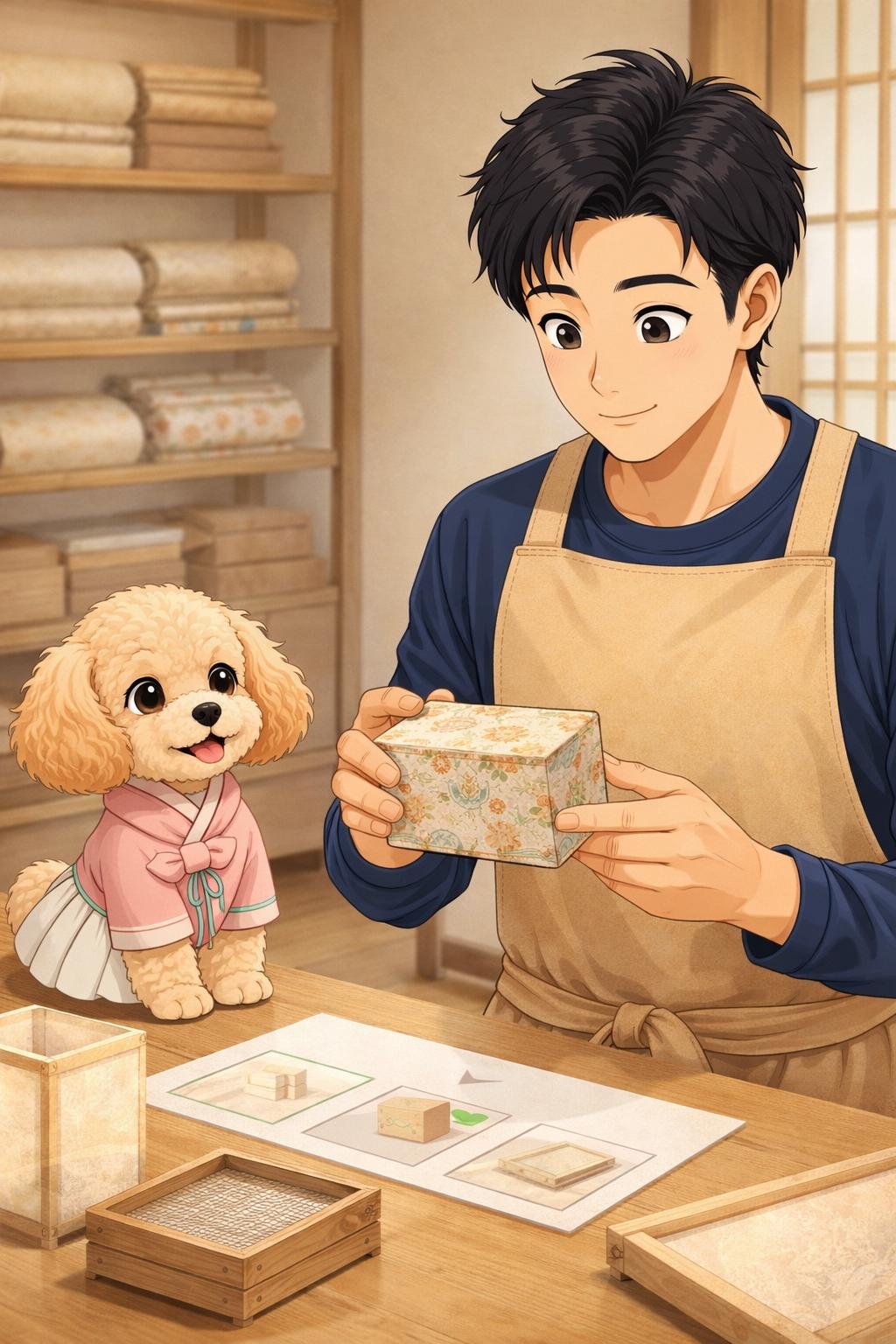
The first decision is not simply where to go, but what you want to make. Project difficulty, time, and portability can differ even within the same studio.
Before booking a Korean hanji craft workshop, ask these questions:
- What object will I make?
- Does the class use finished hanji, or will I make a sheet of paper?
- How long is the session?
- Is the listed duration an estimate or a fixed schedule?
- Is advance booking required?
- Is instruction available in English, or is it demonstration-based?
- Are materials included?
- Will the finished item be ready to take away immediately?
- Is shipping available if the object must dry?
- Are there minimum-age or adult-supervision requirements?
- Does the venue accept my intended payment method?
Photographs in a booking listing may show several projects. Confirm which exact item belongs to your selected option rather than assuming you can choose any design after arrival.
Choosing a project for your itinerary
| Project type | What to consider |
|---|---|
| Small box or tray | Generally easy to pack, although corners and surface decoration need protection. |
| Flower or ornament | Lightweight but potentially crushable. |
| Lamp | Visually memorable, but the frame and electrical components may require careful transport. |
| Paper cord item | May involve repetitive twisting or weaving and require more hand strength. |
| Traditional paper sheet | May need drying time or later collection. |
Step 2: Book and Confirm the Details
Some workshops accept walk-ins, while others prepare materials only for reserved participants. Booking requirements may also differ between regular studio classes and public cultural programs.
If you are booking through an online platform, compare its details with the venue’s current official information. Check whether the reservation is instantly confirmed or remains pending until the instructor approves it.
Information to save before going
- The venue name in both English and Korean, if available
- The full Korean address
- A map pin rather than only a street name
- Your reservation confirmation
- The selected project and number of participants
- The start time and requested arrival time
- A contact method in case you cannot find the entrance
- The cancellation and late-arrival policy
Small studios may be located above street level, inside mixed-use buildings, or along narrow lanes. Leave extra time to locate the correct entrance. If accessibility matters, confirm stairs, elevators, doorway width, seating, and restroom access directly with the venue.
Step 3: Prepare for the Workshop
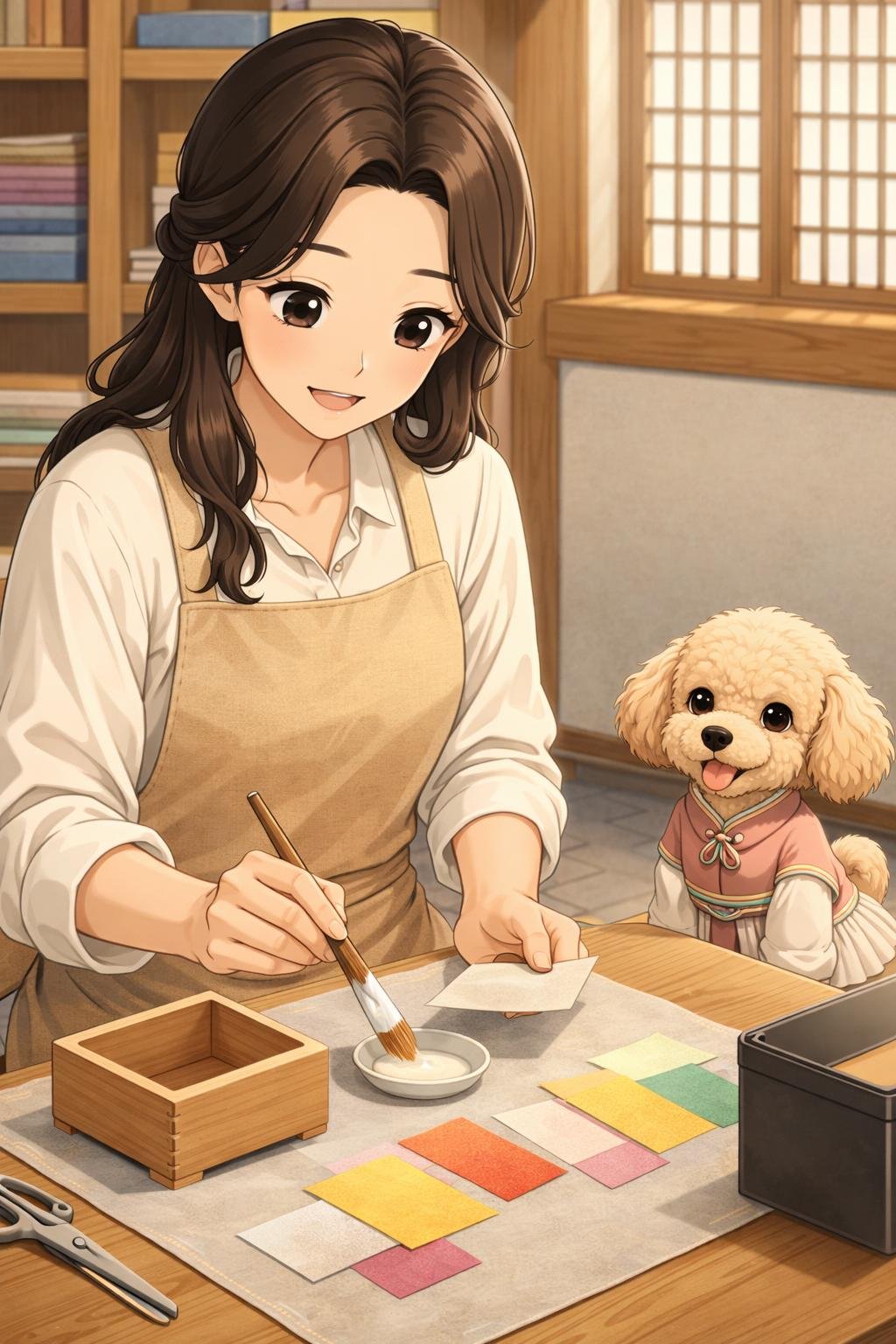
Hanji craft is not usually physically demanding, but adhesives, dyes, water, and paper fibers can reach sleeves or hands. Wear comfortable clothing that allows you to work at a table.
What to wear
- Comfortable sleeves that can be rolled up
- Clothing you would not mind exposing to a small amount of glue or color
- Secure long hair if the activity uses adhesive, water, or rotating tools
- Follow the venue’s footwear instructions if the studio has a shoes-off area
What to bring
- Your booking confirmation
- A charged phone with the address saved
- A payment method confirmed with the venue
- A reusable bag or rigid container for the finished craft
- A translation app if English instruction is not guaranteed
- Reading glasses if you use them for detailed handwork
Tools and basic materials are often provided as part of a workshop, but inclusions vary. Do not bring your own cutting tools or adhesives unless the instructor requests them.
Sensitivities and safety
Materials can include paper fiber, pigments, adhesives, sealants, wood frames, metal components, or decorative coatings. Their composition varies by workshop. Travelers with serious allergies, chemical sensitivities, skin conditions, or medically necessary restrictions should ask the venue about specific materials before booking.
Some projects use scissors, craft knives, hot-glue tools, awls, or electrical components. The instructor may complete riskier steps for children or beginners. Follow the demonstration and do not handle unfamiliar equipment without permission.
Step 4: What Happens When You Arrive?
A typical visit begins with check-in and confirmation of the project. You may be asked to remove your shoes, store outerwear, select colors, or sit at an assigned workstation.
The instructor will usually show a sample and explain the sequence. Depending on the class, the process may include:
- Selecting hanji colors or patterns
- Measuring or choosing pre-cut pieces
- Applying adhesive to paper or a prepared frame
- Smoothing the paper to reduce wrinkles and air pockets
- Folding or trimming edges
- Adding decorative motifs or layers
- Allowing the object to dry
- Packing or arranging later collection
Demonstration-based classes can still be manageable without fluent English, especially when the instructor completes one step at a time. However, English-language service should never be assumed. Confirm it in advance if verbal explanation is important to you.
Step 5: Make and Decorate Your Hanji Craft
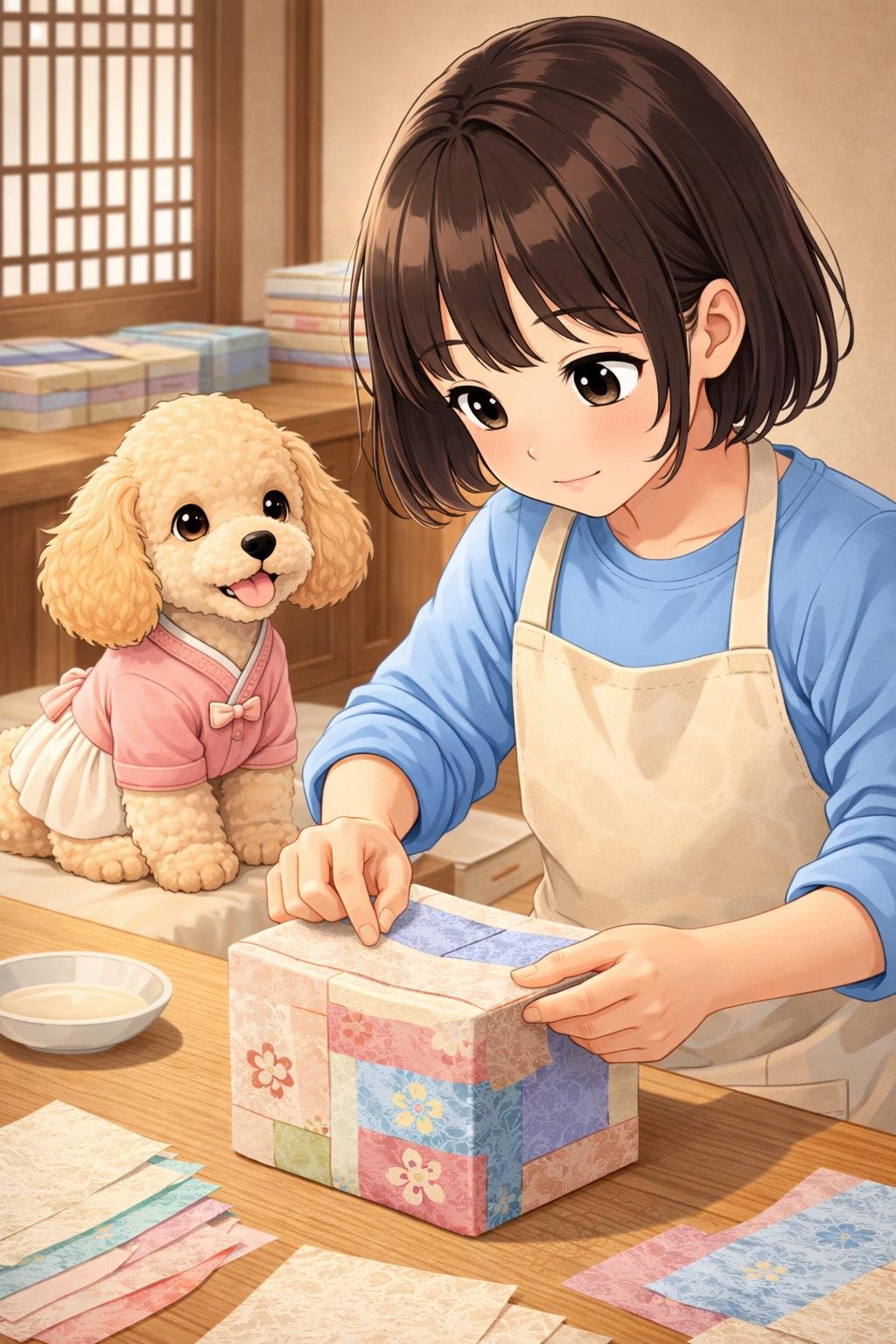
The central experience is working with the paper itself. Hanji may feel softer or more fibrous than common office paper, but its behavior depends on how it was produced and treated.
Beginners often use too much adhesive. A heavy layer can make the paper difficult to control, increase drying time, or leave an uneven surface. Follow the instructor’s example and apply only the recommended amount.
Tips for a cleaner result
- Plan the color arrangement before attaching the first piece.
- Work from one area toward another instead of covering random sections.
- Smooth gently rather than repeatedly rubbing wet paper.
- Keep adhesive away from the visible side unless instructed otherwise.
- Ask before trimming an edge that looks uneven.
- Allow pieces to overlap when the design requires full coverage.
- Do not rush the final layer simply because the class is nearly finished.
Small wrinkles or irregular edges are normal in handcraft. The aim is not to reproduce a factory-made product, but to understand how paper, layering, color, and structure work together.
Drying, Packing, and Taking Your Craft Home
Ask about drying before beginning the project. A small decorated item may be ready to carry after the class, while a dyed sheet, heavily glued object, or coated piece may need more time.
For safe transport:
- Keep the item flat or upright as directed by the instructor.
- Do not seal a damp object inside an airtight plastic bag.
- Protect corners with soft paper rather than pressing them against other luggage.
- Keep delicate flowers and ornaments out of an overfilled backpack.
- Ask whether electrical parts in a lamp can be removed for packing.
- Confirm airline and destination rules if the object includes unusual natural, wooden, or electrical components.
If later collection is necessary, confirm the collection time in writing. International shipping may not be offered, and any available shipping service can involve separate costs or destination restrictions.
Photography and Workshop Etiquette
Craft studios are working spaces, not only tourist attractions. A few simple habits make the experience easier for everyone.
- Arrive on time so the instructor does not need to repeat the full demonstration.
- Ask before photographing the instructor, other participants, teaching materials, or detailed patterns.
- Do not assume video recording is permitted.
- Keep drinks away from shared paper and tools.
- Use only the materials assigned to your project.
- Return shared tools to the correct place.
- Do not copy or remove templates unless permission is given.
- Keep phone use brief during demonstrations.
- Tell the instructor immediately if a tool breaks or adhesive spills.
Photography rules vary. Some venues welcome photos of your own work but restrict filming of the full teaching process or proprietary designs. Always ask first.
Is the Experience Suitable for Children or Travelers with Limited Mobility?
Many simple hanji crafts can suit families, but age requirements and supervision rules vary. Projects involving blades, hot glue, strong adhesives, or delicate frames may not be suitable for young children. Confirm whether each child needs a separate booking and whether an accompanying adult must also pay or participate.
For travelers with limited hand strength, tremors, low vision, or other access needs, ask about:
- The amount of cutting, twisting, pressing, or weaving
- Whether pieces can be prepared in advance
- Table and chair height
- Breaks during longer sessions
- Step-free access and elevators
- Whether a companion may assist
Do not rely on general district accessibility information. Confirm the conditions of the specific building and workshop room.
K-Nana Family Guide
Dad: Confirm what you are actually making
Dad’s first check is the project type. “Hanji workshop” might mean decorating with finished paper or making a paper sheet from fiber. He saves the exact option, address, start time, and collection instructions before leaving the hotel.
Mom: Check materials, payment, and transport
Mom confirms what the fee includes, which payment methods are currently accepted, and whether the finished item needs drying. She also asks about adhesives and coatings when sensitivities are a concern, then carries a protective bag for the trip back.
Daughter: Photograph the process respectfully
Daughter enjoys choosing colors and watching the object change with each layer. She photographs her own progress only after checking the studio’s rules and avoids filming other participants or the instructor’s complete demonstration without permission.
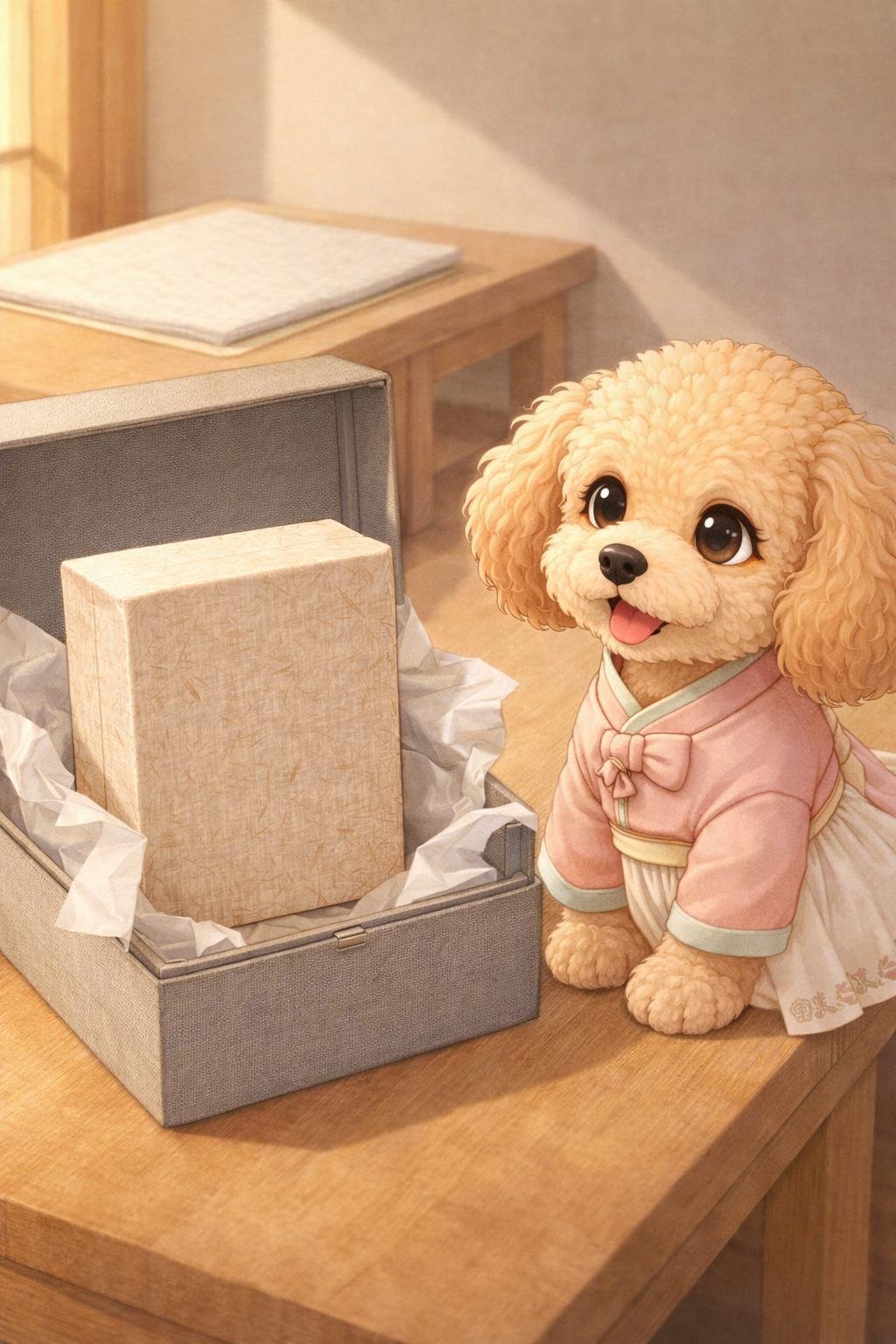
Nana: Pack for the craft, not just the class
Nana says: “Your masterpiece still has to survive the subway and suitcase—bring it a safe little nest!”
Nana is the symbolic K-Nana Studio mascot in these visuals, not a claim that real pets are permitted inside workshops. Pet access and animal-related house rules must be confirmed directly with each venue.
Common First-Timer Mistakes
- Booking by photo alone: The pictured craft may not be included in the selected option.
- Confusing paper craft with paper making: Confirm whether you will create hanji or use prepared hanji.
- Assuming English is available: Language support varies by instructor and session.
- Arriving exactly at the start time: Finding a small studio can take longer than expected.
- Using too much glue: More adhesive does not necessarily produce a stronger or smoother result.
- Planning another timed activity immediately afterward: Craft sessions and drying can run longer than expected.
- Bringing no protective packaging: A delicate finished piece can be damaged during transport.
- Assuming walk-ins are accepted: Materials or instructors may be prepared according to reservations.
Practical Korean Hanji Craft Workshop Checklist
- Choose the exact project you want to make.
- Confirm whether the activity is craft decoration or traditional paper making.
- Check the current date, start time, duration, and reservation policy.
- Ask whether English instruction is available.
- Confirm materials, tools, and packaging included in the fee.
- Save the Korean venue name, address, and map pin.
- Check accepted payment methods directly.
- Wear comfortable clothes with manageable sleeves.
- Ask about age, safety, and accessibility requirements when relevant.
- Confirm drying, collection, and shipping arrangements.
- Bring a suitable bag or container for the completed item.
- Ask before taking photos or recording video.
Frequently Asked Questions
Can foreigners join a Korean hanji craft workshop?
Yes, many hanji activities are suitable for international visitors. However, reservation systems and language support vary. Confirm whether the instructor provides English explanations, translated instructions, or demonstration-based teaching.
Do I need to speak Korean?
Not always. A simple project may be possible by following visual demonstrations, but English availability is not guaranteed. Save essential questions in a translation app if the class is primarily conducted in Korean.
Do I need a reservation?
It depends on the venue. Some cultural facilities offer scheduled or walk-in sessions, while small studios may prepare materials only after receiving a reservation. Check current official information before visiting.
How long does a hanji workshop take?
Duration depends on the project and drying process. A simple decoration activity may be shorter than paper weaving, lamp making, or traditional sheet-making. Use the venue’s current estimate and leave extra time afterward.
Will I make hanji paper from scratch?
Only if the program specifically includes traditional paper making or sheet formation. Most visitor craft classes use prepared hanji to decorate or construct an object.
Can I take my finished craft home immediately?
Often, but not always. Adhesive, dye, sealant, or wet paper may require additional drying. Ask whether the item can be carried away, collected later, or shipped.
Are hanji workshops suitable for children?
Many simple projects can be child-friendly, but minimum ages, adult-supervision rules, and tool restrictions vary. Confirm the selected project’s requirements directly with the organizer.
Can I take photos during the workshop?
Policies vary. Ask before photographing the instructor, other participants, templates, or the complete teaching process. Photos of your own work may be allowed even when video recording is restricted.
What should I do if I have an allergy or chemical sensitivity?
Ask the venue for information about adhesives, pigments, coatings, fibers, and other materials before booking. Material composition varies, so travelers with serious allergies or medically important restrictions should confirm directly with the workshop.
Can I bring a real pet?
Do not assume so. Workshops may restrict animals because of shared tools, delicate materials, building rules, safety, or other participants. Confirm the current pet and assistance-animal policy directly with the venue.
Final Takeaway
A Korean hanji craft workshop combines cultural learning with a practical activity and a handmade souvenir. The most important first step is identifying exactly what the class includes: decorating with finished hanji is different from making traditional paper.
Before going, confirm the project, reservation status, language support, materials, payment options, accessibility, photography rules, and drying arrangements. With those details settled, beginners can focus on the paper’s texture, colors, and careful layering rather than worrying about unfamiliar workshop procedures.
References
- Korea Tourism Organization, VISITKOREA — official cultural and travel information about Korea.
- Korea Craft & Design Foundation — official information on Korean crafts and traditional cultural industries.
- Hanji Culture and Industry Center — educational information and resources related to Korean paper culture.
- Korea Heritage Service — official information concerning Korea’s traditional heritage and craftsmanship.
- Visit Seoul — official Seoul travel information for cultural districts and visitor activities.
Image Credits
- Image 01: K-Nana Studio original visual introducing the family to a general hanji craft experience.
- Image 02: K-Nana Studio original visual showing Dad and Nana considering beginner project options.
- Image 03: K-Nana Studio original visual showing Mom preparing for careful hanji craft work, with Nana in a separate safe mascot position.
- Image 04: K-Nana Studio original visual showing Daughter enjoying the paper-layering and decorative process, with Nana observing symbolically from a safe position.
- Image 05: K-Nana Studio original visual featuring Nana with a final reminder about protecting the completed craft during transport.
Disclaimer
This article provides general travel, cultural, and educational information. Prices, opening hours, reservations, class projects, materials, payment methods, language support, participation requirements, age limits, accessibility, photography rules, pet policies, drying arrangements, shipping options, and house rules may vary or change.
Confirm important current information with the relevant official source, booking provider, cultural organization, or workshop venue before visiting. Travelers with serious allergies, chemical sensitivities, accessibility needs, or other specific requirements should discuss them directly with the organizer in advance.