
Introduction to Korean Cushion Foundation
A Korean cushion foundation is complexion makeup packaged in a portable compact. Inside, a sponge holds a gel-type formula, and a separate puff is pressed onto the sponge to collect and apply the product.
This guide explains how the compact works, how to interpret formula and finish descriptions, how to approach shade selection, and how to apply controlled layers. Because coverage, shades, ingredients, and cosmetic claims differ between products, current manufacturer information should guide your final choice.
The first educational visual associated with this guide presents an illustrative overview of the compact, formula-soaked sponge, and puff. It explains the core concept without depicting a specific commercial product.
Quick Guide
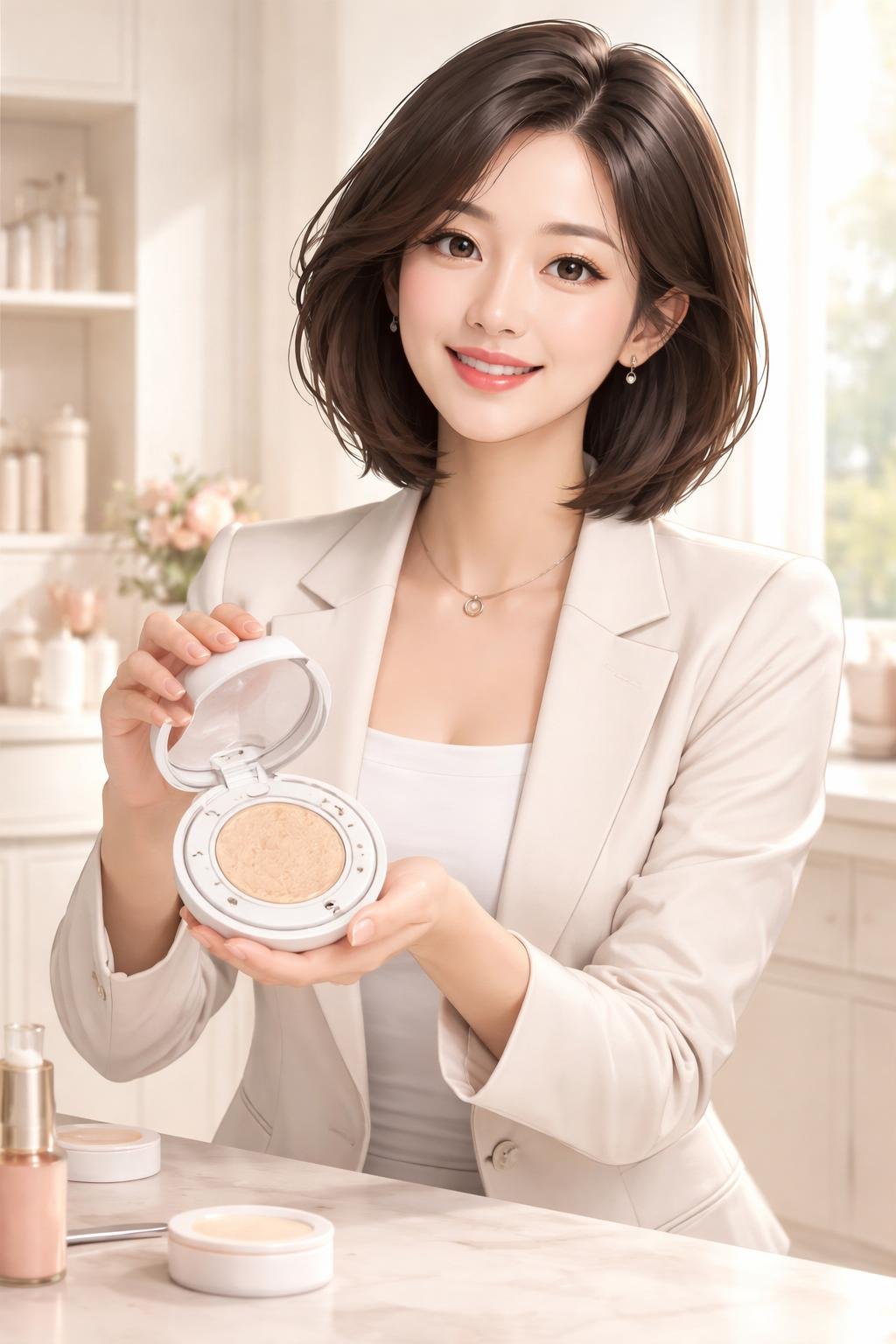
- Format: A cushion compact contains a sponge soaked with a gel-type foundation formula.
- Dispensing: Press the included puff onto the sponge to pick up the product.
- Application: Apply a small amount in light layers rather than loading the puff heavily.
- Practical use: The compact format is portable and convenient for application and selective touch-ups.
- Finish and coverage: Read the current product description because these characteristics are not identical across all cushions.
- Shade selection: Compare manufacturer shade descriptions, undertone information, and available swatches or samples.
- Claims: Check the label for any UV-related, skincare, or other cosmetic claims instead of assuming that every cushion includes them.
What Is a Korean Cushion Foundation?
A cushion foundation is defined primarily by its packaging and dispensing mechanism. The foundation formula is held in a porous sponge inside the compact. Pressing a puff against that sponge transfers formula onto the puff, which can then spread it across the skin.
This design combines the foundation, dispensing surface, applicator, and mirror-equipped compact commonly associated with portable makeup. The format can make application and touch-ups convenient because users do not need to pour or pump foundation onto a separate tool.
The cushion format does not establish one universal level of coverage, finish, shade range, or ingredient profile. Individual products may carry different cosmetic functions and label claims, so the word “cushion” alone does not describe everything a formula will do.
Formulas, Finishes, and Product Labels
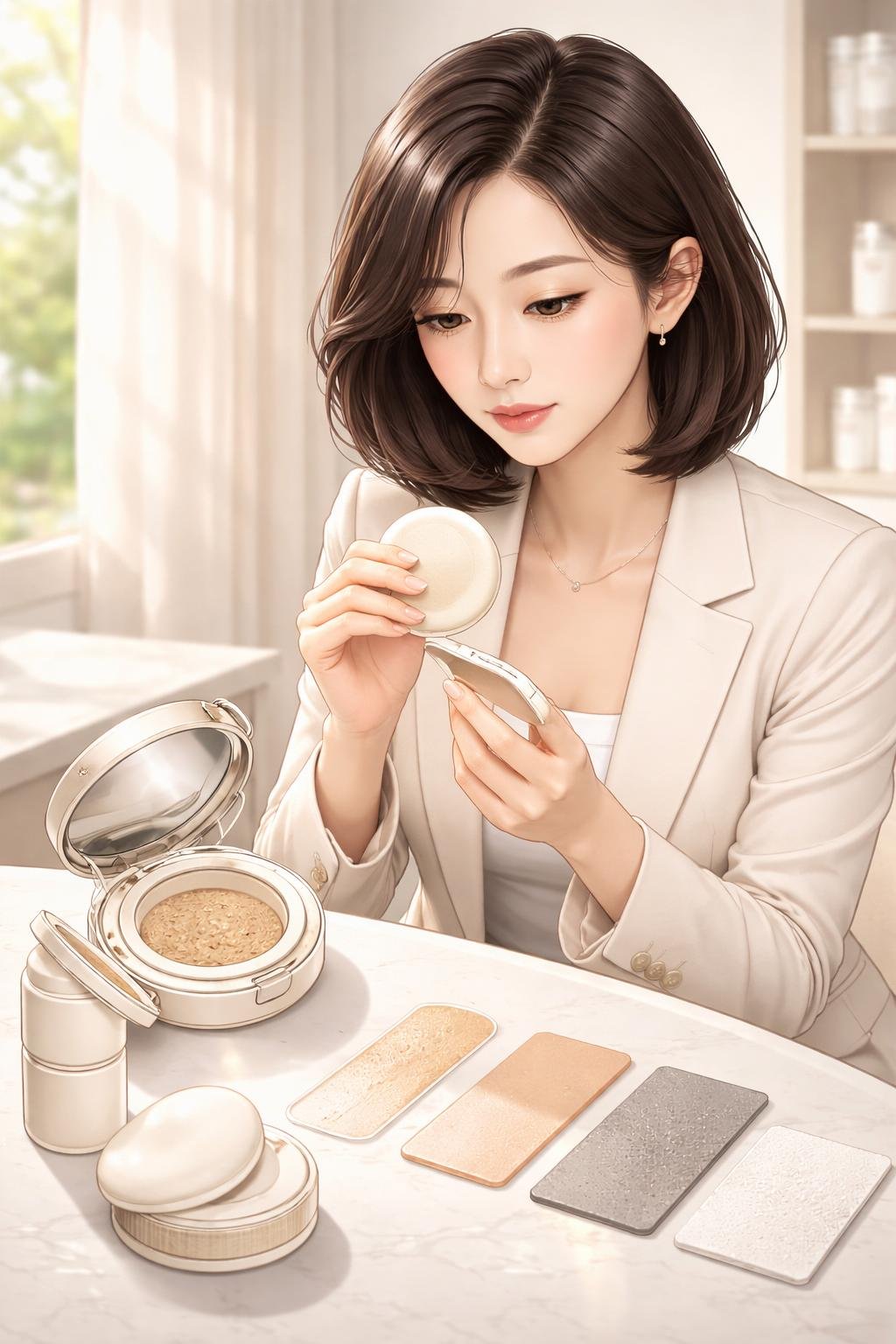
The supplied academic overview describes a sponge soaked with a gel-type formula. Within that general format, manufacturers can offer different product descriptions, so beginners should compare labels rather than treat every cushion as interchangeable.
Coverage descriptions
Coverage indicates how much the product is intended to alter the visible appearance of uneven color or marks. Labels may use terms such as light, medium, buildable, or high coverage. These are product-specific descriptions rather than a standardized guarantee of how the makeup will appear on every person.
Finish terminology
| Label term | What to look for in the description |
|---|---|
| Dewy or radiant | Language suggesting a visibly luminous or light-reflective appearance. |
| Natural | Language suggesting a finish positioned between strongly luminous and strongly matte. |
| Satin or semi-matte | Language suggesting limited shine without an entirely flat appearance. |
| Matte | Language suggesting reduced visible shine. |
These terms are useful as a label-reading framework, but brands may use them differently. Skin preparation, application amount, and individual skin characteristics can also affect the visible result.
UV, skincare, and ingredient information
Some cushion products may combine complexion makeup with labeled UV protection or other cosmetic functions. Do not assume that these features are present in every cushion. Check the current packaging and official manufacturer information for the exact claims, directions, and limitations.
Read the full ingredient list if you need to avoid a known cosmetic ingredient or fragrance component. Formulas can change, and the product name or an older online listing may not reflect the version currently sold in your market. Ingredient benefits should not be inferred without reliable product-specific evidence.
The second educational visual organizes the compact into its main components and presents separate label categories for coverage, finish, ingredients, and UV-related or skincare claims. It is an illustrative learning aid rather than a reproduction of actual packaging.
How to Apply Korean Cushion Foundation
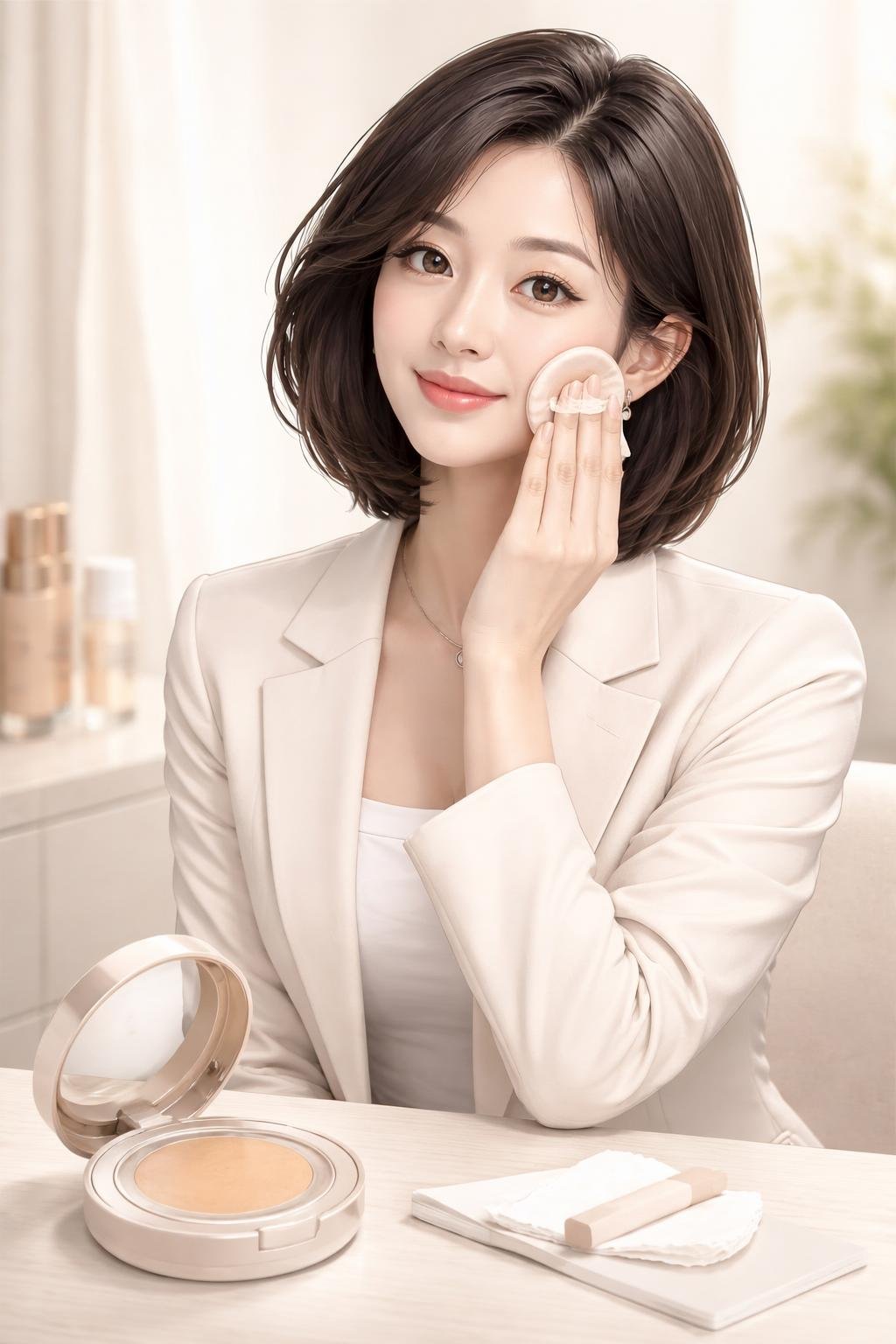
- Prepare your skin according to its needs. Allow any skincare or other base products to settle before applying foundation. Heavy or unsettled layers underneath may make even application more difficult.
- Press the puff onto the cushion gently. Start with one light, controlled press instead of repeatedly pushing the puff deep into the sponge.
- Check the amount. If one area of the puff holds a large deposit, distribute it across the puff before applying it to the face.
- Apply a thin first layer. Use light pressing or patting motions. Work across one area at a time rather than rubbing a heavily loaded puff over the entire face.
- Add coverage selectively. Pick up a small additional amount and apply it only where more coverage is wanted.
- Inspect the result before adding more. Repeated heavy layers can make the application look thicker than intended.
Touch-ups
For a touch-up, first assess whether oil, moisture, or existing makeup has collected in the area. Gently address the surface as appropriate, then press on a small amount of fresh product. Applying a thick layer directly over disturbed makeup may create an uneven appearance.
Puff handling
Keep the puff clean according to the product or applicator manufacturer’s care instructions. Let a washed reusable puff dry properly before returning it to a closed compact, and replace it when it is damaged or can no longer be cleaned appropriately. Avoid sharing a used puff.
Common application mistakes
- Pressing too forcefully and collecting more formula than needed.
- Starting with a heavy layer instead of building thin layers.
- Adding repeated layers everywhere when only selected areas need more coverage.
- Using a visibly soiled or damp applicator without appropriate cleaning and drying.
- Assuming every cushion requires the same preparation or application amount.
The third educational visual demonstrates the sequence of preparing the skin, loading the puff lightly, applying a thin layer, and adding product selectively. It does not promise a particular makeup result.
How to Choose a Finish and Shade Safely
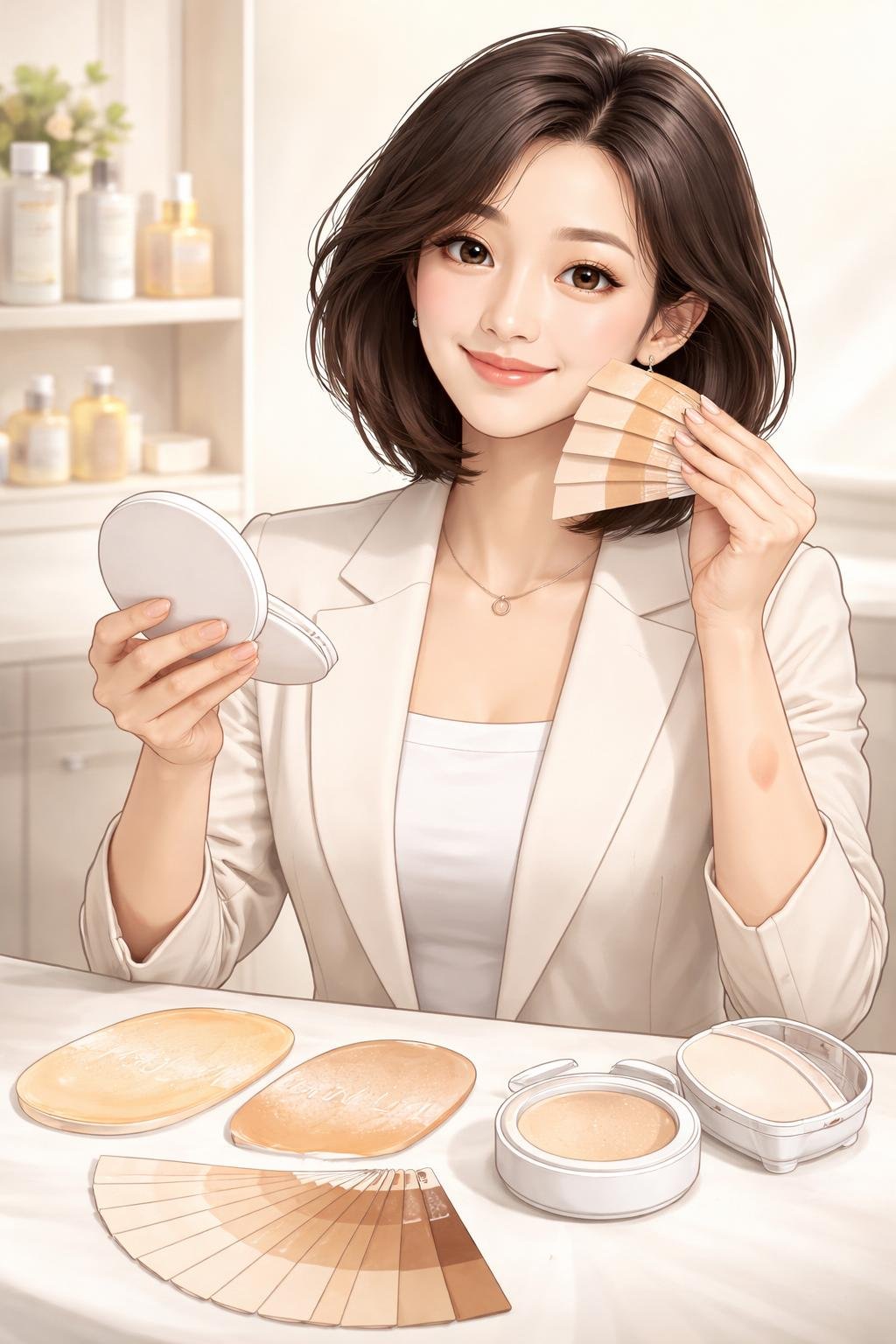
Start with your preferred finish and coverage
Decide whether you want a more luminous, balanced, or reduced-shine appearance, then compare that preference with the manufacturer’s finish description. Consider how much coverage you want initially and whether the product is described as buildable.
Use current shade information
Review the shades currently offered in your market. Manufacturer shade names and numbers are not necessarily consistent across different brands or product lines, so a familiar number is not enough to confirm a match.
Use undertone information where the manufacturer provides it. Undertone labels may include warm, cool, neutral, or other brand-specific categories. Compare official swatches and, where practical, test an authorized sample in suitable lighting before making a decision.
Online images can be affected by lighting, screens, photography, and editing. They may help narrow the options, but they cannot guarantee an exact match. The supplied overview source explains the cushion mechanism but does not establish a universal shade-selection system.
Check labels and individual compatibility
- Review the current ingredient list, especially if you know that a cosmetic ingredient has previously caused a reaction.
- Follow any warnings and use directions supplied by the manufacturer.
- If appropriate, test a small amount according to manufacturer guidance before broader facial use.
- Stop using the product if irritation occurs and seek appropriate professional advice for a significant or persistent concern.
- Keep the inner sponge, lid, puff, and hands as clean as reasonably possible during use.
- Do not rely on an expired listing or old package photograph because formulations and labels may change.
The fourth educational visual is a finish, shade, undertone, ingredient-label, and hygiene checklist. It supports a careful selection process but does not depict or guarantee perfect color matching.
Korean Cushion Foundations in Beauty Culture
The cushion format has a practical place in Korean beauty because it packages complexion makeup and an applicator in a portable compact. Research on cushion container design highlights portability, easy spreading, and convenient touch-ups as notable characteristics of the format.
Some products also combine complexion makeup with labeled UV protection or other cosmetic functions. This helps explain why shoppers may encounter several claims on one package, but it does not mean that every Korean cushion is multifunctional or that all products offer the same claims.
International shoppers should treat Korean shade names, finish terms, and cosmetic claims as product-specific information. Availability and labeling may differ by market, so an official regional manufacturer page or current package is more useful than assumptions about a universal Korean routine or preference.
K-Nana Beauty Guide
Fictional educational example: Nana is a fictional female beauty guide used to demonstrate a decision process. She is not providing a personal review or reporting real wear-test results.
Nana begins by checking the current official label rather than choosing on the basis of the compact design. She separates the information into finish, coverage, shades, ingredients, directions, and any stated UV-related or skincare claims.
Next, she compares the listed finish options with the appearance she wants. She does not assume that a “natural” finish from one product is identical to the same term used by another manufacturer.
For color, Nana reviews the available shade descriptions and any undertone guidance. She compares official swatches and looks for an authorized sample when possible, recognizing that photographs and screens cannot guarantee a match.
During the application example, Nana presses the puff lightly onto the cushion and applies a thin first layer with gentle patting motions. She adds a small amount only to areas where additional coverage is desired rather than building heavy layers across the entire face.
For later touch-ups, Nana plans to assess the existing makeup first and use a controlled amount. This fictional process illustrates careful label reading and application; it does not endorse a product or promise a particular result.
Frequently Asked Questions
1. How is a cushion different from other foundation packaging?
A cushion stores its formula in a sponge inside a compact and uses a puff to pick up and apply the product. Bottles, tubes, sticks, and other packages dispense or present foundation differently. The packaging format alone does not determine the coverage, finish, or suitability of the formula.
2. How much product should I pick up?
Begin with a light press of the puff and apply a thin layer. You can collect a small additional amount for selected areas. Starting with less provides more control than trying to spread a heavily loaded puff.
3. How do I select a cushion shade?
Use the current manufacturer’s shade descriptions, undertone information, and official swatches. Test an authorized sample when practical, and do not assume that shade numbers are consistent across brands. No universal cushion shade-selection system is established by the supplied overview source.
4. Can a cushion foundation be used for touch-ups?
Yes, convenient touch-ups are one of the practical characteristics associated with the cushion format. Assess the existing makeup first, then apply a small amount selectively rather than pressing a heavy new layer over the entire face.
5. How can I check whether a cushion has UV protection or skincare claims?
Read the current package and official manufacturer information for that exact product and market. Some cushions carry UV-related or other cosmetic claims, but these features are not universal. Follow the stated directions and do not infer a claim from the cushion format alone.
References
- 쿠션 파운데이션의 불편성을 개선하는 신기능 용기 개발에 관한 연구: https://www.kci.go.kr/kciportal/ci/sereArticleSearch/ciSereArtiView.kci?sereArticleSearchBean.artiId=ART002257701. This source supports the description of a gel-type formula held in a sponge, dispensing with a puff, portability, easy spreading, convenient touch-ups, and the context of products carrying multiple cosmetic functions. It does not provide detailed shade-selection guidance or universal finish comparisons.
Final Takeaway
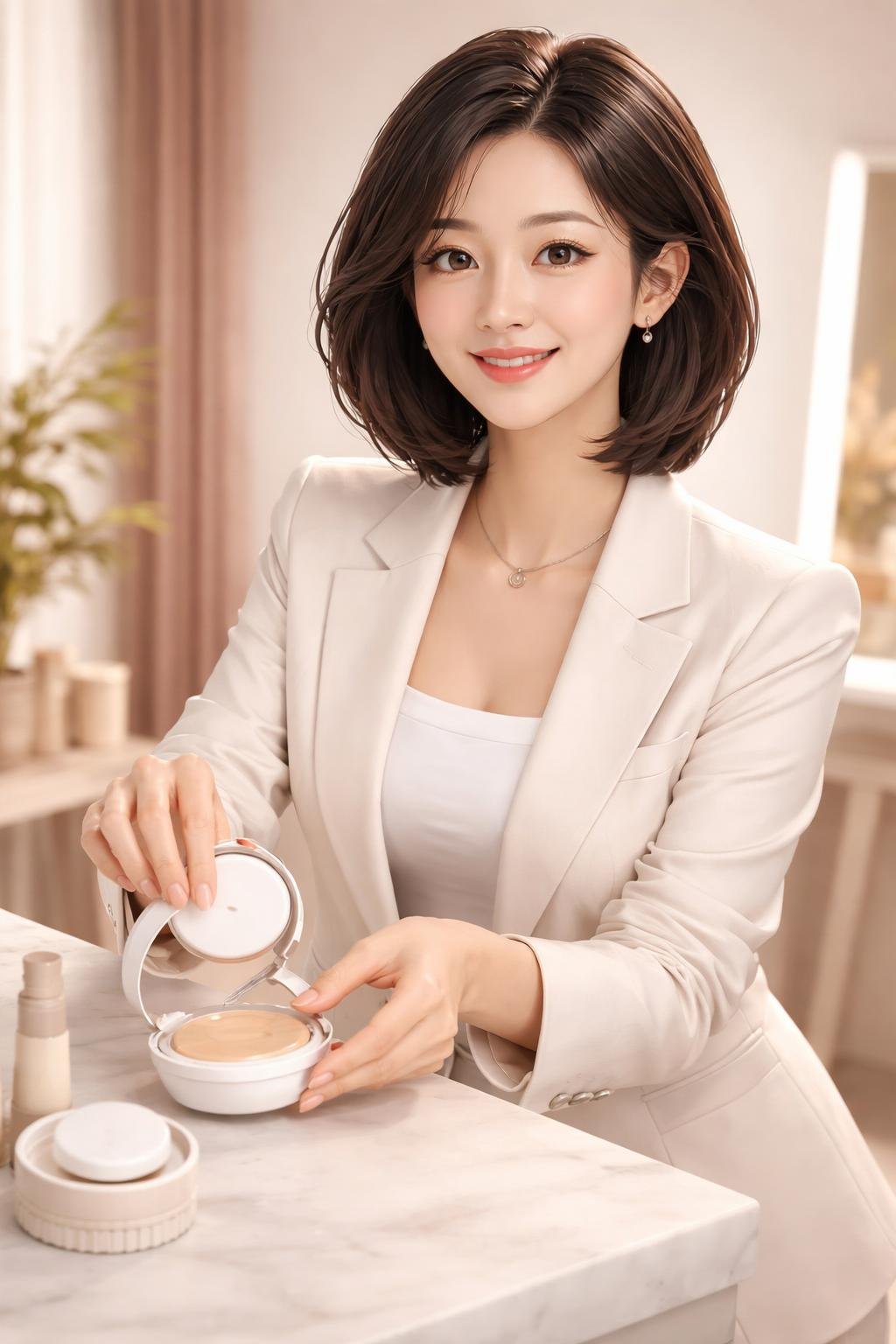
A Korean cushion foundation uses a formula-soaked sponge and puff to provide a portable method of applying complexion makeup. Compare current labels because finishes, coverage, shades, ingredients, and additional claims vary between products. Use manufacturer shade information and available samples where practical, then apply a controlled amount in light layers for greater flexibility.
Image Credits
- Compact and core concept: Original AI-generated educational visual showing an illustrative cushion compact, formula-soaked sponge, and puff.
- Components and label categories: Original AI-generated educational visual organizing compact parts and general coverage, finish, ingredient, UV-related, and skincare label categories.
- Application sequence: Original AI-generated educational visual showing light puff loading, thin-layer application, and selective building without promising results.
- Selection checklist: Original AI-generated educational visual covering finish, shade, undertone, current labels, ingredient checks, and applicator hygiene.
- Final practical reminder after the FAQ: Original AI-generated educational visual reminding readers to verify current labels, use controlled amounts, and treat shade matching as product-specific.
All five visuals are illustrative. They do not depict real products, packaging, events, application results, or clinical outcomes.
Disclaimer
This article provides general educational information and is not medical advice, diagnosis, or treatment. Cosmetic formulations, ingredients, labels, availability, and prices may change, and individual skin responses vary. Verify current product information with the official manufacturer, follow the supplied directions and warnings, and consult an appropriate healthcare professional about significant or persistent skin concerns. AI-generated images are illustrative and may not accurately represent actual products, packaging, ingredients, application results, or clinical outcomes.