
Korean Cup Ramyeon is a convenient form of Korean instant noodles packaged in a single-serving container. Instead of cooking noodles in a separate pot, many products are prepared by adding hot water directly to the container and waiting for the package-directed cooking time.
In Korea, container noodles come in different shapes, including tall cup-style containers and wider bowl-style containers often associated with the word sabal, meaning bowl.
Today, Cup Ramyeon is closely connected with Korean convenience stores, travel, workplaces, late-night snacks, and other situations where a quick hot meal is useful.
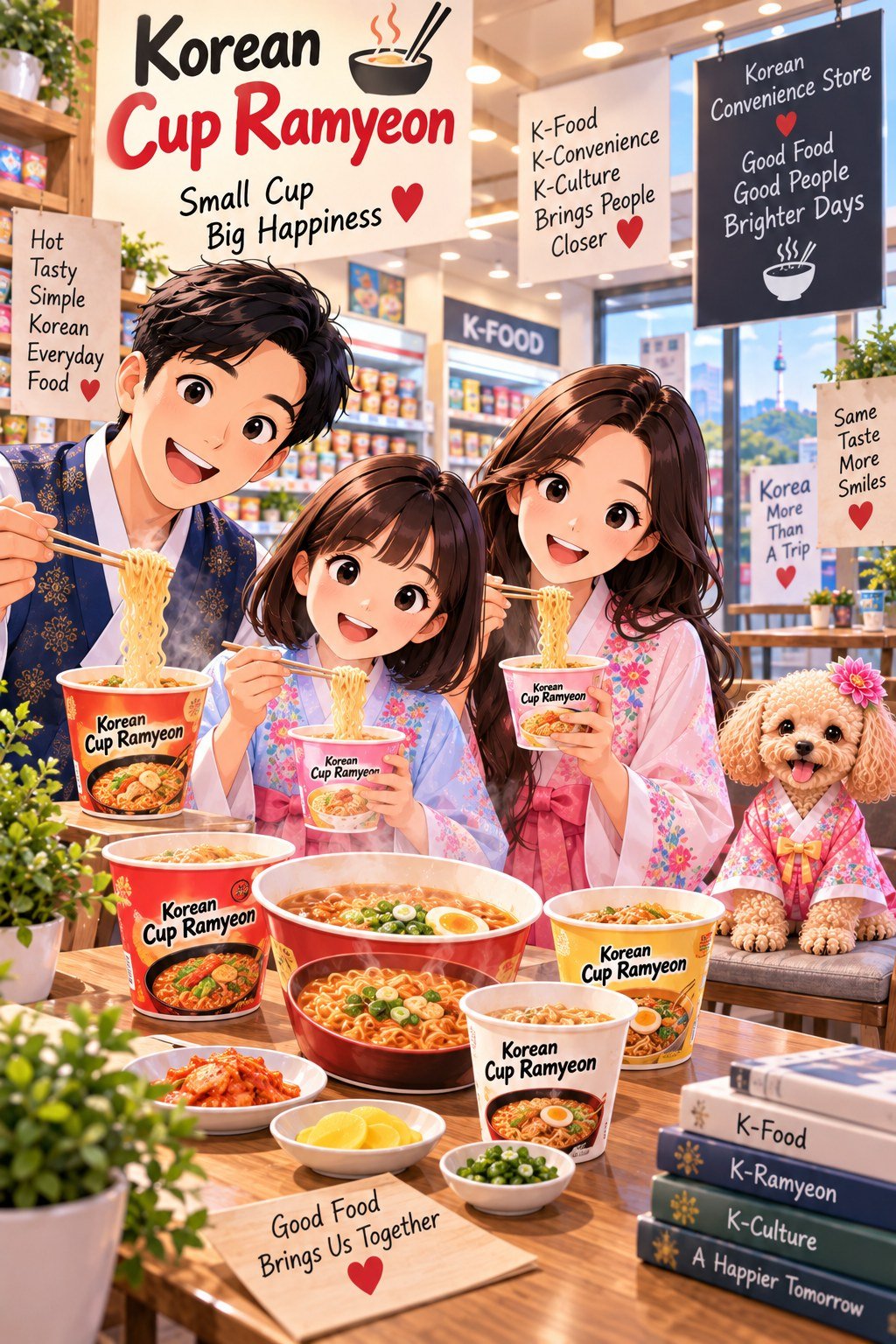
Cup and bowl-style containers make Korean Ramyeon easy to prepare and enjoy without using a separate cooking pot.
Quick Guide
| Korean name | 컵라면 / 용기면 |
| Romanization | Cup Ramyeon / Yonggimyeon |
| Category | Korean instant noodles / convenience food |
| Common formats | Tall cup and wide bowl-style container |
| Preparation | Product-dependent; commonly prepared with hot water |
| Common styles | Soup noodles and brothless or sauce-mixed noodles |
| Everyday connection | Convenience stores, travel, work and quick meals |
| Important consumer check | Current ingredients, allergens, nutrition and cooking instructions on the specific package |
What Is Korean Cup Ramyeon?
Korean Cup Ramyeon is instant ramyeon packaged in a container that can also function as the serving bowl.
The container commonly holds dried or pre-cooked noodles together with seasoning and product-dependent dried ingredients.
Exact noodle formulations, seasonings, spice levels, ingredients, and preparation methods vary widely between products.
Cup Ramyeon vs. Bag Ramyeon
Korean Ramyeon includes both packaged noodles designed for pot cooking and convenient container-based products.
Bagged ramyeon is commonly cooked in a separate pot, while many Cup Ramyeon products are designed to be prepared directly inside their own containers.
The cooking method should still be checked on the specific package because not every instant noodle product uses identical instructions.
How Cup Ramyeon Developed in Korea
Container-style instant noodles became part of Korea’s growing convenience-food culture during the 1970s and 1980s.
Korean cup noodles appeared in the 1970s, while wider bowl-style products helped expand the category during the following decade.
As the market developed, Korean consumers gained an increasingly broad range of flavors, container sizes, and noodle styles.
Cup vs. Sabal-Style Ramyeon
Korean container ramyeon does not always come in the same shape.
A cup-style product can use a relatively tall and narrow container, while a sabal-style product uses a wider bowl-like form that reflects the familiar shape of a Korean soup or rice bowl.
The wider base can also make the container feel stable on a table while providing space for noodles, broth, and toppings.
Choosing a Korean Cup Ramyeon
Before preparing a product, check the exact flavor, spice level, cooking method, ingredient list, allergen information, nutrition panel, and date labeling.
Some products contain broth, while others are designed to have water drained or mixed with a sauce after the noodles soften.
Appearance alone should not be used to assume how a particular Cup Ramyeon is prepared.
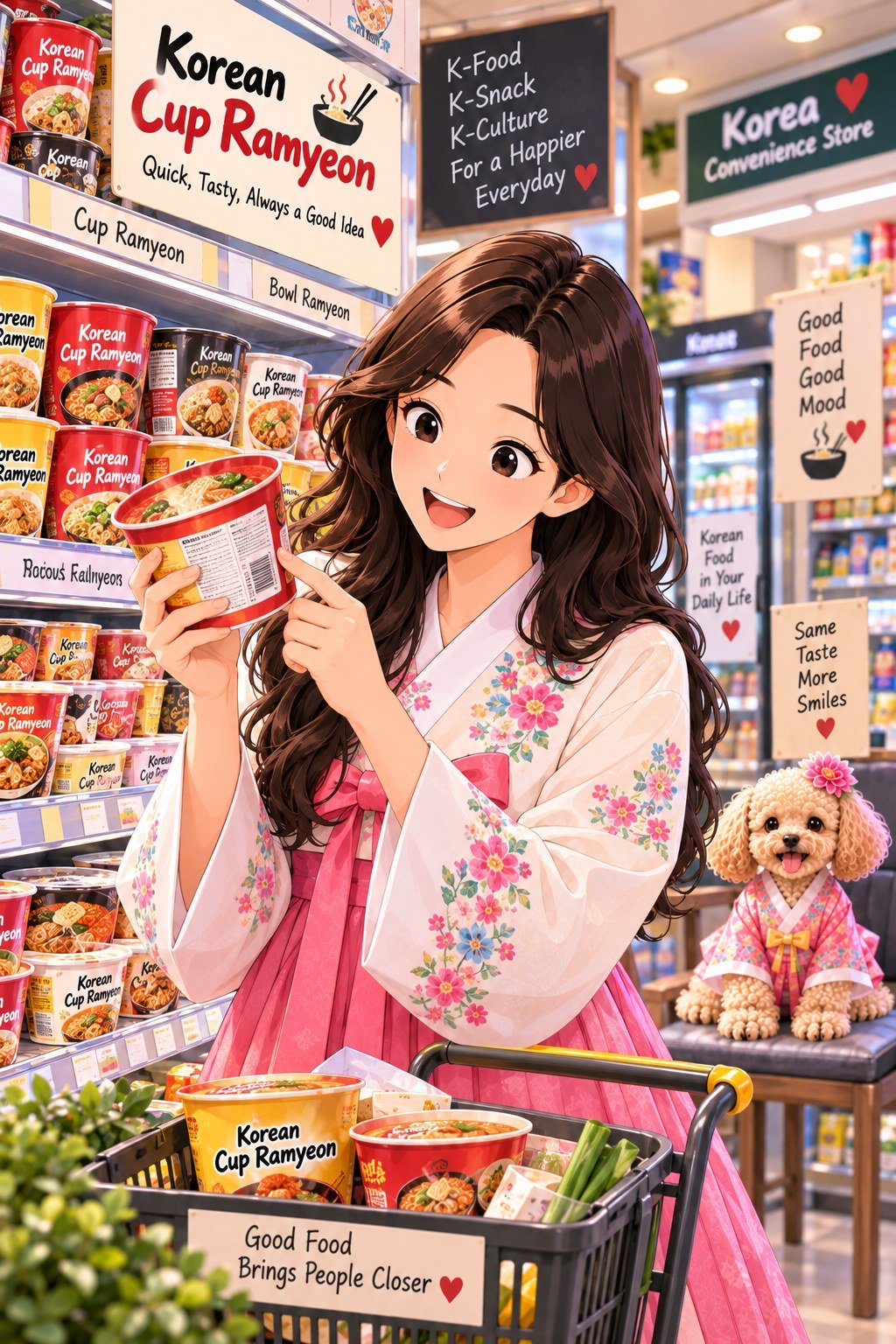
Checking the package first helps identify the cooking method, spice level, ingredients, allergens, nutrition information, and serving instructions.
How Korean Cup Ramyeon Is Prepared
Many Korean Cup Ramyeon products are prepared by opening the lid as directed, adding the included seasoning, and pouring hot water to the indicated level.
The lid is then closed or partially closed while the noodles soften for the time specified on the package.
Because water quantity, seasoning sequence, cooking time, draining instructions, and preparation methods vary, the actual product directions should always take priority.
Hot Water & the Fill Line
Many containers include a fill line showing approximately how much hot water should be added.
Too much or too little water can change the concentration of the seasoning and the final noodle texture.
Hot water and steam can cause burns, so the container should be placed on a stable surface and handled carefully during preparation.
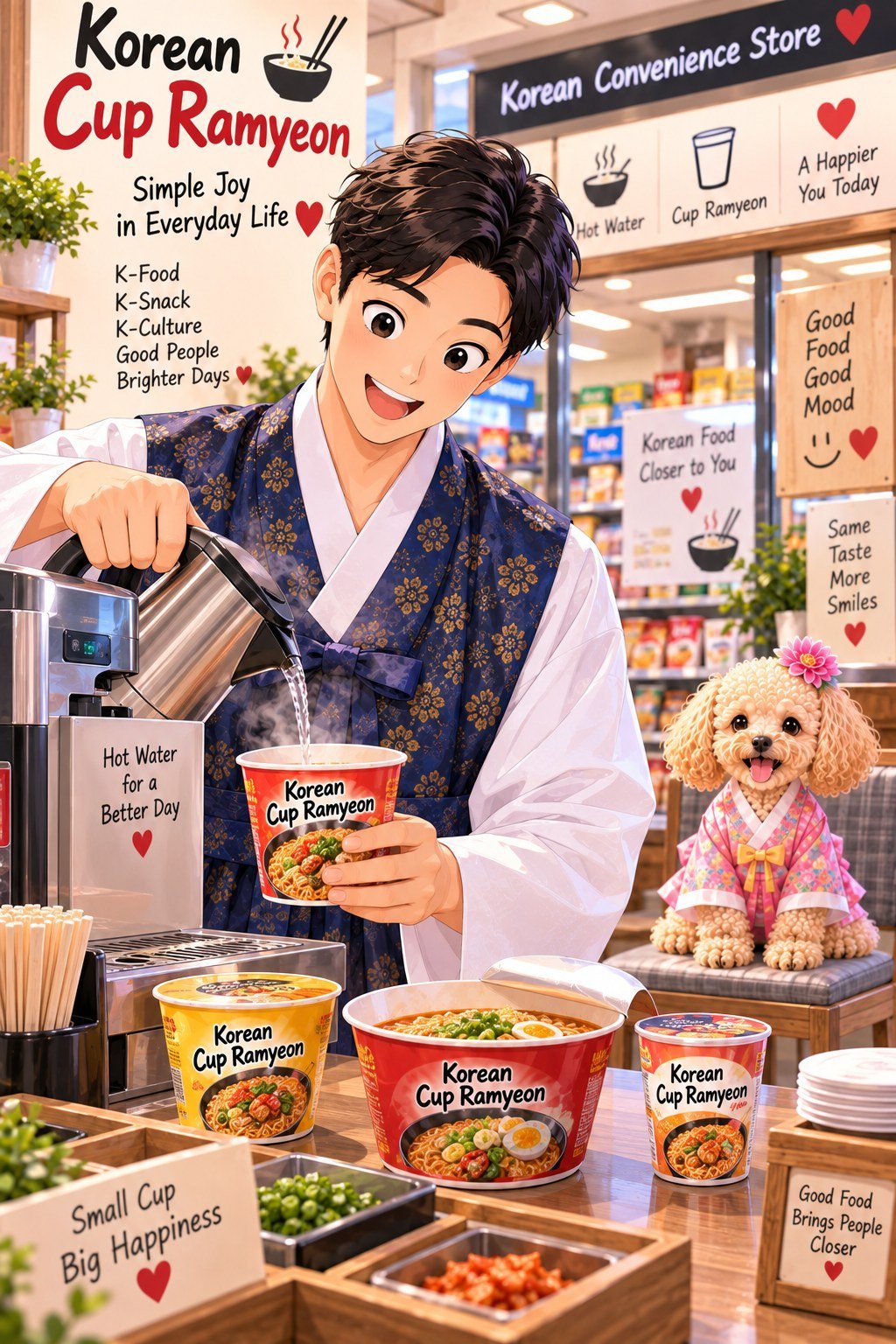
Hot water, the product’s fill line, and the package-directed waiting time are central to preparing many Korean Cup Ramyeon products.
Soup vs. Brothless Cup Ramyeon
Some Korean Cup Ramyeon is designed to be eaten with a seasoned broth, while other products emphasize sauce-coated or mixed noodles with little or no soup.
Brothless products can require a different sequence, such as draining water before adding or mixing a sauce.
The package instructions are therefore especially important when trying an unfamiliar product.
Why Cup Ramyeon Fits Korean Convenience Culture
Cup Ramyeon combines shelf-stable packaged food with quick preparation and a built-in serving container.
This makes it practical in convenience stores and other places where access to a full kitchen may be limited.
Its role in Korean food culture comes as much from convenience and everyday accessibility as from any one particular flavor.
How to Try Korean Cup Ramyeon for the First Time
Choose a product with a spice level and flavor that suit your preference, then follow the preparation directions on that specific package.
After the waiting or cooking time is complete, stir the noodles as directed and allow both noodles and broth or sauce to cool enough to eat comfortably.
Lift a manageable amount of noodles rather than taking a large bundle directly from the hot container.
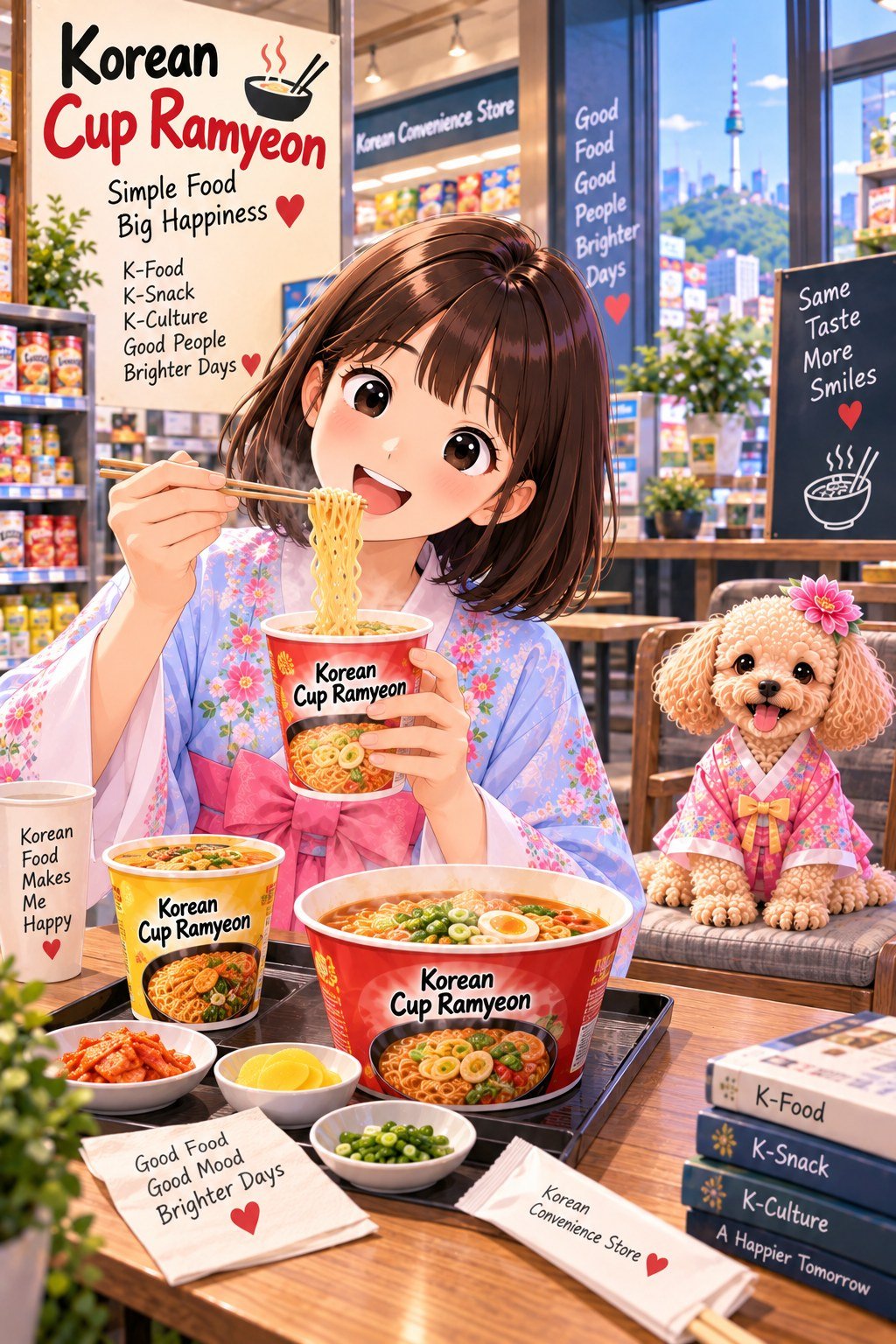
Following the package directions and allowing the noodles to cool makes a first Korean Cup Ramyeon experience simpler and safer.
Korean Cup Ramyeon as Everyday K-Food
Korean Cup Ramyeon shows how K-Food extends beyond restaurant meals and foods prepared from scratch.
Its cup and bowl formats combine instant noodles, seasoning, preparation, and serving in one compact product.
For K-Nana Studio, it connects the broader Korean Ramyeon tradition with the everyday world of convenience stores, packaged snacks, drinks, and quick Korean meals.
Cup Ramyeon & Korean Convenience Stores
Korean convenience stores provide a natural setting for Cup Ramyeon because customers can choose a packaged noodle product and, where facilities are provided, prepare it with hot water.
This combination of retail space and quick preparation makes Cup Ramyeon part of Korea’s everyday convenience-food culture rather than simply a smaller version of bagged instant noodles.
Different Flavors & Spice Levels
Korean Cup Ramyeon comes in many styles, from relatively mild broths to intensely spicy noodles and from soup-based products to sauce-mixed varieties.
Spice level, ingredients, noodle texture, seasoning, and preparation method vary by product, so the current package should be checked before choosing or preparing an unfamiliar variety.
Cup Ramyeon as a Quick Meal
The container serves as both cooking vessel and eating bowl for many products, reducing the equipment needed for preparation.
This makes Cup Ramyeon practical for travel, work breaks, convenience-store meals, and other situations where a full kitchen is unavailable.
Korean Cup Ramyeon Outside Korea
Korean instant noodle brands have expanded into international markets, allowing Cup Ramyeon to reach consumers through supermarkets, Korean grocery stores, and other retail channels.
Products, flavors, labels, package sizes, and preparation instructions can differ by country, so overseas products should be checked individually.
The Complete Korean Cup Ramyeon Experience
The basic experience combines instant noodles, seasoning, a single-serving container, and quick preparation.
Tall cups, wide sabal-style bowls, soup noodles, and sauce-mixed varieties demonstrate how broad the Korean container-noodle category has become.
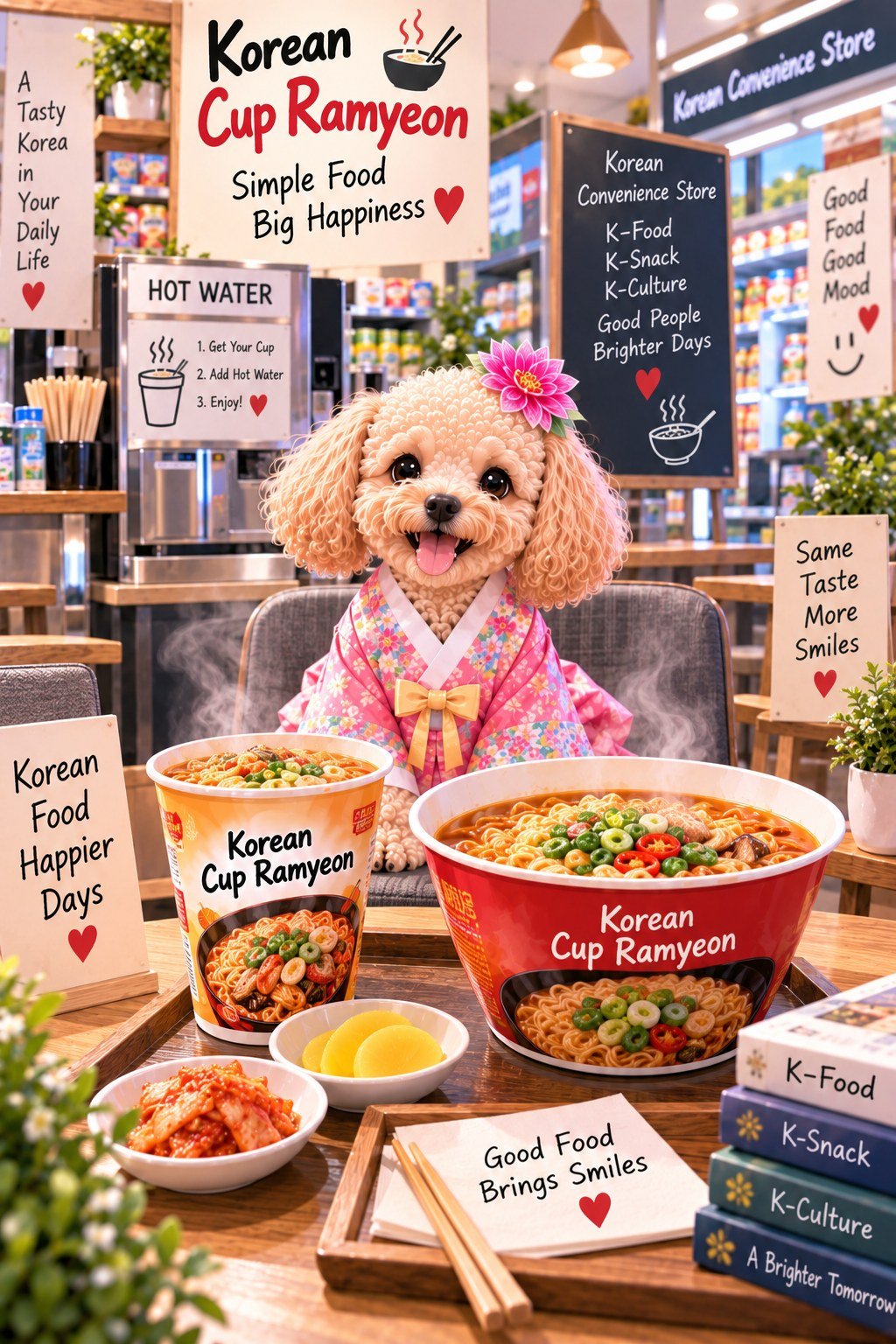
Korean Cup Ramyeon combines quick preparation, different container styles, and a wide range of flavors in one familiar convenience-food category.
How Cup Ramyeon Connects with Other K-Food
Korean Ramyeon provides the broader foundation for understanding Korean instant noodles, while Cup Ramyeon focuses specifically on convenient single-serving container products.
Budae Jjigae shows another role for ramyeon noodles as sari inside a shared Korean stew, creating a very different eating experience from container noodles.
Orion Choco Pie and Binggrae Banana Flavored Milk connect Cup Ramyeon with Korea’s wider packaged snack and convenience-drink culture.
Bibigo Mandu provides another example of convenient packaged Korean food that has expanded through international retail markets.
From Korean Convenience Food to Global K-Food
Cup Ramyeon demonstrates how a Korean food experience can travel through packaged products without requiring a restaurant or full kitchen.
Together with Korean snacks, refrigerated drinks, frozen foods, and other convenience products, it represents an increasingly visible part of everyday global K-Food.
FAQ
What is Korean Cup Ramyeon?
Korean Cup Ramyeon is instant ramyeon packaged in a single-serving container that commonly functions as both the preparation container and serving bowl. Products can include soup-based noodles, sauce-mixed noodles, tall cups, and wider bowl-style containers.
What is the difference between Cup Ramyeon and bagged Ramyeon?
Bagged ramyeon is commonly cooked in a separate pot, while many Cup Ramyeon products are designed for preparation directly inside their containers. Exact cooking methods vary by product.
What is Sabal Ramyeon?
Sabal means bowl in Korean. Sabal-style ramyeon uses a wider, bowl-shaped container rather than the relatively tall and narrow form associated with many cup noodles.
Does all Korean Cup Ramyeon contain soup?
No. Some products are designed to be eaten with broth, while others use little or no soup and can require draining water before mixing in sauce or seasoning.
How do you prepare Korean Cup Ramyeon?
Many products use hot water and a specified waiting time, but water quantity, seasoning sequence, draining instructions, and preparation time vary. Follow the directions printed on the specific product package.
Ingredients & Allergens
Cup Ramyeon ingredients vary widely and can include wheat, soy, sesame, egg, milk, seafood, meat-derived ingredients, or other product-dependent allergens.
Consumers with allergies or dietary restrictions should check the current ingredient list and allergen statement on the exact product they purchase.
Sodium & Nutrition Label
Sodium, calories, fat, carbohydrates, protein, serving size, and other nutrition values differ between Cup Ramyeon products.
Use the current nutrition panel for the specific product rather than applying the nutrition information from one Korean instant noodle to the entire category.
Hot Water & Steam Safety
Preparing Cup Ramyeon can involve near-boiling water, hot steam, and a container that becomes hot during preparation.
Place the container on a stable surface, pour water carefully, open the lid away from the face, and allow the noodles and broth or sauce to cool sufficiently before eating.
Container & Cooking Instructions
Not every instant noodle container is designed for the same preparation method or appliance.
Follow the specific package directions for water level, waiting time, draining, stirring, microwave use where applicable, and any other preparation instructions rather than assuming one method works for every product.
Storage & Product Condition
Unopened Cup Ramyeon should be stored according to the package directions and protected from conditions that can damage the container or product.
Check package integrity, date labeling, and storage information before preparation, particularly when the product has been stored for an extended period.
Image Credits
Korean Cup Ramyeon family convenience-food visual with Dad, Mom, K-Nana daughter, and Nana in hanbok enjoying noodles in tall cup and wide bowl-style containers — K-Nana Studio original visual.
Korean Cup Ramyeon package-check visual with Mom in hanbok reviewing product information among different container noodle formats while Nana watches from a separate safe seat — K-Nana Studio original visual.
Korean Cup Ramyeon preparation visual with Dad in hanbok safely adding hot water to a container noodle product while Nana remains separated from the hot water and steam — K-Nana Studio original visual.
Korean Cup Ramyeon tasting visual with K-Nana daughter in hanbok enjoying prepared noodles while tall cup and wide sabal-style containers are shown and Nana sits separately — K-Nana Studio original visual.
Nana in pink floral hanbok seated separately as a K-Food mascot beside Korean Cup Ramyeon in tall cup and wide bowl-style containers with noodles, broth, and vegetables — K-Nana Studio original visual.
Disclaimer
This article is provided for general food, cultural, and product information. Korean Cup Ramyeon products, ingredients, allergens, nutrition information, spice levels, container materials, preparation methods, serving sizes, availability, and storage requirements can vary by product, manufacturer, country, and time. Consumers should check the current product package for the exact ingredients, allergen information, nutrition values, water level, cooking time, draining instructions, appliance suitability, and storage directions. Hot water, steam, containers, noodles, and broth can cause burns. People with food allergies, medical conditions, or other individual dietary requirements should confirm current product information before consumption and follow appropriate professional guidance when necessary.