
Samgyeopsal is one of Korea’s most familiar pork dishes and one of the easiest ways for international visitors to experience Korean tabletop grilling. Thick slices of pork belly are cooked directly on a hot grill, usually at the table, then eaten with leafy vegetables, ssamjang, garlic, kimchi, rice, and a variety of side dishes.
The name refers to pork belly, a cut known for alternating layers of meat and fat. As the slices cook, the exterior browns while the fat renders onto the grill. This creates the rich flavor and texture associated with samgyeopsal and also makes it possible to grill ingredients such as kimchi and garlic alongside the pork.
But samgyeopsal is not simply a plate of grilled meat. The experience includes cooking together, cutting the pork into bite-sized pieces, choosing different accompaniments, building ssam wraps, sharing banchan, and combining each bite differently. For many travelers, this interactive style of eating is as memorable as the pork itself.
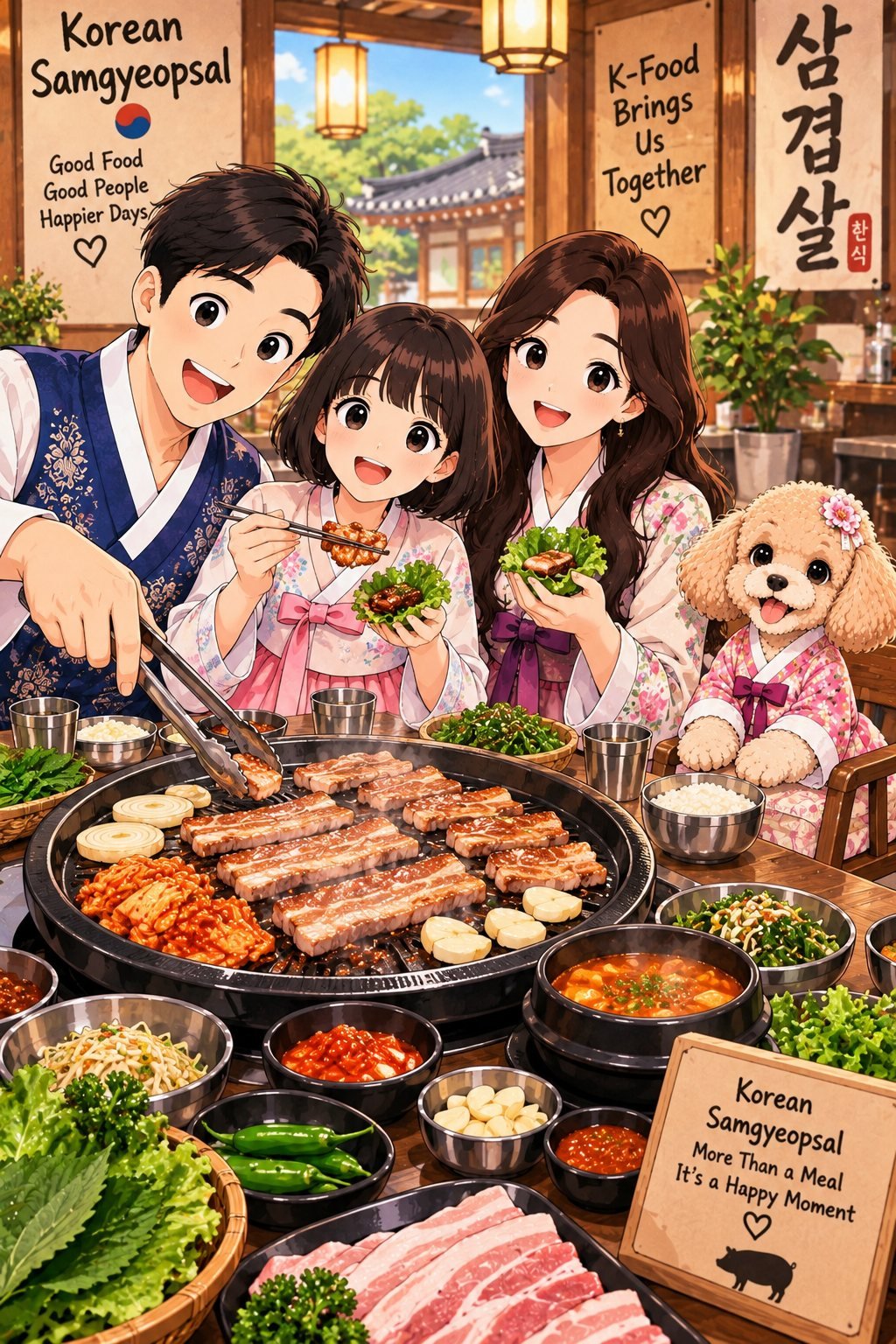
Samgyeopsal brings grilling, ssam, kimchi, garlic, rice, and banchan together around one shared Korean table.
Quick Guide
| Korean name | 삼겹살 |
| Main ingredient | Pork belly |
| Cooking style | Tabletop grilling is common |
| Common accompaniments | Lettuce, perilla leaves, ssamjang, garlic, kimchi, rice, and banchan |
| How it is eaten | Plain, with dipping sauces, or wrapped as ssam |
| Typical dining style | Shared meal cooked and eaten around the same table |
| Useful for first-time visitors | Cook pork thoroughly and try several different ssam combinations |
What Is Samgyeopsal?
Samgyeopsal is pork belly cut into slices suitable for grilling. The Korean name is commonly associated with the layered appearance of the cut, where lean meat and fat form visible bands through the pork.
Unlike some Korean meat dishes that rely heavily on a marinade before cooking, familiar samgyeopsal is often grilled without a strong marinade. This allows the pork itself, the browning from the grill, and the accompanying sauces and side dishes to create the final flavor.
Thickness varies by restaurant. Some establishments serve relatively thin slices that cook quickly, while others specialize in thick pieces that take longer to grill and can develop a browned exterior while retaining a substantial texture inside.
Restaurants may also serve different pork cuts alongside samgyeopsal, so travelers should check the menu rather than assuming every plate of pork at a Korean barbecue restaurant is the same cut.
Why Pork Belly Works So Well on the Grill
Pork belly contains both lean meat and a significant amount of fat. During grilling, some of that fat renders and helps brown the surface of the pork.
The result can combine several textures in one piece: browned edges, a firmer layer of meat, and richer fatty sections. How much fat remains depends on the cut, thickness, grilling time, and individual piece.
The rendered fat also changes the other foods cooked on the grill. Kimchi and garlic can absorb some of the pork flavor as they cook, creating a different experience from eating them directly from the side-dish plate.
How Samgyeopsal Is Grilled
At many Korean barbecue restaurants, raw pork belly arrives at the table and is cooked on a built-in or portable grill. Depending on the restaurant, diners may cook the meat themselves or staff may assist with grilling.
Thick strips are often placed on the grill first and allowed to brown before being turned. As the meat cooks, kitchen scissors can be used to cut long pieces into smaller portions that are easier to turn, cook evenly, and eat.
Tongs are useful for handling the meat without touching it directly. When raw and cooked foods are handled at the same table, diners should follow the restaurant’s utensil setup and avoid unnecessary contact between raw pork and foods that are ready to eat.
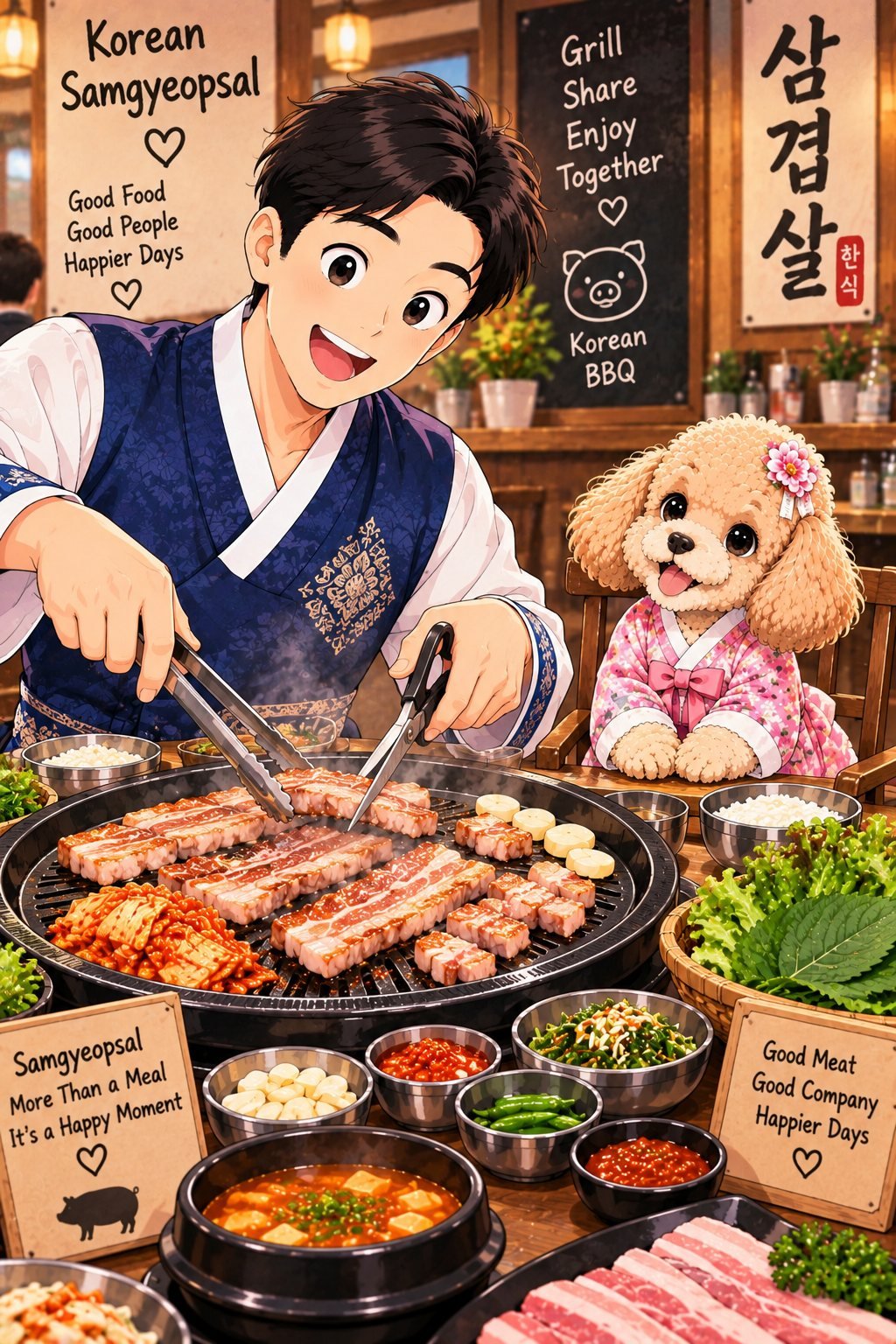
Grilling, turning, and cutting thick pork belly directly at the table turns samgyeopsal into an interactive dining experience.
Why Are Scissors Used at Korean BBQ?
Kitchen scissors are a familiar tool at Korean barbecue tables. Large strips of pork can be easier to manage on the grill before they are divided into bite-sized pieces.
Cutting the meat during cooking also makes it easier to expose additional surfaces to the hot grill. Diners can then turn the smaller pieces and continue cooking until they are properly done.
The scissors are therefore not simply a visual feature of Korean BBQ. They are a practical tabletop tool for portioning meat without moving it back to a kitchen cutting board.
Grilled Kimchi & Garlic
Kimchi and garlic are two familiar companions to samgyeopsal, and both can take on a different character when heated on the grill.
Kimchi becomes warmer and softer as it cooks, while parts touching the hot surface can brown. When cooked near pork belly, it may also pick up rendered pork fat, creating a richer flavor than uncooked kimchi served as banchan.
Garlic can be grilled until it softens and develops a milder, roasted character. It can then be eaten with the pork or added to a ssam wrap.
K-Nana Studio’s Kimchi Guide explains the broader fermentation and kimjang culture behind one of the most important foods commonly found at a Korean table.
What Is Ssam?
Ssam means “wrap” and describes the practice of wrapping food inside leafy vegetables. With samgyeopsal, lettuce and perilla leaves are familiar choices, although the available greens vary by restaurant.
A basic wrap can begin with one leaf, followed by a piece of grilled pork. Ssamjang, garlic, kimchi, rice, or another accompaniment can then be added according to preference.
The goal is not to follow one mandatory formula. One diner may prefer a simple lettuce-and-pork wrap, while another may combine perilla leaf, samgyeopsal, ssamjang, grilled garlic, and kimchi in the same bite.
This ability to change every wrap is an important part of the samgyeopsal experience.
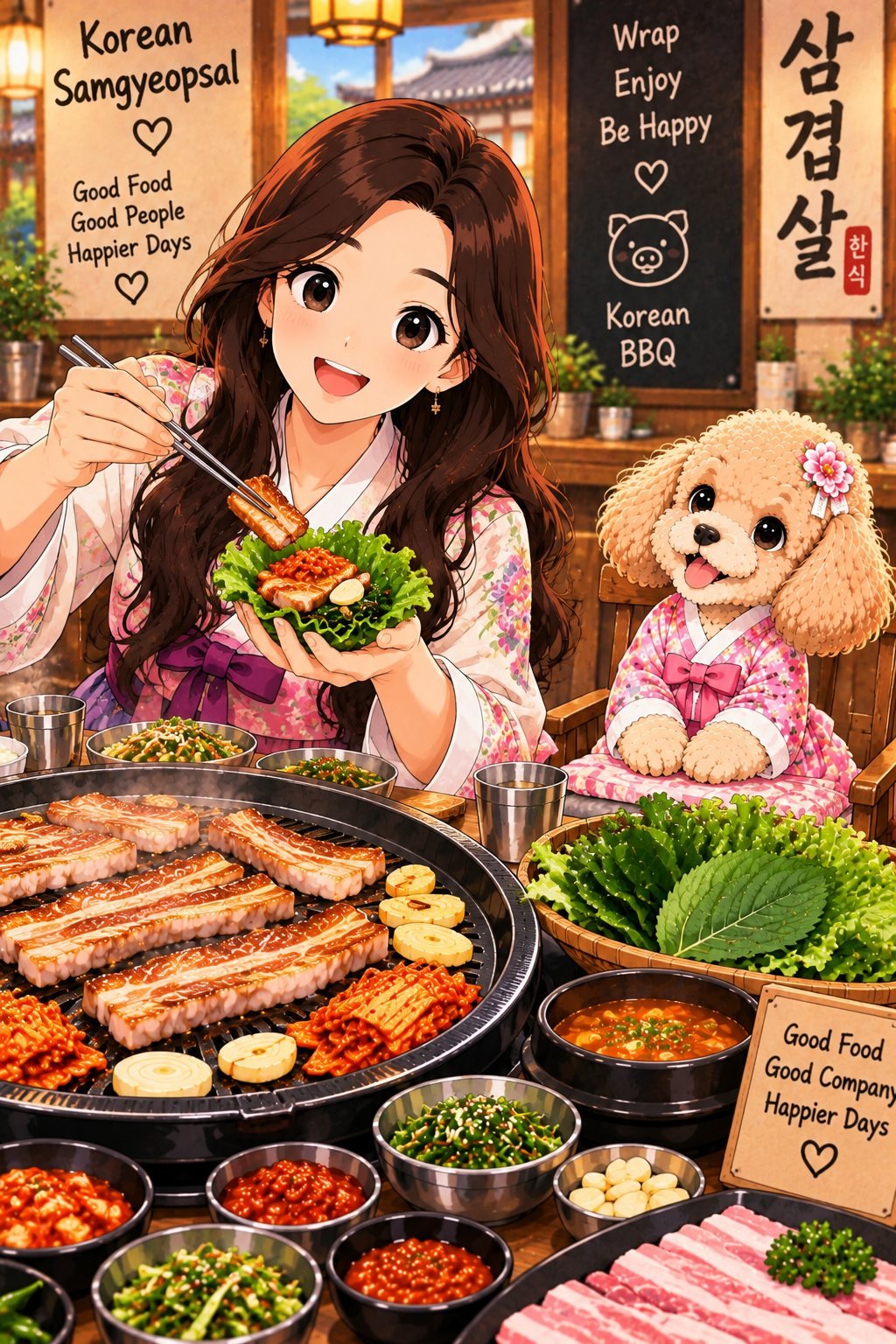
A samgyeopsal ssam can combine pork, fresh greens, ssamjang, garlic, kimchi, and other accompaniments in one customizable bite.
What Is Ssamjang?
Ssamjang is a thick Korean condiment commonly served with grilled meat and vegetable wraps. Its flavor is typically savory and fermented, with recipes often built around Korean fermented pastes and additional seasonings.
Only a small amount may be needed because the flavor can be concentrated. Adding too much can overpower the pork and the fresh vegetables, so first-time visitors can start with a small portion and adjust from there.
Recipes differ between restaurants and commercial products. Diners with allergies or dietary restrictions should not assume that every ssamjang contains exactly the same ingredients.
Lettuce vs. Perilla Leaves
Lettuce provides a relatively mild, crisp base for a samgyeopsal wrap. This makes it useful for first-time visitors who want the grilled pork and ssamjang to remain the strongest flavors.
Perilla leaves have a much more distinctive aroma and flavor. They can be used alone or combined with lettuce to create a layered wrap.
Trying the same piece of pork first with lettuce and then with perilla is a simple way to experience how much one leaf can change the character of a bite.
Grilled Kimchi, Garlic & Pork Together
One of the pleasures of a samgyeopsal meal is that ingredients can change as the meal continues. Kimchi that begins as a cool side dish can be moved to the grill, while raw garlic can be cooked until its flavor becomes softer and more roasted.
These ingredients can then be combined with the pork in several ways. A piece of samgyeopsal can be eaten with grilled kimchi alone, dipped into a sauce, placed over rice, or wrapped with vegetables, ssamjang, and grilled garlic.
There is no need to build every bite the same way. Alternating between simple pieces of pork and more elaborate combinations helps diners experience the different textures and flavors on the table.
Samgyeopsal with Rice & Banchan
Although lettuce wraps are strongly associated with Korean barbecue, samgyeopsal does not have to be eaten only as ssam. Rice and banchan provide other ways to enjoy the grilled pork.
A piece of meat with warm rice creates a simple combination, while kimchi, seasoned vegetables, pickled dishes, or other banchan can add acidity, spice, freshness, or additional texture.
The exact banchan selection varies considerably between restaurants. Some tables may include several vegetable dishes and sauces, while others provide a more compact set of accompaniments.
This variety is part of Korean dining culture: the main grilled meat remains at the center, but many smaller dishes allow diners to change each bite throughout the meal.
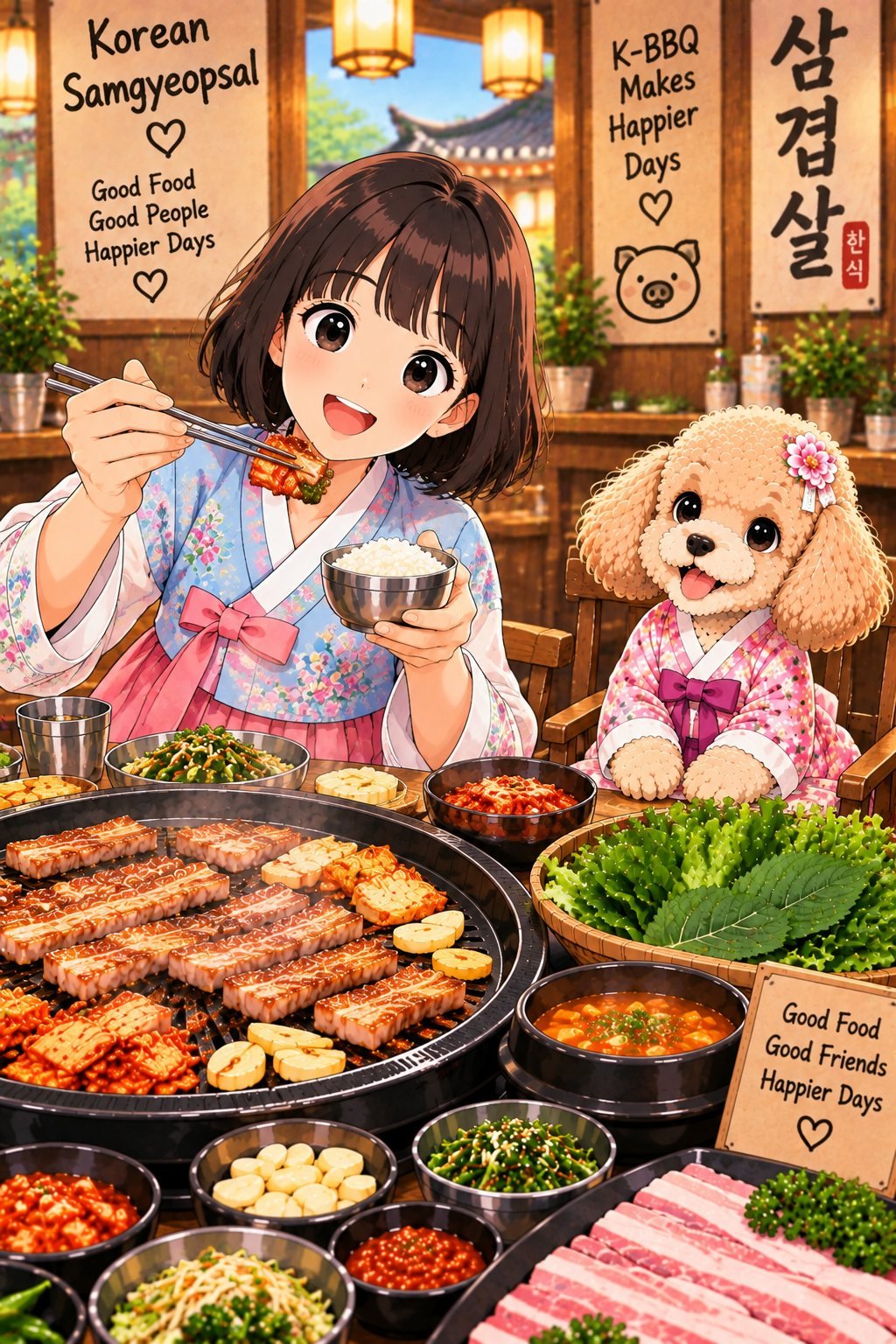
Grilled kimchi, garlic, rice, and banchan turn a plate of pork belly into a table of different combinations rather than one repeated flavor.
How to Dip Samgyeopsal
Samgyeopsal can also be eaten without a vegetable wrap. Restaurants may provide salt-based seasonings, sesame-oil mixtures, ssamjang, or other sauces depending on their style.
Trying the pork first without a strong condiment can help first-time visitors understand the flavor and texture of the grilled meat itself. A second piece can then be paired with one of the available sauces.
Ssamjang creates a stronger fermented and savory combination, while simpler dipping seasonings may allow the flavor of the pork to remain more prominent.
Because restaurant sauces differ, there is no single dipping method that applies to every samgyeopsal meal.
How to Order Samgyeopsal
Korean barbecue menus commonly list meat by portion, weight, or serving, depending on the restaurant. Samgyeopsal may appear alongside other pork cuts and beef options, so check the Korean or English menu carefully before ordering.
Restaurants can also have minimum-order policies, especially for grilled meat. For example, a restaurant may require an initial order intended for more than one serving even when additional meat can later be ordered separately.
These policies vary, so travelers should check the current menu or ask staff rather than assuming every restaurant follows the same system.
Fresh, Frozen & Different Cuts
Travelers may encounter several descriptions of pork belly on Korean menus. Restaurants can distinguish their products by freshness, origin, thickness, aging method, or specific cut.
Some specialize in very thick pork belly, while others use thinner slices that cook quickly. Different cuts can contain noticeably different ratios of meat and fat.
The word “samgyeopsal” therefore tells you the general type of pork, but it does not guarantee that every restaurant will serve an identical-looking piece.
What Happens at the Table?
A typical samgyeopsal meal begins with the grill, meat, vegetables, sauces, and banchan being arranged around the table. The exact service sequence varies by restaurant.
The pork is placed on the hot grill and turned as it cooks. Larger strips can be cut into smaller pieces with scissors, while kimchi and garlic may also be grilled depending on the setup.
Once the pork is properly cooked, diners can begin creating their own combinations with lettuce, perilla leaves, ssamjang, rice, garlic, kimchi, and other side dishes.
Additional meat or side dishes can then be ordered if needed. Some restaurants also offer noodles, stews, rice dishes, or fried rice as a later part of the meal.
Samgyeopsal vs. Korean BBQ
Samgyeopsal and Korean BBQ are related, but the terms do not mean exactly the same thing. Samgyeopsal refers specifically to pork belly, while Korean BBQ is a broader dining category that can include many pork and beef cuts, marinades, sauces, and grilling styles.
K-Nana Studio’s Korean BBQ Guide introduces the wider tabletop-grilling experience, including samgyeopsal, ssam, different meats, banchan, and the shared dining format.
This Samgyeopsal Guide focuses more closely on one particular cut: how pork belly cooks, why its rendered fat matters, how it works with grilled kimchi and garlic, and how diners build different combinations around it.
Samgyeopsal as a Shared Meal
Part of the appeal of samgyeopsal comes from the fact that the cooking takes place in the middle of the table. Diners are not simply waiting for individual finished plates to arrive from the kitchen.
Someone may turn the meat, another person may cut it, and the group can share the cooked pieces as they become ready. This creates a meal that naturally encourages conversation and interaction.
The experience can be casual among friends or part of a larger gathering. Restaurant style, group size, and dining customs vary, but sharing a grill remains one of the most recognizable features of the meal.
Samgyeopsal & Korean Evening Culture
Grilled meat restaurants are common choices for dinner and social gatherings in Korea. A samgyeopsal meal can therefore fit naturally into an evening that also includes cafés, shopping, entertainment, or nightlife.
Travelers exploring Hongdae can combine Korean food with one of Seoul’s best-known youth, music, shopping, and nightlife districts.
Gangnam Station & Gangnam-daero provides another dense urban area where restaurants, cafés, shopping, and evening activity are concentrated together.
Itaewon offers a different atmosphere, with Korean and international dining cultures sharing the same broader neighborhood.
First-Time Samgyeopsal Tips
- Check the ordering minimum — some barbecue restaurants require a minimum initial meat order.
- Notice the thickness — thick and thin pork belly can cook and feel very different.
- Cook pork thoroughly — do not judge doneness only by the browned exterior.
- Separate raw and cooked utensils — follow the restaurant’s setup for tongs, scissors, and serving utensils.
- Try the pork by itself first — this provides a baseline before adding sauces and wraps.
- Compare lettuce and perilla — the same pork can taste noticeably different with each leaf.
- Start with a little ssamjang — its concentrated flavor can easily dominate a wrap.
- Try grilled kimchi and garlic — heating them changes both texture and flavor.
- Leave room for later dishes — restaurants may offer stew, noodles, rice, or other finishing foods.
The Complete Samgyeopsal Table
A complete samgyeopsal experience is built from contrasts. Hot pork meets fresh lettuce and perilla leaves. Rich rendered fat is balanced by kimchi and vegetable banchan. Savory ssamjang can be followed by plain rice or a simpler bite of meat.
The grill itself continues to change during the meal as pork browns, garlic softens, and kimchi cooks. Instead of receiving one fixed combination from the kitchen, diners decide how each bite will be assembled.
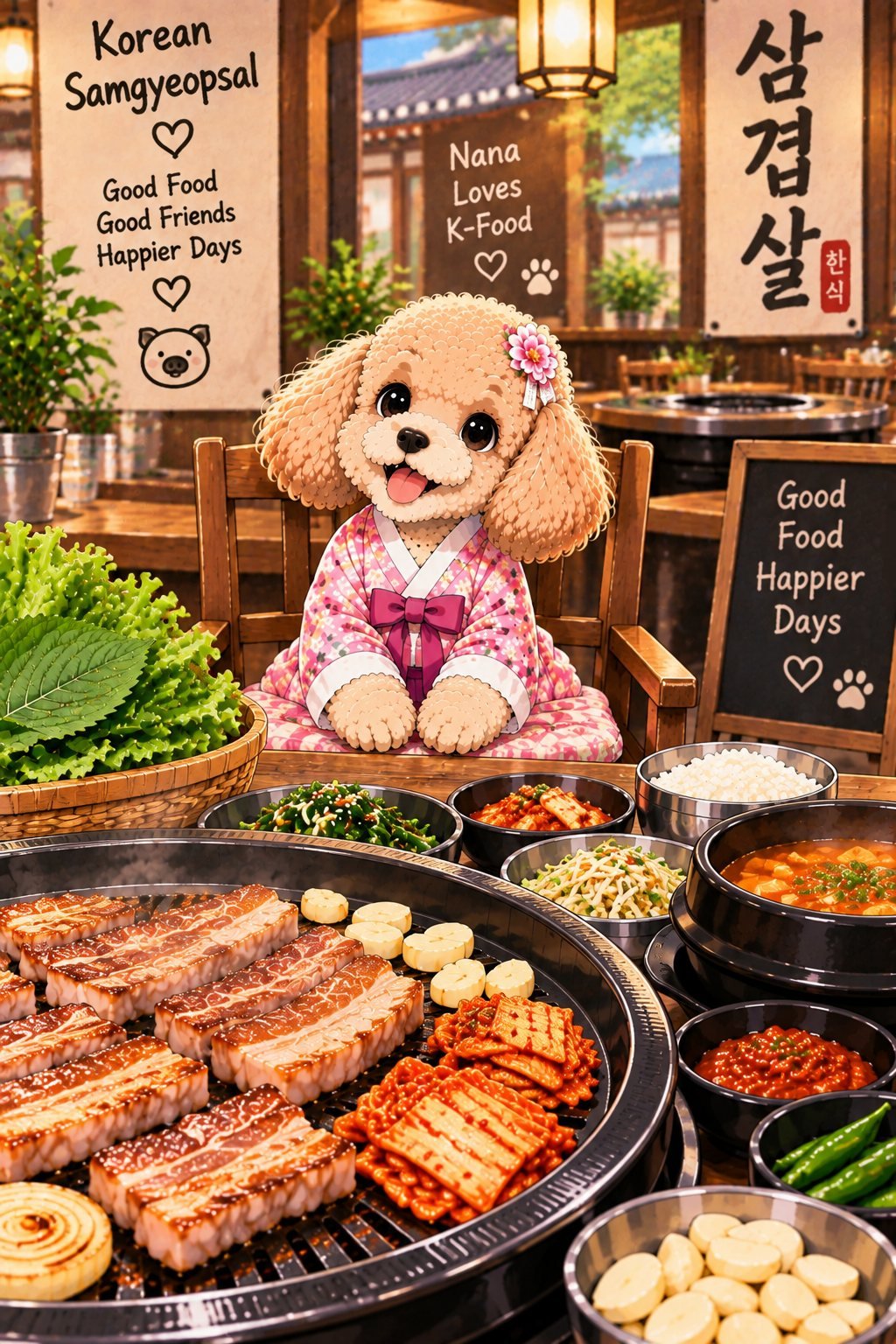
Samgyeopsal is more than grilled pork belly: the full experience comes from the grill, fresh vegetables, fermented sauces, kimchi, garlic, rice, banchan, and the people sharing the table.
How Samgyeopsal Connects with Other K-Food
Samgyeopsal also shows how several familiar Korean foods and eating traditions meet at one table.
Kimchi can begin as banchan and then take on a richer character when grilled beside the pork. Ssamjang and leafy vegetables introduce the culture of wrapping grilled foods into customizable bites.
The shared-table experience connects directly with the broader Korean BBQ tradition, while the rice-and-side-dish combinations demonstrate a different style of eating from the single mixed bowl introduced in the Bibimbap Guide.
For a contrasting casual Korean food experience, Tteokbokki moves from tabletop grilling to rice cakes, gochujang sauce, bunsik, and street-food culture, while Korean Fried Chicken introduces crispy chicken, sauces, takeout, delivery, and contemporary casual dining.
FAQ
What is samgyeopsal?
Samgyeopsal is Korean pork belly commonly cut into slices and grilled directly at the table. It is usually eaten with accompaniments such as lettuce, perilla leaves, ssamjang, garlic, kimchi, rice, and banchan.
Is samgyeopsal the same as Korean BBQ?
No. Samgyeopsal is a specific pork belly cut and dish, while Korean BBQ is a broader category that includes many pork and beef cuts, marinades, sauces, and tabletop grilling styles. Samgyeopsal is one of the best-known foods within Korean BBQ culture.
Is samgyeopsal usually marinated?
Familiar samgyeopsal is often grilled without a strong marinade, allowing the flavor of the pork and browning from the grill to remain prominent. However, preparation styles vary between restaurants, and seasoned or restaurant-specific versions can also exist.
What is ssam?
Ssam means “wrap.” Diners place grilled pork and selected accompaniments inside lettuce, perilla leaves, or other available greens and eat the combination together. Ssamjang, garlic, kimchi, rice, and banchan can be added according to preference.
What is ssamjang?
Ssamjang is a thick Korean condiment commonly served with grilled meat and vegetable wraps. It usually has a concentrated savory and fermented flavor, although ingredients and recipes vary by restaurant and product.
Why is kimchi grilled with samgyeopsal?
Heating kimchi changes its texture and flavor. When kimchi is grilled near pork belly, it can also come into contact with rendered pork fat, creating a richer flavor than cool kimchi served directly as banchan.
Why are scissors used for samgyeopsal?
Kitchen scissors allow larger strips of pork belly to be divided into bite-sized pieces directly over the grill. Smaller pieces can then be turned and cooked evenly before being shared around the table.
Where to Try Samgyeopsal
Samgyeopsal restaurants can be found throughout Korea, from neighborhood dining streets to major commercial and nightlife districts. Travelers do not need to visit one particular famous restaurant to experience Korean pork belly barbecue.
When comparing restaurants, look at the pork thickness, available cuts, portion size, minimum-order policy, banchan, vegetable selection, grill style, and whether staff assist with cooking. Prices and menus can change, so current restaurant information should always be checked directly.
In Seoul, Hongdae makes it easy to combine dinner with cafés, shopping, music, and nightlife.
Gangnam Station & Gangnam-daero provides another major dining and entertainment environment, while Itaewon offers a neighborhood where Korean and international dining cultures meet.
Related K-Nana Guides
For the wider tabletop grilling experience, continue with K-Nana Studio’s Korean BBQ Guide, which introduces different meats, ssam, banchan, sauces, and shared grilling culture.
The Kimchi Guide explains fermentation, kimjang, and the food that can appear both as a side dish and as a grilled accompaniment to samgyeopsal.
The Bibimbap Guide explores rice, namul, vegetables, protein, egg, and gochujang in a completely different Korean meal format.
For casual Korean food culture, explore the Tteokbokki Guide for rice cakes and bunsik, and the Korean Fried Chicken Guide for fried, yangnyeom, soy garlic, chicken mu, takeout, and delivery culture.
Travelers planning an evening meal can also explore Hongdae, Gangnam Station & Gangnam-daero, and Itaewon.
Food & Allergy Notes
Samgyeopsal itself is pork belly, but a Korean barbecue meal contains many additional foods and seasonings. Ssamjang, dipping sauces, marinades, kimchi, banchan, soups, and other accompaniments may contain soy, wheat, sesame, fish or seafood-derived ingredients, nuts, egg, milk, or other ingredients relevant to allergies and dietary restrictions.
Ssamjang and other sauces can contain several ingredients that are not obvious from appearance alone. Commercial products and restaurant recipes differ, so ingredient information for one sauce should not be assumed to apply to another.
Kimchi and other fermented or seasoned side dishes can also vary in their ingredients. Travelers with allergies, intolerances, religious dietary restrictions, or other specific requirements should ask the restaurant directly before eating.
Raw Pork & Cross-Contact
Samgyeopsal is commonly cooked from raw pork directly at the dining table. Raw pork, cooked meat, vegetables, sauces, and ready-to-eat banchan can therefore be present within a relatively small area.
Use the restaurant’s designated tongs, scissors, plates, and serving utensils appropriately. Avoid placing cooked pork back onto surfaces or dishes that held raw meat unless the restaurant specifically provides a safe setup for doing so.
Do not rely only on exterior browning to determine whether thick pork is fully cooked. Thick pieces can brown on the outside while requiring additional cooking inside.
Hot Grill Safety
Tabletop grills, metal plates, burners, pans, and nearby surfaces can become extremely hot during a samgyeopsal meal. Rendered pork fat can also cause sizzling or occasional splattering around the grill.
Keep hands, clothing, bags, phones, and other personal items away from the cooking surface. Children should be supervised carefully around tabletop cooking equipment.
Follow restaurant staff instructions when adjusting burners, replacing grill plates, or handling hot equipment rather than attempting to move unfamiliar equipment yourself.
Image Credits
Korean samgyeopsal family dining experience with grilled pork belly, kimchi, garlic, ssam vegetables, rice, and banchan with the K-Nana family and Nana in hanbok visual — K-Nana Studio original visual.
Samgyeopsal grilling and cutting experience with Dad in hanbok using Korean barbecue tongs and scissors while Nana watches from a separate chair visual — K-Nana Studio original visual.
Korean ssam culture with Mom in hanbok preparing a lettuce and perilla wrap with grilled pork belly, ssamjang, garlic, and kimchi while Nana watches from a separate seat visual — K-Nana Studio original visual.
Korean samgyeopsal table with grilled kimchi, garlic, rice, pork belly, and banchan with K-Nana daughter in hanbok while Nana sits separately without touching the food visual — K-Nana Studio original visual.
Nana in pink floral hanbok seated separately as a K-Food mascot beside a Korean samgyeopsal table with pork belly, lettuce, perilla leaves, ssamjang, grilled garlic, kimchi, rice, and banchan visual — K-Nana Studio original visual.
Disclaimer
This article is provided for general food, travel, and cultural information. Samgyeopsal ingredients, pork cuts, sauces, side dishes, allergens, cooking methods, restaurant practices, portion sizes, and dietary suitability can vary. Raw pork requires appropriate handling and thorough cooking, and tabletop grills can cause burns or splattering. Always follow restaurant instructions and confirm ingredients and preparation directly with the restaurant when allergies, medical conditions, religious restrictions, or other dietary requirements are relevant.