
What Are K-Pop Fan Chants?
K-Pop fan chants are coordinated cheers that fans use at particular moments during songs and performances.
Depending on the artist and song, fans may call out member names, repeat selected words or phrases, respond during pauses, or cheer according to a particular rhythm and timing.
The result can create a recognizable interaction between the performers, music, and audience.
Fan chants are an important part of some K-Pop fan experiences, but they are not used in exactly the same way for every artist, song, concert, or event.
They are also not a requirement for being a K-Pop fan.
If you want to understand the broader community surrounding these traditions, start with K-Pop Fandom Culture.
Is a Fan Chant the Same as Singing Along?
Not exactly.
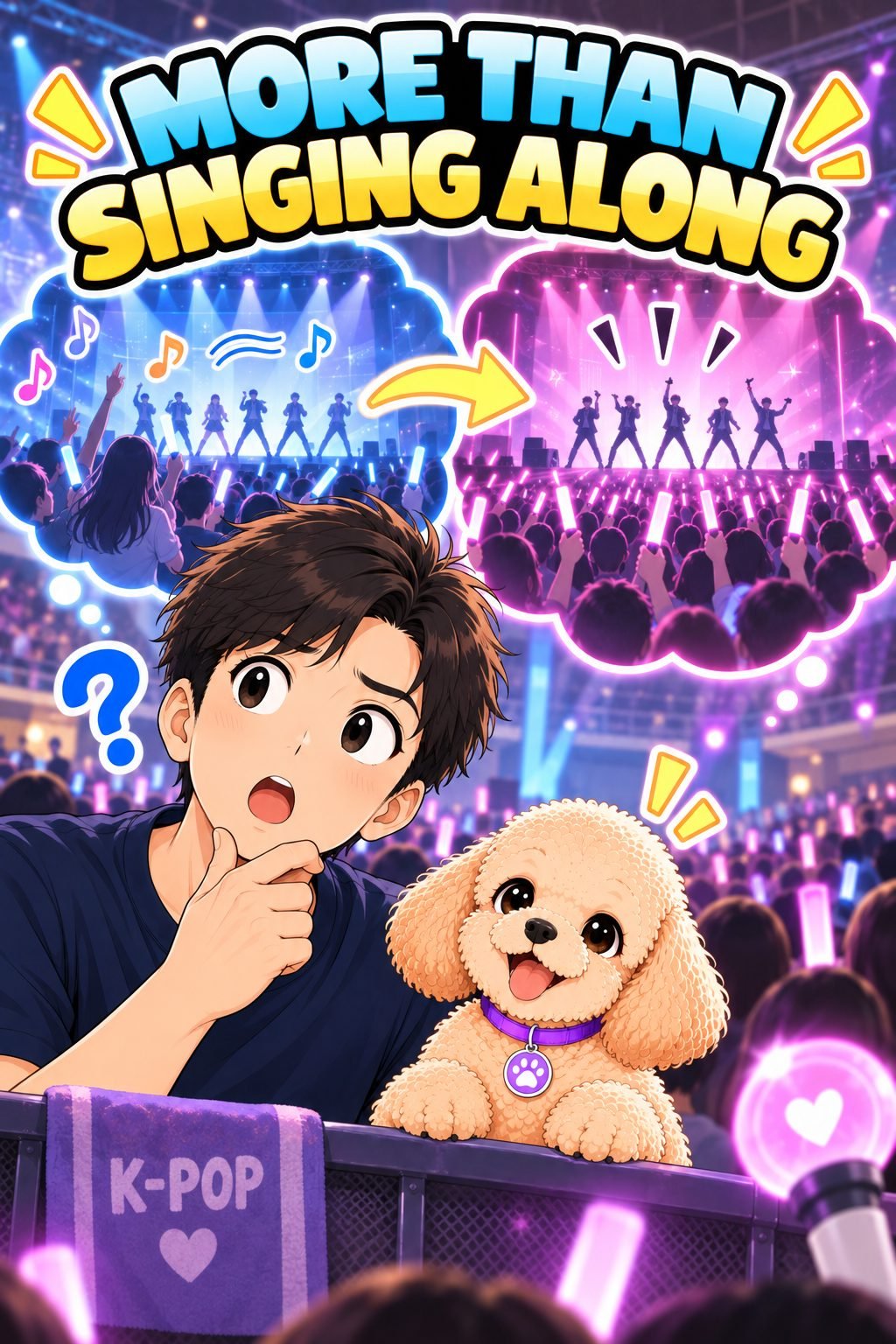
Singing along usually means singing parts of the song together with the artist.
A fan chant is generally more structured. Fans respond at particular moments using specific words, names, sounds, or rhythms associated with the song’s cheering guide or established fan practice.
The two can overlap in a live audience, but they describe different ideas.
A fan can sing along without knowing a fan chant, and a fan chant may include words that are not simply the next lyric being sung by the artist.
What Can Be Included in a Fan Chant?
The structure depends on the song.
A fan chant may include elements such as:
- Artist or group names
- Member names
- Selected words from a song
- Short responses between vocal lines
- Repeated phrases
- Rhythmic cheering
- Calls placed during instrumental sections or pauses
These are examples rather than a universal formula.
Some songs have highly recognizable cheering patterns, while others may have simpler audience participation or no widely used structured chant at all.
Why Do Fans Chant Member Names?
Calling member names together is one recognizable type of K-Pop fan chant.
For some songs, names may be called in a particular sequence and rhythm before or during the performance.
This can create a strong group response from the audience and identify support for the performers on stage.
However, not every fan chant includes member names, and the structure can differ greatly between artists.
Why Is Timing Important?
Fan chants work because the audience response is coordinated with the music.
A phrase shouted at a specific pause can sound very different if it is shouted randomly over a vocal line.
This is why fan-chant guides often connect the cheering words with particular parts of a song.
Fans who want to participate may listen to the track while practicing where each response fits.
The goal is not simply to be loud. The timing is part of the fan chant itself.
Who Creates K-Pop Fan Chants?
There is no single answer that applies to every artist.
For many K-Pop releases, an official cheering guide or fan-chant guide may be provided through an artist’s entertainment company, official fan platform, social channel, or other authorized source.
In other cases, fan communities may develop or reinforce cheering practices themselves.
This means beginners should distinguish between an officially published cheering guide and a chant circulating informally among fans.
What Is an Official Fan Chant Guide?
An official fan chant or cheering guide is information released through an authorized artist or company channel explaining how fans can cheer during a particular song.
Depending on the format, it may show the song lyrics together with highlighted cheering sections, member names, timing cues, or a demonstration video.
Not every artist or song necessarily has the same type of official guide.
If you want to learn a specific current fan chant, start with the artist’s official channels rather than assuming that an old fan-made version is still the relevant one.
How Do Fans Learn Fan Chants?
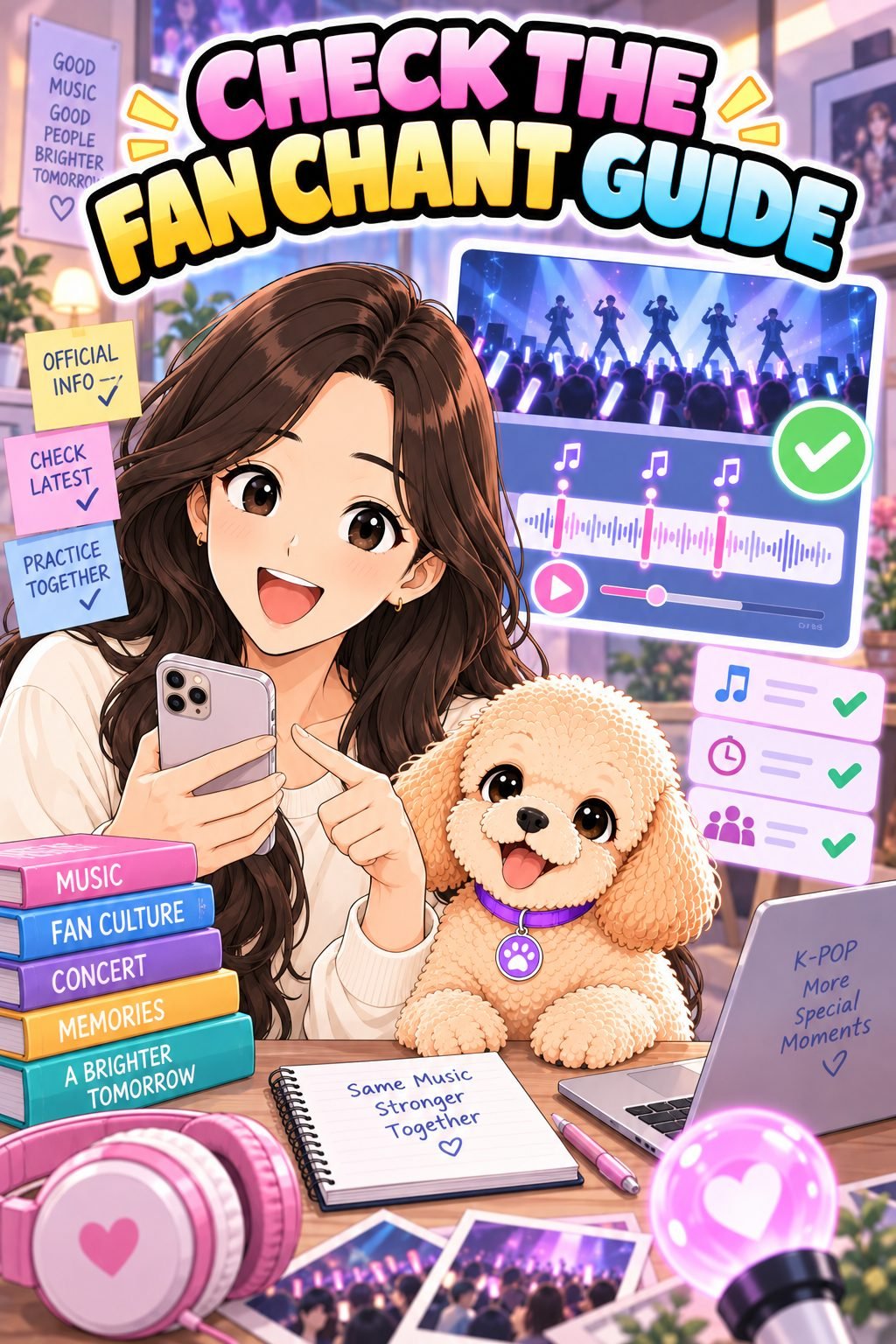
Fans can learn by reading a cheering guide, watching an official demonstration when one is available, listening to the song, and practicing the timing.
Some fans memorize the entire chant before attending an event.
Others learn only a few recognizable sections or follow the audience once they are at the venue.
You do not need to memorize every word perfectly before attending a K-Pop performance.
What If You Do Not Speak Korean?
International fans can still participate if they want to.
Learning names, short responses, and timing can be easier than understanding every Korean lyric in the song.
Romanized fan guides or fan-created learning materials may also exist, although unofficial versions should be checked carefully if accuracy matters.
Do not worry if pronunciation or timing is not perfect. Fan chants are a form of participation, not a language examination.
Where Are K-Pop Fan Chants Used?
Fan chants are strongly associated with live K-Pop fan participation, particularly during performances where organized fan audiences are present.
You may hear them at:
- Korean music-show recordings
- K-Pop concerts
- Fan meetings
- Showcases
- Festivals
- Other live performances
The exact audience culture and rules vary by event.
A chant used at one type of performance should not automatically be assumed to be appropriate in every setting.
Fan Chants at Korean Music Shows
Korean television music programs are one of the places where coordinated fan cheering can be especially noticeable.
During prerecordings or other audience sessions, fans may perform established cheering sections while the artist performs.
This audience sound can become part of the atmosphere viewers associate with K-Pop music-show stages.
If you want to understand the programs themselves, read Korean Music Shows.
If you are considering attending one in Korea, use How to Attend a Korean Music Show because actual participation rules can be much more important than simply knowing the chant.
Fan Chants at K-Pop Concerts
Fan chants can also appear at concerts, but concert audience behavior can be more varied.
Fans may chant, sing along, cheer, use light sticks, respond to artist comments, and participate in other audience moments throughout the show.
Not every concert audience follows every music-show fan chant in exactly the same way.
Venue, country, artist, song, tour culture, and audience can all influence how participation sounds.
For the broader live experience, see the K-Pop Concert Guide in Korea.
Fan Chants and Light Sticks
Fan chants and light sticks are different forms of audience participation.
A fan chant uses coordinated voices, while a light stick provides a visual form of support and can sometimes participate in synchronized lighting at compatible events.
Fans may use both during the same performance, but neither should be treated as proof of how dedicated someone is.
The K-Pop Light Sticks guide explains official light sticks and synchronization separately.
Names + Timing + Rhythm
For a beginner, these three ideas make fan chants easier to understand.
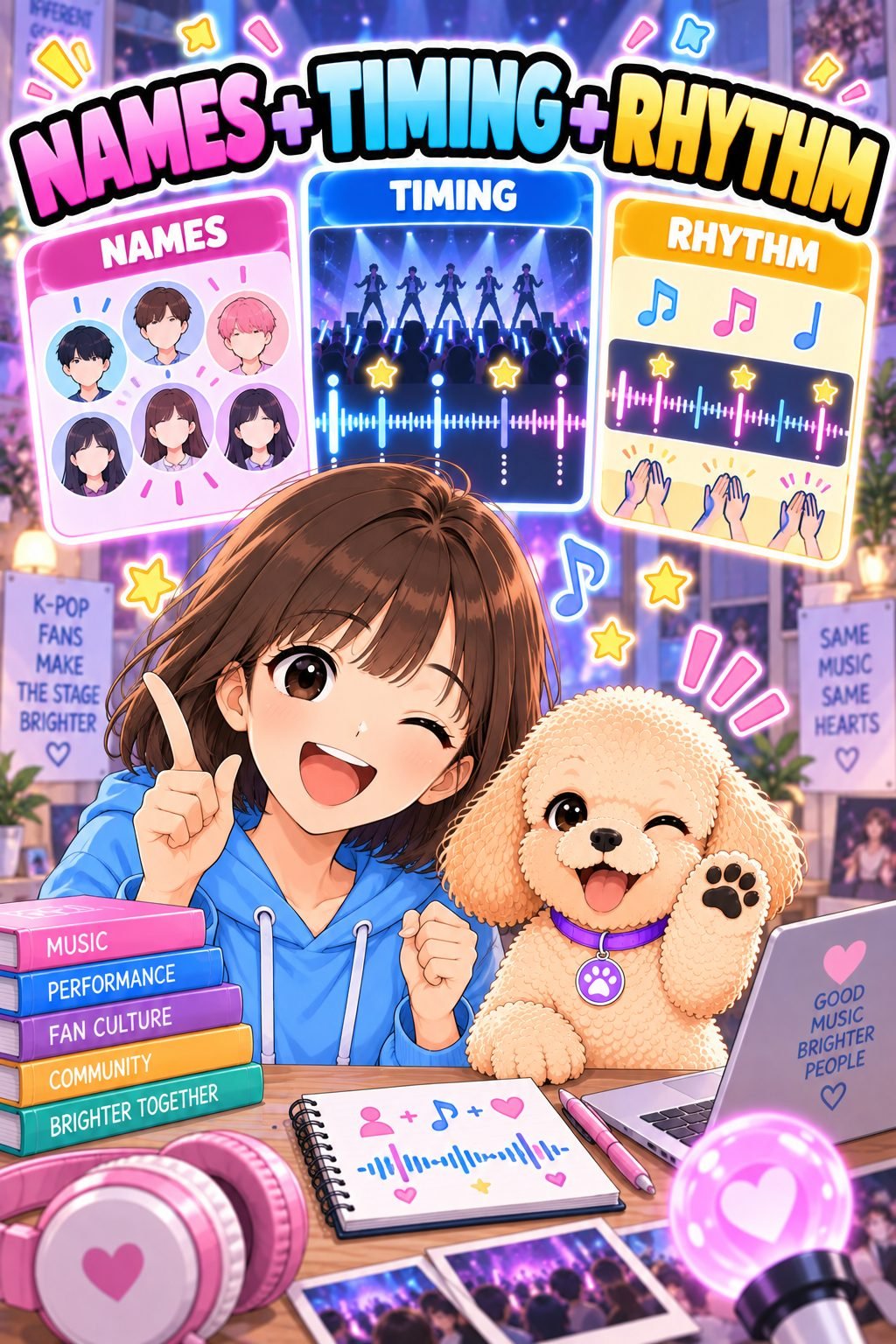
Names: some chants include artist or member names.
Timing: the response is placed at particular moments in the song.
Rhythm: the audience tries to deliver the response together rather than as unrelated individual shouting.
Not every chant uses all three in the same way, but together they explain why a large audience can sound surprisingly coordinated.
Do You Have to Learn Fan Chants Before a Concert?
No.
You can attend and enjoy a K-Pop concert without knowing any fan chants.
Some fans enjoy memorizing every cheering section, while others prefer singing along, watching the performance, using a light stick, or simply listening.
Fan chants are an optional way to participate in the live experience.
They are not a test that determines whether someone is a genuine fan.
Can You Join a Fan Chant If You Do Not Know It?
Yes, but you do not need to force yourself to participate.
If you recognize a simple response or member-name section, you can join when you feel comfortable.
You can also listen to the surrounding audience and gradually learn the timing during the performance.
If you are unsure, simply enjoying the stage is completely fine. It is better to listen than to worry about performing every response perfectly.
Are Fan Chants the Same Outside Korea?
Not always.
International concert audiences can have different participation habits depending on the country, venue, artist, tour, and local fan community.
At some performances, fans may follow established Korean fan chants closely. At others, the audience may sing larger portions of the song, cheer differently, or combine several styles of participation.
This does not automatically make one audience more dedicated than another.
Fan culture can travel internationally while also adapting to different live-performance environments.
Can Fan Chants Change?
Yes.
A new song can have a new cheering guide, and different versions of a performance may create different audience moments.
Fan practices can also evolve as songs become familiar or as artists and fan communities develop new traditions.
If you are preparing for a specific current performance, use recent information rather than assuming that a chant from an older release applies to a new song.
Are All Fan Chants Official?
No.
Some cheering guides are released through official artist, entertainment-company, or authorized fan channels.
Other chants or audience responses can develop informally within fan communities.
Both can become recognizable parts of a live experience, but they should not automatically be described as the same thing.
If official status matters, check the source of the cheering guide.
Fan Chant Etiquette
Fan chants are designed to add to the shared performance experience rather than overwhelm everyone around you.
- Follow current event and venue rules.
- Use established timing when you know the chant.
- Avoid deliberately shouting over quiet artist comments or unrelated moments.
- Do not pressure another fan to participate.
- Respect fans who enjoy the performance differently.
- Do not turn cheering volume into a competition between members or fandoms.
- Follow staff instructions during music-show recordings and other organized events.
The goal is shared participation, not proving who can shout the loudest.
Do Fan Chants Show Which Member Is Most Popular?
No.
The structure or volume of a fan chant should not automatically be interpreted as a reliable ranking of member popularity.
Different parts of a song can naturally create different audience responses, and an organized chant may intentionally include names or phrases in a particular order.
Audience size, microphone placement, venue acoustics, recording, editing, and the event itself can also affect what viewers hear.
Fan chants are better understood as participation culture than as popularity statistics.
Fan Chants and Member Names
Some fan chants include member names, sometimes in a predetermined sequence.
That sequence should not automatically be interpreted as a ranking.
Depending on the artist, it may follow an established cheering format or another ordering convention.
If you want to learn a particular name chant, use the relevant current cheering guide rather than guessing the order.
Fan Chants and K-Pop Fandom Culture
Fan chants are one example of how K-Pop Fandom Culture can become participatory rather than purely observational.
Fans do not only listen to the song. At some events, they become part of the sound and atmosphere of the performance.
This exists alongside other fan practices such as K-Pop Light Sticks, collecting photocards, birthday events, fan projects, and other activities.
None of these activities is required in order to enjoy K-Pop.
Should Beginners Memorize Every Chant?
No.
If you want to learn one, start with a song you already know well.
Listen for a few clear responses, understand where they occur, and add more only if you enjoy doing so.
Trying to memorize an entire unfamiliar cheering guide immediately can make a concert feel like homework.
Fan chants should make participation more enjoyable, not create unnecessary pressure.
K-Nana Family Guide
Dad: Initially thinks the audience is simply singing the entire song together and wonders how everyone somehow knows the same words.
Mom: Checks whether a current cheering guide exists and looks at the timing instead of relying on an old or random fan post.
K-Nana Daughter: Explains that names, short responses, timing, and rhythm can turn thousands of individual voices into coordinated audience participation.
Nana: Keeps the lesson simple: join if you want, listen if you want — you do not have to know every fan chant.
Practical Tips for K-Pop Beginners
- Do not confuse a structured fan chant with simply singing along.
- Start with an official or current cheering guide when one is available.
- Listen to the song while learning the chant timing.
- Learn a few easy sections first instead of memorizing everything at once.
- Remember that not every chant includes member names.
- Do not assume every K-Pop song has an official fan chant.
- Do not assume the same cheering style is used at every event.
- Expect concert audiences and music-show audiences to behave differently.
- International audiences may adapt fan chants differently.
- Do not pressure other fans to chant.
- Do not use cheering volume as a member-popularity ranking.
- Follow music-show staff and venue instructions.
- Check current information when preparing for a specific performance.
- Remember that fan chants are optional.
FAQ
What is a K-Pop fan chant?
A K-Pop fan chant is a coordinated audience cheer used at particular moments during a song or performance.
Is a fan chant the same as singing along?
Not exactly. Singing along generally means singing with the artist, while fan chants usually involve more structured responses at particular moments.
What do fans say during K-Pop fan chants?
Depending on the song, fans may call artist or member names, repeat selected words or phrases, respond between lines, or use rhythmic cheering.
Who creates K-Pop fan chants?
Some cheering guides are released through official artist or entertainment-company channels, while other fan practices can develop informally within fandom communities.
Do all K-Pop songs have fan chants?
No. Not every song has the same kind of structured or officially published cheering guide.
Why do K-Pop fans shout member names?
Some fan chants include member names as part of an established cheering pattern. Not every chant uses names.
How do international fans learn K-Pop fan chants?
They can use current cheering guides, demonstration videos when available, the song itself, and other learning materials to practice the timing and responses.
Do I need to speak Korean to join a fan chant?
No. International fans can learn short responses, names, and timing even without understanding every Korean lyric.
Are fan chants used at Korean music shows?
Yes. Coordinated cheering can be an important part of some music-show audience experiences, although participation procedures and rules vary.
Are fan chants used at K-Pop concerts?
Yes, but concert audiences can combine fan chants with singing, cheering, light sticks, and other forms of participation.
Are fan chants the same at overseas concerts?
Not necessarily. Audience participation can vary by country, venue, tour, artist, and local fan culture.
Do I have to memorize fan chants before a concert?
No. Learning them is optional. You can enjoy the concert without knowing any fan chants.
Does a louder fan chant mean one member is more popular?
Not necessarily. Fan-chant structure, venue acoustics, audience size, recording conditions, and other factors make cheering volume an unreliable popularity measure.
Final Takeaway
K-Pop fan chants are coordinated audience responses that can combine names, words, timing, and rhythm with a live performance.
They are different from simply singing along, although both forms of participation can happen during the same event.
Some cheering guides are officially provided, while other audience traditions can develop within fan communities. Their use can also differ between music shows, concerts, countries, and individual performances.
Most importantly, fan chants are optional. Learn them if they make the performance more fun for you, but you do not need to memorize them to be a K-Pop fan.
Continue Exploring K-Pop
To understand why coordinated cheering became part of fan participation, continue with K-Pop Fandom Culture.
Fan chants are especially noticeable in television performance environments. Korean Music Shows explains prerecordings, broadcasts, rankings, encore stages, and audience participation.
If you want to experience a recording in Korea, How to Attend a Korean Music Show covers applications, eligibility, check-in, identity verification, and current participation rules.
For live concerts, use the K-Pop Concert Guide in Korea.
Continue With K-Pop Fan Culture
Next, K-Pop Fandom Names explains how official fandom identities are created and how they differ from informal fan labels.
If you are still learning common fan vocabulary, What Does Bias Mean in K-Pop? explains bias, ultimate bias, and bias wrecker.
For a broader terminology reference, use the K-Pop Glossary for Beginners.
References
- Korea.net — Korean Culture and K-Pop Information
- Korea.net — The Structure and Activities of K-Pop Fandoms
Image Credits
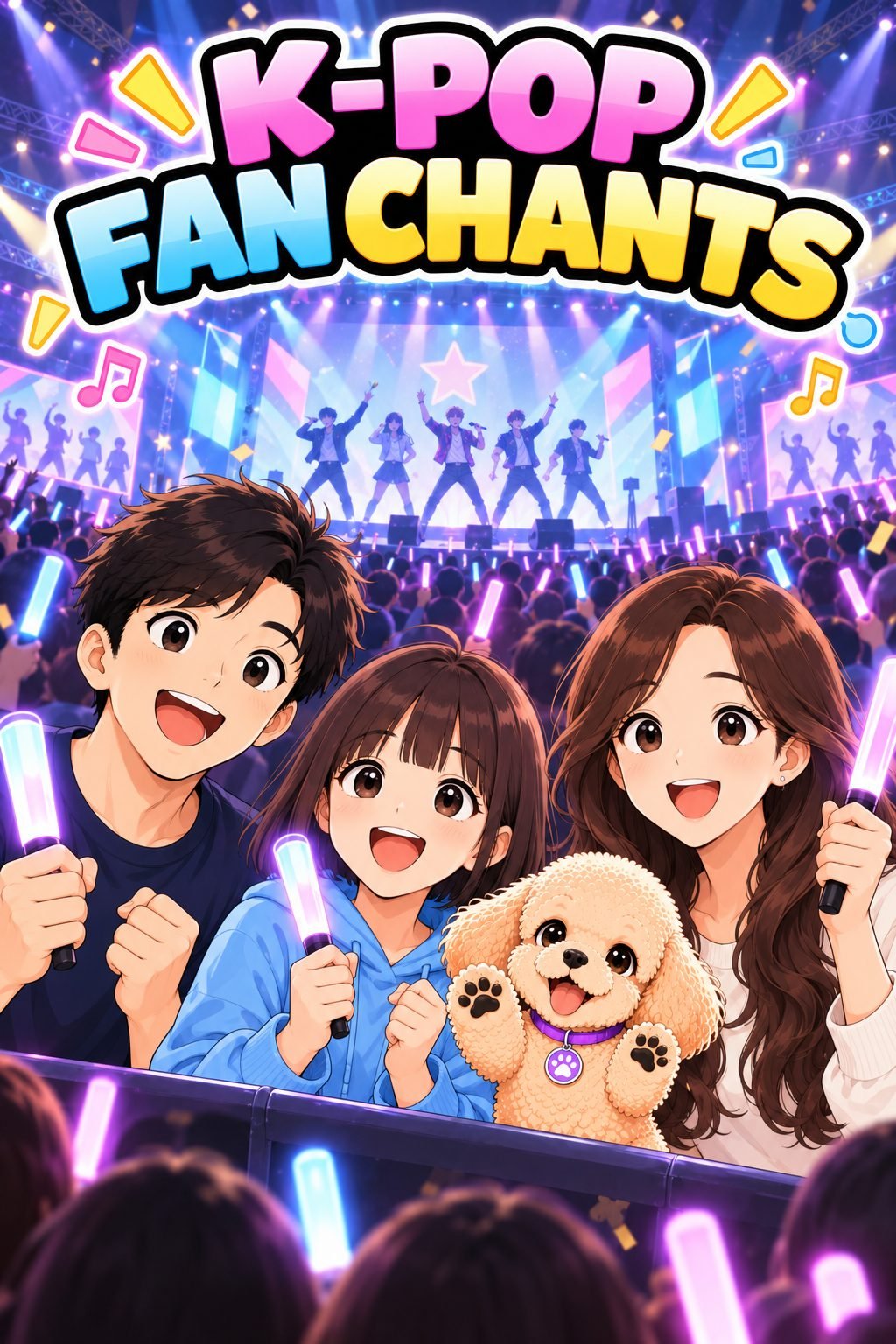
K-Pop fan-chant family visual with Dad, Mom, K-Nana daughter, and Nana discovering coordinated audience cheering during a fictional K-Pop performance — K-Nana Studio original visual.
K-Pop fan-chant beginner visual with Dad and Nana learning that structured fan chants are different from simply singing along — K-Nana Studio original visual.
K-Pop cheering-guide visual with Mom and Nana checking a fictional current fan-chant guide and learning where audience responses fit into a song — K-Nana Studio original visual.
K-Pop fan-chant timing visual with K-Nana daughter and Nana explaining names, timing, and rhythm without reproducing any real artist’s lyrics or cheering guide — K-Nana Studio original visual.
Nana as the K-Nana Studio K-Pop mascot reminding fans that learning and participating in fan chants is optional — K-Nana Studio original visual.
Disclaimer
This article is provided for general cultural and educational information about K-Pop fan chants and audience participation. Fan chants, cheering guides, member-name sequences, event practices, music-show procedures, concert participation, and audience traditions vary by artist, song, fandom, event, venue, country, and period and may change over time.
K-Nana Studio is not affiliated with or endorsed by any K-Pop artist, group, entertainment company, broadcaster, music-show program, concert organizer, fandom, fan platform, venue, or other organization discussed in this guide.
When learning a specific current fan chant, check information from the relevant artist, entertainment company, official fan platform, or other authorized source when available. Event and venue instructions should take priority over general information or older fan guides.
Fan-chant participation is optional and should not be used as a measure of whether someone is a genuine fan or how strongly they support an artist. Fans may choose to chant, sing, cheer, use a light stick where permitted, listen quietly, or enjoy performances in other respectful ways.
All K-Nana family and Nana illustrations used in this article are K-Nana Studio original editorial visuals. They are not intended to depict or reproduce any specific real K-Pop artist, group, fandom, entertainment company, official logo, fan chant, song lyric, light stick, concert stage, music-show set, costume, or other protected official design.