
Lotte Pepero is one of Korea’s most recognizable packaged snacks. Its familiar form combines a long, thin biscuit stick with a chocolate coating, creating a snack that is easy to hold, share, and eat.
Pepero is also closely associated with November 11 in Korea, known as Pepero Day. The date 11/11 visually resembles several long Pepero sticks placed side by side.
This combination of a simple packaged snack and a distinctive sharing tradition gives Pepero a cultural identity that extends beyond the product itself.
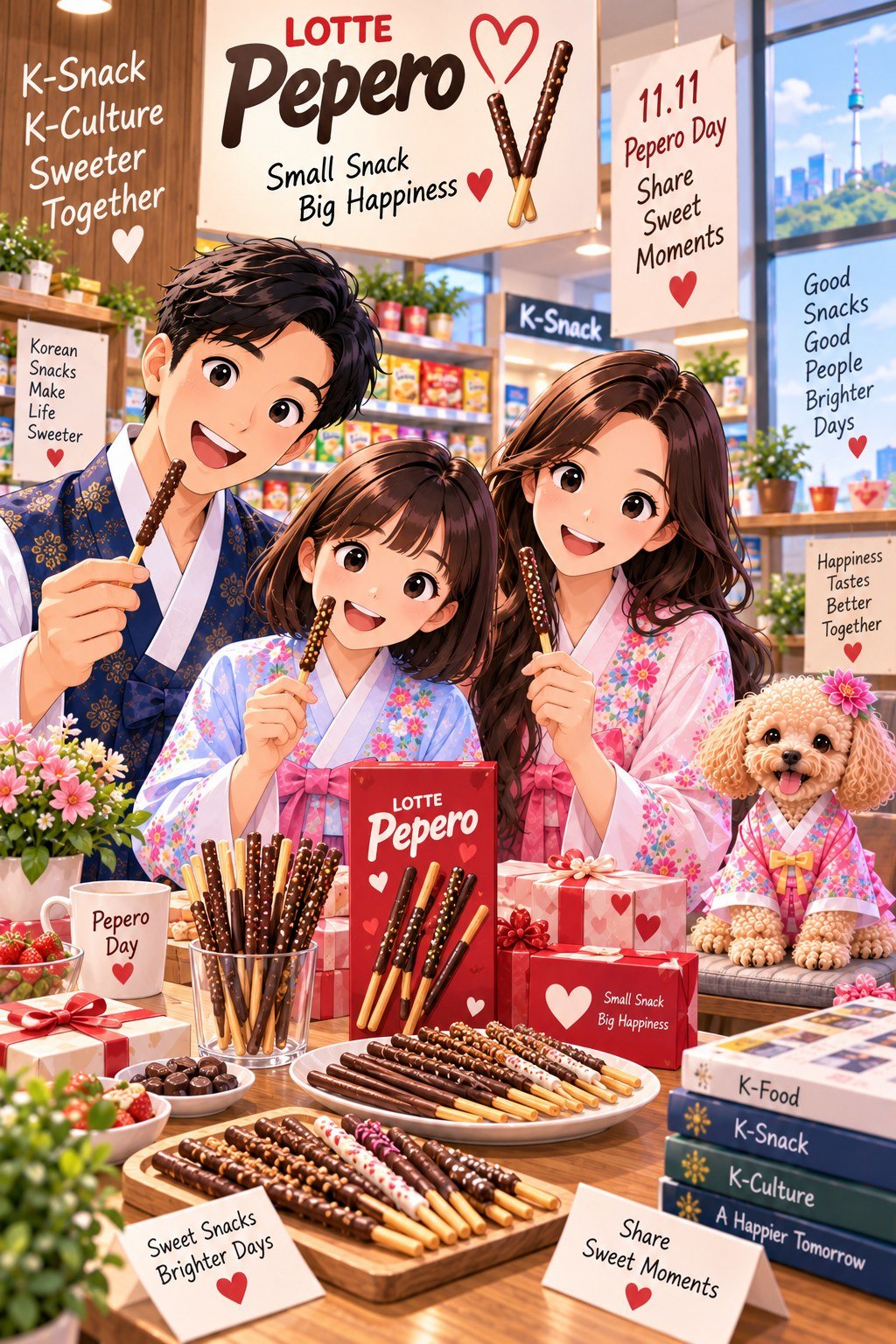
Long chocolate-coated biscuit sticks and the November 11 sharing tradition make Pepero a recognizable part of Korean K-Snack culture.
Quick Guide
| Product | Lotte Pepero |
| Korean name | 빼빼로 |
| Category | Korean packaged snack |
| Basic structure | Long biscuit stick with coating or toppings, depending on product |
| Best-known cultural connection | Pepero Day |
| Pepero Day | November 11 |
| Common occasion | Sharing and gift-giving |
| Important consumer check | Current ingredients, allergens and nutrition information on the specific package |
What Is Lotte Pepero?
Pepero is a packaged biscuit-stick snack produced by Lotte.
The familiar style uses a long, thin biscuit with much of the stick covered in chocolate, leaving part of the biscuit easy to hold.
Different Pepero products can use different coatings, toppings, flavors, and ingredients, so one variety should not be treated as representing every Pepero product.
What Makes Pepero Easy to Recognize?
The long, narrow stick shape is the product’s most recognizable visual feature.
It also creates a contrast between the crisp biscuit and the smoother coating or product-dependent toppings.
The simple shape makes Pepero easy to portion individually and naturally suited to sharing.
Checking the Pepero Package
Pepero products can differ in flavor, coating, toppings, ingredients, allergens, package size, and nutrition information.
Consumers should check the exact product name, ingredient list, allergen statement, nutrition panel, date labeling, and storage information on the package they purchase.
Information for one Pepero variety or another country should not automatically be applied to every product.
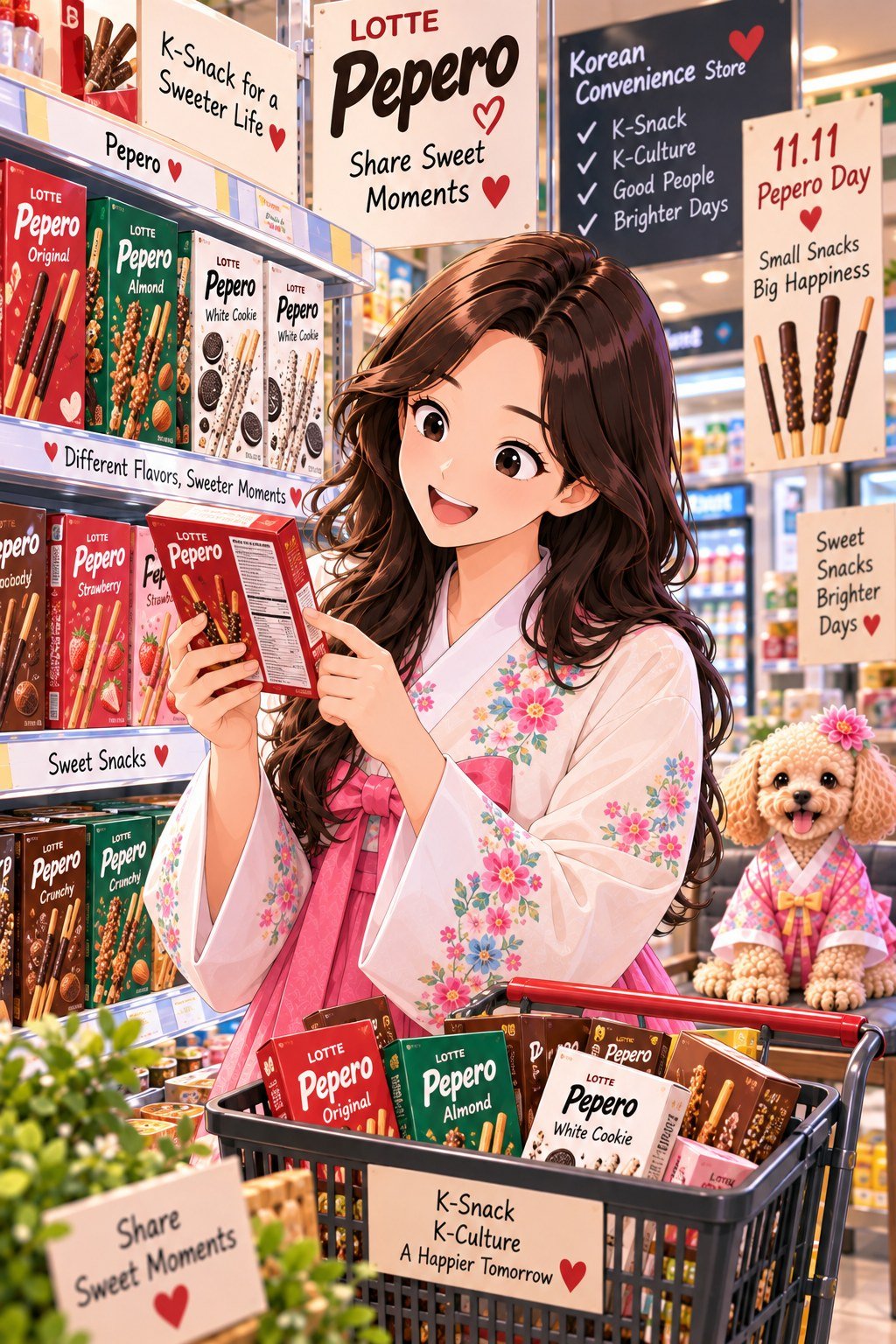
Different Pepero varieties can have different coatings, toppings, ingredients, allergens, and nutrition information, making the current package the best product reference.
What Is Pepero Day?
Pepero Day is observed in Korea on November 11 and is strongly associated with exchanging Pepero and similar stick-shaped snacks.
Friends, couples, families, classmates, and colleagues can use the occasion to give small snack gifts or share them with one another.
It is a modern popular-culture occasion rather than a traditional Korean holiday.
Why November 11?
The date is written numerically as 11/11.
The four number 1s resemble long, thin Pepero sticks standing next to one another, creating an easy visual connection between the date and the snack.
This distinctive date-and-shape relationship became central to the identity of Pepero Day.
Pepero Day & Sharing Culture
Pepero Day gives a commercially packaged snack a social role beyond simply eating it alone.
A small box can be shared or given as a casual gift, while larger or more elaborate presentations can also appear depending on the person and occasion.
The central idea is the exchange or sharing of snacks rather than one required way to celebrate.
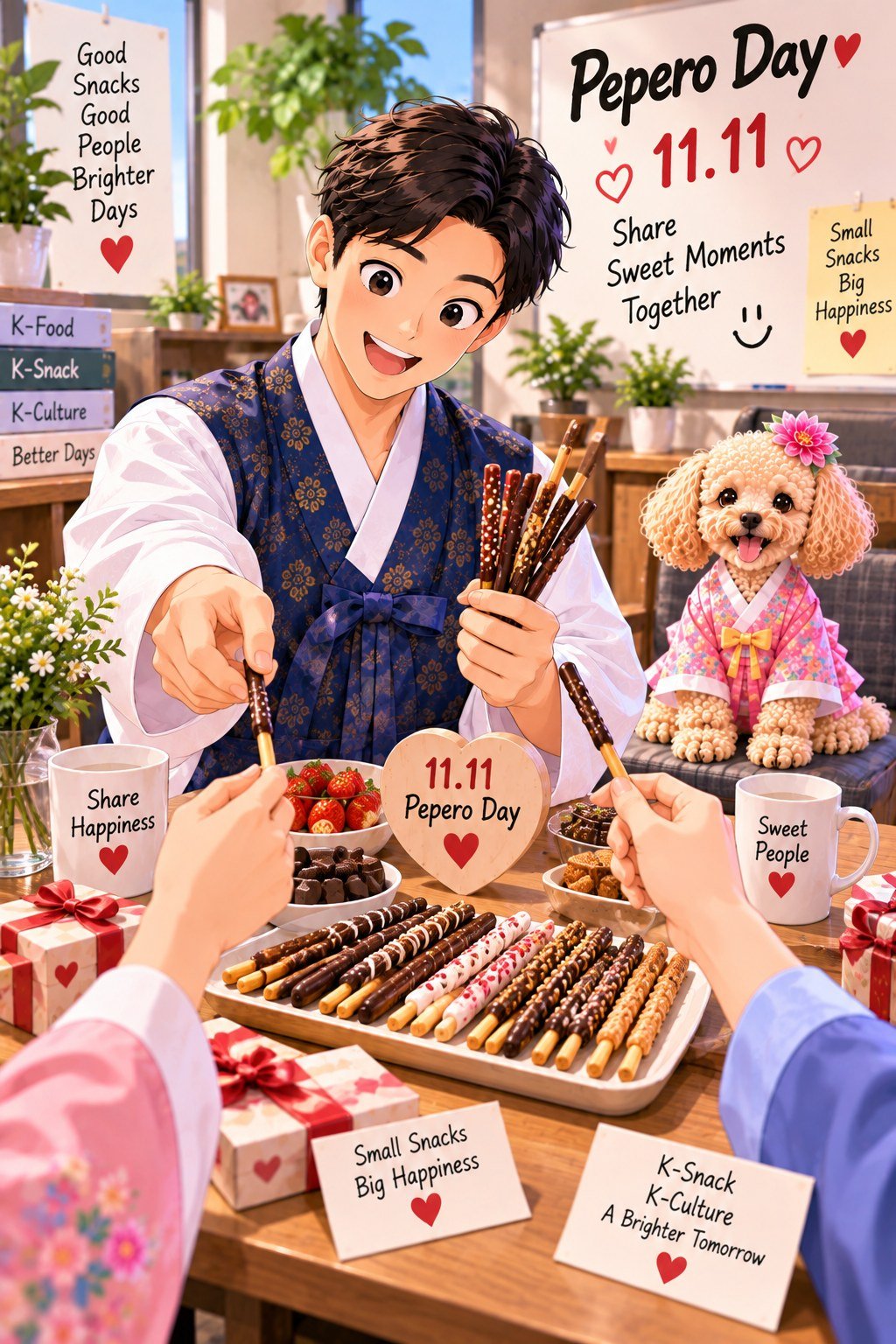
November 11 turns Pepero’s simple stick shape into a Korean snack-sharing occasion associated with small gifts and personal connections.
Pepero as a Korean Packaged Snack
Pepero requires no cooking and can be carried and shared directly from its package.
This places it within the same broad everyday K-Food world as packaged cakes, refrigerated drinks, instant noodles, and other supermarket or convenience-store products.
Its Pepero Day connection gives it an additional cultural story that many ordinary packaged snacks do not have.
What Does Pepero Taste Like?
The experience depends on the specific variety, but the familiar format combines a crisp biscuit with a sweeter coating.
Chocolate, nuts, or other product-dependent coatings and toppings can change both flavor and texture.
Consumers should check the specific package when ingredients or allergens matter.
How to Try Pepero for the First Time
Choose a variety that suits your flavor preference and check the package information before opening it.
Hold the uncovered part of the biscuit stick and try one piece to notice the contrast between the crisp biscuit and its coating or toppings.
Trying different varieties separately can make differences in coating, texture, and flavor easier to recognize.
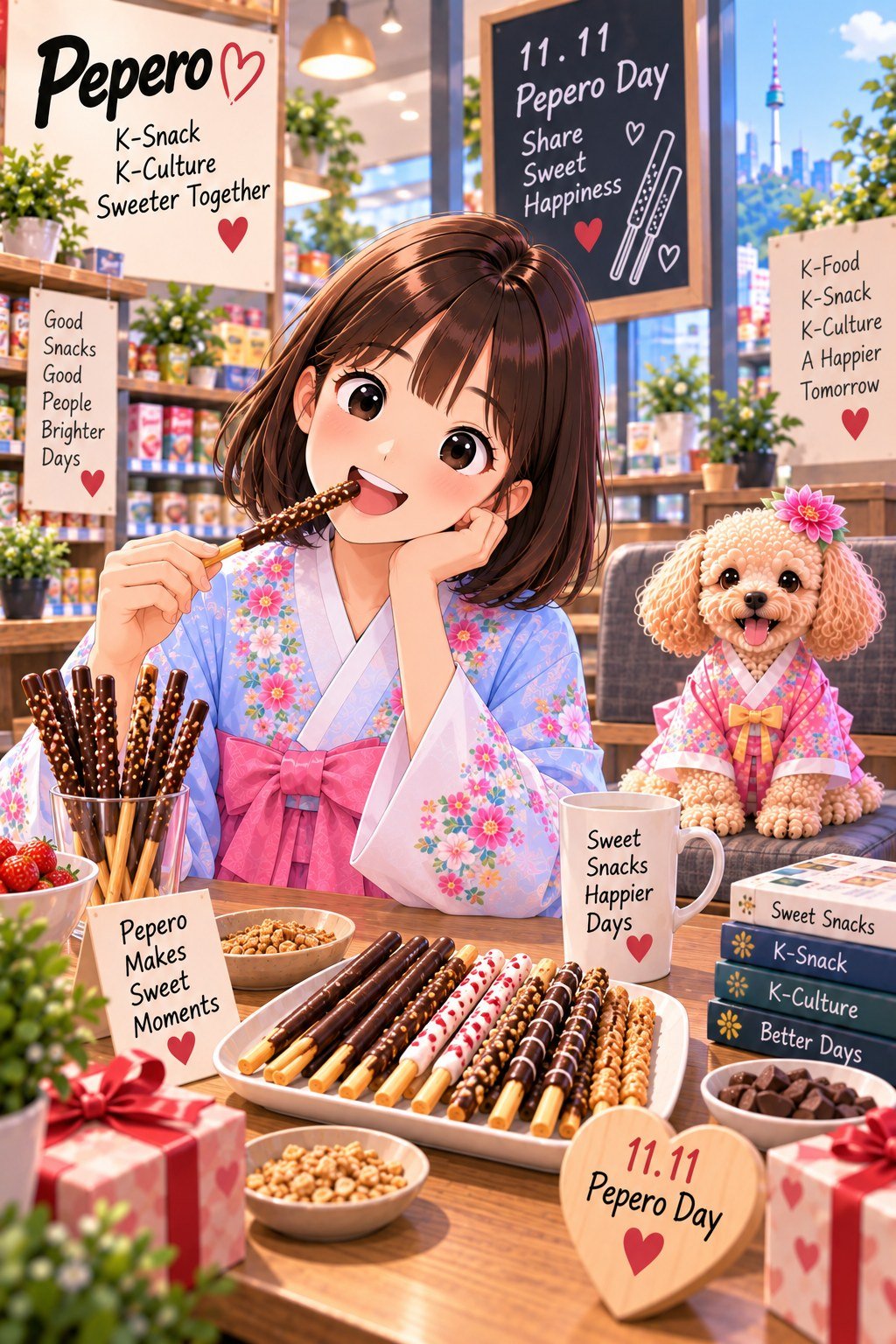
The contrast between a crisp biscuit stick and its coating or toppings defines the familiar Pepero eating experience.
Lotte Pepero as a K-Snack Icon
Pepero combines a recognizable stick-shaped snack with a uniquely strong November 11 cultural connection in Korea.
Pepero Day transformed the product into part of a modern sharing and gift-giving occasion while the snack itself remained simple and convenient.
For K-Nana Studio, Pepero adds another side of Korean packaged-food culture after Choco Pie, Banana Flavored Milk, and Korean Cup Ramyeon.
Different Pepero Products
Pepero is available in different varieties rather than one universal product.
Coatings, toppings, flavors, biscuit styles, package sizes, ingredients, and nutrition information can vary, so consumers should check the specific product they are purchasing.
Pepero in Korean Convenience Stores & Marts
Pepero can be found as part of Korea’s broader packaged-snack culture in convenience stores, supermarkets, and other food retailers.
Product selection can become especially noticeable around Pepero Day, although varieties, promotional displays, prices, and availability differ by retailer and time.
Pepero Day Beyond One Type of Pepero
November 11 is associated with giving and sharing stick-shaped snacks, but there is no single required Pepero flavor or gift format.
People can exchange a simple package or choose different varieties according to personal preference, making the social act of sharing more important than one specific product style.
Pepero Outside Korea
Pepero has also reached consumers outside Korea through international distribution of Korean packaged foods.
Available varieties, packaging, ingredients, labeling, and product selection can differ by country, so overseas consumers should check the version sold in their own market.
Why Pepero Works as a Global K-Snack
The basic product is easy to understand: a crisp biscuit stick combined with a sweet coating or toppings.
At the same time, Pepero Day gives international consumers a distinctly Korean cultural story connected with November 11, sharing, and small gifts.
The Complete Lotte Pepero Experience
The Pepero experience combines a simple stick-shaped snack with different coatings and toppings, convenient packaging, and a modern Korean sharing tradition.
Its strongest cultural feature is the connection between the stick shape and November 11 Pepero Day.
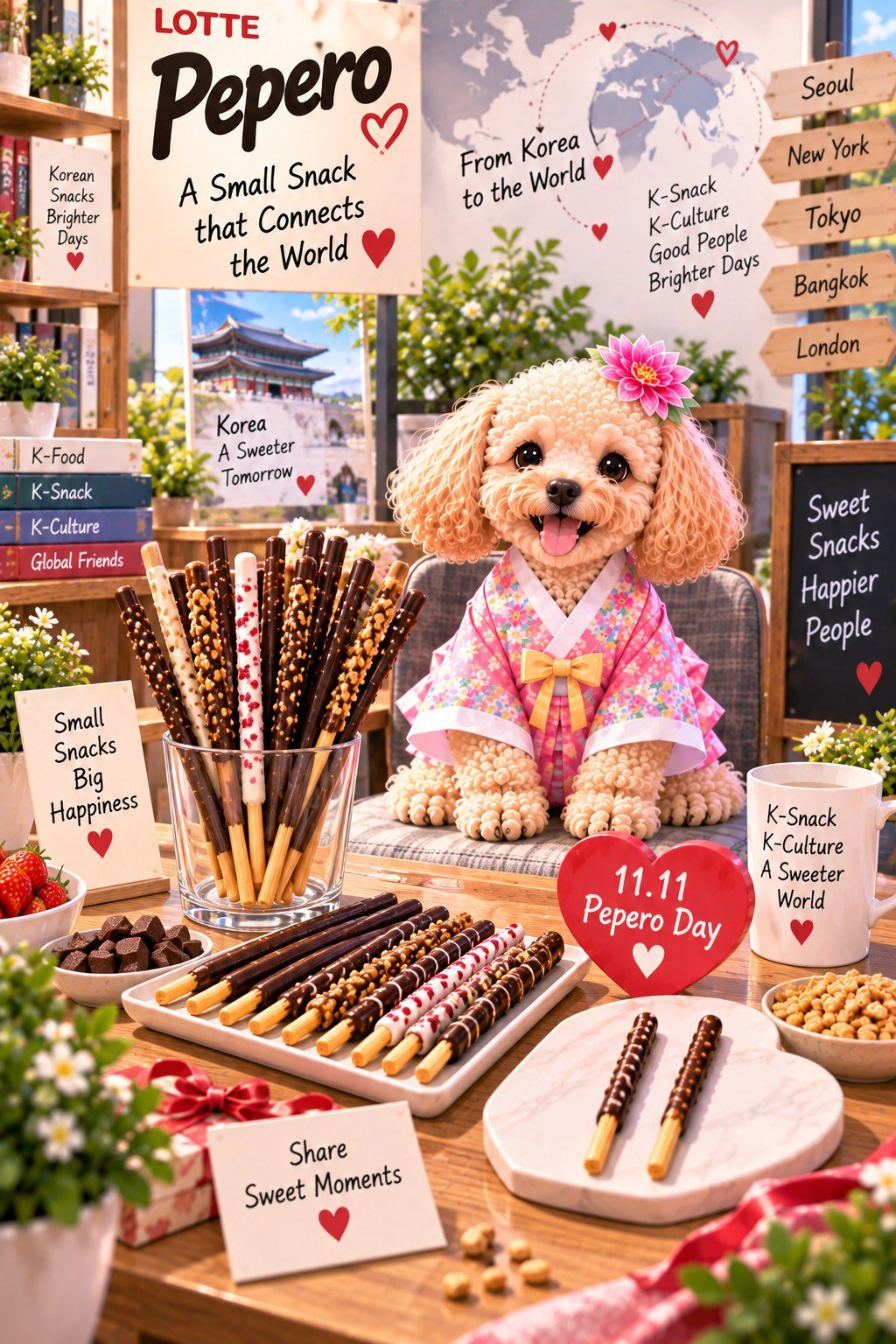
Lotte Pepero connects a recognizable Korean packaged snack with the November 11 tradition of sharing small gifts.
How Pepero Connects with Other K-Food
Orion Choco Pie provides the closest comparison as another long-running Korean packaged snack connected with sharing culture.
Binggrae Banana Flavored Milk expands the collection into Korean packaged drinks, while Korean Cup Ramyeon represents Korean convenience meals.
Bibigo Mandu provides another example of a Korean branded food product reaching consumers through international retail markets.
Pepero in the Growing K-Snack Collection
Pepero adds gift-giving and November 11 culture to the K-Nana Studio packaged-food collection.
Together with Choco Pie, Banana Flavored Milk, and Cup Ramyeon, it shows how everyday Korean products can carry cultural stories beyond traditional dishes and restaurant food.
FAQ
What is Lotte Pepero?
Lotte Pepero is a Korean packaged snack built around a long, thin biscuit stick with chocolate or other product-dependent coatings and toppings.
What is Pepero Day?
Pepero Day is a modern Korean popular-culture occasion observed on November 11. People commonly exchange or share Pepero and other stick-shaped snacks with friends, family, classmates, colleagues, or partners.
Why is Pepero Day on November 11?
The date 11/11 resembles several long Pepero sticks standing side by side. This visual similarity became strongly associated with Pepero Day.
Are all Pepero products the same?
No. Coatings, toppings, flavors, ingredients, allergens, package sizes, and nutrition information can differ by product, market, and time. Check the current package for the specific product being purchased.
Is Pepero sold outside Korea?
Yes. Pepero has reached international markets as part of the wider distribution of Korean packaged snacks. Available varieties, packaging, ingredients, and labeling can differ by country.
Ingredients & Allergens
Pepero products can contain wheat, gluten, milk, soy, nuts, or other product-dependent ingredients and allergens.
Different coatings and toppings can change the allergen profile, so consumers with food allergies or dietary restrictions should check the current ingredient list and allergen statement on the exact product.
Nutrition Label
Calories, sugar, fat, sodium, serving size, and other nutrition values vary between Pepero varieties.
Use the current nutrition panel on the specific package rather than applying information from one Pepero product to the entire range.
Storage & Product Condition
Pepero should be stored according to the directions provided on the package and protected from conditions that can affect the biscuit, coating, or overall product quality.
Check package integrity, date labeling, and storage information before eating, particularly when the product has been stored for an extended period.
Image Credits
Lotte Pepero family K-Snack visual with Dad, Mom, K-Nana daughter, and Nana in hanbok enjoying long chocolate-coated biscuit sticks in a Korean snack setting — K-Nana Studio original visual.
Lotte Pepero package-check visual with Mom in hanbok reviewing product information among different coated and topped biscuit-stick varieties while Nana watches from a separate safe seat — K-Nana Studio original visual.
Pepero Day sharing-culture visual with Dad in hanbok sharing Pepero-style biscuit sticks in a November 11-inspired Korean snack setting while Nana remains separately seated — K-Nana Studio original visual.
Lotte Pepero tasting visual with K-Nana daughter in hanbok enjoying a coated biscuit stick and comparing different topping styles while Nana sits separately without touching the food — K-Nana Studio original visual.
Nana in pink floral hanbok seated separately as a K-Food mascot beside Pepero-style chocolate-coated and topped biscuit sticks arranged to suggest November 11 Pepero Day — K-Nana Studio original visual.
Disclaimer
This article is provided for general food, cultural, brand, and product information and is not an advertisement or product endorsement. Lotte Pepero products, flavors, coatings, toppings, ingredients, allergens, nutrition information, package sizes, availability, manufacturing locations, and storage requirements can vary by product, country, and time and may change through product updates or reformulation. Consumers should check the current official product information and physical package for the specific product they purchase. Pepero products can contain wheat, gluten, milk, soy, nuts, or other product-dependent allergens, and manufacturing environments can present cross-contact risks. People with food allergies, medical conditions, or other individual dietary requirements should confirm current product information before consumption and follow appropriate professional guidance when necessary.