
Binggrae Melona is one of Korea’s recognizable frozen snacks. Introduced in 1992, the classic product became known for its melon flavor, pale green color, and long rectangular ice cream bar shape.
Melona later expanded beyond Korea, making it a useful example of how Korean ice cream and frozen snacks can reach international consumers through supermarkets and other retail markets.
Products sold in different countries can have different ingredients and formulations, so this guide treats Melona as a product family rather than assuming every version is identical.
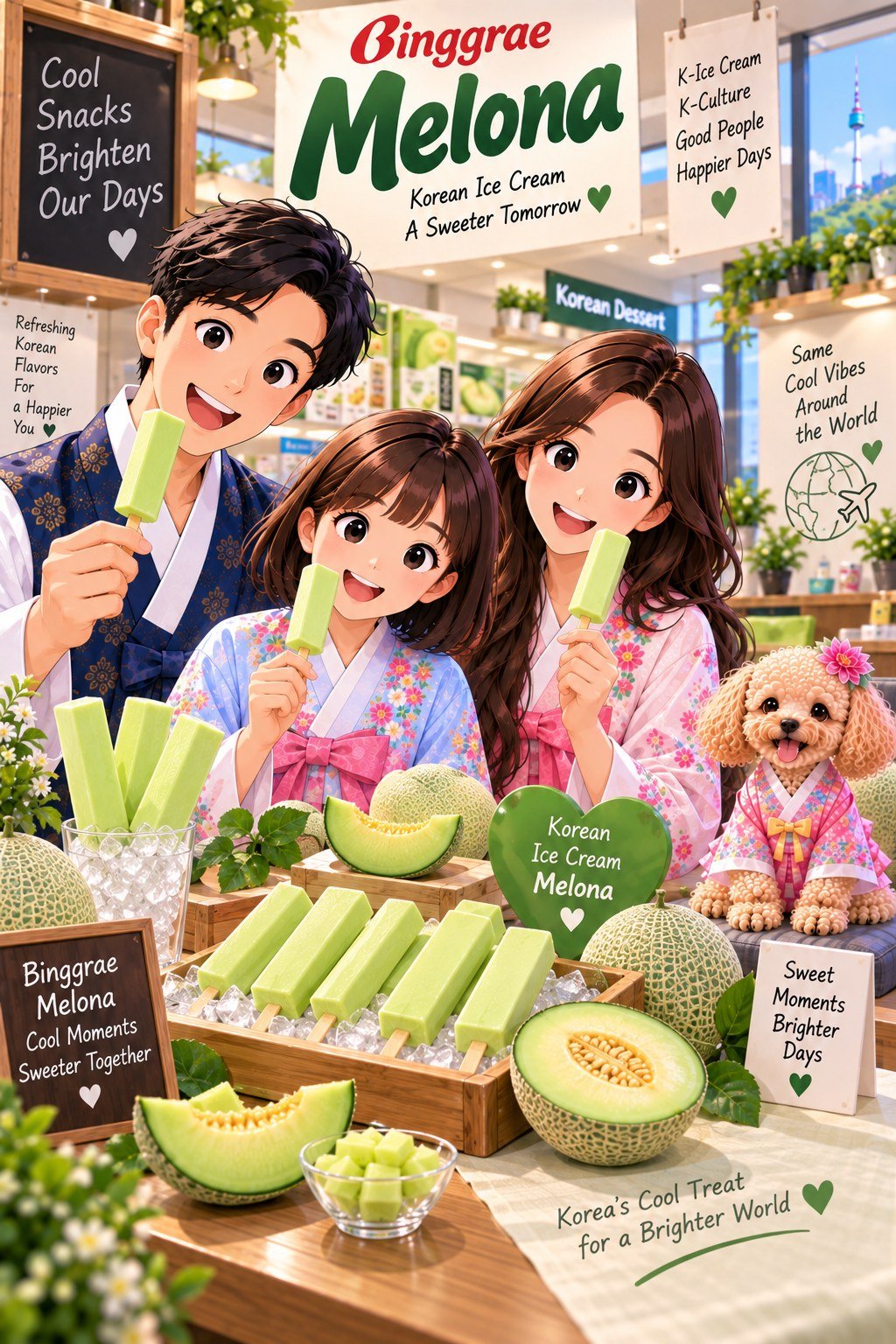
Melon flavor, a pale green color, and a distinctive rectangular bar have made Melona a recognizable Korean frozen snack.
Quick Guide
| Product | Binggrae Melona |
| Korean name | 메로나 |
| Category | Korean frozen snack / ice cream bar |
| Introduced | 1992 |
| Classic flavor | Melon |
| Signature appearance | Pale green rectangular bar |
| Serving style | Frozen and ready to eat |
| Important consumer check | Current ingredients, allergens, nutrition and frozen-storage information on the specific package |
What Is Binggrae Melona?
Melona is a frozen bar product made by Binggrae and is best known for its classic melon-flavored version.
The familiar bar has a smooth rectangular form and a pale green appearance associated with its melon identity.
This guide focuses on Binggrae Melona rather than treating every melon-flavored ice cream product as the same food.
Binggrae Melona Since 1992
Binggrae introduced Melona in Korea in 1992.
At the time, melon carried a premium fruit image in Korea, helping give the new frozen snack a distinctive flavor identity.
Over time, Melona became a long-running Korean ice cream product and later developed an international presence.
Why Melon Flavor Stands Out
Melon gives the classic Melona its immediately recognizable flavor theme and pale green visual identity.
The product should still be understood as a commercially formulated frozen snack rather than assuming it has the same composition as fresh melon.
Exact ingredients and flavor formulations can vary by product and market.
Melona’s Signature Rectangular Bar
The long, straight rectangular shape helps distinguish Melona visually from cones, cups, sandwiches, and rounded ice cream bars.
A wooden or product-specific stick provides a simple handle while the frozen portion maintains its compact bar form.
Together with the pale green color, this shape has become an important part of the classic Melona image.
Checking the Melona Package
Melona products can differ by flavor, country, formulation, ingredients, allergens, nutrition information, and package design.
Consumers should check the current product name, ingredient list, allergen statement, nutrition panel, date labeling, and frozen-storage information on the package they purchase.
Information from a Korean product or an older package should not automatically be applied to a Melona sold in another market.
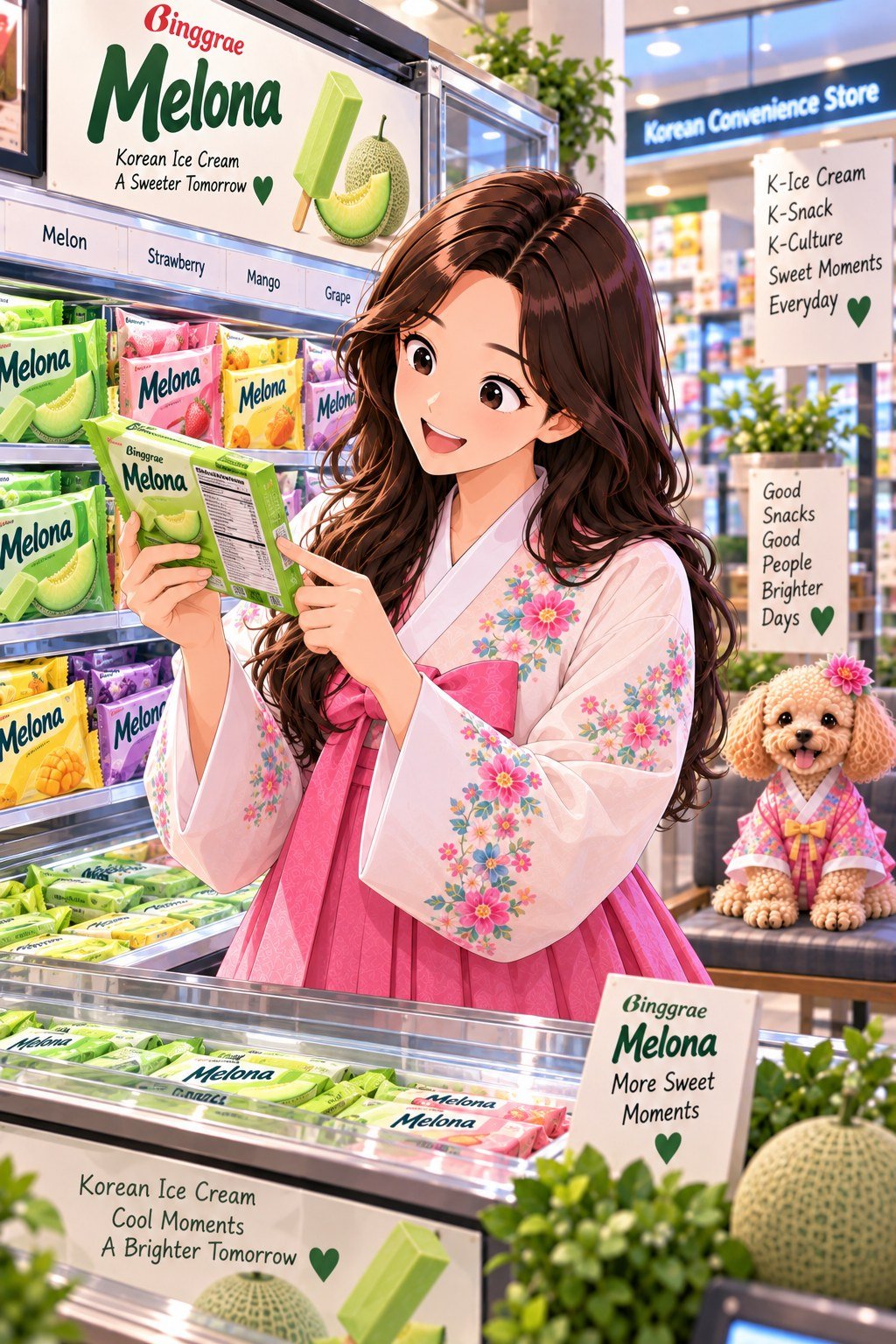
Because Melona formulations can differ by product and market, the current package is the best reference for ingredients, allergens, nutrition, and storage information.
Melona & Korean Ice Cream Culture
Melona belongs to Korea’s everyday frozen-snack culture rather than restaurant-style dessert dining.
Individually packaged ice cream bars can be purchased from convenience stores, supermarkets, and other retailers and eaten without additional preparation.
This makes Melona part of the broader Korean convenience-food experience alongside packaged snacks and ready-to-drink products.
Melona in Korean Convenience Stores & Marts
Frozen sections in Korean convenience stores and supermarkets can contain bars, cones, cups, sandwiches, and other ice cream formats.
Melona’s rectangular bar gives it a visually simple place within this larger frozen-snack selection.
Available flavors, package designs, prices, and product selection can differ by retailer and time.
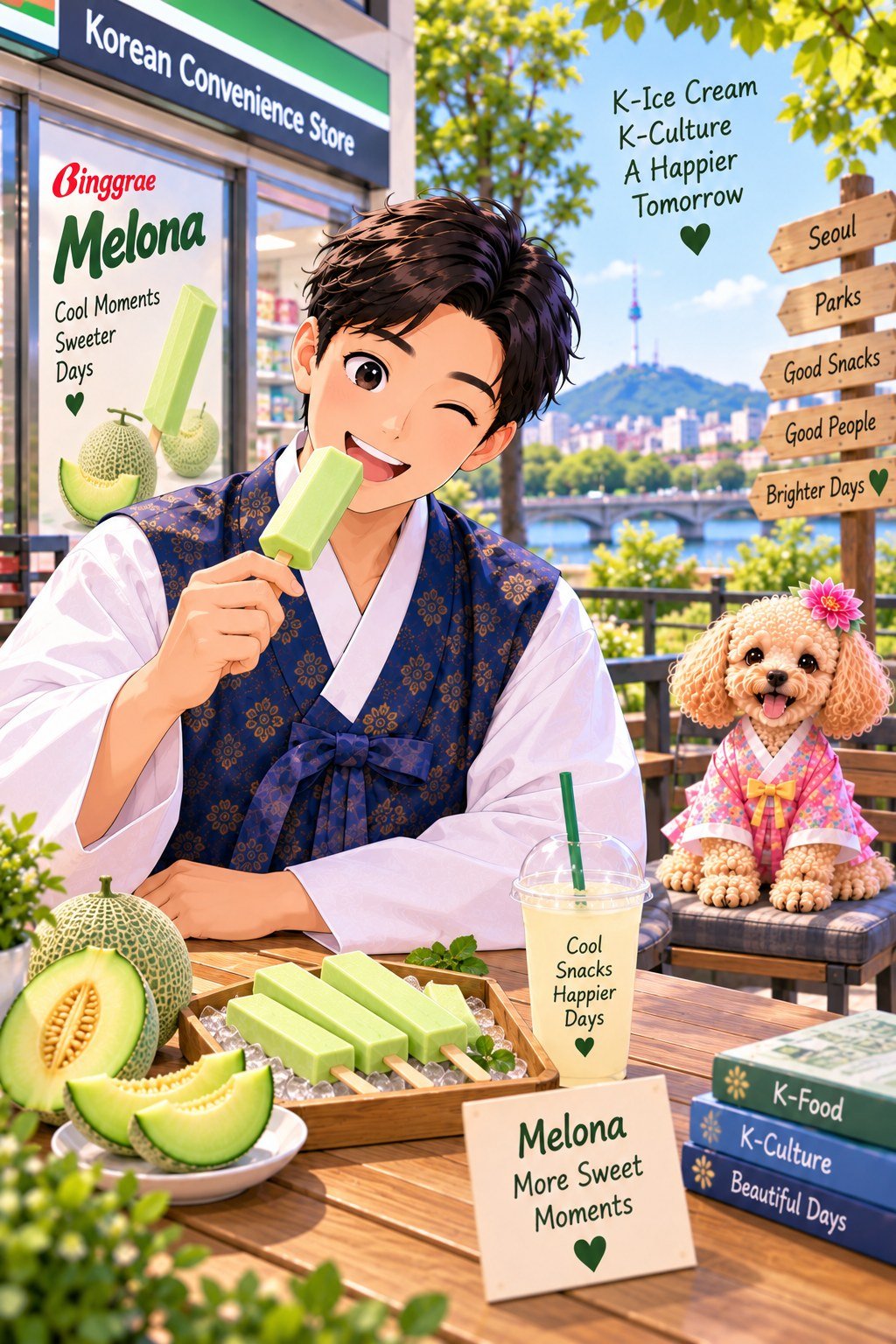
An individually packaged frozen bar makes Melona an easy part of Korea’s everyday convenience-store and supermarket snack culture.
What Does Melona Taste Like?
The classic Melona is associated with a sweet melon flavor and a smooth frozen texture.
Other Melona products can use different flavors or formulations, so the classic melon version should not be used to describe the taste of every product in the range.
Ingredients and allergen information should always be checked when those details matter.
How to Try Melona for the First Time
Keep Melona frozen according to the package directions until it is ready to be eaten.
Open the individual wrapper and hold the bar by its stick, allowing the surface to soften only enough for comfortable eating without leaving the product unrefrigerated longer than appropriate.
For the classic version, notice the combination of melon flavor, smooth texture, pale green appearance, and simple rectangular shape.
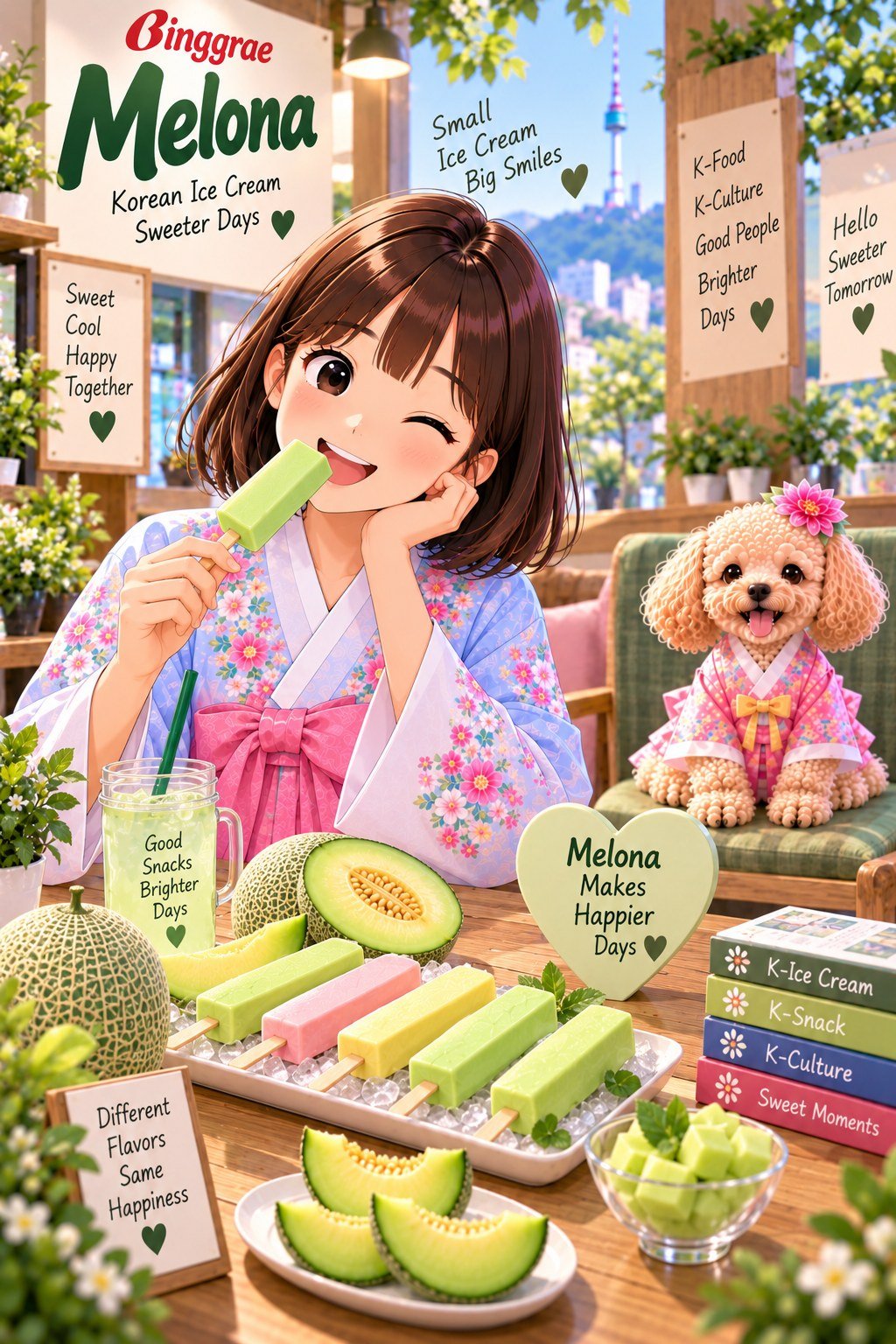
The classic Melona experience combines a sweet melon flavor with a smooth frozen texture and recognizable pale green rectangular bar.
Binggrae Melona as a Korean Frozen K-Snack
Melona adds frozen desserts to the wider picture of everyday Korean packaged food.
Its 1992 history, recognizable melon identity, convenience-store presence, and overseas distribution give it a different role from restaurant desserts such as Bingsu.
For K-Nana Studio, Melona expands the packaged K-Food collection from snacks, drinks, and Cup Ramyeon into Korean ice cream and frozen K-Snacks.
Different Melona Products
Melona has expanded beyond the classic melon-flavored bar, and available varieties can differ by country and time.
Flavor, color, ingredients, allergens, nutrition information, and package design can vary, so consumers should check the specific product rather than assuming every Melona is identical.
Melona Outside Korea
Melona has become one of Binggrae’s internationally distributed frozen products and can be found in markets outside Korea.
Products sold abroad can differ from Korean-market versions in formulation, labeling, available flavors, and other details.
Plant-Based Melona in Some Markets
Some export markets have received plant-based Melona products formulated differently from conventional dairy-based versions.
This difference is especially important for consumers checking dairy ingredients, allergens, or dietary requirements. A plant-based product sold in one market should not be used to describe every Melona sold worldwide.
Why Melona Works as a Global K-Ice Cream
The rectangular bar is simple to recognize, while melon provides a distinctive flavor identity that separates the classic product from many familiar chocolate or vanilla frozen snacks.
International distribution has allowed Melona to introduce another side of Korean packaged food beyond instant noodles, snacks, and drinks.
The Complete Binggrae Melona Experience
The classic Melona experience combines a sweet melon flavor, smooth frozen texture, pale green appearance, and long rectangular bar.
Its history in Korea since 1992 and later international expansion give the product a place in both Korean ice cream culture and the wider global K-Food story.
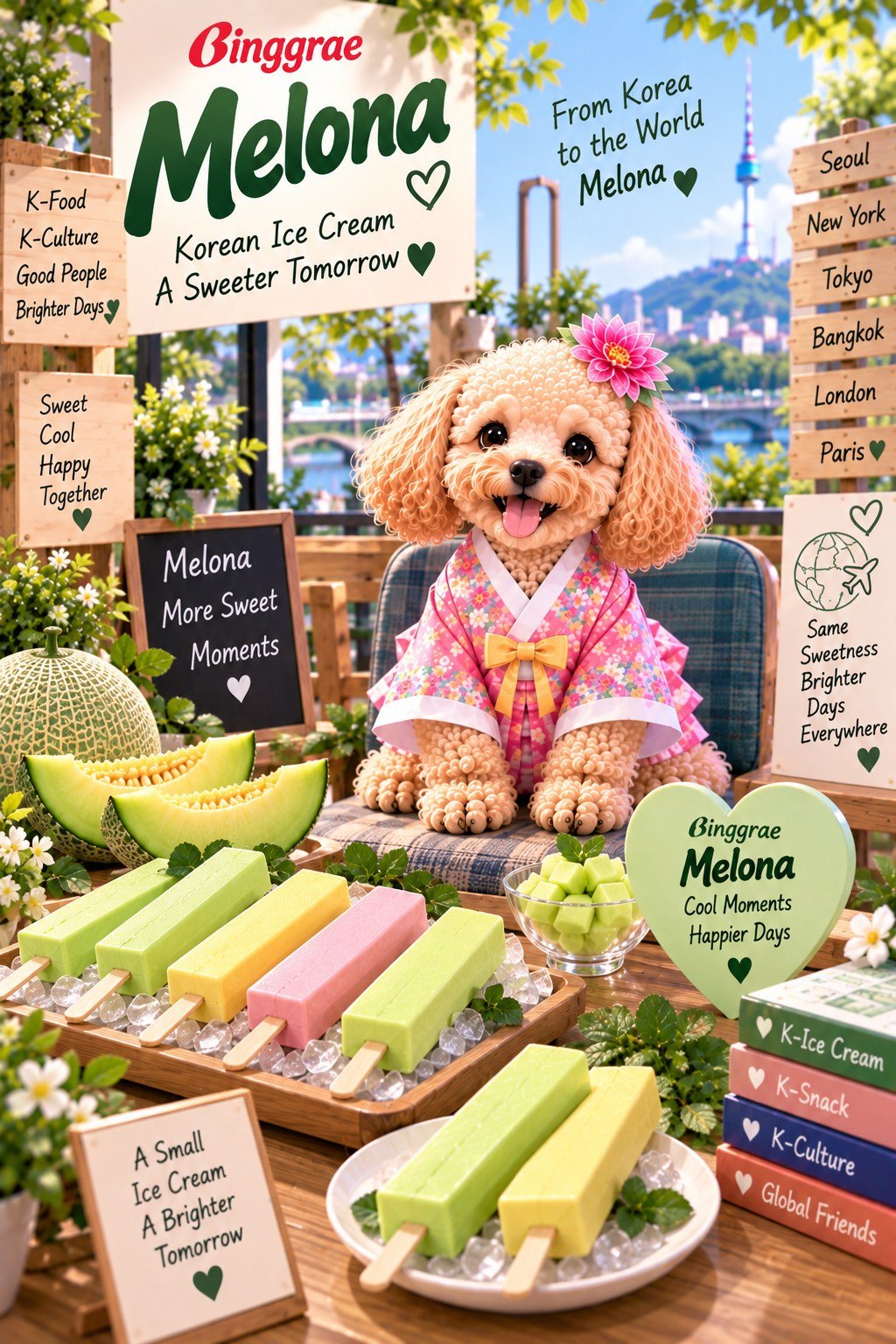
Binggrae Melona shows how a recognizable Korean frozen snack can move from everyday convenience-store culture into international K-Food markets.
How Melona Connects with Other K-Food
Binggrae Banana Flavored Milk provides the closest brand connection and represents another long-running Binggrae product associated with everyday Korean convenience culture.
Orion Choco Pie and Lotte Pepero expand the collection into Korean packaged snacks, while Korean Cup Ramyeon represents Korean convenience meals.
Bingsu provides a useful contrast between packaged Korean frozen snacks and Korea’s shaved-ice dessert culture.
Melona in the Growing K-Snack Collection
Melona adds a frozen-food category to the K-Nana Studio collection without returning to restaurant or cooking-centered content.
Together with Choco Pie, Banana Flavored Milk, Cup Ramyeon, and Pepero, it helps build a broader guide to the packaged foods and convenience products people encounter in everyday Korean life.
FAQ
What is Binggrae Melona?
Binggrae Melona is a Korean frozen snack introduced in 1992. The classic version is known for its sweet melon flavor, pale green appearance, smooth frozen texture, and long rectangular bar shape.
When was Melona introduced?
Binggrae introduced Melona in Korea in 1992. It later expanded into international markets as one of the company’s recognizable frozen products.
Is every Melona melon flavored?
No. Melona has expanded into different flavors and product variations. Availability differs by country and time, so consumers should check the specific product being sold in their market.
Is Melona always a dairy product?
No single formulation should be assumed worldwide. Conventional and plant-based versions can differ by market, making the current ingredient list and allergen statement important when dairy or other dietary requirements matter.
Is Melona sold outside Korea?
Yes. Melona is distributed internationally, although flavors, formulations, packaging, ingredients, and availability can differ from Korean-market products.
Ingredients & Allergens
Melona ingredients and allergens can vary according to flavor, formulation, and market.
Consumers with food allergies or dietary restrictions should check the current ingredient list and allergen statement on the exact product rather than applying information from one Melona variety to the entire range.
Dairy & Product Differences
Some Melona products can contain dairy ingredients, while certain products developed for particular export markets can use different formulations, including plant-based versions.
A plant-based Melona available in one country does not mean every Melona worldwide is dairy-free or suitable for the same dietary requirements.
Nutrition Label
Calories, sugar, fat, protein, sodium, serving size, and other nutrition values can differ between Melona products.
Use the current nutrition panel on the specific package when comparing varieties or monitoring particular nutrients.
Frozen Storage & Product Condition
Melona should remain frozen and be stored according to the directions provided for the specific product.
Check package integrity, date labeling, and storage information before eating, and avoid using a product that has been stored outside its required conditions.
Image Credits
Binggrae Melona family K-Ice Cream visual with Dad, Mom, K-Nana daughter, and Nana in hanbok enjoying pale green rectangular Melona ice cream bars — K-Nana Studio original visual.
Binggrae Melona package-check visual with Mom in hanbok reviewing product information in a Korean frozen ice cream section while Nana watches from a separate safe seat — K-Nana Studio original visual.
Korean ice cream culture visual with Dad in hanbok enjoying a pale green rectangular Melona bar in a convenience-store or outdoor snack setting while Nana remains separately seated — K-Nana Studio original visual.
Binggrae Melona tasting visual with K-Nana daughter in hanbok enjoying a pale green rectangular Melona ice cream bar while Nana sits separately without touching the frozen snack — K-Nana Studio original visual.
Nana in pink floral hanbok seated separately as a K-Food mascot beside pale green rectangular Binggrae Melona bars in a Global K-Ice Cream setting — K-Nana Studio original visual.
Disclaimer
This article is provided for general food, cultural, brand, and product information and is not an advertisement or product endorsement. Binggrae Melona products, flavors, formulations, ingredients, allergens, nutrition information, package designs, availability, manufacturing locations, and frozen-storage requirements can vary by product, country, and time and may change through product updates or reformulation. Some market-specific products can use different formulations, including plant-based versions, and this should not be interpreted as meaning that every Melona product is dairy-free or has the same allergen profile. Consumers should check the current official product information and physical package for the specific product they purchase. People with food allergies, medical conditions, or other individual dietary requirements should confirm current product information before consumption and follow appropriate professional guidance when necessary.