
Korean BBQ is more than grilled meat. It is a shared dining experience built around a tabletop grill, where meat is cooked in front of the diners and eaten together with lettuce, perilla leaves, garlic, sauces, rice, kimchi, and a variety of side dishes.
For international visitors, Korean BBQ can be one of the most interactive ways to experience Korean food culture. Instead of receiving one completed plate, diners take part in the meal by grilling meat, cutting it into bite-sized pieces, making wraps, combining different side dishes, and sharing food around the same table.
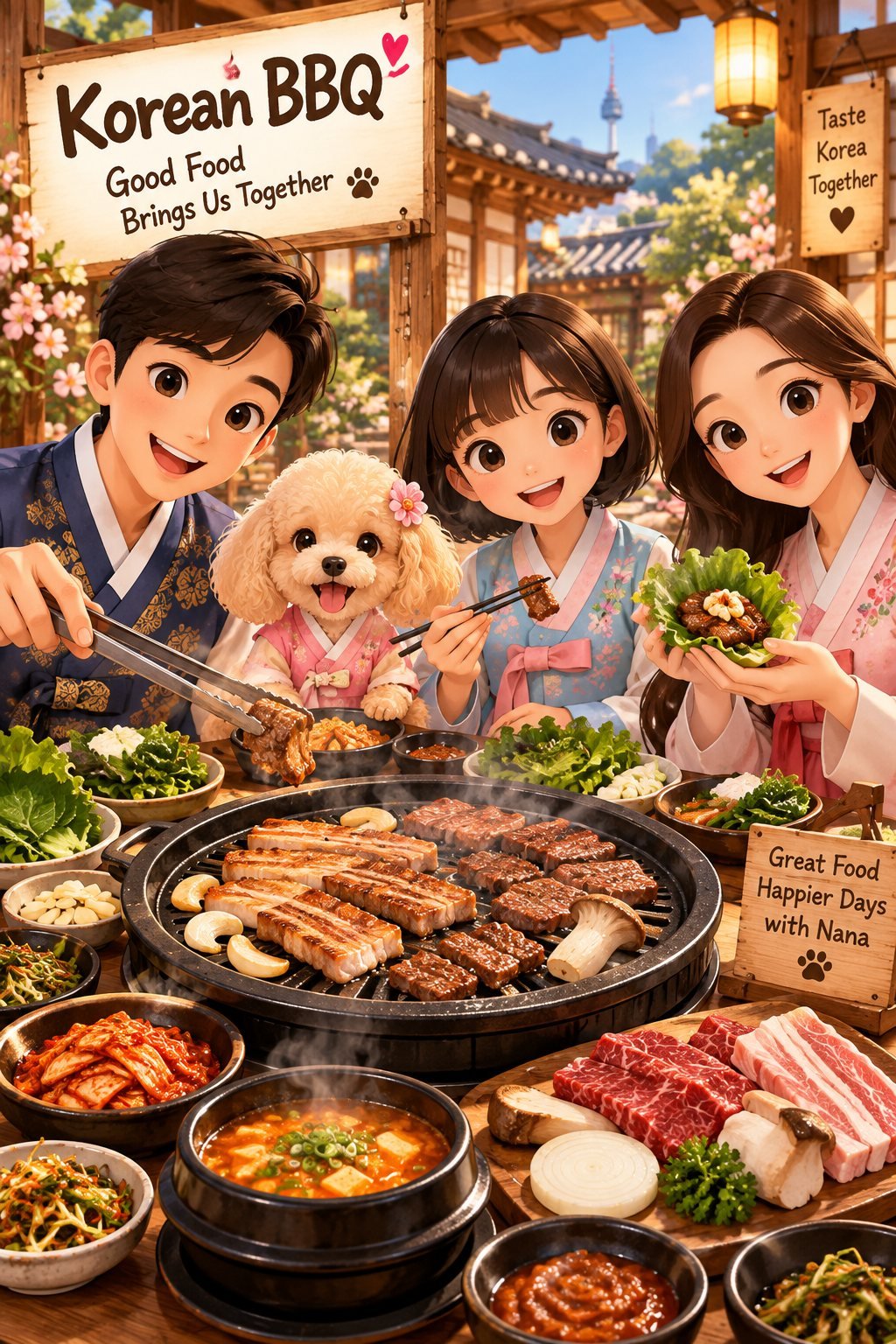
Korean BBQ brings grilling, side dishes, wraps, sauces, and conversation together around one shared table.
Quick Guide
| Korean name | 고기구이 / Korean BBQ |
| Dining style | Meat grilled at or near the table and shared with side dishes |
| Popular choices | Samgyeopsal, galbi, beef cuts, and marinated meats |
| Common accompaniments | Kimchi, lettuce, perilla leaves, garlic, ssamjang, rice, and banchan |
| Key experience | Grilling, cutting, wrapping, combining, and sharing food |
| Useful for first-time visitors | Ask staff how the grill works and whether diners or staff cook the meat |
What Is Korean BBQ?
Korean BBQ is a broad dining style rather than one specific dish. Restaurants may specialize in pork, beef, marinated meat, particular cuts, or combinations of several meats, but the shared grill is often at the center of the experience.
Depending on the restaurant, the grill may be built directly into the table or placed on top of it. Meat can be cooked by the diners, restaurant staff, or a combination of both. First-time visitors should watch how the restaurant operates rather than assuming that every Korean BBQ restaurant follows exactly the same system.
The meal usually extends beyond the grill. Banchan, vegetables, dipping sauces, garlic, rice, soup or stew, and other accompaniments can turn each piece of grilled meat into a different combination of flavors and textures.
The Tabletop Grill Experience
One of the defining features of Korean BBQ is that cooking happens during the meal. Raw meat arrives at the table, is placed on a hot grill, and is cooked in stages while diners continue eating and talking.
Tongs are commonly used to handle and turn the meat. Kitchen scissors are also frequently used to cut larger pieces into smaller portions directly over the grill, especially with pork belly and other cuts that are easier to cook before being divided.
The exact process varies by restaurant. Some staff members manage most of the grilling, while other restaurants allow diners to cook for themselves. When staff begin handling the grill, it is usually best to follow their lead.
Samgyeopsal: Korean Pork Belly
Samgyeopsal is one of the foods most strongly associated with the Korean BBQ experience. It consists of thick slices of pork belly that are usually grilled without a heavy marinade, allowing the flavor and texture of the meat to remain central.
As the pork cooks, it develops browned edges and rendered fat. Larger strips can be cut into bite-sized pieces with kitchen scissors before being cooked further to the desired level.
Samgyeopsal is commonly eaten with garlic, vegetables, dipping sauces, rice, and Kimchi. Kimchi may be served cold as banchan or, in some restaurants, placed near the grill so it becomes warm and develops a different texture and flavor.
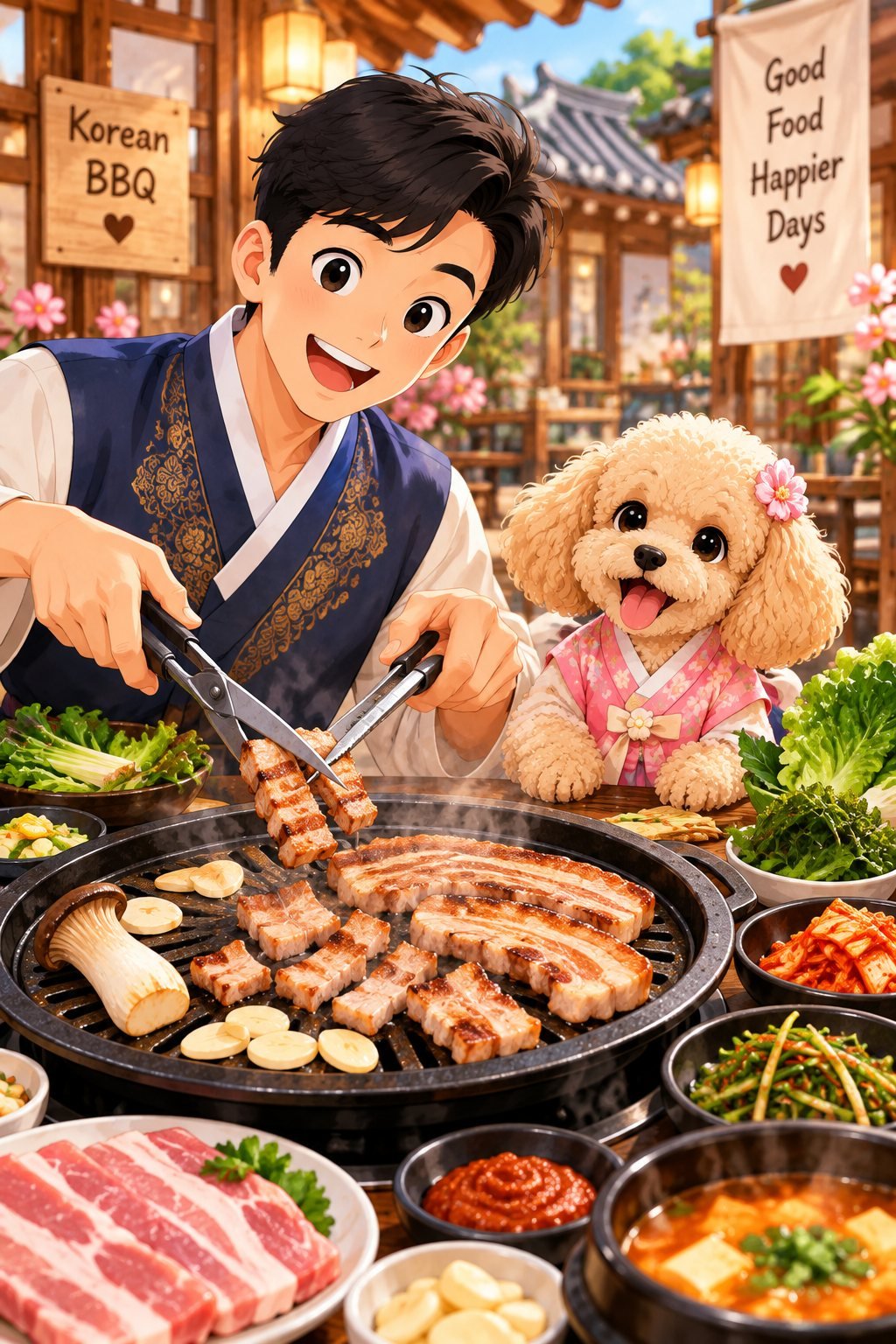
Grilling thick pork belly and cutting it into bite-sized pieces at the table is one of the most familiar Korean BBQ experiences.
Ssam Culture: Making a Korean BBQ Wrap
One of the most enjoyable ways to eat Korean BBQ is to make a ssam, or wrap. A piece of lettuce or a perilla leaf becomes the base, and diners can add grilled meat along with garlic, ssamjang, kimchi, rice, or other ingredients from the table.
There is no single required combination. One person may prefer a simple wrap with meat and ssamjang, while another may add garlic, kimchi, vegetables, and a small amount of rice.
The wrap is usually made small enough to eat comfortably in one bite. Trying different combinations is part of the experience, so first-time visitors can begin simply and gradually discover which flavors they prefer together.
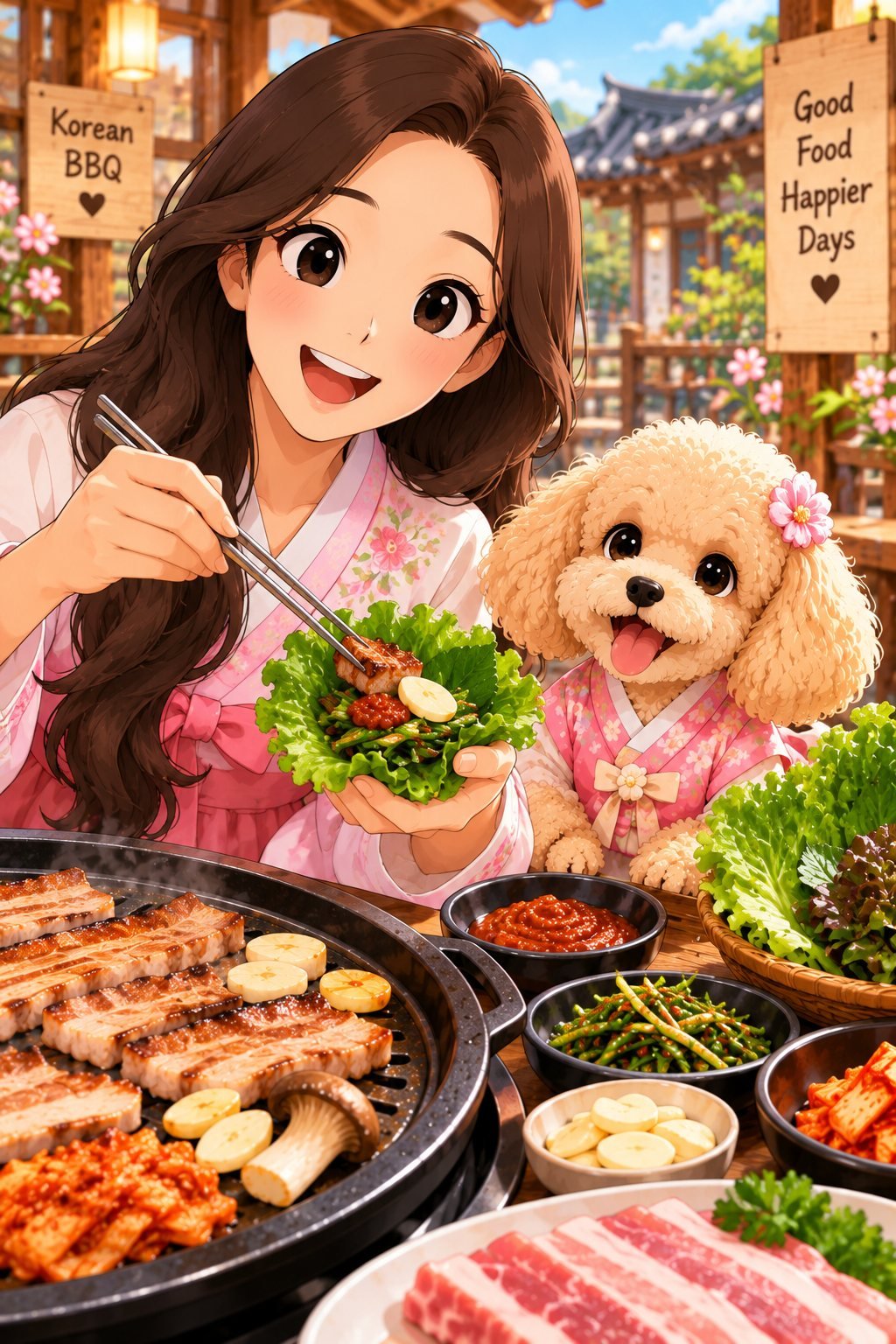
A lettuce or perilla leaf can turn one piece of grilled meat into a complete bite with ssamjang, garlic, vegetables, kimchi, and other ingredients.
Ssamjang, Garlic & Dipping Sauces
Ssamjang is a thick Korean dipping and wrapping sauce commonly served with grilled meat. Recipes vary, but it is generally associated with fermented soybean paste and gochujang along with additional seasonings.
Only a small amount may be needed because ssamjang can have a concentrated savory and salty flavor. It can be placed directly on grilled meat or added inside a lettuce or perilla-leaf wrap.
Garlic is another familiar part of the Korean BBQ table. It may be eaten raw, grilled until softer and sweeter, or added to a ssam. Restaurants can also provide other dipping sauces, seasoned salt, or restaurant-specific combinations depending on the meat being served.
Galbi & Korean Beef BBQ
Korean BBQ is not limited to pork belly. Galbi, meaning ribs, is another well-known style and may be served plain or marinated depending on the restaurant and recipe.
Marinated galbi commonly combines savory and sweet flavors, while other beef cuts may be served with minimal seasoning so diners can focus more directly on the meat itself. Restaurants specializing in beef can offer several cuts with different levels of marbling, tenderness, and texture.
Because menus vary widely, “Korean BBQ” should be understood as a broad category. Samgyeopsal, galbi, marinated beef, pork neck, and other cuts can provide noticeably different dining experiences even when they are cooked on a similar tabletop grill.
Banchan at Korean BBQ
The small dishes surrounding the grill are an important part of the meal. Banchan can include Kimchi, seasoned vegetables, pickles, salads, sprouts, and other side dishes that vary by restaurant.
These foods are not only extras placed beside the meat. Their acidity, freshness, crunch, spice, and seasoning help create different combinations throughout the meal and can balance richer grilled meats.
Rice, soup, or stew may also be ordered or included depending on the restaurant. A Korean BBQ meal can therefore move between grilled meat, wraps, banchan, rice, and hot dishes rather than following a strict main-course-and-side-dish structure.
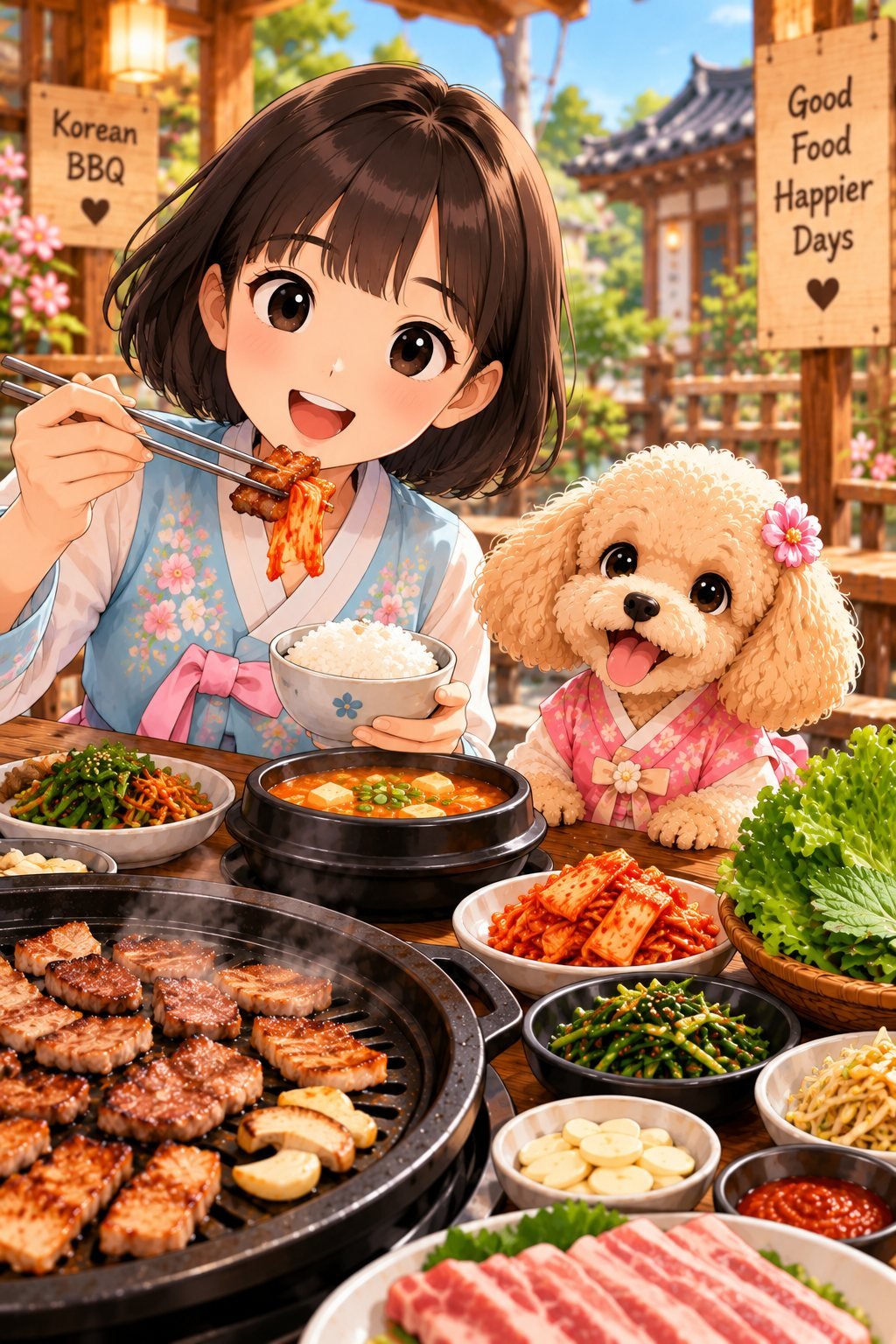
Korean BBQ becomes a complete table experience when grilled meat is combined with kimchi, rice, vegetables, sauces, and a changing selection of banchan.
What to Order at Korean BBQ
A Korean BBQ menu can feel unfamiliar to first-time visitors because restaurants may list several cuts of pork and beef, marinated and unmarinated options, set menus, and additional dishes. Starting with one or two familiar meats makes the experience easier to understand.
Samgyeopsal is a popular starting point for pork. Its thick slices and rich flavor work well with lettuce, garlic, ssamjang, kimchi, and other banchan. Galbi provides a different experience through ribs that may be served plain or with a sweet-savory marinade.
Beef-focused restaurants may offer several cuts with different levels of marbling and tenderness. Rather than ordering many meats at once, first-time visitors can try a smaller selection and compare how each tastes with the sauces, vegetables, and side dishes provided.
What Comes with Korean BBQ?
A Korean BBQ table usually contains much more than meat. The exact selection varies by restaurant, but lettuce or other leafy vegetables, garlic, ssamjang, Kimchi, seasoned vegetables, pickles, salads, rice, soup, or stew may appear around the grill.
These ingredients allow diners to change the flavor of each bite. Meat can be eaten on its own, dipped into sauce, combined with rice, or wrapped in vegetables with garlic and ssamjang.

Samgyeopsal, galbi, beef, leafy vegetables, kimchi, garlic, rice, and ssamjang show how Korean BBQ is built from many ingredients around one grill.
First-Time Korean BBQ Tips
- Check who cooks the meat — restaurant staff may grill it for you, or diners may be expected to cook it themselves.
- Use the tongs for the grill — keep cooking utensils separate from personal chopsticks when appropriate.
- Cook meat thoroughly — especially pork and poultry, and follow restaurant staff guidance when provided.
- Start with a simple ssam — try grilled meat, lettuce, and a small amount of ssamjang before adding more ingredients.
- Try grilled garlic and kimchi — heating them can create different flavors and textures.
- Do not touch the grill — the grill, metal edges, and nearby surfaces can remain extremely hot.
- Expect smoke and aromas — tabletop grilling can leave a noticeable smell on clothing and hair.
- Ask before ordering too much — some restaurants have minimum-order rules or portions designed for sharing.
Korean BBQ & Kimchi
Kimchi is one of the most natural companions to Korean BBQ. Its acidity, spice, fermentation, and vegetable texture can contrast with the richness of grilled pork or beef.
Kimchi may be eaten cold directly from the side-dish plate or heated near the grill when the restaurant setup allows it. Warm grilled kimchi becomes softer and develops a different flavor from fresh or chilled kimchi.
This combination also connects two different parts of Korean food culture. Korean BBQ emphasizes grilling and sharing food around the table, while kimchi introduces fermentation, banchan, seasonal ingredients, and traditions such as kimjang.
Korean BBQ & K-Culture
Korean BBQ is memorable not only because of the meat but because the meal encourages participation. Diners cook, cut, wrap, combine, share, and talk while the food continues to cook in the center of the table.
This shared format appears frequently in contemporary Korean social life and is also familiar to international audiences through Korean dramas, entertainment programs, travel content, and other K-culture media.
Korean BBQ also demonstrates how different K-Food experiences connect. A diner may combine grilled meat with Kimchi, rice, vegetables, sauces, and banchan, while a dish such as Bibimbap shows another way Korean cuisine brings rice, vegetables, protein, and fermented seasoning together.
For K-Nana Studio, Korean BBQ expands the K-Food collection from fermentation and mixed rice into one of Korea’s most social and interactive dining experiences.
Dining Etiquette & Practical Tips
Korean BBQ restaurants range from casual neighborhood restaurants to more formal or specialized establishments, so there is no single set of rules that applies everywhere. Watching how the restaurant operates and following staff guidance is usually the easiest approach.
When sharing a grill, be considerate of the other diners at the table. Use the provided cooking utensils, avoid moving meat that another person or staff member is actively managing, and keep personal utensils away from raw meat.
Banchan may be shared by the table, and refill practices vary by restaurant. If you would like more of a particular side dish, ask rather than assuming that every item is automatically refillable.
Most importantly, Korean BBQ does not need to feel complicated. Start with the meat, try it with a little sauce, make a simple ssam, add Kimchi or garlic, and gradually discover the combinations you enjoy.
FAQ
What is Korean BBQ?
Korean BBQ is a dining style in which pork, beef, or other meats are grilled at or near the table and eaten with vegetables, sauces, rice, kimchi, and other banchan. The shared tabletop grilling experience is an important part of the meal.
What meat should I try first at Korean BBQ?
Samgyeopsal is an approachable choice for many first-time visitors. The thick pork belly can be grilled, cut into bite-sized pieces, and eaten with lettuce, garlic, ssamjang, rice, and Kimchi. Galbi and different beef cuts provide other popular options.
Do I cook the meat myself?
It depends on the restaurant. Some Korean BBQ restaurants expect diners to manage much of the grilling, while others have staff cook and cut the meat at the table. Watch how the restaurant operates and follow staff guidance when you are unsure.
What is ssam?
Ssam is a wrap commonly made with lettuce, perilla leaves, or other leafy vegetables. Grilled meat can be placed inside with ingredients such as ssamjang, garlic, kimchi, rice, or vegetables before the wrap is eaten.
What is ssamjang?
Ssamjang is a thick Korean sauce commonly eaten with grilled meat and vegetable wraps. Recipes vary, but it is generally associated with fermented soybean paste, gochujang, and additional seasonings that create a concentrated savory flavor.
Is Korean BBQ always spicy?
No. The grilled meat itself may be unseasoned, lightly seasoned, or marinated depending on the order. Spicy flavors often come from kimchi, sauces, seasoned side dishes, or other accompaniments, allowing diners to choose different combinations at the table.
Where to Experience Korean BBQ
Korean BBQ restaurants can be found throughout Korea, from casual neighborhood establishments to restaurants specializing in premium beef, pork, galbi, or particular regional styles. Travelers do not need to visit one specific district to experience the basic tabletop grilling culture.
In Seoul, areas such as Hongdae, Myeongdong, and Gangnam Station & Gangnam-daero provide visitors with busy dining districts where Korean restaurants can be combined with shopping, cafés, nightlife, and other city experiences.
Rather than choosing a restaurant only because it appears on a famous-food list, first-time visitors can compare the menu, meat selection, prices, ordering requirements, recent operating information, and whether the restaurant is comfortable for their party size and dietary needs.
Related K-Nana Guides
Explore K-Nana Studio’s Kimchi Guide to learn how fermentation, kimjang, and different kimchi varieties connect with the Korean table.
Continue with the Bibimbap Guide for another Korean dining experience built around rice, vegetables, protein, egg, namul, and gochujang.
For travel planning, explore Hongdae, Myeongdong, or Gangnam Station & Gangnam-daero for different sides of Seoul’s shopping, dining, nightlife, and urban culture.
Food & Allergy Notes
Korean BBQ ingredients and preparation methods vary considerably by restaurant. Marinades, dipping sauces, ssamjang, banchan, soups, and other foods may contain soy, sesame, wheat, seafood-derived ingredients, shellfish products, garlic, nuts, or other ingredients relevant to allergies and dietary restrictions.
Cross-contact can also be important because different meats and ingredients may be prepared or cooked on shared grills, utensils, kitchen surfaces, or equipment. Ask the restaurant directly about ingredients and preparation methods when an allergy or dietary restriction is important.
Visitors avoiding particular meats or animal products should also confirm broths, sauces, banchan, and other accompanying foods rather than judging suitability from appearance alone.
Image Credits
Korean BBQ family dining experience with the K-Nana family and Nana in hanbok visual — K-Nana Studio original visual.
Samgyeopsal grilling and cutting experience with Dad and Nana in hanbok visual — K-Nana Studio original visual.
Korean BBQ ssam culture with Mom and Nana in hanbok visual — K-Nana Studio original visual.
Grilled meat, kimchi, rice, and Korean banchan with K-Nana daughter and Nana in hanbok visual — K-Nana Studio original visual.
Nana in hanbok with samgyeopsal, galbi, Korean beef, ssam vegetables, kimchi, and ssamjang visual — K-Nana Studio original visual.
Disclaimer
This article is provided for general food, travel, and cultural information. Korean BBQ ingredients, meat cuts, marinades, sauces, allergens, preparation methods, cooking practices, restaurant policies, and dietary suitability can vary. Always confirm ingredients and preparation directly with the restaurant when allergies, medical conditions, religious restrictions, or other dietary requirements are relevant, and follow restaurant guidance for safe use of tabletop grills and cooking equipment.