
Introduction to Doenjang Jjigae
Doenjang jjigae is a Korean stew built around doenjang, a fermented soybean paste. The paste is dissolved in broth, then cooked with ingredients that may include tofu, mushrooms, vegetables, seasonal greens, seafood, or meat.
This guide explains the dish’s essential terms, ingredients, flavor, documented variations, preparation method, serving approach, and relationship to cheonggukjang. It also covers allergen, label, storage, and food-safety checks for home cooks and consumers.
Quick Guide
| Feature | Guide |
|---|---|
| Korean name | 된장찌개 |
| Romanized name | Doenjang jjigae |
| Food category | Korean fermented soybean paste stew |
| Base | Doenjang dissolved in boiling vegetable, seafood, or meat broth |
| Possible additions | Tofu, mushrooms, seasonal greens, onions, seafood, meat, or other recipe-specific ingredients |
| Presentation | A cooked stew generally presented hot, with ingredients and intensity varying by recipe |
| Essential checks | Check for soy and recipe-dependent ingredients such as seafood, meat, kimchi, and packaged seasonings. Review the current label when using prepared products. |
What Is Doenjang Jjigae?

Doenjang jjigae is a savory Korean stew made by dissolving fermented soybean paste in boiling vegetable, seafood, or meat broth. Tofu, mushrooms, and seasonal greens are among the ingredients that may be added.
Doenjang means fermented soybean paste. It supplies the stew’s central fermented soybean character, although its exact formula and intensity can differ among homemade and packaged versions.
Jjigae refers to a Korean stew. Together, the words identify a stew whose defining base is doenjang rather than a single fixed combination of vegetables, proteins, or broth.
Background and Cultural Context
The dish belongs to Korean cookery based on fermented soybean paste. Its connection to doenjang is fundamental, but the supplied sources do not establish a single origin date or one universal historical recipe.
Documented examples show that soybean-paste stews can accommodate different broths and additions. Seasonal greens are one source-supported possibility: shepherd’s purse, an aromatic plant that sprouts after winter, is used in a named variation.
That shepherd’s purse version uses only a small amount of soybean paste so the plant’s flavor and aroma remain noticeable. This illustrates how the balance of paste and other ingredients can be adjusted to suit a particular variation rather than following one mandatory formula.
Ingredients and Varieties

The basic foundation
The defining ingredient is fermented soybean paste. It is dissolved in boiling vegetable, seafood, or meat broth, after which selected additions are cooked in the seasoned liquid.
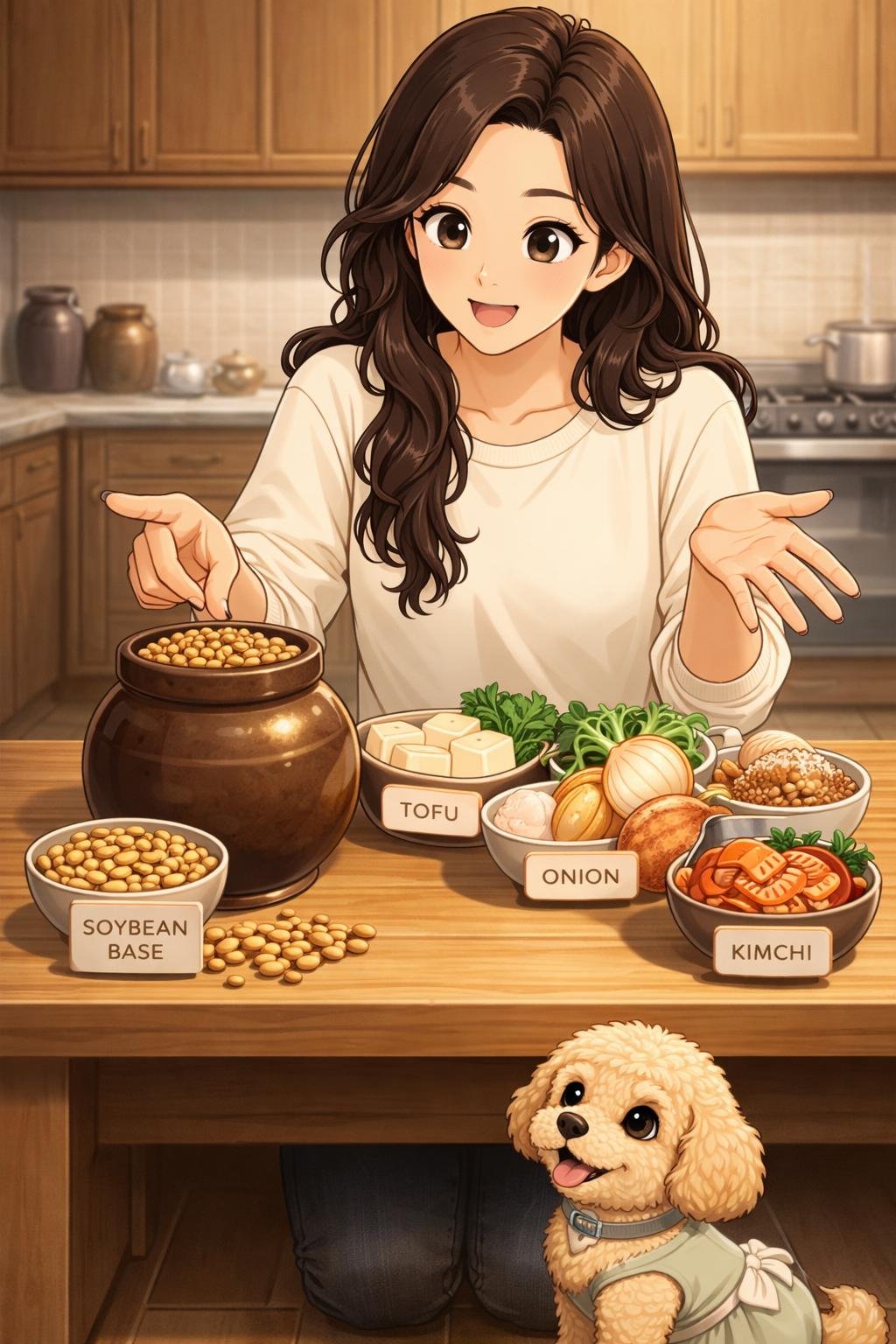
Documented possible additions include tofu, mushrooms, seasonal greens, and onions. Individual recipes may also use seafood, meat, or kimchi, but these ingredients should not be assumed to appear in every bowl.
Shepherd’s purse soybean paste jjigae
Naengidoenjangjjigae is a soybean paste stew featuring shepherd’s purse. The plant contributes a bitter, aromatic quality, and a restrained amount of soybean paste helps preserve its distinctive flavor and aroma.
Freshwater-snail cheonggukjang stew
The sourced freshwater-snail dish is made with cheonggukjang, a golden fermented soybean paste with a strong aroma. Its documented ingredients include tofu and onions, while kimchi may also be included. Freshwater snail adds a chewy texture and savory character.
This cheonggukjang-based example is related to soybean-paste stew cookery, but it should not be presented as an ordinary doenjang jjigae. Cheonggukjang and doenjang are distinct fermented soybean pastes.
Taste and Texture
Doenjang jjigae has a savory profile shaped by fermented soybean paste. The strength of the paste, broth selection, and added ingredients all influence the finished flavor, so not every version tastes identical.
Soft tofu can contrast with mushrooms, greens, and other vegetables. Texture varies further when a recipe contains meat or seafood.
Shepherd’s purse contributes a documented bitter and aromatic quality. In that variation, using less soybean paste allows the herb to remain prominent rather than becoming overwhelmed.
Cheonggukjang has a notably strong aroma. In the sourced freshwater-snail version, tofu provides softness while the snail contributes chewiness, demonstrating a texture combination that is not characteristic of every soybean-paste stew.
How to Prepare, Serve, and Eat Doenjang Jjigae
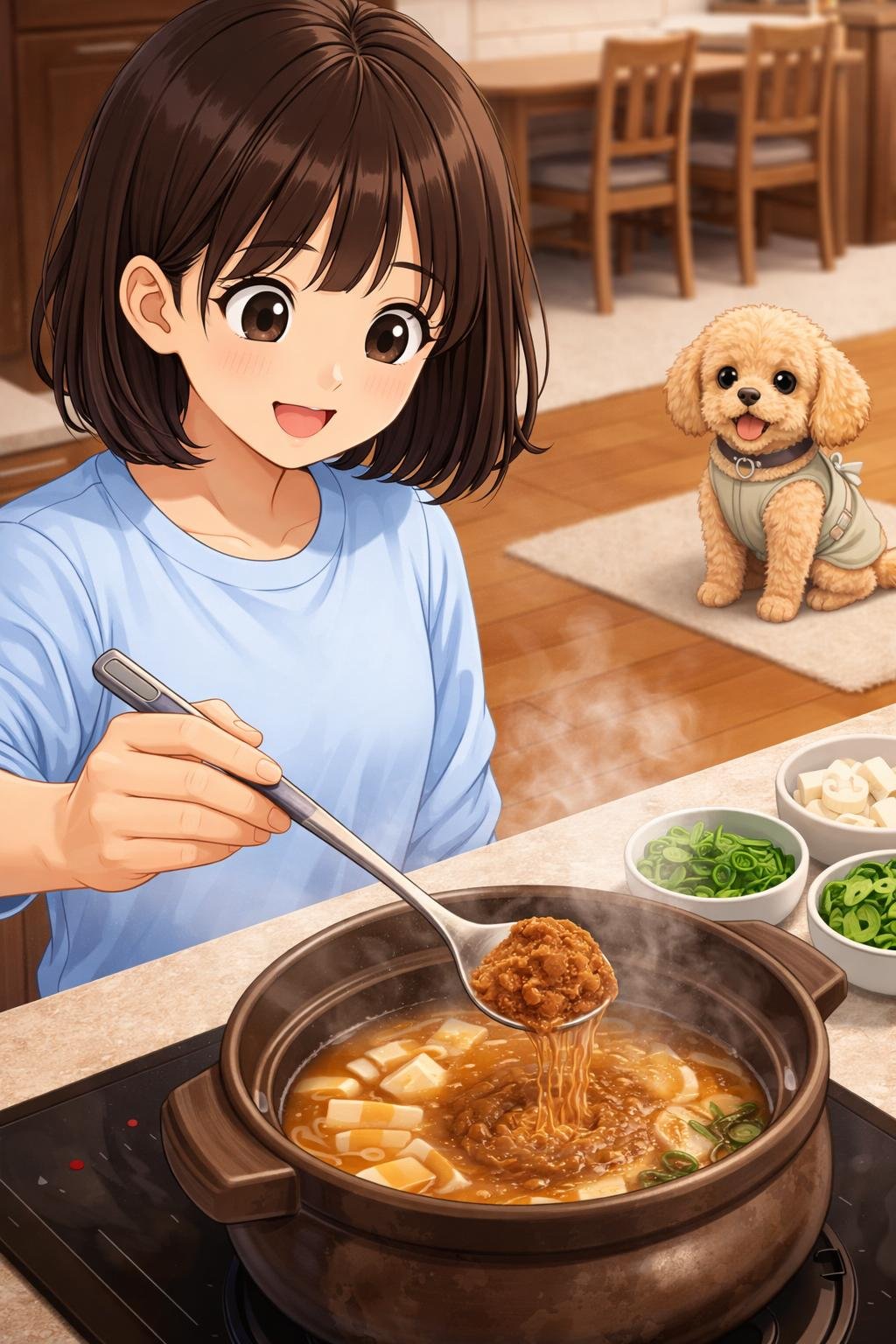
- Select a vegetable, seafood, or meat broth appropriate to the recipe and the diners’ dietary needs.
- Bring the broth to a boil and dissolve doenjang into it, adjusting the quantity to the intended variation rather than assuming one fixed amount.
- Add the selected ingredients, such as tofu, mushrooms, onions, or seasonal greens.
- Cook until the ingredients are properly heated and safely cooked, following any product-specific directions for packaged ingredients.
- Serve the completed stew hot while taking care around the hot broth and serving vessel.
Beginners can eat the solid ingredients and broth in alternating bites or spoonfuls. Rice may be served alongside according to preference and the particular meal.
The supplied source specifically documents steamed rice as an accompaniment to the related freshwater-snail cheonggukjang version, noting that barley or brown rice also pairs with it. That serving detail should not be treated as proof that every doenjang jjigae follows an identical recipe or accompaniment rule.
Doenjang Jjigae in Korean Food Culture
Doenjang jjigae represents one use of fermented soybean paste within Korean food culture. The documented ingredient combinations connect fermented paste with tofu, mushrooms, onions, vegetables, greens, seafood, or meat.
Seasonal ingredients can shape a named version. Shepherd’s purse soybean paste jjigae highlights a green associated with the period after winter and balances its aromatic flavor against a smaller amount of paste.
The freshwater-snail cheonggukjang example shows another branch of fermented soybean cookery. It combines a strongly aromatic paste with tofu, onions, and freshwater snail and is documented as being served with rice.
These examples demonstrate ingredient flexibility without establishing how frequently the dishes are eaten, assigning them a single regional origin, or claiming that all homes and restaurants prepare them in the same way.
Doenjang Jjigae and Cheonggukjang: Key Differences
| Point | Doenjang jjigae | Sourced freshwater-snail cheonggukjang version |
|---|---|---|
| Fermented paste | Doenjang | Cheonggukjang, described as golden and strongly aromatic |
| Documented base and additions | Vegetable, seafood, or meat broth; tofu, mushrooms, and seasonal greens may be added | Cheonggukjang stew with tofu and onions; kimchi may be included |
| Distinctive texture | Depends on the selected ingredients | Freshwater snail contributes chewiness |
| Documented serving detail | No single accompaniment applies to every recipe | Served with steamed rice and noted as pairing with barley or brown rice |
The two dishes share a connection to fermented soybean cookery, but their pastes should not be treated as interchangeable names. Aroma, ingredients, and texture can also differ substantially.
K-Nana Family Guide
Illustrative examples: The following family scenarios are educational guides, not personal reviews or claims that the characters ate a particular dish.
- Dad: Dad’s example starts by choosing among vegetable, seafood, and meat broth. He checks the full recipe rather than assuming that the word “doenjang” reveals every ingredient.
- Mom: Mom’s example compares additions such as tofu, mushrooms, onions, and seasonal greens. For a shepherd’s purse variation, she keeps the documented balance in mind so the aromatic green is not overwhelmed by paste.
- Daughter: Daughter’s example focuses on flavor intensity. She distinguishes the savory profile of doenjang jjigae from the strong aroma documented for cheonggukjang.
- Nana: Nana, the K-Nana Studio family mascot, illustrates serving choices. Her guide notes the documented rice pairing for freshwater-snail cheonggukjang while avoiding the assumption that every soybean-paste stew must have the same accompaniments.
Frequently Asked Questions
What is doenjang jjigae?
It is a Korean stew made by dissolving fermented soybean paste in boiling vegetable, seafood, or meat broth. Ingredients such as tofu, mushrooms, and seasonal greens may be added.
Does every version contain meat or seafood?
No single broth or ingredient combination applies to every version. Vegetable, seafood, and meat broths are all possible, so consumers should check the specific recipe or product label.
Which ingredients may be added?
Documented possibilities include tofu, mushrooms, seasonal greens, and onions. Some related recipes may include kimchi, seafood, meat, or freshwater snail, but these are not universal ingredients.
How is doenjang different from cheonggukjang?
They are distinct fermented soybean pastes. The supplied source describes cheonggukjang as golden and strongly aromatic, while standard doenjang jjigae is defined by the use of doenjang. A cheonggukjang stew should therefore not automatically be labeled as ordinary doenjang jjigae.
Which ingredient and allergen checks should consumers make?
Soy is central to doenjang and tofu. Depending on the recipe, consumers may also need to check seafood, meat, kimchi, broth, seasonings, and other packaged ingredients. Read the current complete label and allergen statement because formulas and preparation environments can vary.
Ingredients, Allergens, Storage, and Safety

Soybean is a central ingredient. Doenjang is fermented soybean paste, and tofu adds another soy-based component when included. Anyone avoiding soy should not assume that removing visible tofu makes the stew suitable.
Broths and seasonings require separate review. A vegetable-looking stew may still use seafood or meat broth, while packaged paste, stock, kimchi, or seasoning products may contain ingredients not obvious from the finished bowl.
Check the current ingredient list, allergen statement, dietary certification where relevant, and preparation information on every packaged component. Restaurant and homemade recipes may differ, so ask the preparer about material dietary restrictions when possible.
Store unopened packaged paste and other ingredients according to their labels. After opening, follow the manufacturer’s refrigeration and use instructions rather than applying one rule to every product.
Cook meat, seafood, and other perishable ingredients safely according to the directions applicable to the product. Refrigerate leftovers appropriately under current local food-safety guidance, and follow product-specific reheating instructions. Do not rely on appearance or aroma alone to establish safety.
Image Credits
- An original K-Nana Studio educational illustration of a finished bowl of doenjang jjigae presented as a visual introduction to the stew.
- An original labeled ingredient arrangement showing fermented soybean paste, broth options, tofu, mushrooms, onions, and seasonal greens.
- An original step illustration showing soybean paste being dissolved into heated broth.
- An original comparison visual presenting documented examples, including shepherd’s purse soybean paste jjigae and freshwater-snail cheonggukjang stew.
- An original K-Nana family serving guide featuring Dad, Mom, Daughter, and Nana as illustrative educational characters.
Images in this article are K-Nana Studio original educational illustrations. They are provided for visual guidance and may be AI-generated. They do not represent verified photographs of actual venues, facilities, products, or operating conditions.
References
- Shepherd’s Purse Soybean Paste Jjigae (냉이된장찌개 / Naengidoenjangjjigae)- VISITKOREA — https://english.visitkorea.or.kr/svc/contents/contentsView.do?menuSn=181&vcontsId=179244
- Freshwater Snail Rich Soybean Paste Jjigae (우렁청국장(우렁이청국장) / Ureongcheonggukjang (Ureongicheonggukjang))- VISITKOREA — https://english.visitkorea.or.kr/svc/thingsToDo/foodTrip/special_view.do?vcontsId=181078
- productList | K-FOODTRADE — https://www.k-foodtrade.or.kr/product/m_2/productView.do?catalogId=100069
Final Takeaway
Doenjang jjigae is a savory Korean stew defined by fermented soybean paste dissolved in vegetable, seafood, or meat broth. Tofu, mushrooms, onions, seasonal greens, and other ingredients may be added, but no single recipe represents every version.
Shepherd’s purse soybean paste jjigae is a documented seasonal example with bitter, aromatic greens and a restrained amount of paste. Freshwater-snail cheonggukjang stew is a related but distinct dish made with strongly aromatic cheonggukjang, not ordinary doenjang, and includes its own documented ingredients, texture, and rice pairing.
Disclaimer
This article provides general cultural and educational information. Ingredients, allergens, recipes, product labels, storage directions, safety guidance, prices, opening hours, reservations, payment methods, participation requirements, house rules, accessibility, photography rules, access conditions, and venue policies may vary or change. Confirm material current details with the relevant producer, official source, or venue before purchasing, preparing food, or visiting.
AI-generated images are illustrative visual aids and may not exactly represent actual dishes, products, venues, facilities, or visitor conditions. Nana is a K-Nana Studio family mascot, and her appearance in an illustrative scene does not imply that pets are permitted at any real venue or activity.