
What Is the K-Pop Idol System?
The K-Pop idol system is a structured way of discovering, developing, debuting, producing, and managing performers within the Korean entertainment industry.
For beginners, the easiest way to understand it is to think beyond the person standing on stage. A K-Pop idol may be the most visible part of the process, but many activities can happen behind that performance: casting, training, music production, choreography, styling, content production, promotion, scheduling, marketing, and fan communication.
The exact structure varies between companies and artists. There is no single rulebook that every K-Pop idol or entertainment company follows.

What Is a K-Pop Idol?
A K-Pop idol generally refers to a performer working within the Korean idol entertainment system, either as a member of a group or as a solo artist.
Singing and dancing are highly visible parts of idol activity, but an idol’s work can extend beyond the stage. Depending on the artist, activities may include recording music, filming music videos, appearing on broadcasts, creating digital content, performing at concerts, participating in promotional events, and communicating with fans.
Some idols also work in acting, variety programs, fashion, advertising, songwriting, production, or other creative areas. These activities differ greatly from artist to artist.
More Than Singing
One reason the idol system stands out to many international fans is its strong emphasis on performance as a complete package.
Music is central, but choreography, stage presentation, styling, visual concepts, music videos, promotional content, and communication with fans can all become part of an artist’s activities.
This does not mean that every idol must perform every role equally. Within a group, different members may have different strengths, responsibilities, and creative interests.
It is also important not to assume that all K-Pop performers work in exactly the same way. Group structure, artistic participation, promotion, and management can vary considerably.

What Do Entertainment Companies Do?
Entertainment companies can play a broad role in the K-Pop idol system.
Depending on the company and artist, teams may work on talent development, music production, artist management, choreography, styling, publicity, marketing, content, performances, merchandise, and tours.
This means that the final performance fans see can be the result of collaboration among many professionals, not only the performers themselves.
A songwriter or producer may work on the music. Choreographers may design or develop the performance. Stylists and visual teams may help shape presentation. Managers and production teams coordinate schedules and activities. Marketing and content teams may introduce releases to audiences in Korea and overseas.
The exact division of these responsibilities differs by company, label, project, and artist.

From Casting to Debut
Many idols begin their path before their official debut.
Potential performers may enter entertainment companies through auditions, scouting, online applications, audition programs, or other recruitment routes. Those accepted may spend time as trainees before being considered for a debut.
Becoming a trainee does not automatically guarantee a debut. Training periods and selection processes vary widely, and some trainees leave a company or choose a different path.
The detailed training process is explained separately in K-Pop Trainee System.
What Does “Debut” Mean?
In K-Pop, debut generally refers to the official launch of an artist or group into professional public activities.
A debut may involve the release of music, a music video, promotional content, showcases, broadcast performances, or other activities. The exact process differs between artists and companies.
Debut is therefore not simply the day someone becomes talented enough to perform. It is usually the beginning of an artist’s official public career under a particular project or identity.
The complete beginner explanation is available in What Is a K-Pop Debut?.
How Are K-Pop Groups Organized?
K-Pop groups can vary greatly in size and structure.
Fans may encounter terms such as leader, vocalist, rapper, dancer, or other role descriptions. These terms can help explain how a group presents its members, but they should not be treated as universal rules.
Some groups use clearly defined positions, while others use them more loosely or change how they describe member roles over time.
Members may also participate creatively in songwriting, composing, producing, choreography, visual ideas, or other aspects of their work. The level and type of participation varies from artist to artist.
Leader, vocalist, rapper, dancer, maknae, main, lead, visual, and center are explained in K-Pop Group Roles.
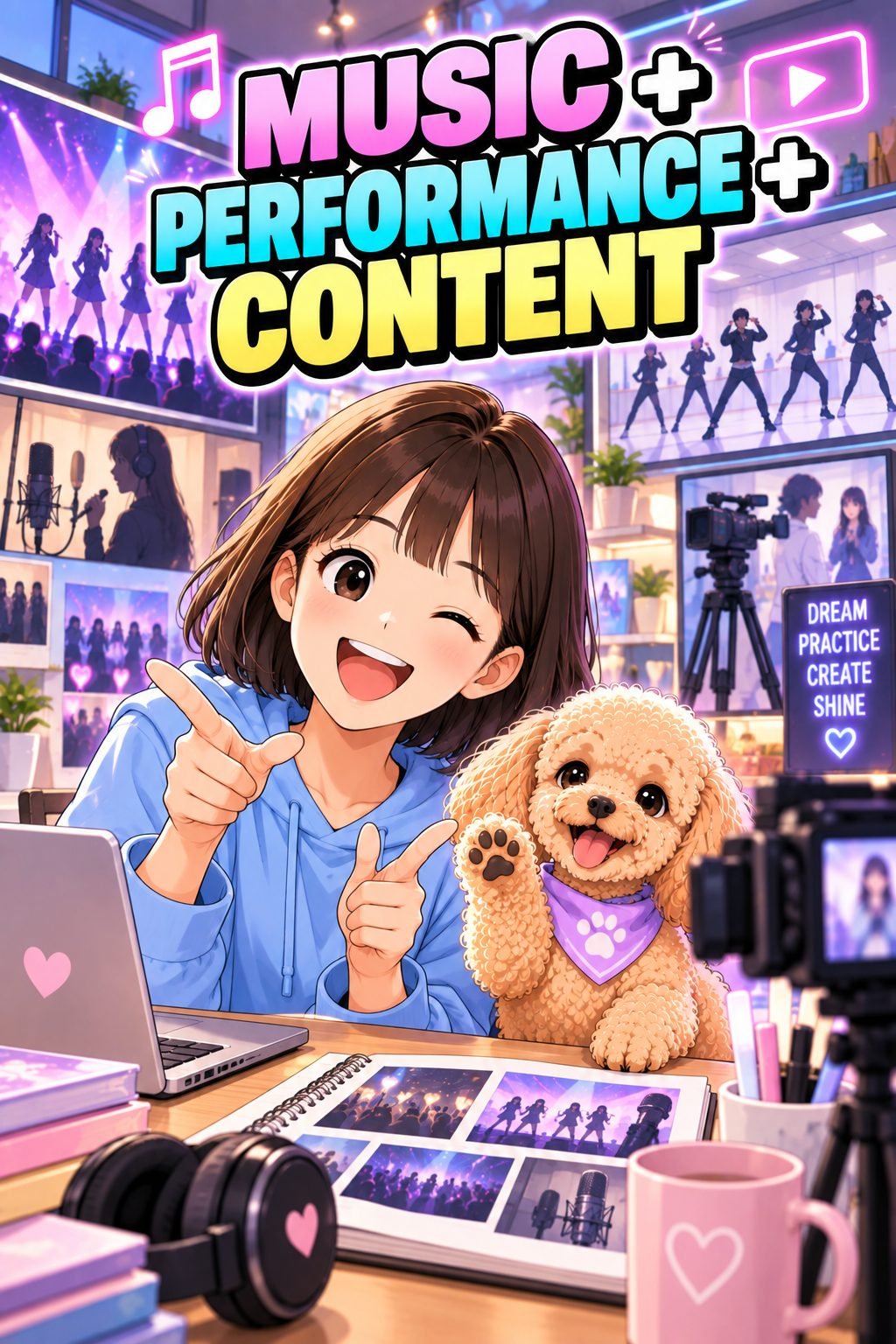
Music, Performance and Content
After debut, idol activities can extend across several types of media and events.
An artist may release songs and albums, perform on Korean music shows, publish music videos and performance videos, appear in interviews or entertainment programs, create online content, hold fan events, and perform at concerts or festivals.
Digital platforms have made this content especially accessible to international audiences. A fan outside Korea can often encounter the same music videos, performances, interviews, and artist content shortly after they are released.
Why Fans Matter
The idol system is also closely connected with fan culture.
Fans may listen to music, buy albums, attend concerts, collect merchandise, participate in fan meetings or fansigns, watch digital content, and communicate through official fan platforms and social media.
These activities form part of the wider K-Pop Fandom Culture.
However, there is no requirement to participate in every part of fandom culture. Someone who simply enjoys the music can still be a K-Pop fan.
Fan practices also differ between artists and fandoms, so beginners should avoid assuming that one group’s customs apply to every K-Pop artist.
Is Every K-Pop Artist an Idol?
No.
Korean popular music includes many singers, rappers, bands, producers, and other musicians who are not necessarily part of the idol system.
The idol system is one highly visible part of modern K-Pop culture, but it should not be used as a label for every Korean musician.
This distinction helps beginners understand why “K-Pop,” “Korean popular music,” and “K-Pop idol” can overlap without meaning exactly the same thing.
What International Fans Should Know
The word “idol” can have different meanings depending on cultural context. In K-Pop, it commonly refers to performers working within the idol entertainment system rather than simply meaning a famous person that someone admires.
Information about artists can also change quickly. Group membership, contracts, agencies, activities, official positions, fan platforms, and schedules may change over time.
When you need current information about a specific artist, check the artist’s official channels and the relevant entertainment company’s current announcements.
If another K-Pop term is unfamiliar, use the K-Pop Glossary for Beginners as the central terminology guide.
K-Nana Family Guide
Dad: Wonders whether becoming a K-Pop idol is mainly about being able to sing well.
Mom: Notices how many people and practical systems can be involved behind an artist’s public activities.
K-Nana Daughter: Explains that music, performance, content, management, and fan communication can all connect within the idol system.
Nana: Keeps the key idea simple: the idol is the person you see, but the system around that artist can involve a much larger team.
Practical Tips for K-Pop Beginners
- Do not assume every K-Pop artist follows the same career path.
- Remember that becoming a trainee does not guarantee a debut.
- Do not treat unofficial fan profiles as permanent facts about an artist.
- Check current official sources for group members, agencies, schedules, and activities.
- Remember that group positions and roles may differ between artists and can change.
- You do not need to participate in every fan activity to enjoy K-Pop.
- Separate the public artist from the many professionals working behind a performance or release.
FAQ
What is a K-Pop idol?
A K-Pop idol generally refers to a performer working within the Korean idol entertainment system, either in a group or as a solo artist. The exact career structure varies between artists and companies.
Does every K-Pop idol start as a trainee?
Trainee development is a common feature of the idol system, but individual paths can differ. Recruitment, preparation, training length, and debut processes are not identical across the industry.
Does becoming a trainee guarantee a debut?
No. Being accepted as a trainee does not guarantee that a person will eventually debut. Selection and development processes vary by company and project.
Do K-Pop idols only sing and dance?
No. Depending on the artist, activities may also include recording, digital content, broadcasts, concerts, fan events, acting, variety programs, songwriting, production, fashion, advertising, and other work.
Does every group have a leader, main vocalist, rapper, and dancer?
No. Member roles and position systems vary. Some groups use formal positions, while others use fewer fixed labels or describe roles differently.
Are all Korean singers K-Pop idols?
No. Korea has many musicians who work outside the idol system, including solo singers, rappers, bands, indie musicians, and artists from other genres.
Who creates a K-Pop idol’s music and performances?
It varies. Artists may work with songwriters, composers, producers, choreographers, stylists, visual teams, managers, marketers, and other professionals. Some idols also participate directly in songwriting, production, choreography, or other creative work.

Final Takeaway
The K-Pop idol system is not simply a method for creating singers. It can connect talent development, music, choreography, performance, content production, management, promotion, and fan communication around an artist or group.
At the same time, there is no single formula that describes every idol. Companies, artists, groups, creative roles, and career paths can differ significantly.
Understanding that distinction makes the rest of K-Pop much easier to explore.
Continue Exploring K-Pop
To understand what happens after artists begin official activities, explore K-Pop Comebacks and how a new release can connect music, promotion, performances, and other content.
Some group members may also participate in smaller combinations while remaining connected to their full group. K-Pop Subunits explains how these activities differ from full-group and solo activities.
For direct artist-fan activities, continue with K-Pop Fan Meetings & Fansigns.
For the live-performance side of idol activities, use the K-Pop Concert Guide in Korea.
References
- Korea.net — Entertainment Companies and Their Role in K-pop
- Korea.net — Inside the K-pop Trainee System and Debut Process
- Korea.net — K-pop Management Innovation Changes Global Music Industry
Image Credits
K-Pop Idol System family visual with Dad, Mom, K-Nana daughter, and Nana exploring the different activities surrounding a K-Pop idol — K-Nana Studio original visual.
K-Pop idol activity visual with Dad and Nana discovering that idol work can involve more than singing — K-Nana Studio original visual.
Behind-the-scenes teamwork visual with Mom and Nana exploring the people and production processes that can support K-Pop artist activities — K-Nana Studio original visual.
K-Pop content visual with K-Nana daughter and Nana exploring the connection between music, performance, digital content, and fan communication — K-Nana Studio original visual.
Nana as the K-Nana Studio K-Pop mascot summarizing the idea that an idol can be part of a larger entertainment and production system — K-Nana Studio original visual.
Disclaimer
This article is provided for general cultural, educational, and travel-planning information. K-Pop industry structures, training practices, artist roles, contracts, group membership, agency relationships, schedules, fan activities, and entertainment-company practices can vary and may change over time.
K-Nana Studio is not affiliated with or endorsed by any K-Pop artist, entertainment company, broadcaster, concert organizer, ticketing service, fandom, or merchandise retailer mentioned or discussed in this guide. References to K-Pop industry practices are provided for informational purposes only.
For current information about a specific artist, group, agency, audition, event, contract-related announcement, or activity, check the relevant official artist or entertainment-company sources.
All K-Nana family and Nana illustrations used in this article are K-Nana Studio original visuals created for educational and editorial use. They are not intended to depict or reproduce any specific real K-Pop artist, group, entertainment company, official logo, album artwork, photocard, light stick, or other protected official design.