
Using City Buses in Korea for the First Time
Learning how to use city buses in Korea can make it easier to reach neighborhoods and destinations that are not directly beside a subway station. The basic routine involves choosing the correct route and direction, preparing an accepted transportation card, boarding, monitoring the stops, signaling before your destination, and completing any required exit tap.
International visitors should not assume that every city follows the same system. Bus procedures, fares, transportation-card eligibility, transfer conditions, route categories, and payment options can vary by city or operator. Check current local information before riding, especially when traveling outside Seoul.
How Korean City Bus Systems Work

City buses generally follow numbered routes and stop at designated bus stops. A stop may serve several routes, so the number on an approaching bus is as important as the name of the stop. You also need to confirm the direction because buses using the same route number may travel toward different endpoints.
Many routes connect residential areas, commercial districts, visitor destinations, and subway stations. This makes buses useful both for complete journeys and for the first or last part of a trip involving another form of public transportation.
Arrival information may be displayed at the stop or provided through online route tools. The available language support and accuracy of a particular service can differ by location, so compare the route number, direction, and destination stop before boarding.
Seoul uses several documented bus categories, including blue trunk buses, green branch buses, yellow circulation buses, red rapid buses, residential town buses, and late-night N buses. These are Seoul examples and should not be treated as nationwide categories.
Why Visitors May Want to Use Local Buses
A local bus may reach an area that requires a longer walk from the subway. It can also connect a neighborhood to a rail station or help visitors travel between nearby districts without returning to a major subway interchange.
Bus travel also offers a view of ordinary streets and everyday movement through a city. That can help a visitor understand the distance between neighborhoods and see how residential, shopping, and transportation areas connect.
However, a bus is not automatically the best choice for every journey. Traffic, luggage, unfamiliar stop names, and complicated transfers can make another option more comfortable. Compare the route, expected walking, number of transfers, and your ability to monitor the journey before deciding.
Fares, Transportation Cards, and Planning Before You Ride

Check the route and fare first
Identify the route number, boarding stop, direction of travel, destination stop, and any planned transfer before leaving. Review current fares through the relevant city transport authority or operator rather than relying on an old screenshot or an unverified travel post.
Do not assume that a payment method accepted in one city or on one transport service will work everywhere. Card coverage, product eligibility, refund conditions, and loading methods may change.
Common transportation-card options
- Tmoney: A reloadable prepaid transportation card sold and loaded at convenience stores nationwide. It can provide public-transport transfer discounts where supported.
- EZL: Another reloadable prepaid card sold and loaded at convenience stores nationwide. It can also provide transfer discounts on supported public transportation.
- WOWPASS: A foreigner-exclusive product combining payment, currency exchange, and transportation-card functions. A passport is required. Confirm its current purchase process, fees, coverage, and loading conditions before choosing it.
- Mpass: A Seoul visitor product that allows up to 20 daily rides for a selected period of one to seven days on eligible Seoul city buses, subways, and non-express AREX services. The supplied official guidance states that it must be purchased with Korean-won cash; confirm current sales locations, prices, and coverage.
- Seoul Climate Card: A Seoul-specific product offering unlimited eligible bus and subway travel for periods from one to seven days. Check whether your intended routes are covered before purchasing it.
Tmoney and EZL have broad nationwide availability, while Mpass and the Climate Card are Seoul-specific products. Availability does not guarantee that every route or operator accepts every card, so verify current coverage for your destination.
A Seoul subway single-journey ticket does not work on Seoul buses. Visitors planning to connect between the subway and a bus should prepare a compatible transportation card instead.
How to Ride a City Bus Step by Step

- Select the route. Search for your destination and compare the suggested bus number, boarding stop, direction, destination stop, and transfers.
- Find the correct stop. Check the stop name and the routes serving it. Stops on opposite sides of a road often serve different directions.
- Check arrival information. Use the display at the stop or an appropriate route tool to see whether the bus is approaching. Arrival estimates can change with traffic.
- Confirm the bus number. Read the number on the arriving vehicle rather than boarding only because other passengers are moving.
- Wait safely. Stand in the designated waiting area, remain clear of the road, and allow passengers to exit when necessary.
- Board and tap. Verified Seoul guidance directs passengers to board through the front door and tap the transportation card on the reader beside the driver.
- Monitor the journey. Follow the route on a map or watch and listen for stop information. Counting stops alone can be unreliable if a route changes or you begin counting late.
- Press the stop bell. Signal before the destination so the driver knows that a passenger wants to leave.
- Tap when leaving. In Seoul, tap the reader near the back door when exiting. This is important when a transfer discount or distance-based calculation applies.
- Exit carefully. Seoul guidance directs passengers to use the back door. Watch your footing and move away from the door after leaving.
Front-door boarding and back-door exit are verified Seoul procedures. Follow signs, vehicle layouts, and operator instructions elsewhere because local practice may vary.
Finding Routes, Stops, and Live Arrival Information
The most common directional mistake is finding the correct route number at a stop serving the wrong direction. Before boarding, compare the route’s next stops or endpoint with your intended journey. If the first few stops move away from your destination, check the opposite side of the road or another nearby stop.
Verified Seoul information identifies bus-stop terminals, Seoul TOPIS, bus.go.kr, Naver Map, and Kakao Map as ways to check routes or live arrival information. The most practical tool may depend on your device, preferred language, and destination.
Keep your destination stop visible on your phone after boarding. Following the vehicle’s progress on a map can help when announcements are difficult to understand. Allow time for location updates to lag, and use the stop display or announcement as an additional check when available.
Outside Seoul, confirm which official local tools cover the city and whether they provide a language you can use. Do not assume that every Seoul service includes routes throughout South Korea.
How Bus and Subway Transfers Work
A transportation system needs both the boarding and exit records to determine whether a later ride qualifies as a transfer. This is why tapping when leaving can matter even when the doors open without another payment action.
According to the supplied Seoul Metropolitan Government guidance, discounted transfers between buses and subways are available for up to four transfers daily. The transfer must normally be made within 30 minutes. From 9 PM to 7 AM, the stated window is one hour. Returning to the same bus route is excluded.
These are Seoul-specific conditions and current details should be rechecked before travel. Transfer counts, time windows, eligible services, and fare calculations should not be assumed to work identically in other cities.
Use the same eligible transportation card throughout a connected journey. If a required boarding or exit tap is missed, the system may not have the records needed to apply the expected transfer treatment.
K-Nana Family Guide
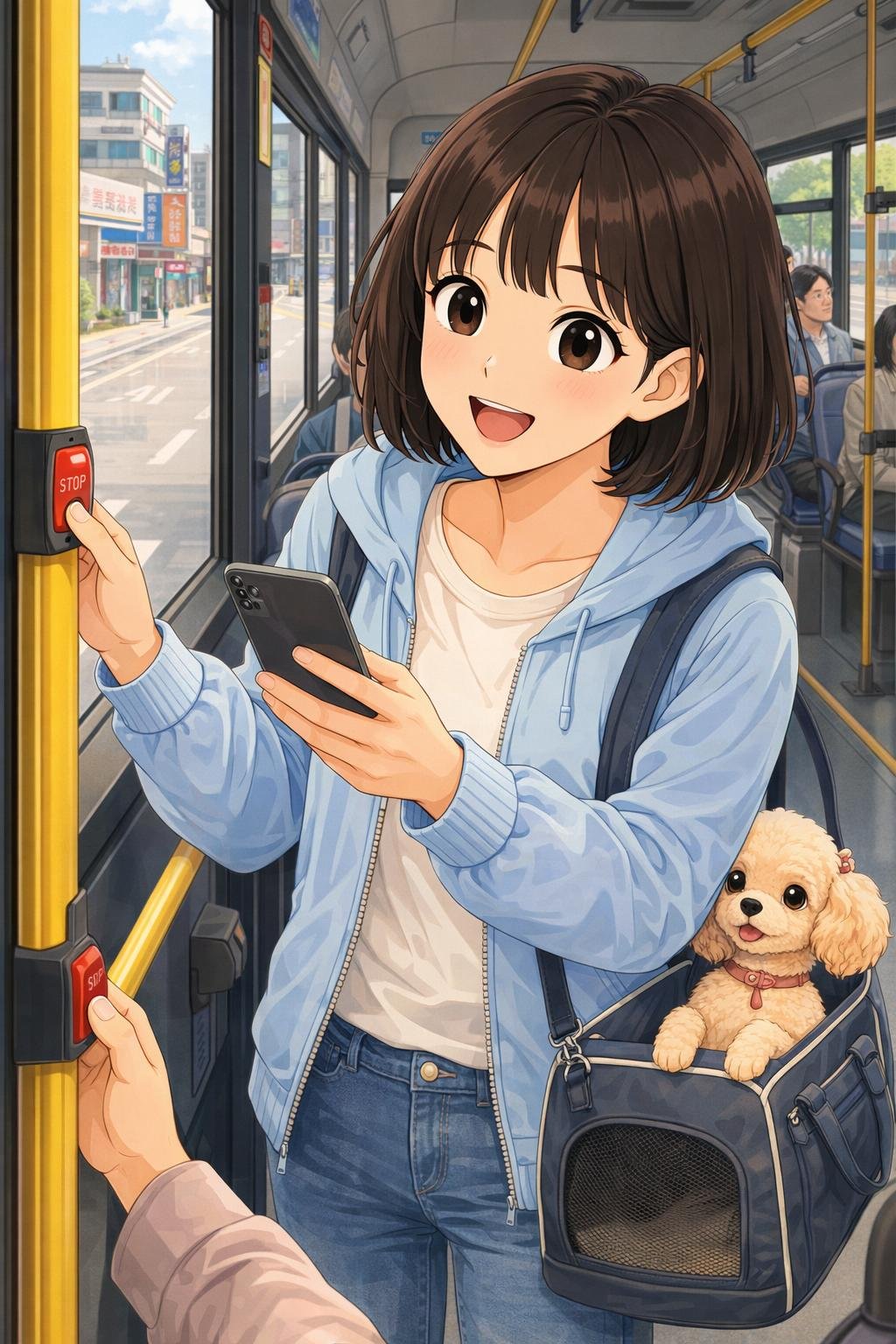
Illustrative examples: The following family scenes are fictional teaching examples, not verified reviews or official operator instructions.
Dad: Confirm the first direction
Dad finds the route number in a journey-planning tool, then checks the endpoint and next stops before joining the queue. He does not rely on the route number alone because the same route travels in two directions.
Mom: Prepare the payment method
Mom checks that the chosen transportation card is accepted for the planned city and route, has sufficient stored value where applicable, and fits the family’s travel plan. She also reviews the current fare and transfer conditions through official local information rather than assuming that Seoul rules apply everywhere.
Daughter: Follow the stops
Daughter keeps the destination stop open on her phone and watches the bus’s progress. Before the destination, she presses the stop bell with enough time to signal the driver, prepares to leave without blocking the aisle, and completes the required exit tap.
Nana: Remember the final tap
Nana’s mascot reminder is simple: Tap when required, and check the local rules. Nana is an illustrative family mascot, and this scene does not indicate that pets are permitted on any bus.
Bus Etiquette, Safety, and Common Mistakes
General courtesy
- Wait in an orderly manner and avoid stepping into the road as the bus approaches.
- Allow movement around the doors and follow the local boarding order.
- Keep bags and luggage from blocking doors, seats, or aisles.
- Keep conversations, calls, and device audio at a considerate volume.
- Pay attention to priority seating and give space to passengers who need it.
- Prepare for your stop without rushing, pushing, or standing in an unsafe position while the vehicle is moving.
These points describe general courtesy. Posted signs and instructions from the driver or operator take priority and may establish more specific rules.
Common mistakes to avoid
- Correct number, wrong direction: Check the route endpoint and upcoming stops before boarding.
- No stop signal: Press the stop bell before your destination rather than assuming the bus will stop automatically.
- Forgotten exit tap: Tap when required so the journey and any eligible transfer can be calculated correctly.
- Ineligible ticket: Do not attempt to use a Seoul subway single-journey ticket on a Seoul bus.
- Unsupported payment assumption: Confirm whether your card or other payment method is accepted by the local operator.
- Seoul rules treated as national rules: Recheck boarding, exit, fare, and transfer procedures when traveling in another city.
City Bus Checklist for International Visitors
- Choose a transportation card accepted by the relevant city and route.
- Load sufficient value if the selected product requires stored value.
- Confirm the current local fare and card coverage.
- Save the route number and destination stop.
- Check the travel direction and route endpoint.
- Review live arrival information when available.
- Confirm the local boarding door and tapping procedure.
- Follow the journey instead of relying only on memory.
- Press the stop bell before the destination.
- Tap when leaving if the local system requires it.
- Check the time window and eligible services before relying on a transfer discount.
- Follow current signs and operator instructions.
Frequently Asked Questions
Where can visitors buy and reload a transportation card?
The supplied official guidance states that Tmoney and EZL cards are sold and loaded at convenience stores nationwide. Purchase and reloading arrangements for other products differ, so confirm their current sales locations, payment conditions, and required identification.
Can I use a Seoul subway single-journey ticket on a bus?
No. A Seoul subway single-journey ticket does not work on Seoul buses. Prepare a compatible transportation card if your trip includes a bus.
Can I pay a city bus fare without a transportation card?
Payment options can vary by city and operator. A locally accepted transportation card is the most clearly documented option in the supplied visitor guidance, but travelers who need another payment method should check the relevant operator’s current rules before boarding.
How do I know when to get off?
Follow the route in a map tool and watch or listen for stop information where available. Confirm the stop before yours, then press the stop bell in time to signal that you want to exit.
Do I need to tap my card when leaving?
Seoul guidance requires passengers to tap when leaving, and both the boarding and exit taps are needed for transfer discounts. Procedures elsewhere may differ, so follow the local system and posted instructions.
Can I transfer from a bus to the subway?
Eligible Seoul bus and subway journeys can receive discounted transfer treatment when the card, service, tapping, and time requirements are met. Use the same eligible card and confirm current local conditions before relying on a discount.
Which visitor transportation card should I choose?
The answer depends on where you will travel and how often you expect to ride. Tmoney and EZL are reloadable options with nationwide sales availability. WOWPASS combines visitor-oriented payment, exchange, and transportation functions and requires a passport. Mpass and the Climate Card are Seoul-specific options with their own limits and coverage. Compare current prices, eligible routes, purchase conditions, and refund rules before choosing.
Will the Seoul procedure work in every Korean city?
Not necessarily. Other cities may use different fare structures, transfer rules, route tools, boarding arrangements, or accepted cards. Consult the relevant local authority or operator for current information.
Final Takeaway
The essential routine is to plan the route and direction, prepare an accepted transportation card, follow the local boarding procedure, monitor the journey, press the stop bell before your destination, and tap when required as you leave.
Before traveling, confirm current fares, card coverage, transfer conditions, route operations, and city-specific procedures. A few checks before boarding can prevent the most common mistakes, especially taking the correct route in the wrong direction or missing an eligible transfer because of an incomplete tap.
References
- Public Transportation – Seoul Metropolitan Government: https://english.seoul.go.kr/service/movement/public-transportation/
- Transportation Cards- VISITKOREA: https://english.visitkorea.or.kr/svc/contents/infoHtmlView.do?vcontsId=140663
The Seoul Metropolitan Government source supports the Seoul-specific boarding, route, exit, and transfer guidance. The VISITKOREA source provides broader visitor information about transportation-card options while identifying products specific to Seoul.
Image Credits
K-Nana Studio original visual.
K-Nana visuals are illustrative and should not be interpreted as verified depictions of a particular bus operator, vehicle, facility, policy, or permission for pets.
Disclaimer
This article is provided for general travel, cultural, and educational information. Fares, schedules, transportation-card acceptance, payment methods, transfer rules, route operations, accessibility, passenger requirements, boarding procedures, and operator policies may vary or change. Confirm important current details with the relevant official transport authority or operator before traveling. AI-generated images are illustrative visual aids and may not exactly represent real vehicles, facilities, products, or visitor conditions. Nana is a K-Nana Studio family mascot, and her appearance in an illustrative scene does not imply that pets are permitted by any real transport operator.