
Bongeunsa Temple is a historic Buddhist temple in Gangnam, Seoul, offering a peaceful contrast to the modern towers, shopping centers, and busy streets surrounding the COEX area. Traditional temple buildings, stone paths, Buddhist statues, lanterns, trees, and quiet courtyards create an atmosphere that feels remarkably different from the commercial district just outside.
For first-time visitors, Bongeunsa Temple provides an accessible introduction to Korean Buddhist culture without leaving central Gangnam. Its location near COEX also makes it easy to experience traditional and contemporary Seoul during the same outing.
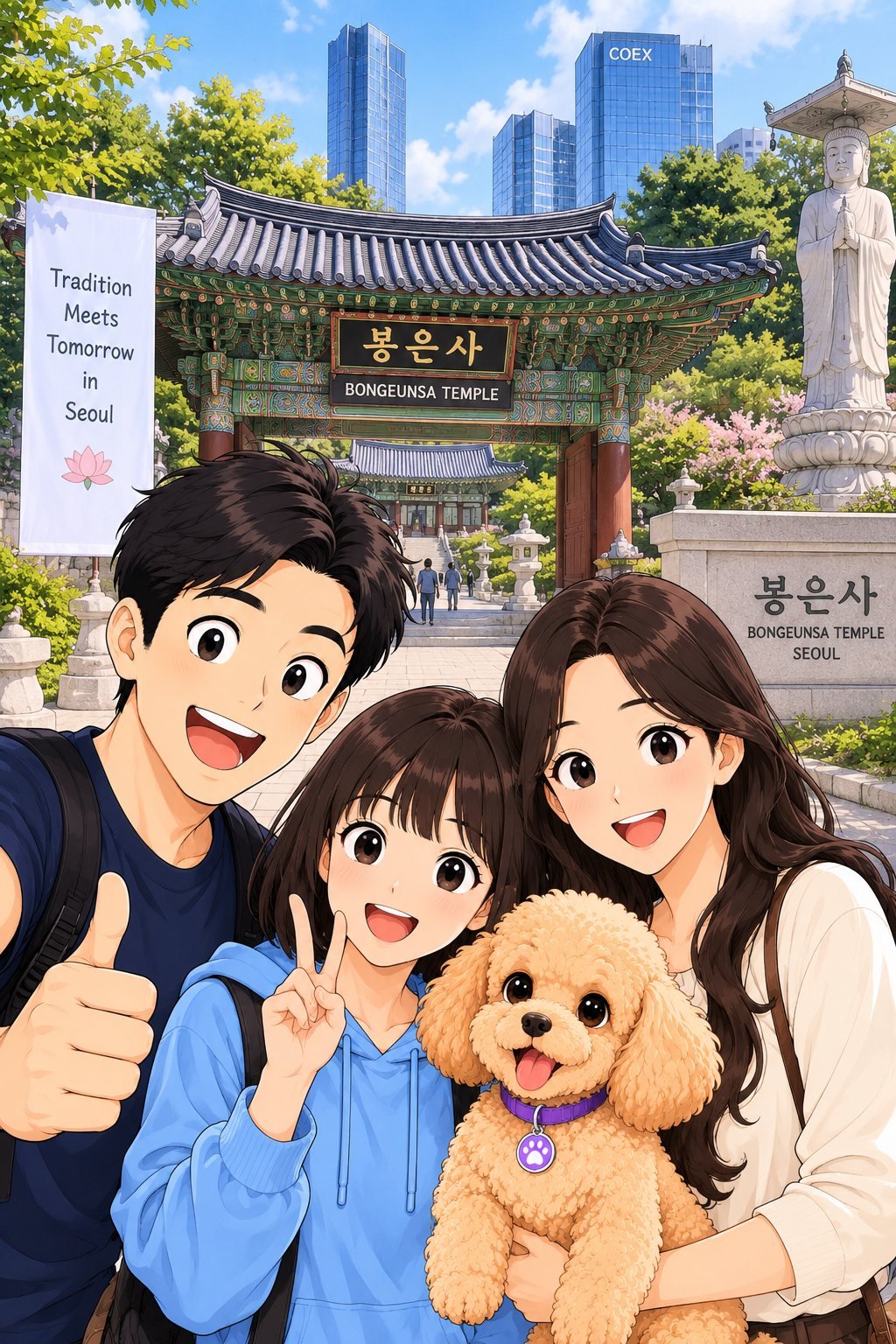
Traditional Buddhist architecture and modern Gangnam meet at Bongeunsa Temple in the heart of Seoul.
Quick Guide
| Location | Gangnam-gu, Seoul |
| Best for | Korean Buddhist culture, traditional architecture, quiet walks, photography, cultural sightseeing |
| Recommended time | About 1–2 hours |
| Nearest subway | Bongeunsa Station |
| Admission | General temple access is typically free |
| Good to combine with | COEX, Starfield Library, Samseong-dong, and Cheongdam-dong |
What Is Bongeunsa Temple?
Bongeunsa Temple is a Korean Buddhist temple located in Gangnam, directly across from the modern COEX area. The temple traces its history back more than a thousand years, although its buildings and grounds have changed repeatedly through reconstruction, restoration, and the development of the surrounding city.
Today, the temple remains an active religious site while also welcoming visitors interested in Korean Buddhism, architecture, history, and traditional culture.
One of its most distinctive features is its location. Traditional tiled roofs, colorful dancheong decoration, statues, lanterns, and wooded temple grounds stand beside one of Seoul’s most modern business and commercial districts.
Why Visit?
- Experience a traditional Buddhist temple in central Gangnam.
- See Korean temple architecture and colorful dancheong decoration.
- Walk through quieter courtyards and tree-lined temple paths.
- Learn about Korean Buddhist culture and religious traditions.
- See Buddhist statues, lanterns, stone structures, and temple halls.
- Photograph the contrast between traditional architecture and the modern Gangnam skyline.
- Combine the temple easily with nearby COEX and Starfield Library.
Walking Through the Temple
Bongeunsa is best explored slowly on foot. Rather than treating the temple as a single photo stop, allow time to walk between its gates, halls, courtyards, stone paths, statues, and quieter areas.
The grounds include changes in elevation, stairs, and traditional stone pathways. Comfortable shoes are useful, especially if you plan to explore beyond the most accessible buildings near the entrance.
Because Bongeunsa is an active religious site, visitors may encounter worshippers, monks, ceremonies, prayer, and other religious activities. Move quietly around these areas and avoid interrupting people who are practicing or participating in temple activities.
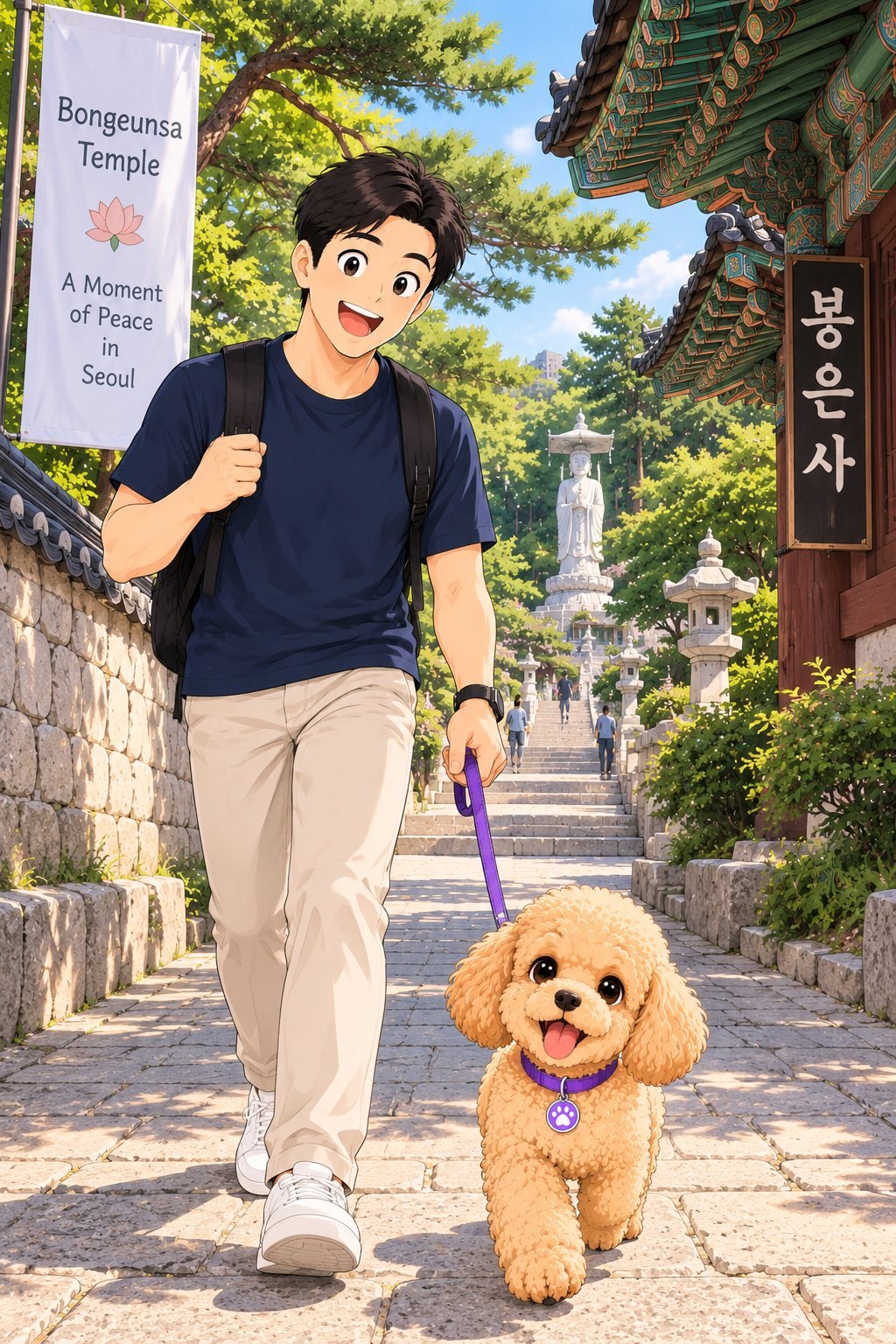
Stone paths, traditional buildings, trees, and quiet courtyards make walking an important part of the Bongeunsa Temple experience.
Temple Architecture & Dancheong
One of the most visually distinctive features of Bongeunsa Temple is its traditional Korean Buddhist architecture. Curved tiled roofs, wooden columns, courtyards, stone structures, and richly decorated temple halls create a strong contrast with the glass towers of modern Gangnam.
Look closely at the colorful patterns painted across beams, ceilings, and roof structures. This decorative tradition is known as dancheong and is commonly seen on Korean temples and other important traditional wooden buildings.
Different halls within the temple grounds serve religious purposes, so visitors should appreciate the architecture while remembering that these buildings remain active places of worship.
Lanterns at Bongeunsa Temple
Lanterns can add another layer of color and meaning to the temple grounds. Depending on the season and religious calendar, visitors may see lantern displays and decorations around temple buildings, courtyards, and pathways.
Lantern displays can be particularly prominent around Buddhist celebrations, but their number, arrangement, and appearance change throughout the year.
Visitors should therefore treat photographs of large lantern displays as seasonal examples rather than something guaranteed on every visit.
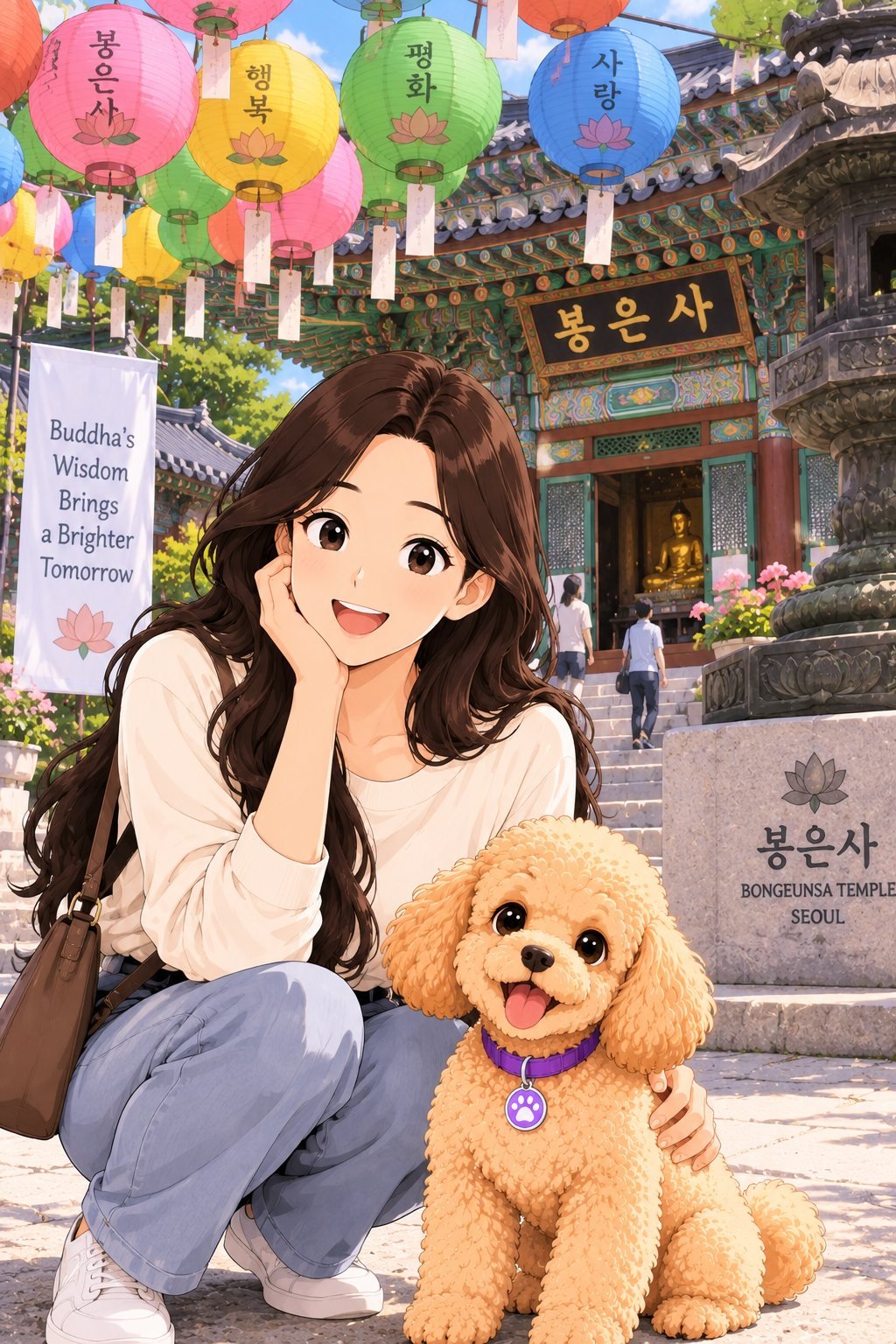
Lanterns, dancheong, tiled roofs, and temple courtyards bring color and detail to the traditional atmosphere of Bongeunsa.
Buddhist Culture & Temple Etiquette
Bongeunsa is not simply a historic attraction. It remains an active Buddhist temple where monks, worshippers, and visitors share the same space.
Keep conversations and phone sounds quiet around prayer halls and ceremonies. Avoid standing directly in front of people who are praying, and do not interrupt religious activities for photographs.
Photography rules can vary by building or activity. Pay attention to posted signs and avoid photographing restricted interiors, ceremonies, monks, or worshippers without appropriate permission.
Modest and respectful behavior is appropriate throughout the grounds. Food, litter, loud entertainment, and disruptive posing should be avoided around religious spaces.
Traditional Culture Walk
Walking through Bongeunsa provides an opportunity to notice smaller elements of Korean temple culture beyond the major buildings.
Visitors may encounter wooden prayer plaques, stone lanterns, Buddhist imagery, decorative patterns, inscriptions, flowers, trees, stairs, and quiet corners between temple halls.
These details make Bongeunsa especially suitable for visitors who prefer slow cultural exploration rather than moving quickly between major landmarks.
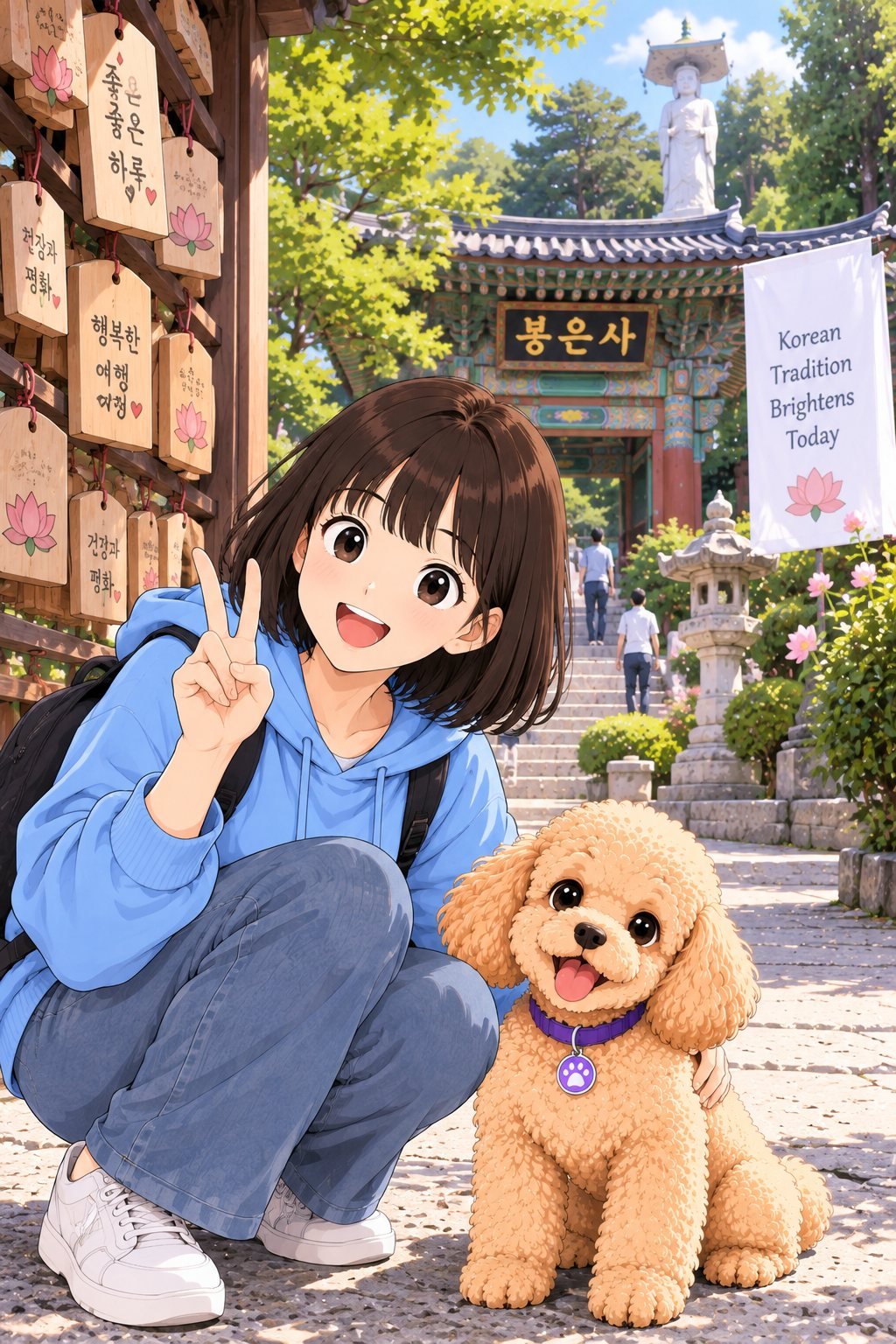
Slow down and notice the architecture, prayer plaques, stonework, trees, and other details throughout the temple grounds.
Photography at Bongeunsa Temple
Bongeunsa offers an unusual combination of traditional architecture and modern city scenery. Temple roofs, stone lanterns, trees, Buddhist statues, seasonal decorations, and surrounding skyscrapers can all appear within the same visit.
Instead of photographing only the main entrance, walk through different parts of the grounds to find changing perspectives between traditional buildings and the Gangnam skyline.
Always prioritize temple etiquette over photography. Keep pathways and entrances clear, follow posted restrictions, and avoid disturbing worshippers or religious activities while taking pictures.
Bongeunsa Temple & COEX
One of the most interesting ways to experience Bongeunsa Temple is to combine it with nearby COEX and Starfield Library.
The two areas provide a striking contrast. Bongeunsa offers traditional Buddhist architecture, temple courtyards, stone paths, religious culture, and quieter surroundings, while COEX Starfield Library places visitors inside one of Gangnam’s major modern shopping, business, culture, and entertainment complexes.
Because they are located close to each other, visitors can experience both traditional and contemporary Seoul without spending much of the day traveling between neighborhoods.
Tradition Beside the Gangnam Skyline
Bongeunsa’s location creates one of the most recognizable contrasts in southern Seoul. Traditional tiled roofs and Buddhist structures stand against a skyline of modern office towers and commercial buildings.
The contrast is not limited to photography. It also demonstrates how historic religious spaces continue to exist within a rapidly developed modern city.
Take time to look back toward the surrounding skyline as you move through the temple grounds. Different paths and courtyards provide changing views of traditional architecture and contemporary Gangnam.
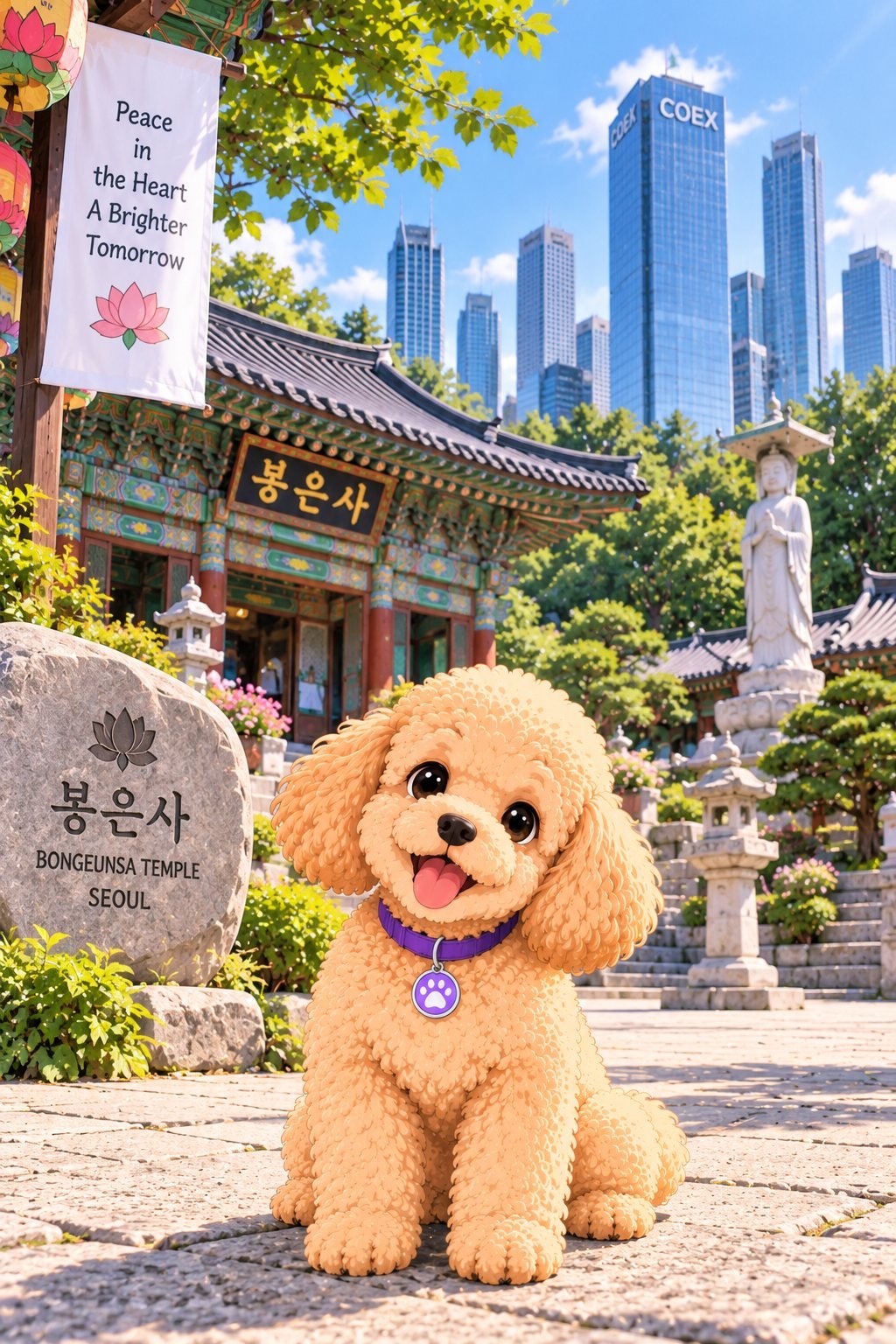
Bongeunsa Temple offers a memorable view of traditional Korean culture beside the modern Gangnam skyline.
Best Time to Visit
Morning and late afternoon can be pleasant times for walking around the temple grounds, particularly during warmer months.
Weekdays may provide a quieter atmosphere than busy weekends or major holidays, although Bongeunsa remains an active temple and visitor numbers can vary according to ceremonies, events, and the Buddhist calendar.
Spring flowers, summer greenery, autumn foliage, winter scenery, and seasonal temple decorations can each create a different experience.
If a particular festival, lantern display, or religious event is important to your visit, check current information before traveling rather than assuming it takes place every day.
How Long to Spend
About 1–2 hours is suitable for many first-time visitors.
A short visit focused on the main buildings can take less time, while visitors interested in architecture, photography, Buddhist culture, and quieter areas of the grounds may prefer to stay longer.
Combining Bongeunsa with COEX and Starfield Library can easily create a half-day itinerary in Gangnam.
How to Get There
Bongeunsa Station on Seoul Subway Line 9 is a convenient starting point for the temple.
The temple is also accessible from the COEX and Samseong-dong area, making it easy to visit before or after exploring COEX Starfield Library.
Use a current map when planning your route because station exits, pedestrian routes, construction, and access conditions can change.
First-Time Visitor Tips
- Remember that Bongeunsa is an active Buddhist temple, not only a tourist attraction.
- Keep voices and phone sounds low around prayer halls and ceremonies.
- Wear comfortable shoes for stone paths, stairs, and changes in elevation.
- Follow posted photography restrictions inside and around temple buildings.
- Avoid disturbing monks, worshippers, ceremonies, or people who are praying.
- Do not block temple entrances, stairs, or pathways while taking photographs.
- Check current information if you are visiting for a particular festival, lantern display, ceremony, or cultural program.
- Combine the temple with nearby COEX for an easy traditional-and-modern Gangnam itinerary.
What to Do Nearby
- COEX & Starfield Library — shopping, books, cafés, restaurants, entertainment, and contemporary K-culture.
- Samseong-dong — modern business towers, hotels, restaurants, and commercial spaces around COEX.
- Apgujeong Rodeo & Cheongdam-dong — fashion, beauty, cafés, galleries, and contemporary Korean style.
- Gangnam — one of Seoul’s major business, shopping, dining, and entertainment areas.
- Banpo Hangang Park — Han River scenery, picnics, sunset, Banpo Bridge, and evening views.
K-Culture Connection
Bongeunsa Temple provides a different perspective on Korean culture from Seoul’s shopping districts, cafés, entertainment areas, and modern landmarks.
Its Buddhist architecture, religious traditions, dancheong, lanterns, statues, prayer spaces, and temple grounds represent cultural traditions that continue to be part of life in modern Korea.
The temple’s location beside COEX makes this relationship particularly visible. Within a short walk, visitors can move between a historic religious environment and one of contemporary Gangnam’s largest commercial and cultural complexes.
FAQ
Is Bongeunsa Temple free to visit?
General access to Bongeunsa Temple is typically free. Certain cultural programs, special activities, or other services may have separate conditions or fees, so check current information when planning a specific experience.
What is Bongeunsa Temple known for?
Bongeunsa Temple is known for Korean Buddhist culture, traditional temple architecture, colorful dancheong, statues, lanterns, quiet temple grounds, and its striking location beside the modern Gangnam skyline.
Which subway station is best for Bongeunsa Temple?
Bongeunsa Station on Seoul Subway Line 9 is a convenient starting point for visiting the temple.
How long should I spend at Bongeunsa Temple?
About 1–2 hours works well for many first-time visitors. Allow more time if you want to explore the grounds slowly, photograph the architecture, or participate in a cultural or religious program.
Can I visit Bongeunsa Temple and COEX on the same day?
Yes. Bongeunsa Temple and COEX & Starfield Library are close to each other and can be combined easily, providing a memorable contrast between traditional Buddhist culture and contemporary Gangnam.
Can I take photos at Bongeunsa Temple?
Photography is possible in many outdoor areas, but visitors should follow posted restrictions and respect religious activities. Avoid disturbing monks, worshippers, ceremonies, or people who are praying, and check before photographing restricted interiors.
Related K-Nana Guides
Continue directly to COEX & Starfield Library for shopping, books, entertainment, and contemporary K-culture. Explore Apgujeong Rodeo & Cheongdam-dong for fashion, cafés, galleries, and modern Korean style, or visit Banpo Hangang Park for Han River scenery, sunset, and evening views.
Official Information
Bongeunsa Temple is an active Buddhist religious site. Temple access, prayer halls, ceremonies, cultural programs, seasonal lantern displays, festivals, photography restrictions, and visitor routes can change according to religious activities, events, maintenance, and other conditions. Check current official temple information when a particular ceremony, program, festival, or facility is important to your visit.
Image Credits
Bongeunsa Temple family travel visual — K-Nana Studio original visual.
Bongeunsa Temple traditional path with Dad and Nana visual — K-Nana Studio original visual.
Bongeunsa Temple lanterns and architecture with Mom and Nana visual — K-Nana Studio original visual.
Bongeunsa Temple traditional culture walk with K-Nana daughter and Nana visual — K-Nana Studio original visual.
Nana with Bongeunsa Temple and the Gangnam skyline visual — K-Nana Studio original visual.