
Itaewon is one of Seoul’s most internationally influenced neighborhoods, known for global restaurants, cafés, bars, small shops, hillside streets, and a long history of cultural diversity. Located in Yongsan-gu near Namsan, the district offers first-time visitors a different perspective on Seoul, where Korean city life meets food, languages, styles, and communities from around the world.
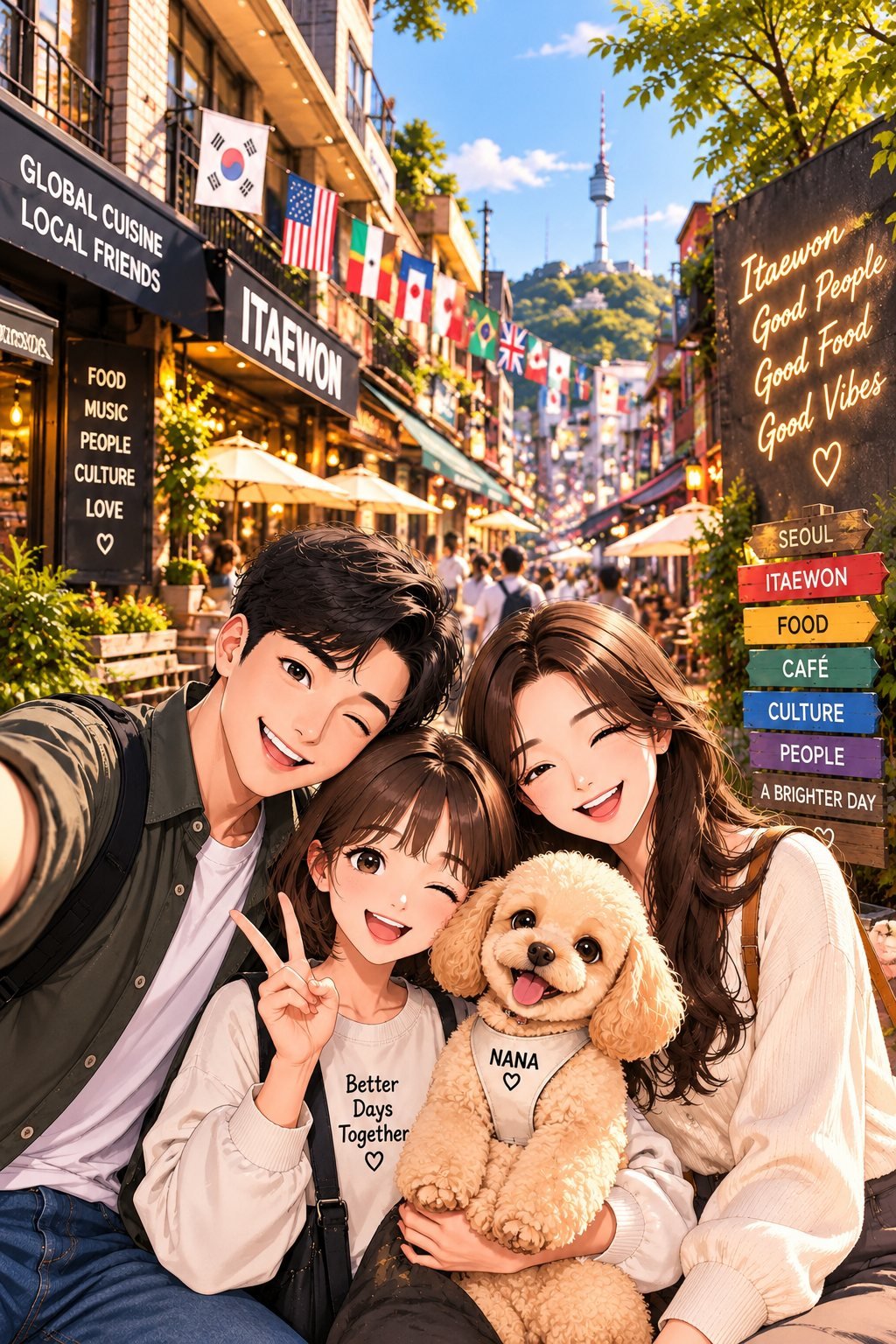
Explore global food, cafés, shopping, hillside streets, and contemporary culture in Itaewon with the K-Nana family.
Quick Guide
| Location | Yongsan-gu, Seoul |
| Best for | Global food, cafés, culture, shopping, nightlife, neighborhood walks |
| Recommended time | About 3–5 hours |
| Nearest subway | Itaewon Station |
| Admission | The neighborhood itself is free to explore |
| Good to combine with | Namsan and N Seoul Tower |
What Is Itaewon?
Itaewon is a neighborhood in Yongsan-gu with a distinctive international character. Over many decades, people, businesses, restaurants, and communities from different countries have contributed to the area’s identity.
Today, visitors can find Korean businesses alongside restaurants serving cuisines from many parts of the world, as well as cafés, fashion stores, bars, specialty shops, and entertainment venues.
Itaewon is not defined by one monument. Much of the experience comes from walking its main streets and smaller hillside alleys.
Why Visit?
- Experience one of Seoul’s most internationally diverse neighborhoods.
- Explore restaurants serving food from many countries.
- Discover cafés, small shops, fashion, and lifestyle businesses.
- Walk through hillside streets and quieter side alleys.
- Experience a neighborhood that changes noticeably after sunset.
- Combine Itaewon with Namsan and N Seoul Tower.
Global Food in Itaewon
Food is one of the strongest reasons to explore Itaewon. The neighborhood has long been associated with international dining, and visitors can encounter restaurants influenced by cuisines from different regions of Asia, the Middle East, Europe, the Americas, and beyond.
Korean restaurants, bakeries, cafés, desserts, casual meals, and late-night food are also part of the area.
Individual restaurants change over time, so menus, opening hours, prices, reservations, and dietary options should be checked directly when a particular business is important to your visit.

Restaurants from different culinary traditions are an important part of Itaewon’s international character.
A Neighborhood Shaped by Different Cultures
Itaewon’s identity has been shaped by decades of interaction between Korean residents, international communities, visitors, businesses, and nearby institutions.
This history is visible in the variety of food, languages, signs, shops, cultural spaces, and businesses found throughout the wider neighborhood.
Rather than representing one single culture, Itaewon is better understood as a district where many influences have existed alongside one another and continued to change over time.
Explore Beyond the Main Street
The streets immediately around Itaewon Station are only one part of the neighborhood.
Walking uphill or turning into smaller roads can lead to cafés, restaurants, residences, boutiques, terraces, and quieter spaces with a different atmosphere from the busiest commercial blocks.
Some streets are steep, so comfortable shoes are particularly useful in Itaewon.
Itaewon Café Culture
Cafés in and around Itaewon range from casual coffee shops to quieter spaces hidden along hillside streets and terraces.
Some offer views across surrounding neighborhoods, while others occupy renovated buildings or intimate courtyards away from the busiest streets.
As with restaurants, individual cafés can change, so exploring and choosing a place based on the atmosphere you find that day can work well.
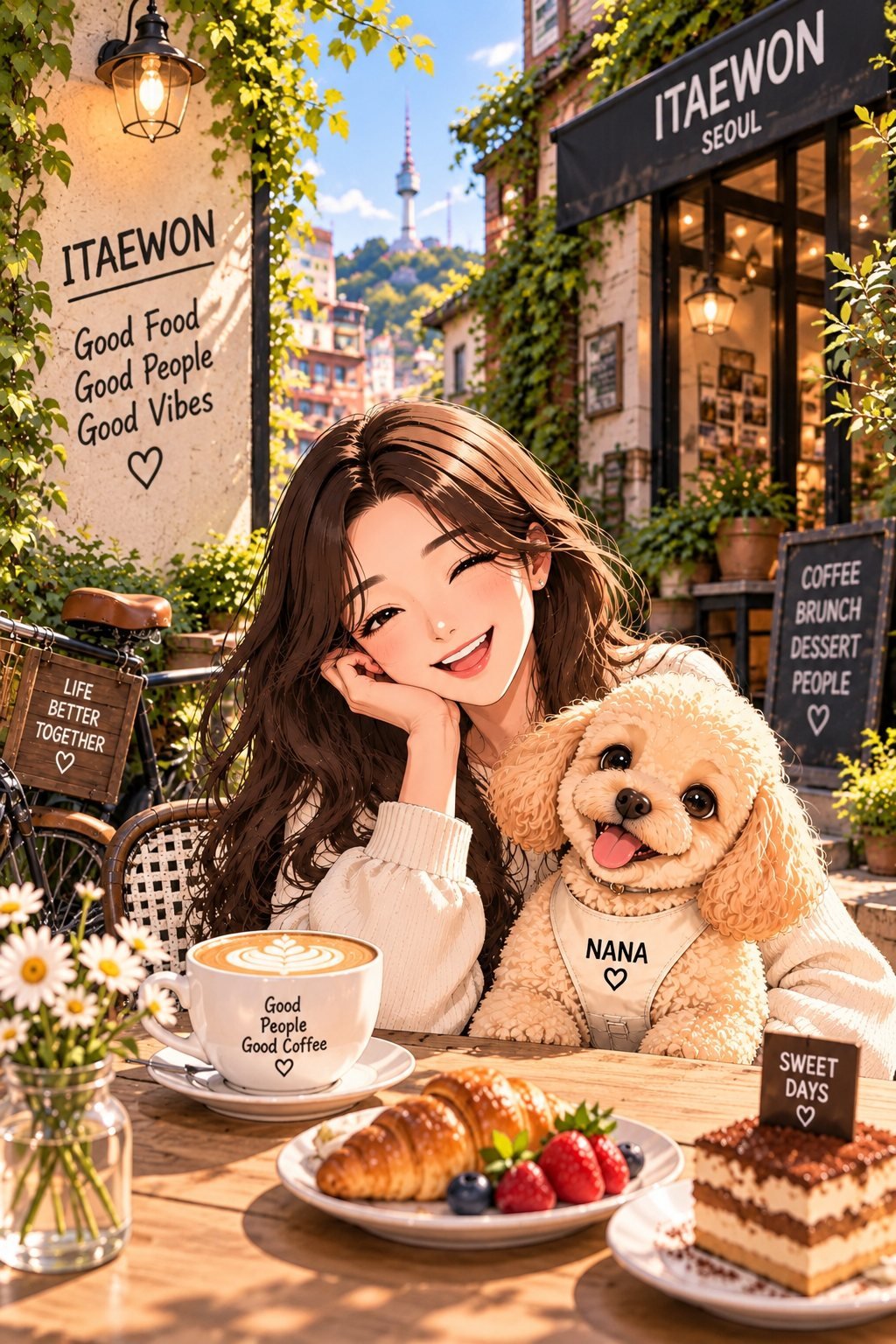
Quieter cafés and hillside terraces reveal another side of Itaewon beyond its busiest streets.
Shopping & Small Finds
Itaewon contains fashion, accessories, souvenirs, vintage items, lifestyle products, specialty stores, and smaller independent businesses.
The shopping experience is more scattered than in a concentrated retail district such as Myeongdong.
Myeongdong is strongly associated with major retail, beauty, cosmetics, and dense shopping streets, while Itaewon mixes shopping with restaurants, cafés, cultural influences, nightlife, and residential alleys.
Street Art & Colorful Alleys
Murals, signs, stairs, storefronts, and small side streets can add color to an Itaewon walk. The visual character changes from one block to another, particularly as you move away from the largest commercial roads.
These smaller spaces can provide interesting photography opportunities, but remember that many alleys include homes and operating businesses.
Avoid blocking entrances and respect people who live or work in the neighborhood.
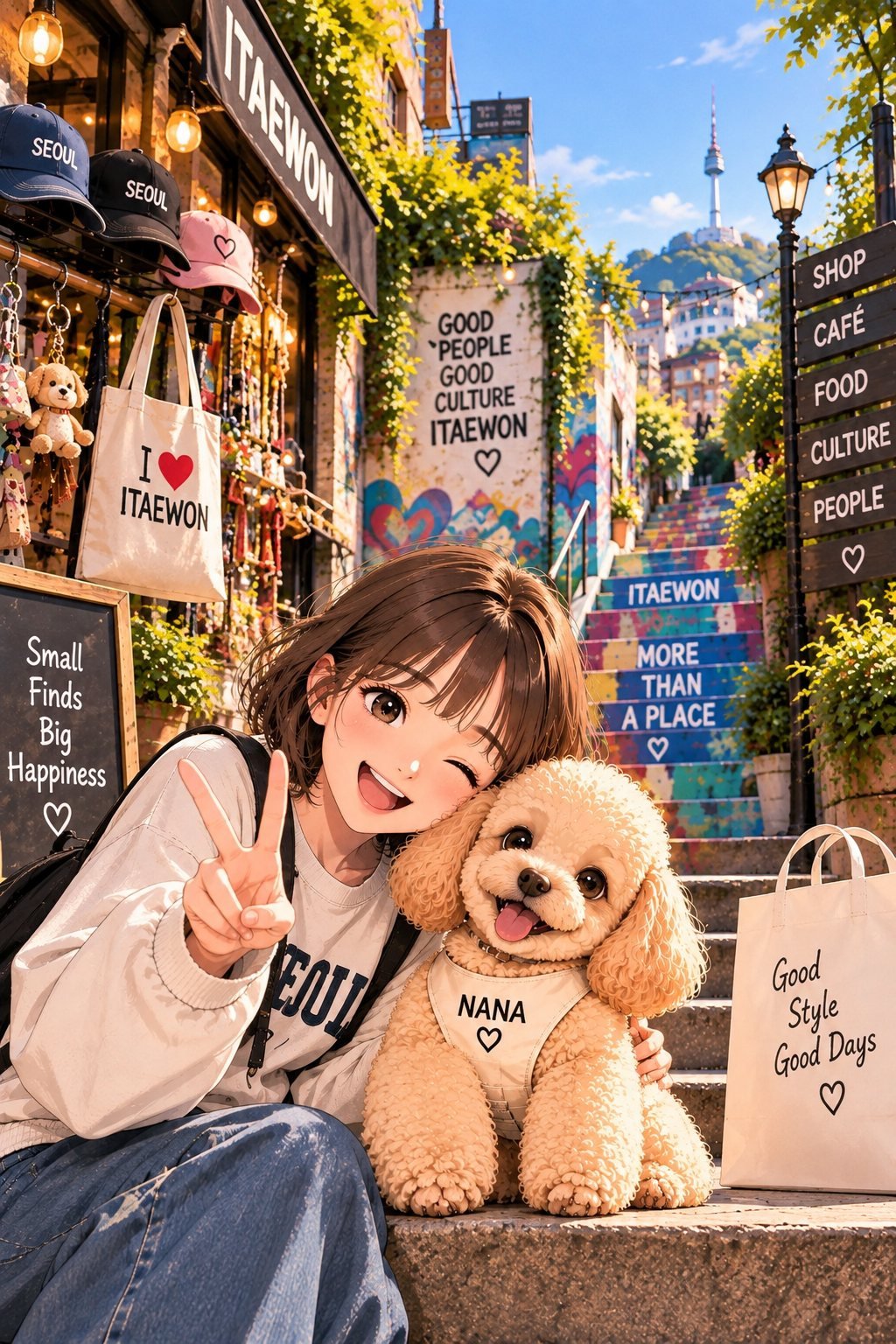
Small shops, colorful streets, and hillside alleys make exploration an important part of the Itaewon experience.
Itaewon & N Seoul Tower
Itaewon sits close to Namsan, making N Seoul Tower a natural attraction to consider on the same day.
The two destinations provide very different experiences. Itaewon focuses on streets, food, cafés, culture, and neighborhood exploration, while N Seoul Tower is centered on elevated city views and the Namsan area.
Combining them can provide both street-level and panoramic perspectives of Seoul in one itinerary.
Itaewon vs Myeongdong
Itaewon and Myeongdong are both well known to international visitors, but their character is different.
Myeongdong emphasizes shopping, beauty products, major stores, street food, and dense central-city activity.
Itaewon is more strongly associated with international restaurants, cultural diversity, hillside streets, cafés, bars, and nightlife.
Visiting both can show how different major visitor districts in Seoul can feel.
Itaewon vs Hongdae
Hongdae and Itaewon both become energetic later in the day, but they developed different identities.
Hongdae is closely associated with university culture, music, street performances, fashion, cafés, and youth entertainment.
Itaewon has a stronger international dining and multicultural identity, combined with bars, restaurants, hillside neighborhoods, and nightlife.
Itaewon vs Seongsu-dong
Visitors interested in contemporary Seoul may also compare Itaewon with Seongsu-dong.
Seongsu emphasizes industrial architecture, large cafés, fashion brands, design, and pop-up culture.
Itaewon instead stands out for global food, multicultural influences, hillside streets, and a long-established international atmosphere.
Photography in Itaewon
Itaewon provides many different visual settings within a relatively compact area. Signs, stairs, murals, restaurants, café terraces, narrow streets, Namsan views, and evening lights can all become part of the scene.
Walking uphill can sometimes reveal wider views across nearby rooftops and toward Namsan.
As always, avoid photographing people closely without permission and be considerate in residential areas.
Itaewon After Dark
Itaewon changes noticeably after sunset. Restaurant signs, café windows, bars, street lights, and surrounding city views create a much more illuminated atmosphere.
Some visitors come primarily for evening dining or nightlife, while others may prefer to experience the neighborhood earlier and leave as crowds increase.
Arriving in the late afternoon allows you to see both sides of the district during one visit.
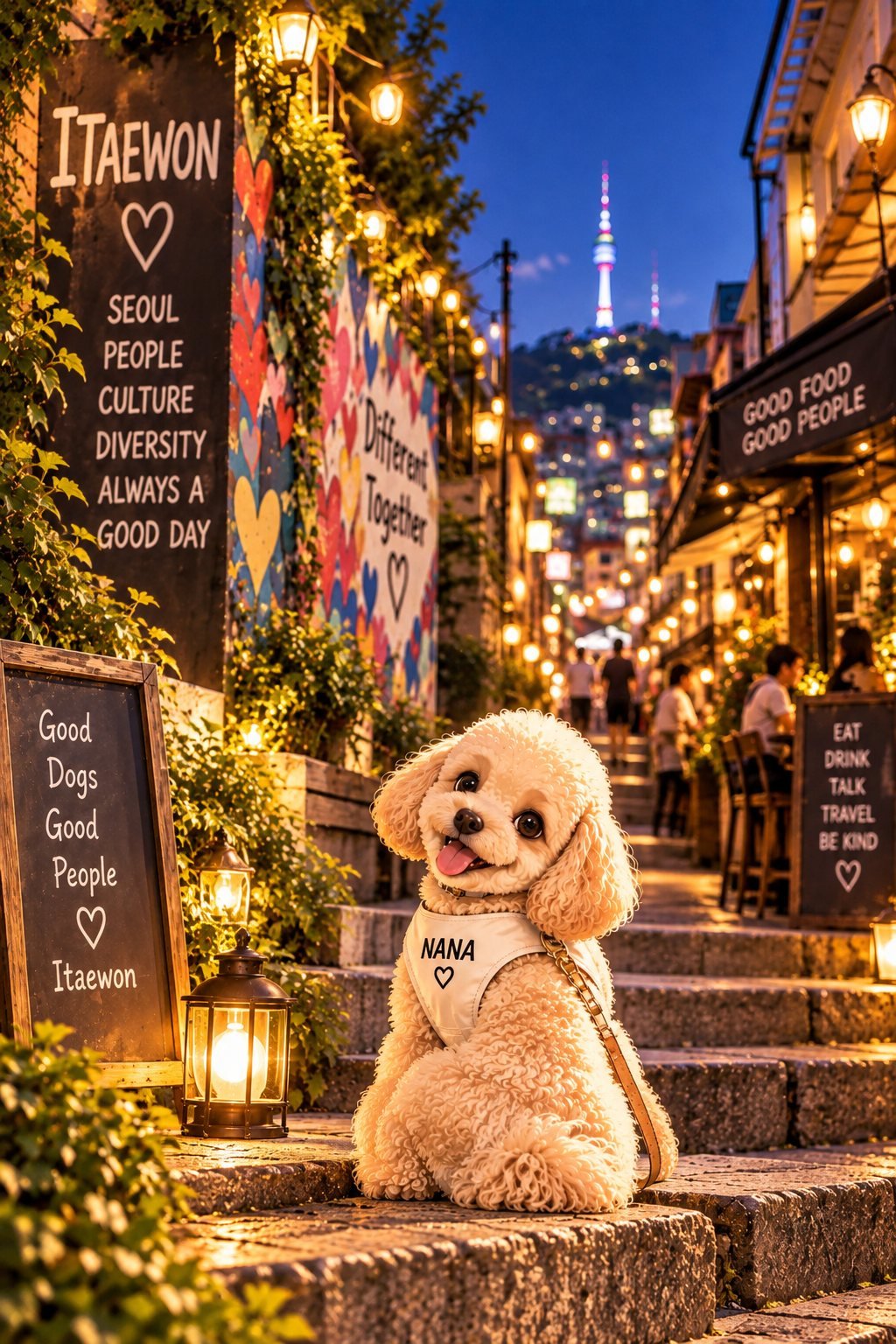
Warm lights, hillside streets, and the glow of Seoul give Itaewon a different personality after sunset.
Best Time to Visit
Late afternoon into evening is a useful time for many first-time visitors. You can explore shops and cafés in daylight, have dinner, and then experience the streets as the lights come on.
Visitors who prefer quieter streets may choose a weekday afternoon instead.
Weekend evenings can be considerably busier around popular dining and entertainment areas.
How Long to Spend
About 3–5 hours works well for many first-time visitors.
A meal and short walk can take considerably less time, while cafés, shopping, photography, dinner, and evening exploration can easily extend the visit.
If you combine Itaewon with Namsan or N Seoul Tower, allow at least half a day for a more comfortable itinerary.
How to Get There
Itaewon Station on Seoul Subway Line 6 is the most convenient starting point for the central commercial area.
Different exits lead toward different streets, restaurants, and hillside areas, so check your route when you have a particular destination in mind.
Because the surrounding terrain includes slopes and stairs, comfortable footwear is recommended.
First-Time Visitor Tips
- Wear comfortable shoes because many surrounding streets are steep.
- Explore beyond the main road around Itaewon Station.
- Check individual restaurant menus when dietary requirements are important.
- Confirm reservations and operating hours for specific restaurants or venues.
- Respect residential streets and avoid blocking entrances for photographs.
- Keep personal belongings secure in crowded evening areas.
- Visit in the late afternoon if you want both daytime and nighttime atmosphere.
- Consider combining Itaewon with Namsan and N Seoul Tower.
What to Do Nearby
- N Seoul Tower — panoramic Seoul views from the Namsan area.
- Namsan — walking routes, greenery, and elevated city scenery.
- Hannam-dong — cafés, restaurants, galleries, fashion, and quieter streets.
- Haebangchon — hillside streets, restaurants, cafés, and views around the Namsan area.
- Yongsan — a large central district connecting several cultural and commercial areas.
K-Culture Connection
Itaewon represents a side of Korean urban culture shaped by international exchange. Korean and global food, languages, music, fashion, nightlife, cafés, and communities have interacted here over many decades.
This makes Itaewon useful for understanding contemporary Seoul as an international city rather than only as a destination for traditional Korean culture.
The neighborhood also demonstrates how Seoul districts can develop very different identities even when they are geographically close to one another.
FAQ
Is Itaewon worth visiting on a first trip to Seoul?
Itaewon is particularly suitable for visitors interested in global food, multicultural neighborhoods, cafés, shopping, hillside streets, and nightlife.
What is Itaewon famous for?
Itaewon is widely known for its international restaurants, cultural diversity, cafés, bars, nightlife, shopping, and location near Namsan.
Which subway station is best for Itaewon?
Itaewon Station on Seoul Subway Line 6 is the main starting point for the central neighborhood.
How long should I spend in Itaewon?
About 3–5 hours is suitable for many first-time visitors. Allow longer if you plan to have dinner, experience nightlife, or combine the area with Namsan.
Can I visit Itaewon and N Seoul Tower on the same day?
Yes. Itaewon and N Seoul Tower can be combined as part of a central Seoul itinerary, although travel time and the uphill Namsan route should be considered.
Is Itaewon only for nightlife?
No. The neighborhood also offers restaurants, cafés, shopping, cultural diversity, hillside streets, and daytime exploration. Nightlife is only one part of Itaewon.
Related K-Nana Guides
Combine Itaewon with N Seoul Tower for elevated city views, or continue to Myeongdong for major shopping and beauty retail. To compare different contemporary Seoul districts, explore Hongdae for youth culture and music or Seongsu-dong for cafés, fashion, design, and pop-up culture.
Official Information
Itaewon contains independently operated restaurants, cafés, shops, bars, cultural spaces, and other businesses. Opening hours, menus, prices, reservations, events, and individual business operations can change. Check current information when a particular restaurant, café, shop, event, or venue is important to your visit.
Image Credits
Itaewon family travel visual — K-Nana Studio original visual.
Itaewon global food with Dad and Nana visual — K-Nana Studio original visual.
Itaewon café with Mom and Nana visual — K-Nana Studio original visual.
Itaewon shopping and culture with K-Nana daughter and Nana visual — K-Nana Studio original visual.
Nana exploring Itaewon at night visual — K-Nana Studio original visual.