
Seongsu-dong is one of Seoul’s most distinctive contemporary neighborhoods, known for red-brick industrial buildings, converted warehouses, large cafés, fashion stores, design spaces, and frequently changing pop-up events. Once strongly associated with factories and workshops, the area has developed into a creative district where older industrial architecture meets modern Korean lifestyle culture.
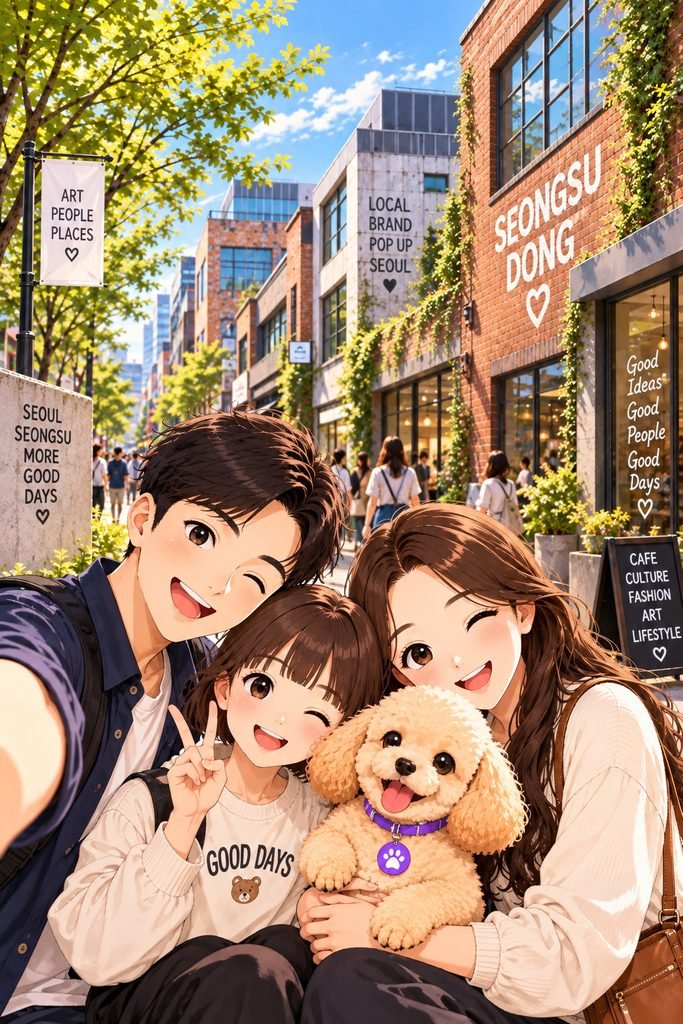
Explore red-brick streets, cafés, fashion, design, and contemporary Seoul culture in Seongsu-dong with the K-Nana family.
Quick Guide
| Location | Seongdong-gu, Seoul |
| Best for | Cafés, fashion, design, pop-ups, shopping, photography |
| Recommended time | About 3–5 hours |
| Nearest subway | Seongsu Station and Ttukseom Station |
| Admission | The neighborhood itself is free to explore |
| Good to combine with | Seoul Forest and eastern Han River areas |
What Is Seongsu-dong?
Seongsu-dong is a neighborhood in Seongdong-gu that developed around manufacturing, workshops, warehouses, and small industrial businesses. Elements of that history remain visible in its brick buildings, concrete structures, narrow streets, and older commercial spaces.
Over time, cafés, fashion brands, design studios, restaurants, galleries, and retail businesses began reusing many of these spaces rather than replacing their industrial character completely.
The result is one of Seoul’s most recognizable examples of old urban architecture being adapted for contemporary culture.
Why Visit?
- Explore streets where industrial architecture meets modern design.
- Visit large cafés built inside converted commercial spaces.
- Discover Korean fashion, beauty, and lifestyle brands.
- Encounter temporary pop-up stores and exhibitions.
- Photograph brick buildings, alleys, signs, and creative interiors.
- Experience a different side of contemporary Seoul from Hongdae or Myeongdong.
Walk Through Seongsu’s Industrial Streets
Walking is one of the best ways to understand Seongsu-dong. Older brick buildings and workshops can appear beside polished cafés, boutiques, galleries, and modern retail spaces.
The neighborhood does not have one single street containing everything. Interesting businesses are spread across several blocks, and the atmosphere can change quickly as you turn into another alley.
This makes Seongsu better suited to slow exploration than a rigid sightseeing route.
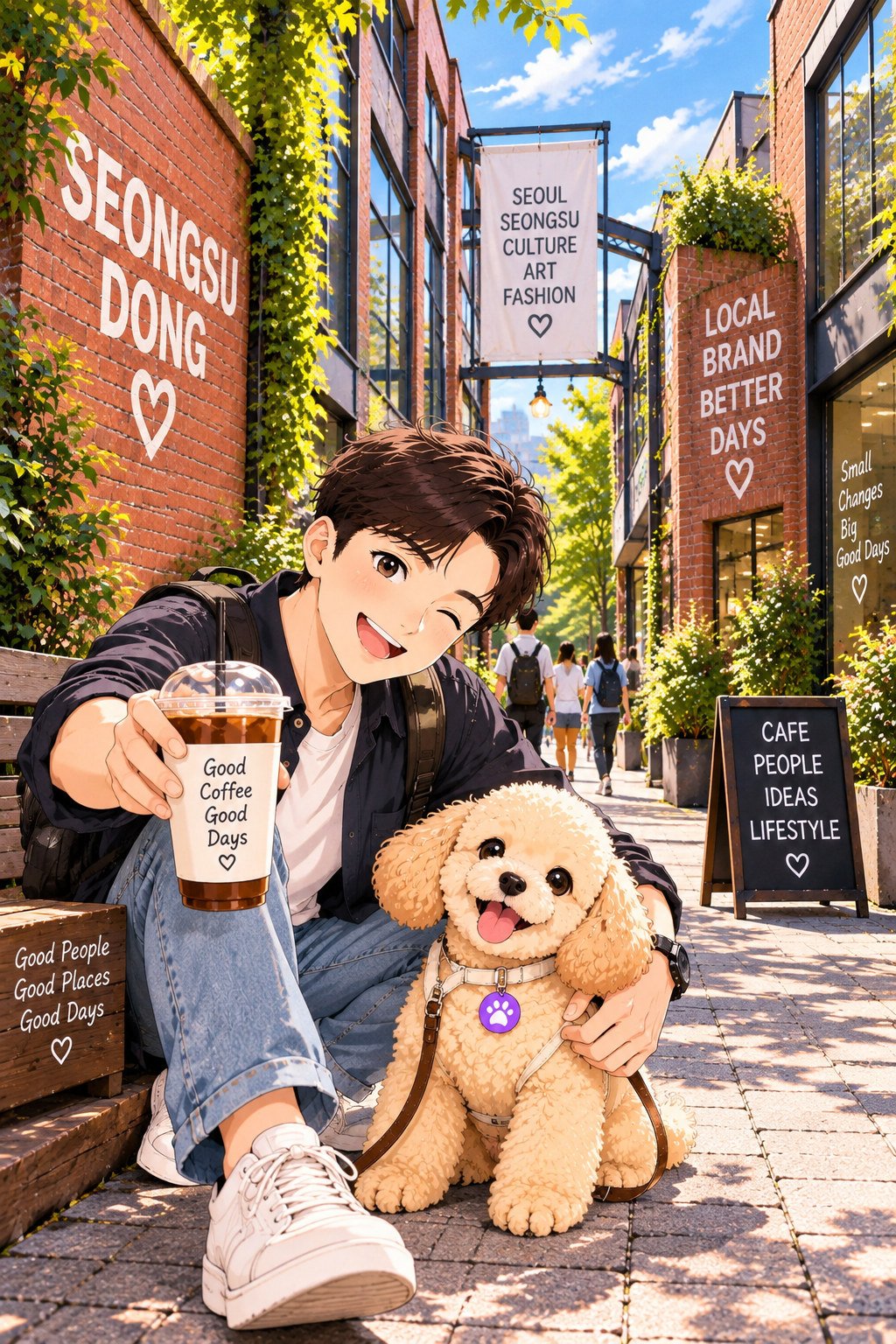
Red-brick buildings and converted industrial spaces give Seongsu-dong a distinctive urban character.
From Factories to Creative Spaces
One of the defining features of Seongsu is the reuse of older industrial buildings. Warehouses and factory-style structures have been transformed into cafés, shops, studios, cultural spaces, and brand venues.
Many businesses deliberately preserve exposed brick, concrete, steel, high ceilings, and other industrial details as part of their design.
This combination of old structures and new uses helps distinguish Seongsu from Seoul neighborhoods dominated by newer commercial buildings.
Seongsu Café Culture
Cafés are a major part of the Seongsu experience. Some occupy unusually large spaces, while others emphasize industrial interiors, bakeries, gardens, rooftops, or carefully designed visual concepts.
Popular cafés can become crowded, particularly on weekends. However, the area contains enough options that visitors do not necessarily need to wait for one specific business.
Walking until you find a café that matches your preferred atmosphere is often part of the experience.
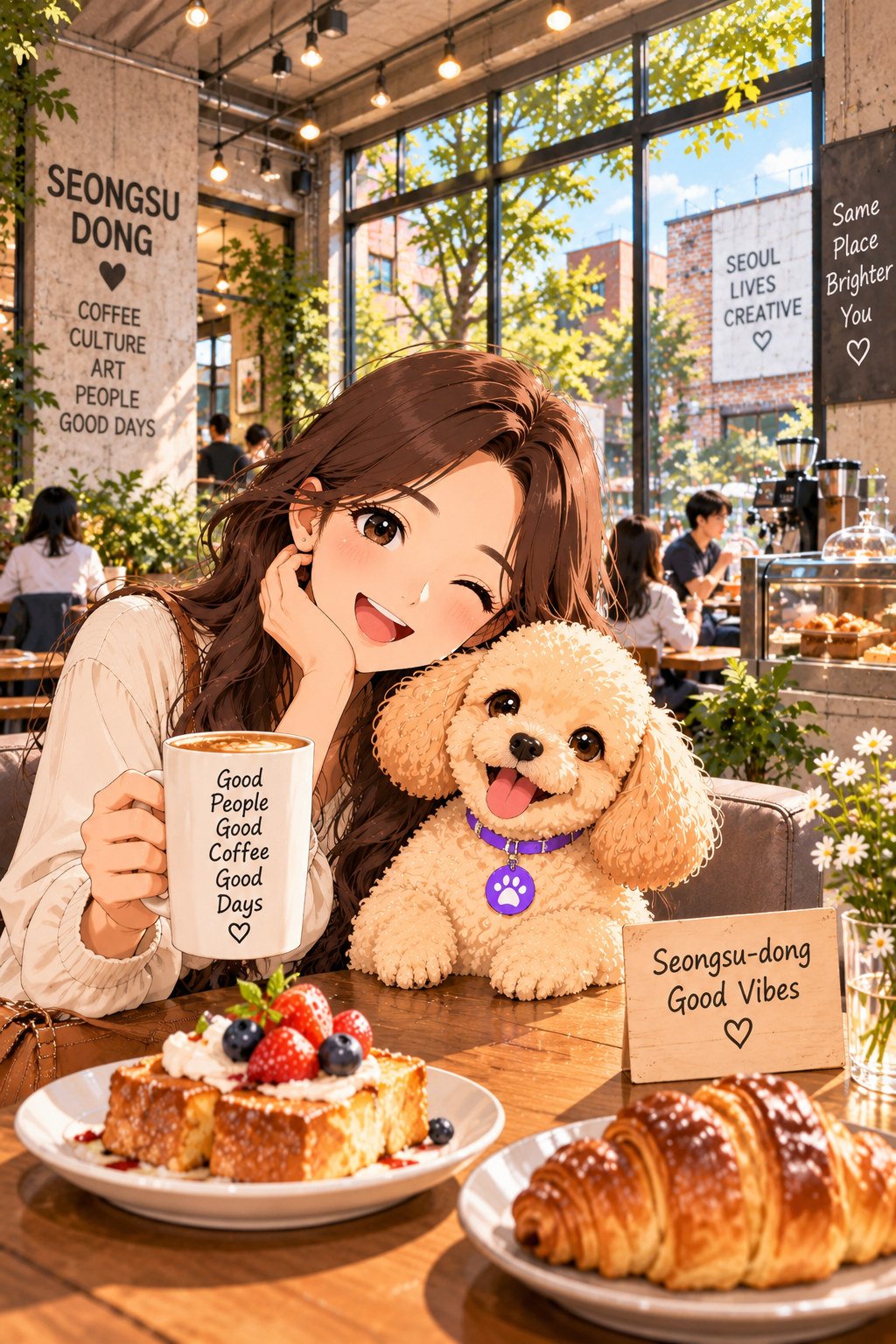
Converted industrial buildings have helped make large and creative cafés part of Seongsu-dong’s identity.
Fashion, Beauty & Lifestyle
Seongsu has become an important destination for Korean fashion, beauty, footwear, accessories, lifestyle products, and design-focused retail.
Some brands operate permanent stores, while others use the neighborhood for temporary launches, collaborations, or experimental spaces.
Visitors interested primarily in dense mainstream retail may prefer Myeongdong, while Seongsu places greater emphasis on creative presentation, individual brands, design, and changing experiences.
Pop-Up Stores
Pop-up stores are one of the most recognizable parts of modern Seongsu culture. Brands may temporarily transform buildings into promotional spaces featuring products, exhibitions, installations, photo areas, or interactive experiences.
Because pop-ups are temporary, a specific event seen online may have ended by the time you arrive.
For this reason, treat pop-ups as a changing bonus rather than the only reason to visit Seongsu-dong.
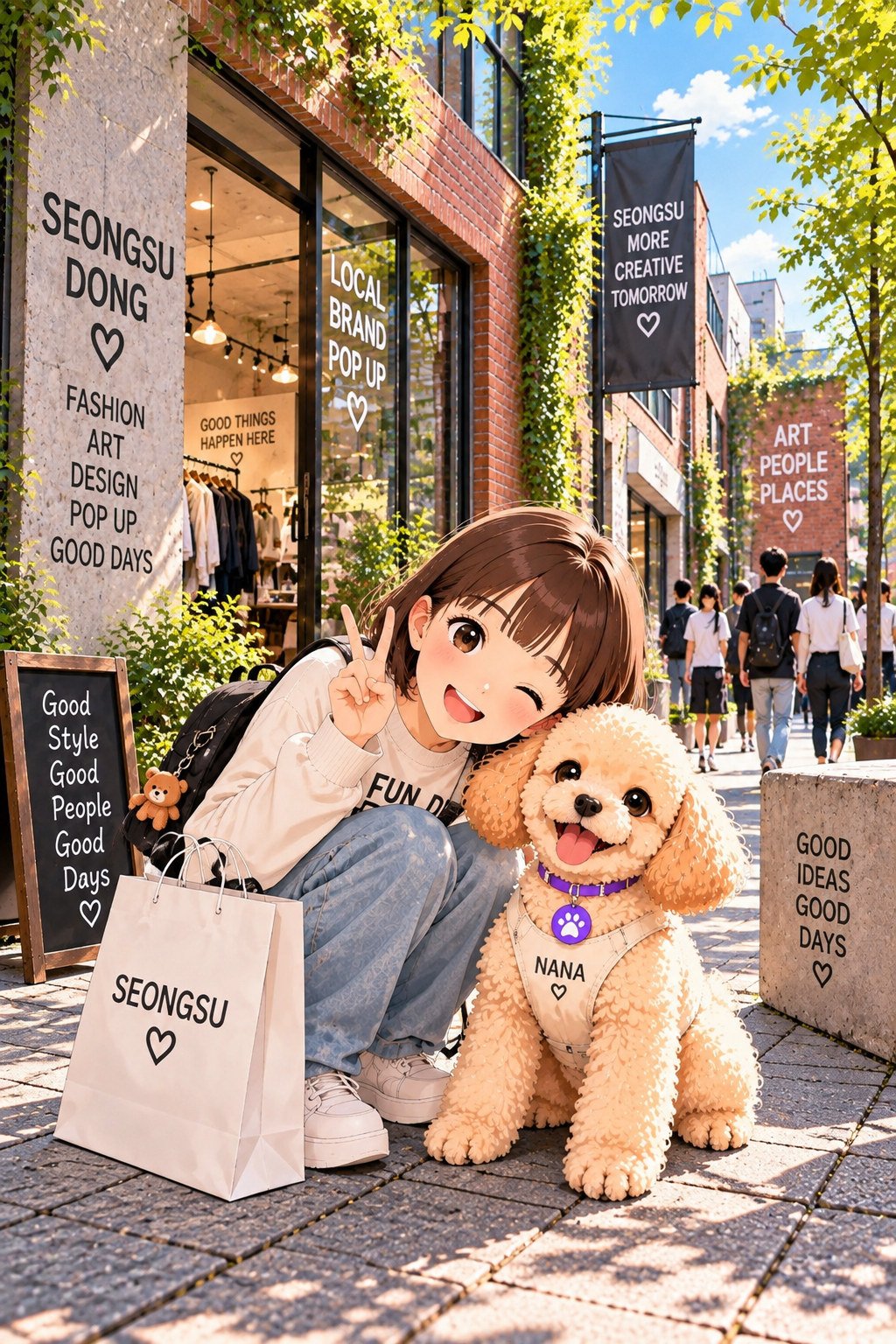
Fashion, design, local brands, and temporary pop-ups keep Seongsu-dong constantly changing.
Small Streets & Unexpected Finds
Not every interesting part of Seongsu is a major café or famous brand. Smaller alleys can contain independent shops, workshops, restaurants, galleries, studios, and businesses that retain more of the neighborhood’s industrial character.
Leaving the busiest streets for a short time can provide a useful contrast with the polished commercial spaces.
This mixture is one reason Seongsu rewards visitors who are willing to explore rather than move directly between famous locations.
Seongsu-dong vs Hongdae
Seongsu and Hongdae are both associated with younger contemporary culture, but their atmosphere is noticeably different.
Hongdae emphasizes music, nightlife, street performances, casual fashion, entertainment, and dense pedestrian streets.
Seongsu is more strongly associated with industrial architecture, design, large cafés, fashion brands, creative retail, and pop-up culture.
Visiting both can provide two very different perspectives on contemporary Seoul.
Seongsu-dong vs Yeonnam-dong
Yeonnam-dong offers another useful comparison.
Yeonnam-dong is centered more on neighborhood streets, the Gyeongui Line Forest Park, smaller cafés, restaurants, and independent shops.
Seongsu generally feels more industrial and brand-focused, with larger commercial spaces and a stronger connection to fashion and pop-up culture.
Photography in Seongsu
Brick walls, old industrial doors, concrete surfaces, narrow alleys, modern storefronts, plants, signs, and large windows create many photography opportunities.
The contrast between older buildings and newer design elements is often more interesting than any single landmark.
Remember that workshops, residences, and operating businesses remain throughout the neighborhood. Avoid blocking entrances or photographing people closely without permission.
Seongsu in the Evening
As daylight fades, café windows, restaurants, shops, and converted industrial spaces begin to illuminate the streets.
The evening atmosphere can feel calmer than Hongdae while still remaining active around popular cafés and restaurants.
Late afternoon is therefore a useful arrival time if you want to see both the architectural details in daylight and the neighborhood after the lights come on.
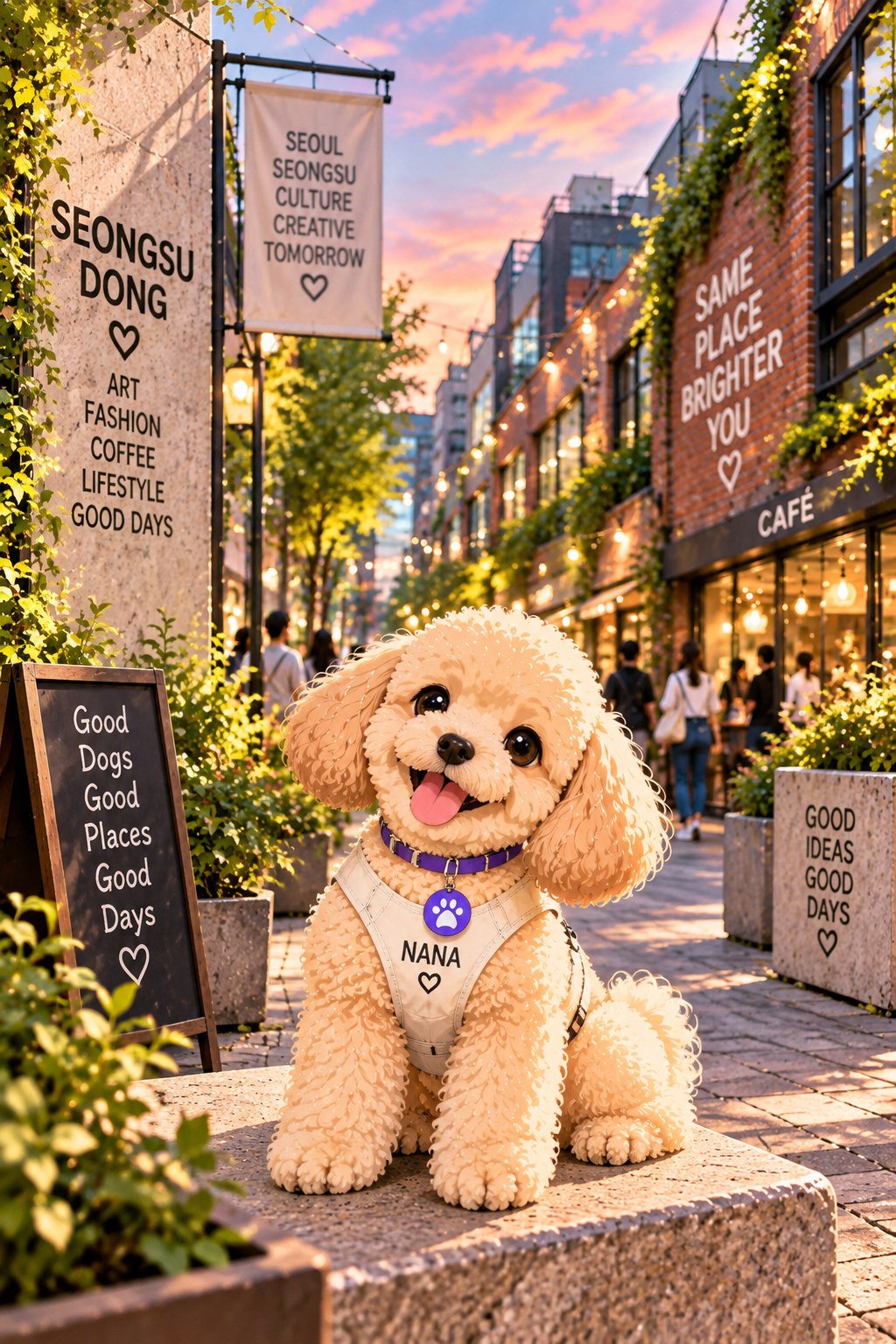
Warm storefront lights and red-brick buildings give Seongsu-dong a different character after sunset.
Best Time to Visit
Afternoon through early evening is a practical time for a first visit. Cafés, shops, pop-ups, and streets can all be explored before the neighborhood gradually changes after sunset.
Weekends can be significantly busier, particularly around popular cafés and temporary events.
If your priority is photography and relaxed walking, a weekday afternoon can provide a calmer experience.
How Long to Spend
About 3–5 hours is suitable for many first-time visitors.
A simple walk and café visit can be shorter, while shopping, pop-ups, restaurants, photography, and nearby Seoul Forest can easily extend the area into a half-day destination.
How to Get There
Seongsu Station on Seoul Subway Line 2 is a convenient starting point for many of the neighborhood’s commercial streets.
Ttukseom Station can also be useful depending on your route and whether you plan to continue toward Seoul Forest.
Because attractions and businesses are distributed across the neighborhood, expect to spend a significant amount of time walking.
Continue Toward Seoul Forest
Seoul Forest is one of the most natural additions to a Seongsu itinerary. It provides trees, lawns, walking paths, and open outdoor space after several hours of cafés and shopping.
The combination works particularly well because it places Seongsu’s dense creative streets beside a much greener and more spacious environment.
From Creative Streets to the Han River
Visitors who enjoy combining urban neighborhoods with outdoor scenery can compare Seongsu with the experience at Mangwon Hangang Park.
Seongsu focuses on cafés, design, fashion, brands, and industrial architecture, while the Han River park provides walking, cycling, picnics, open space, and sunset scenery.
Together, these different Places guides show how varied contemporary Seoul can be beyond its historical attractions.
First-Time Visitor Tips
- Wear comfortable shoes because Seongsu is best explored on foot.
- Do not plan the entire visit around one famous café or pop-up.
- Check current dates before traveling specifically for a temporary pop-up event.
- Explore side streets as well as the busiest commercial blocks.
- Visit on a weekday if you prefer smaller crowds.
- Respect working businesses, workshops, and residential entrances.
- Allow extra time if you plan to continue toward Seoul Forest.
What to Do Nearby
- Seoul Forest — green space, walking paths, lawns, and a relaxing break from the surrounding city.
- Ttukseom — nearby streets and access toward the Han River area.
- Konkuk University area — restaurants, shopping, and university nightlife.
- Han River — riverside parks, cycling routes, and open spaces across Seoul.
- Seongdong-gu — the wider district containing Seongsu and several surrounding neighborhoods.
K-Culture Connection
Seongsu-dong represents an important part of contemporary Korean lifestyle culture. Fashion, beauty, cafés, design, social media, pop-ups, brand collaborations, photography, and urban regeneration overlap within the same neighborhood.
It also demonstrates how older industrial architecture can be reused rather than completely erased. Former manufacturing spaces have become part of the visual identity of modern Seongsu.
For international visitors interested in present-day Korean trends, Seongsu provides a useful contrast with both traditional Seoul and entertainment-focused districts such as Hongdae.
FAQ
Is Seongsu-dong worth visiting?
It is particularly suitable for visitors interested in cafés, Korean fashion and lifestyle brands, design, pop-up stores, photography, and contemporary urban culture.
What is Seongsu-dong famous for?
Seongsu is known for converted industrial buildings, red-brick streets, large cafés, fashion and lifestyle stores, creative spaces, and frequently changing pop-up events.
Which subway station is best for Seongsu-dong?
Seongsu Station on Line 2 is convenient for many commercial streets. Ttukseom Station may also be useful depending on your route.
How long should I spend in Seongsu?
About 3–5 hours works well for many visitors. Allow longer when combining the neighborhood with Seoul Forest.
Are Seongsu pop-up stores permanent?
No. Many pop-ups operate for limited periods. Dates, admission systems, reservations, and operating hours can vary.
Is Seongsu similar to Hongdae?
Both reflect contemporary Seoul culture, but Hongdae emphasizes music, nightlife, and youth entertainment, while Seongsu is more closely associated with industrial architecture, cafés, design, brands, and pop-ups.
Related K-Nana Guides
Compare Seongsu’s creative and industrial atmosphere with Hongdae for music and youth culture, Yeonnam-dong for relaxed café streets, and Myeongdong for major shopping and beauty retail. For an outdoor contrast, continue with the K-Nana guide to Mangwon Hangang Park.
Official Information
Seongsu-dong contains independently operated cafés, restaurants, stores, galleries, studios, pop-ups, and event spaces. Opening hours, prices, reservations, admission systems, temporary events, and individual business operations can change. Pop-up stores are especially time-sensitive, so check current information when a particular event, brand, café, or shop is important to your visit.
Image Credits
Seongsu-dong family travel visual — K-Nana Studio original visual.
Seongsu-dong industrial street with Dad and Nana visual — K-Nana Studio original visual.
Seongsu-dong café with Mom and Nana visual — K-Nana Studio original visual.
Seongsu-dong fashion and pop-up shopping with K-Nana daughter and Nana visual — K-Nana Studio original visual.
Nana exploring Seongsu-dong in the evening visual — K-Nana Studio original visual.