
Mangwon Market and Mangwon-dong offer a relaxed way to experience local Seoul through traditional market food, neighborhood cafés, independent shops, and residential streets. Located in Mapo-gu, the area combines the lively atmosphere of a Korean market with the slower rhythm of a neighborhood that is easy to explore on foot.
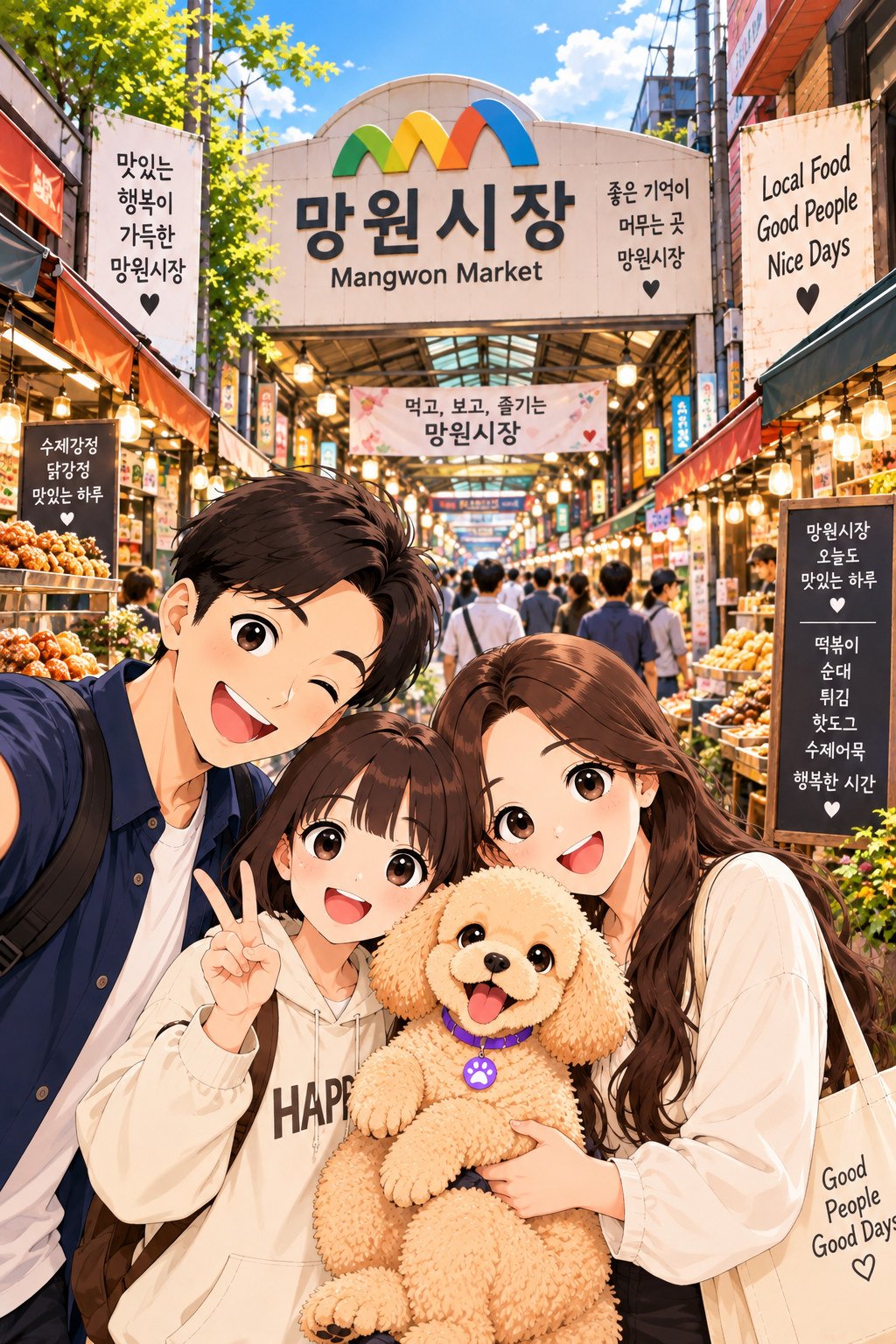
Explore local food, neighborhood streets, cafés, and small shops around Mangwon Market with the K-Nana family.
Quick Guide
| Location | Mapo-gu, Seoul |
| Best for | Traditional market food, cafés, local streets, small shops, walking |
| Recommended time | About 2–4 hours |
| Nearest subway | Mangwon Station |
| Admission | Free to explore; food and shopping are purchased individually |
| Good to combine with | Hongdae, Yeonnam-dong, and the Han River area |
What Is Mangwon Market?
Mangwon Market is a traditional neighborhood market in Mapo-gu. Its covered shopping passage contains food vendors, produce, side dishes, snacks, prepared meals, household products, and businesses serving both residents and visitors.
The market is smaller and more neighborhood-oriented than some of Seoul’s largest traditional markets. This makes it possible to combine a market visit naturally with cafés, shops, and streets in the surrounding Mangwon-dong area.
Rather than treating Mangwon Market as an isolated attraction, it is useful to experience it as one part of the wider neighborhood.
Why Visit?
- Experience the atmosphere of a Korean neighborhood market.
- Try a variety of affordable market foods and snacks.
- Explore cafés and independent shops around Mangwon-dong.
- Walk through quieter residential and commercial streets.
- Combine the neighborhood with nearby Hongdae and Yeonnam-dong.
- Continue toward the Han River for a longer western Seoul itinerary.
Food at Mangwon Market
Food is one of the main attractions of Mangwon Market. Visitors can encounter tteokbokki, fried foods, hot dogs, dumplings, rice dishes, side dishes, sweets, and many other market snacks and prepared foods.
The exact selection varies between vendors, and individual stalls maintain their own menus, prices, and schedules.
Trying several smaller portions rather than ordering everything from one vendor can be an enjoyable way to experience more of the market.
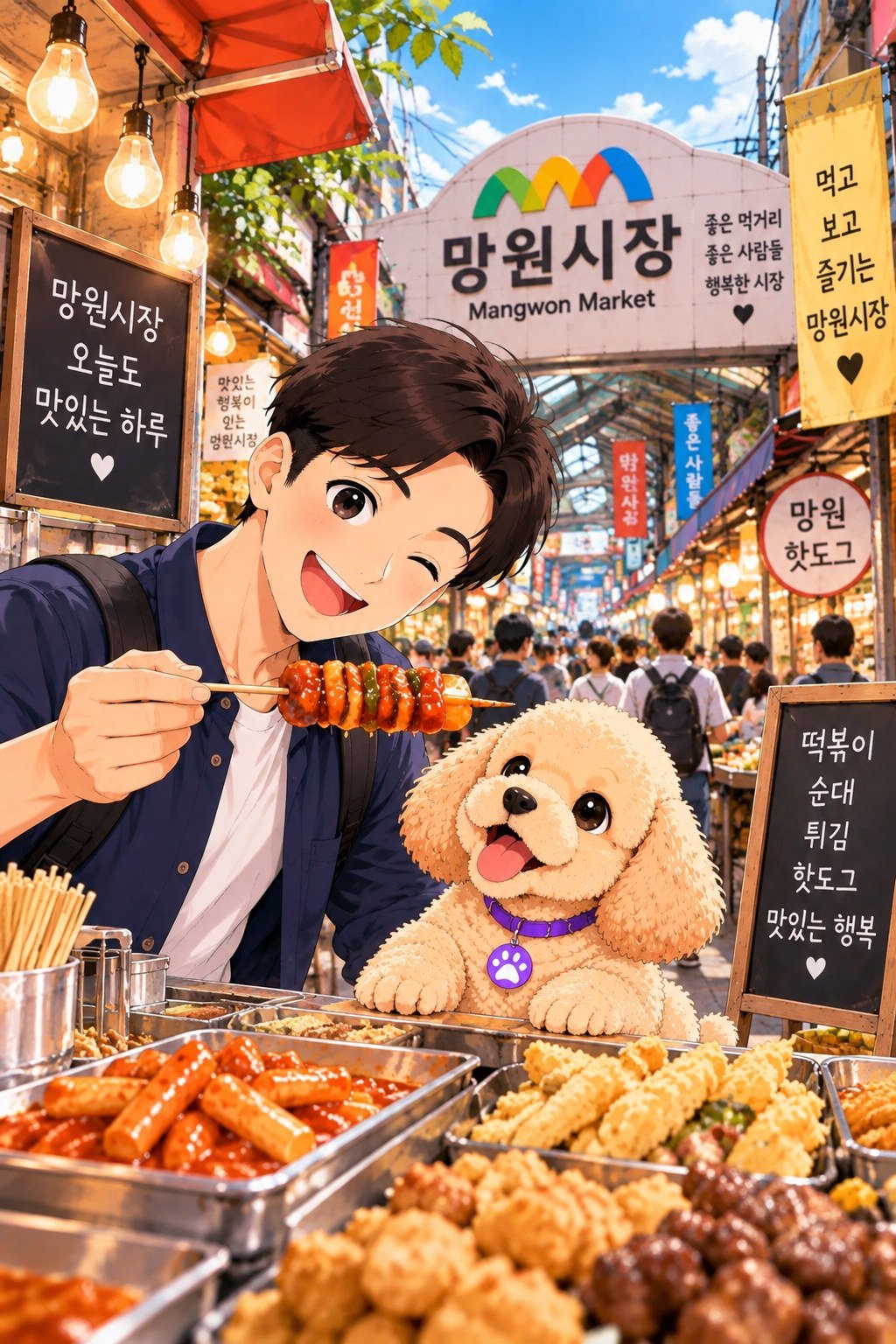
Market snacks and prepared foods are an important part of the Mangwon Market experience.
A Neighborhood Market Experience
Mangwon Market is not designed only for tourists. Local residents continue to use the market for food, groceries, side dishes, and everyday shopping.
This everyday function gives the market a different character from attractions built primarily around sightseeing.
Visitors should remember that narrow passages remain working commercial spaces. Keep bags close, avoid blocking stalls, and allow local shoppers to move comfortably through the market.
Mangwon Market vs Gwangjang Market
Visitors interested in traditional markets may also be considering Gwangjang Market. Both offer Korean food and traditional market atmosphere, but they provide different experiences.
Gwangjang Market is larger, more internationally famous, and closely associated with its extensive food alleys, textiles, and central Seoul location.
Mangwon Market is more compact and closely integrated with the surrounding residential neighborhood. It works particularly well when you want to combine market food with cafés, small shops, and a relaxed walk through Mapo-gu.
Explore Mangwon-dong Beyond the Market
Leaving the covered market does not mean the visit is over. The surrounding Mangwon-dong streets contain cafés, bakeries, restaurants, independent stores, residential buildings, and small neighborhood businesses.
Walking without a rigid route can reveal a quieter side of the area away from the busiest market passage.
Cafés in Mangwon-dong
Mangwon-dong has developed its own café culture, with small independent cafés, dessert shops, bakeries, and relaxed neighborhood spaces scattered throughout the surrounding streets.
The experience differs from the busier café and entertainment environment of Hongdae. Mangwon-dong can feel more residential and slower-paced.
Individual cafés change over time, so choosing a place while exploring is often more practical than relying on one permanent list of recommended businesses.

Small cafés offer a relaxed break after exploring the busy market.
Small Shops & Local Finds
Mangwon-dong also contains independent shops selling stationery, postcards, accessories, books, lifestyle products, character goods, handmade items, and other small finds.
These businesses are scattered throughout the neighborhood rather than concentrated inside one major shopping complex.
This makes discovery part of the experience. A shop found unexpectedly along a side street can be more memorable than following a fixed shopping checklist.
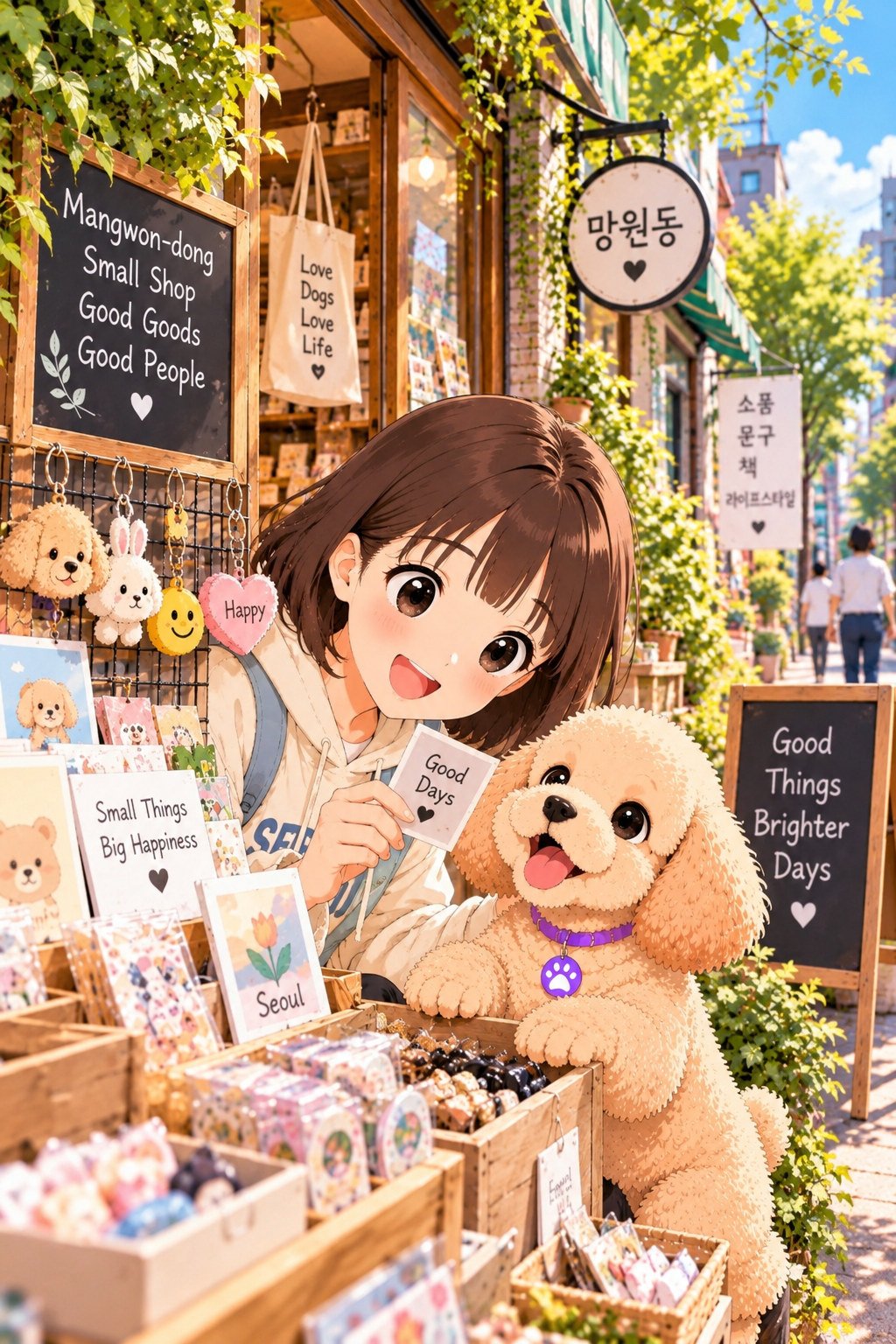
Independent shops and creative goods add another layer to the Mangwon-dong experience.
Mangwon-dong & Yeonnam-dong
Mangwon-dong connects naturally with Yeonnam-dong as part of a wider exploration of Mapo-gu.
Yeonnam-dong is strongly associated with the Gyeongui Line Forest Park, cafés, restaurants, and small creative shops. Mangwon adds a traditional neighborhood market and another set of quieter local streets.
Visiting both areas helps show that western Seoul offers much more than the busiest streets around Hongdae.
Combine Mangwon with Hongdae
Hongdae is another natural connection. Its music, fashion, shopping, nightlife, and youth culture provide a strong contrast with Mangwon’s market and neighborhood atmosphere.
A practical itinerary can begin around Hongdae or Yeonnam-dong and continue toward Mangwon later in the day, or work in the opposite direction depending on your plans.
Walk Toward the Han River
Mangwon-dong is also well positioned for visitors who want to continue toward the Han River area.
A market meal followed by a neighborhood walk and riverside break can create a varied half-day itinerary without returning immediately to central Seoul.
Walking distances and weather should be considered before continuing toward the river, particularly during very hot, cold, or rainy conditions.
Best Time to Visit
Late morning through the afternoon is practical if the market is your main priority.
Arriving around lunchtime allows you to explore food stalls before continuing into Mangwon-dong cafés and shops during the afternoon.
Late afternoon can also work well if you plan to stay for dinner or experience the surrounding neighborhood as evening lights begin to appear.
Mangwon-dong in the Evening
The atmosphere changes after sunset as cafés, restaurants, and small storefronts illuminate the neighborhood streets.
Compared with the nightlife-heavy atmosphere of Hongdae, many parts of Mangwon-dong retain a quieter neighborhood feeling.
This makes an evening walk a pleasant way to finish a market and café visit.
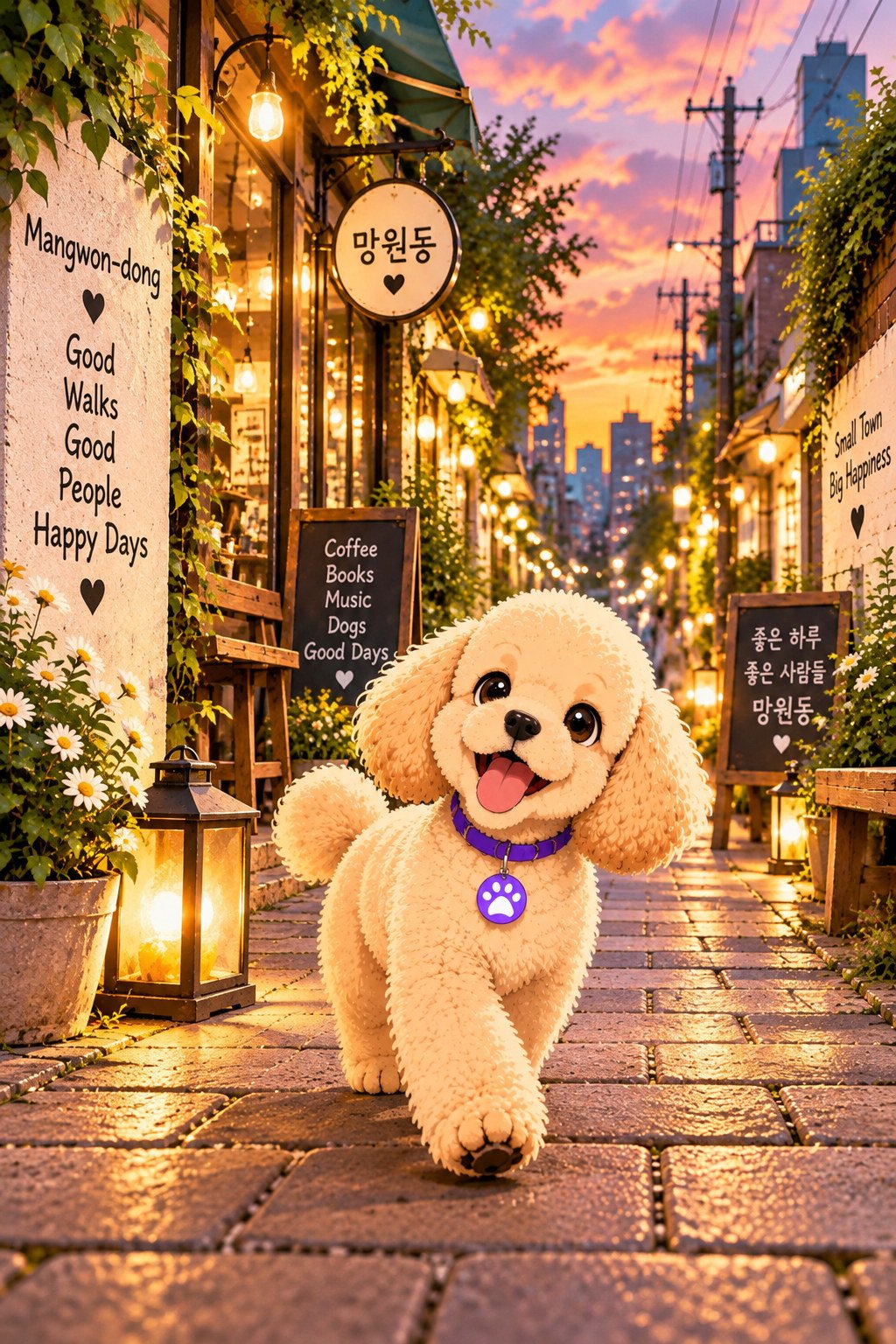
Warm lights and quieter streets reveal another side of Mangwon-dong after sunset.
How Long to Spend
About 2–4 hours works well for many first-time visitors.
A food-focused market visit can be shorter, while adding cafés, small shops, neighborhood streets, and the Han River can extend the itinerary to half a day.
How to Get There
Mangwon Station on Seoul Subway Line 6 is the most convenient starting point for many visitors.
From the station, Mangwon Market can be reached on foot, and the surrounding neighborhood is compact enough to continue exploring without additional transportation.
If you are arriving from Hongdae or Yeonnam-dong, check your preferred walking and subway route according to the exact starting point.
First-Time Visitor Tips
- Visit with an appetite, but try several smaller foods rather than filling up immediately.
- Keep cash or another convenient payment option available for smaller businesses.
- Avoid blocking narrow market passages while taking photographs.
- Ask before closely photographing individual vendors.
- Explore beyond the covered market into Mangwon-dong.
- Wear comfortable shoes if combining the market with cafés and neighborhood walking.
- Check individual businesses when a particular shop or restaurant is important to your visit.
What to Do Nearby
- Yeonnam-dong — forest park walks, cafés, restaurants, and small shops.
- Hongdae — music, fashion, shopping, cafés, youth culture, and nightlife.
- Mangwon Hangang Park — open riverside space along the Han River.
- World Cup Market area — additional neighborhood shopping and local streets.
- Mapo — a wider district containing diverse residential, commercial, and cultural areas.
K-Culture Connection
Mangwon Market and Mangwon-dong provide a useful look at Korean neighborhood culture through everyday shopping, food, cafés, small businesses, and local streets.
The area demonstrates how traditional market culture and contemporary café and lifestyle culture can exist within the same neighborhood.
For international visitors, Mangwon offers a different perspective from both historic central Seoul and highly commercial entertainment districts.
FAQ
Is Mangwon Market worth visiting?
It is particularly suitable for visitors interested in Korean market food, neighborhood culture, cafés, small shops, and a more local atmosphere.
Is Mangwon Market free to enter?
Yes. There is no general admission fee. Food, products, and individual services are purchased separately.
What food can I find at Mangwon Market?
Visitors may encounter tteokbokki, fried foods, hot dogs, dumplings, side dishes, rice dishes, sweets, and many other Korean market foods. Individual vendor offerings can change.
How long should I spend around Mangwon?
About 2–4 hours is suitable for the market and surrounding neighborhood. Allow longer if you continue toward the Han River or combine Mangwon with another Mapo district.
Which subway station is best for Mangwon Market?
Mangwon Station on Seoul Subway Line 6 is a convenient starting point.
Can I visit Mangwon and Hongdae on the same day?
Yes. Hongdae, Yeonnam-dong, and Mangwon can be combined into a western Seoul itinerary depending on how much walking, shopping, and café time you want.
Related K-Nana Guides
Continue exploring western Seoul with the K-Nana Studio guides to Yeonnam-dong and Hongdae. To compare two different Korean market experiences, visit the guide to Gwangjang Market. Future Places guides will expand this network toward the Han River and other Seoul neighborhoods.
Official Information
Mangwon Market and Mangwon-dong contain independently operated vendors, cafés, restaurants, shops, and other businesses. Opening hours, menus, prices, payment methods, reservations, holidays, and individual business operations can change. Check current information when a particular vendor, restaurant, café, or shop is important to your visit.
Image Credits
Mangwon Market family travel visual — K-Nana Studio original visual.
Mangwon Market food with Dad and Nana visual — K-Nana Studio original visual.
Mangwon-dong café with Mom and Nana visual — K-Nana Studio original visual.
Mangwon-dong small shop with K-Nana daughter and Nana visual — K-Nana Studio original visual.
Nana walking through Mangwon-dong in the evening visual — K-Nana Studio original visual.