
Yeonnam-dong is one of Seoul’s most enjoyable neighborhoods for relaxed walks, independent cafés, small shops, restaurants, and everyday local atmosphere. Located beside Hongdae and the Gyeongui Line Forest Park, the area offers a quieter contrast to Seoul’s busier shopping and entertainment districts while remaining easy to explore on foot.
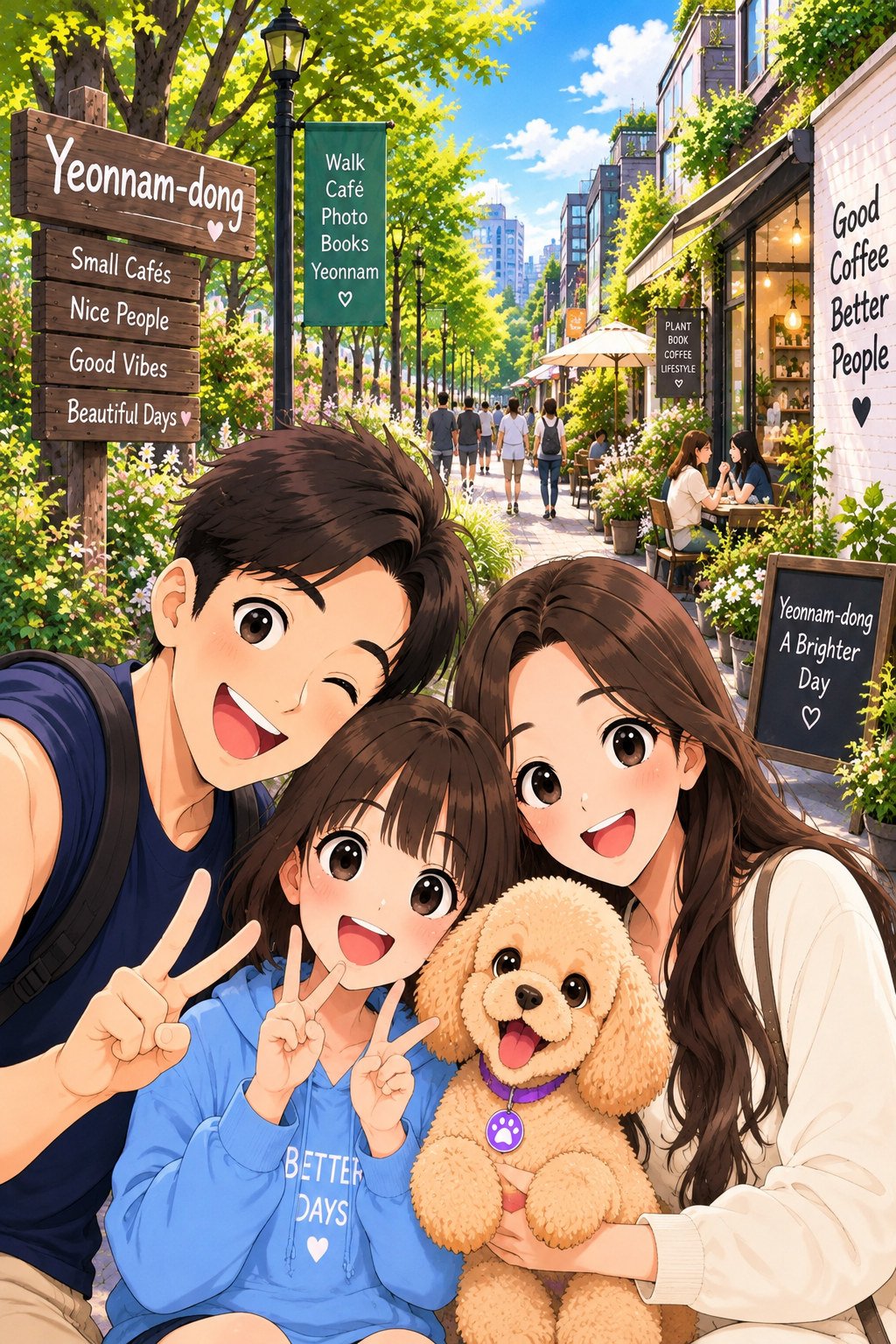
Discover leafy walking paths, cafés, small shops, and neighborhood streets in Yeonnam-dong with the K-Nana family.
Quick Guide
| Location | Mapo-gu, Seoul |
| Best for | Cafés, walking, small shops, restaurants, neighborhood atmosphere |
| Recommended time | About 2–4 hours |
| Nearest subway | Hongik University Station |
| Admission | The neighborhood and park are free to explore |
| Good to combine with | Hongdae and the wider Mapo area |
What Is Yeonnam-dong?
Yeonnam-dong is a neighborhood in Mapo-gu immediately north of the Hongdae area. Its streets contain a mixture of residential buildings, cafés, restaurants, bakeries, independent shops, studios, and small businesses.
One of the neighborhood’s most recognizable features is the Gyeongui Line Forest Park, a long urban green space created along a former railway corridor.
The combination of the park and surrounding side streets gives Yeonnam-dong a different rhythm from nearby Hongdae. Visitors can move between the two areas easily while experiencing two noticeably different sides of contemporary Seoul.
Why Visit?
Yeonnam-dong works especially well for travelers who enjoy exploring neighborhoods without following a strict sightseeing route.
- Walk along the Gyeongui Line Forest Park.
- Explore independent cafés and dessert shops.
- Discover small boutiques, stationery, books, and lifestyle goods.
- Try restaurants hidden along residential side streets.
- Enjoy a calmer atmosphere close to busy Hongdae.
- Experience a neighborhood built around walking rather than a single landmark.
Walk the Gyeongui Line Forest Park
The Gyeongui Line Forest Park is one of the easiest places to begin exploring Yeonnam-dong. Trees, planted areas, paths, benches, and surrounding businesses create a green corridor through the neighborhood.
People use the park for walking, meeting friends, resting, and moving between nearby streets. Cafés and restaurants appear along and around different sections of the route.
You do not need to follow the entire park. A relaxed walk followed by exploration of the surrounding side streets is often enough for a first visit.
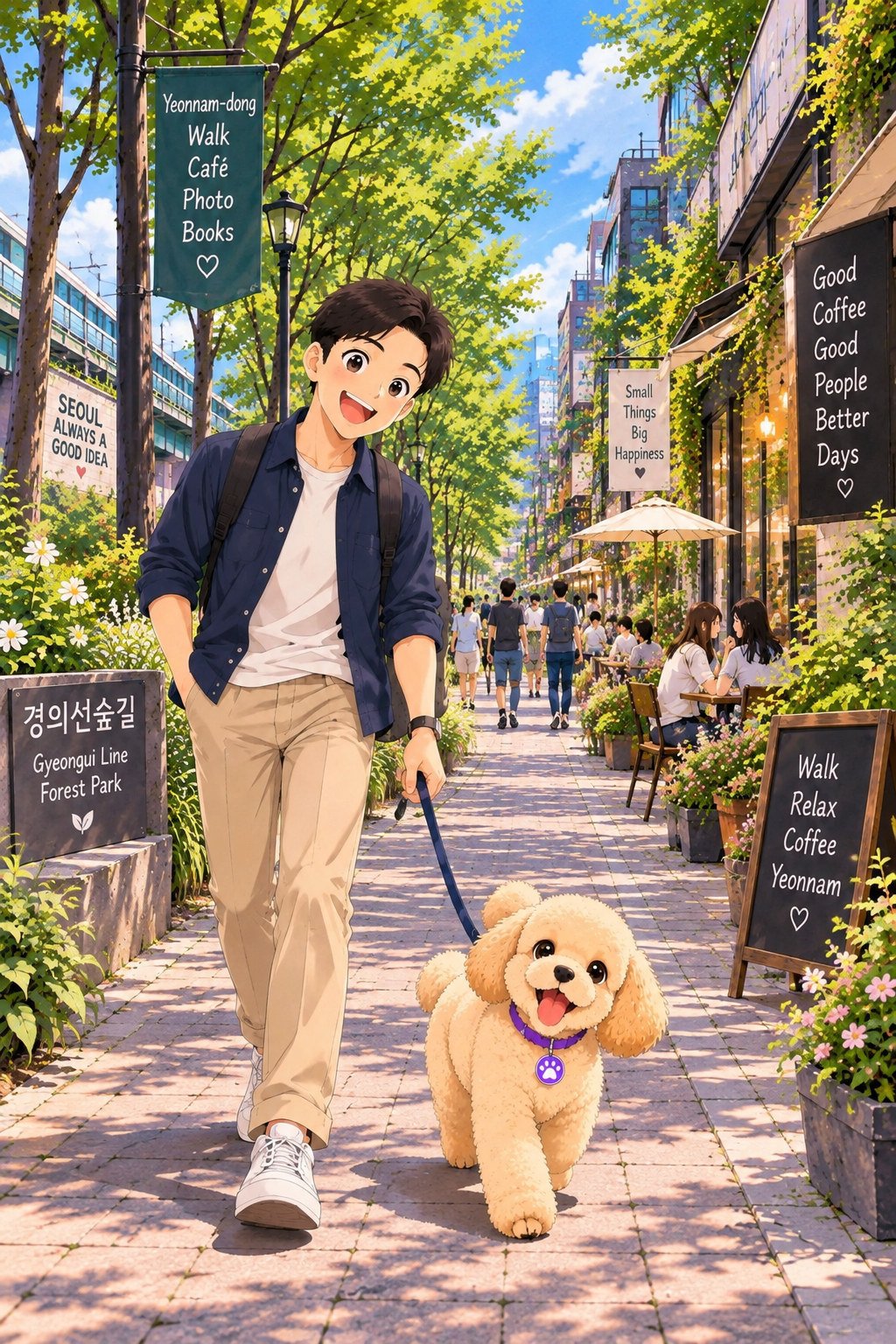
The Gyeongui Line Forest Park provides a leafy walking route through the Yeonnam-dong area.
Explore the Side Streets
The park is only part of the Yeonnam-dong experience. Many of the neighborhood’s cafés, restaurants, shops, and creative spaces are located along smaller streets branching away from the main walking route.
These streets can feel more residential and intimate than the busiest parts of nearby Hongdae.
Instead of following only one main road, turn into several side streets and allow time to discover businesses that catch your attention.
Yeonnam-dong Café Culture
Cafés are a major part of the neighborhood. Visitors can encounter compact independent cafés, dessert shops, garden-style spaces, renovated buildings, and businesses with distinctive interiors.
The café scene changes over time, so individual businesses should not be treated as permanent landmarks.
This constant change is part of the appeal. Choosing a café while walking can be more rewarding than building an itinerary around only one famous location.

Small cafés and relaxed outdoor spaces are an important part of Yeonnam-dong’s neighborhood character.
Restaurants & Food
Yeonnam-dong has developed a diverse restaurant scene alongside its cafés. Korean dishes, international food, casual meals, bakeries, desserts, and smaller independent restaurants can all be found throughout the neighborhood.
Some popular businesses may have queues during busy periods, especially on weekends and around meal times.
Opening hours, menus, reservations, and prices vary by business, so check current information when a particular restaurant is important to your visit.
Small Shops & Independent Stores
Walking through Yeonnam-dong can reveal stationery stores, bookstores, accessories, character goods, lifestyle products, postcards, clothing, and other small creative businesses.
These stores are often much smaller than the large retail spaces found in major shopping districts.
If large-scale shopping is your priority, Myeongdong provides a very different experience. Yeonnam-dong is better suited to slow browsing and discovering individual shops along neighborhood streets.

Small boutiques, stationery, accessories, and creative goods reward slow exploration in Yeonnam-dong.
Yeonnam-dong vs Hongdae
Yeonnam-dong and Hongdae are close enough to explore during the same outing, but their atmosphere is different.
Hongdae is associated with busy shopping streets, youth culture, music, street performances, fashion, entertainment, and nightlife.
Yeonnam-dong generally offers a slower neighborhood experience centered on the forest park, cafés, restaurants, small shops, and quieter side streets.
Visiting both provides a more complete picture of the wider Hongik University and Mapo area.
From Busy Streets to a Slower Walk
A useful way to experience the area is to begin around Hongdae and gradually walk toward Yeonnam-dong.
The transition can happen surprisingly quickly. Crowded commercial streets give way to trees, park paths, residential buildings, cafés, and smaller shops.
This makes Yeonnam-dong particularly useful when you want to continue exploring without maintaining the intensity of Hongdae for an entire afternoon.
Photography in Yeonnam-dong
The neighborhood offers many everyday photography opportunities rather than one famous viewpoint.
Greenery, café exteriors, narrow streets, flowers, signs, small shops, bicycles, and changing light can create attractive scenes while walking.
Remember that many streets include residences and operating businesses. Avoid blocking entrances or photographing people closely without permission.
Yeonnam-dong in the Evening
The neighborhood becomes warmer and more intimate toward evening as café windows, restaurants, street lamps, and small storefronts begin to glow.
Unlike the brighter nightlife atmosphere of Hongdae, many Yeonnam-dong streets can retain a more relaxed feeling after sunset.
Arriving in the late afternoon is therefore a good way to experience both the green daytime atmosphere and the neighborhood after the lights come on.
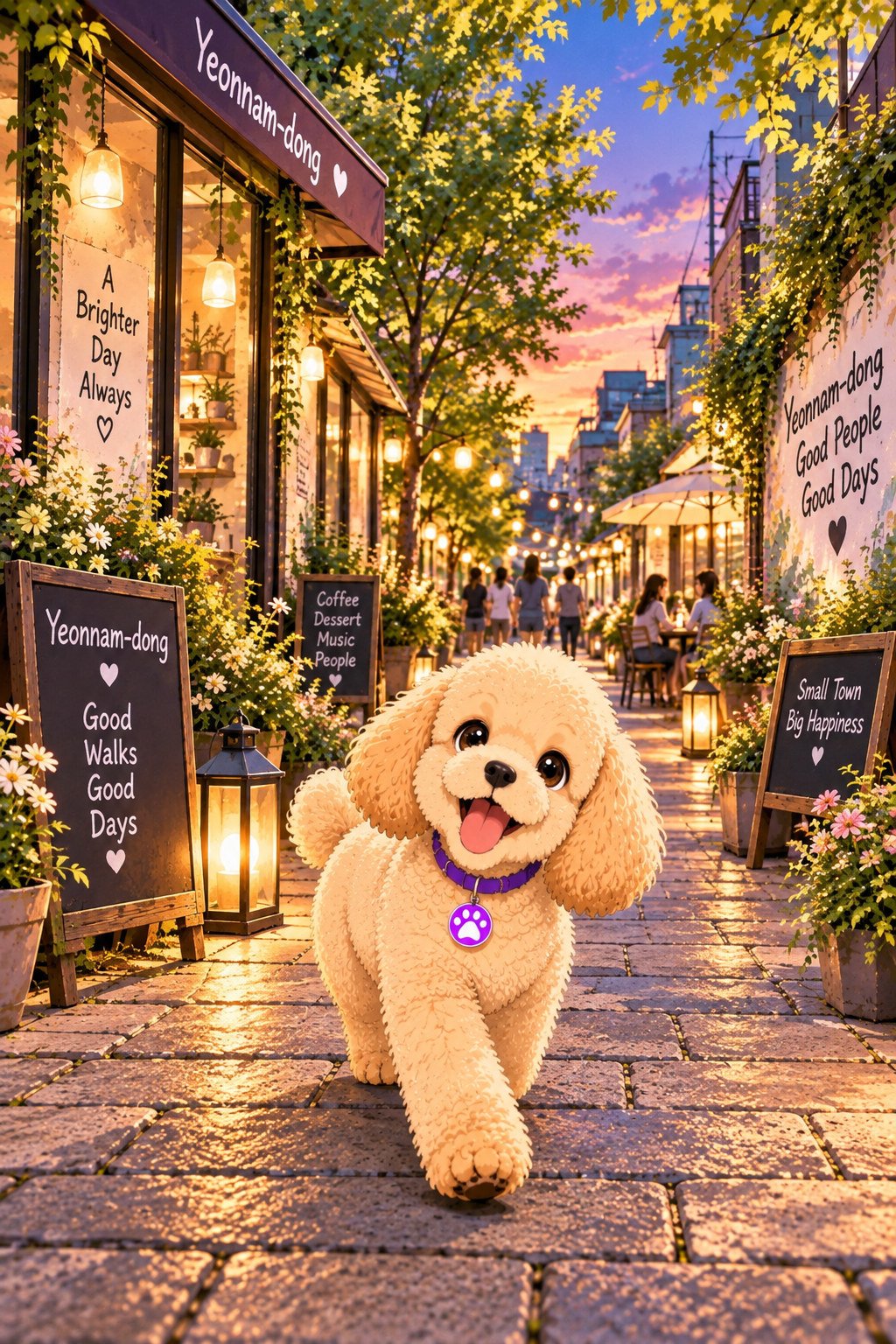
Warm café lights and quieter streets give Yeonnam-dong a relaxed evening atmosphere.
Best Time to Visit
Late morning and afternoon are convenient for walking, cafés, shopping, and exploring the park.
Late afternoon is particularly useful if you want to experience the neighborhood during daylight and remain until the evening lights appear.
Spring and autumn are comfortable seasons for outdoor walking, while summer shade along greener sections can provide some relief from the surrounding city streets.
How Long to Spend
About 2–4 hours is a practical amount of time for a first visit.
A short park walk and coffee can take considerably less time, while lunch, shopping, several side streets, and an evening visit can easily extend the experience.
If you combine Yeonnam-dong with Hongdae, the two areas can comfortably fill a half day or longer.
How to Get There
Hongik University Station is the most convenient transportation hub for many visitors. It is served by Seoul Subway Line 2, the Airport Railroad, and the Gyeongui–Jungang Line.
From the station, visitors can walk toward the Gyeongui Line Forest Park and continue into Yeonnam-dong.
Because the neighborhood is best experienced on foot, comfortable shoes are more useful than trying to follow a complicated transportation route between individual cafés and shops.
A Different Side of Seoul
Yeonnam-dong provides an interesting contrast with the central Seoul route covered in other K-Nana guides.
Cheonggyecheon offers an urban stream walk surrounded by central-city architecture, while Gwangjang Market provides traditional market culture, food stalls, textiles, and busy commercial passages.
Yeonnam-dong instead focuses on neighborhood-scale streets, greenery, cafés, restaurants, and small independent businesses.
First-Time Visitor Tips
- Wear comfortable shoes and explore the neighborhood on foot.
- Use the Gyeongui Line Forest Park as a starting point rather than your entire itinerary.
- Turn into side streets instead of remaining only on the main walking route.
- Visit on a weekday if you prefer a quieter café and walking experience.
- Allow some unplanned time for small shops and cafés you discover along the way.
- Respect residential areas and avoid blocking narrow entrances for photographs.
- Combine Yeonnam-dong with Hongdae rather than treating the two neighborhoods as competing destinations.
What to Do Nearby
- Hongdae — music, fashion, shopping, cafés, youth culture, and nightlife.
- Gyeongui Line Forest Park — the green walking corridor running through the neighborhood.
- Sinchon — a university district with restaurants, shopping, and busy streets.
- Mangwon — neighborhood cafés, local streets, and traditional market culture.
- Han River — riverside parks and open spaces accessible from western Seoul.
K-Culture Connection
Yeonnam-dong represents a quieter part of contemporary Korean urban culture. Rather than being defined by a major monument, the neighborhood is shaped by cafés, food, small businesses, design, books, lifestyle products, walking, and social spaces.
It also demonstrates how former infrastructure can become part of modern city life. The Gyeongui Line Forest Park transformed part of an old railway corridor into a public green space surrounded by an evolving neighborhood.
For international visitors, Yeonnam-dong provides a useful look at the everyday lifestyle side of modern Seoul beyond its largest tourist attractions.
FAQ
Is Yeonnam-dong worth visiting?
It is particularly suitable for visitors interested in cafés, walking, small shops, restaurants, photography, and relaxed neighborhood exploration.
Is Yeonnam-dong the same as Hongdae?
No. They are neighboring areas and are often explored together, but Yeonnam-dong generally has a quieter atmosphere than the busiest parts of Hongdae.
What is Yeonnam-dong known for?
It is known for the Gyeongui Line Forest Park, cafés, restaurants, small independent shops, side streets, and a relaxed neighborhood atmosphere.
How long should I spend in Yeonnam-dong?
About 2–4 hours works well for many first-time visitors. Allow longer when combining the neighborhood with Hongdae.
Which subway station is best for Yeonnam-dong?
Hongik University Station is the most convenient starting point for many visitors.
Is Yeonnam-dong good in the evening?
Yes. Café and restaurant lighting creates a warm atmosphere, while many streets remain more relaxed than the busiest nightlife areas nearby.
Related K-Nana Guides
Start with nearby Hongdae for music, shopping, fashion, and youth culture. For other sides of Seoul, continue with Cheonggyecheon, Gwangjang Market, or Myeongdong. Future Places guides will connect Yeonnam-dong with Mangwon, the Han River, Sinchon, and other western Seoul neighborhoods.
Official Information
Yeonnam-dong is a neighborhood containing independently operated cafés, restaurants, shops, studios, and other businesses. Opening hours, menus, prices, reservations, holidays, and individual business operations can change. Park maintenance, events, and temporary restrictions may also vary, so check current information when a particular destination is important to your visit.
Image Credits
Yeonnam-dong family travel visual — K-Nana Studio original visual.
Gyeongui Line Forest Park walking with Dad and Nana visual — K-Nana Studio original visual.
Yeonnam-dong café with Mom and Nana visual — K-Nana Studio original visual.
Yeonnam-dong small shop with K-Nana daughter and Nana visual — K-Nana Studio original visual.
Nana walking through Yeonnam-dong in the evening visual — K-Nana Studio original visual.