
A Korean makgeolli brewing workshop is a hands-on introduction to Korea’s traditional cloudy rice alcohol. Instead of simply ordering a bottle, you learn how steamed rice, water, and a fermentation starter called nuruk are combined and managed over time.
The difficult part for a first-time visitor is knowing what the class actually includes. Some workshops focus on mixing a small batch, while others include ingredient preparation, fermentation theory, tastings, food pairings, or a finished bottle to take away. Language support, age rules, tasting portions, and take-home arrangements also vary.
This guide explains how to choose a workshop, what happens during the class, how to handle an unfinished batch, and what to confirm before booking.
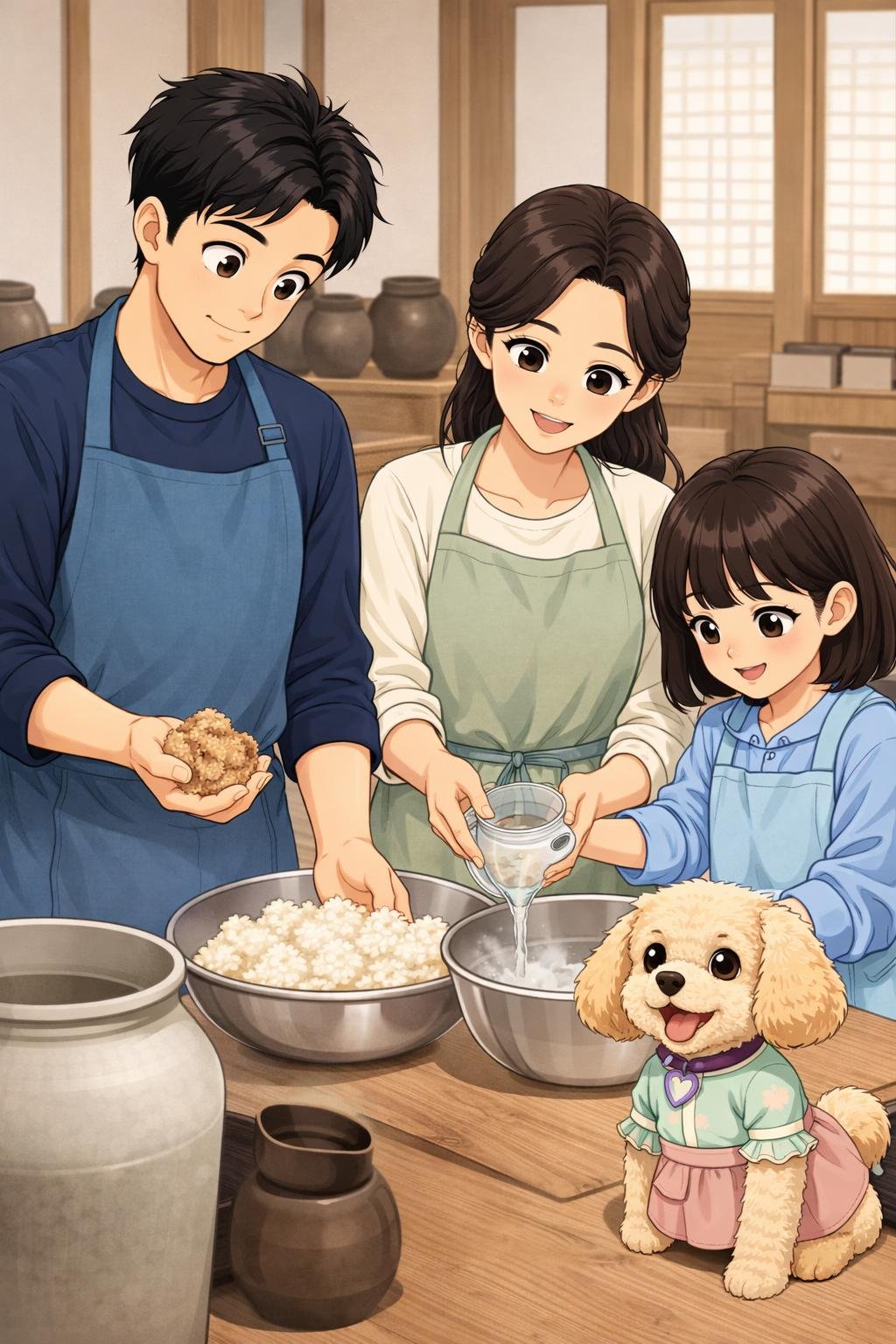
What Is Makgeolli?
Makgeolli is a traditional Korean fermented alcoholic drink commonly made with rice, water, and nuruk. Nuruk is a fermentation starter containing microorganisms that help convert grain starches into sugars and then alcohol.
Makgeolli is usually cloudy because it retains suspended rice sediment. Its flavor can be mildly sweet, tart, grainy, creamy, or lightly sparkling. The taste and alcohol content vary according to the ingredients, fermentation method, filtration, storage, and whether sweeteners or flavorings are added.
Commercial makgeolli and workshop-made makgeolli are not necessarily identical. A freshly fermented version may taste more complex, less sweet, or more acidic than a familiar supermarket bottle.
What Is a Korean Makgeolli Brewing Workshop?
A Korean makgeolli brewing workshop is normally a guided class rather than a complete professional brewing course. Participants may wash or handle prepared rice, break apart cooled steamed rice, combine it with nuruk and water, and place the mixture in a fermentation container.
The class may also explain:
- How rice starch becomes fermentable sugar
- Why nuruk is different from ordinary baking yeast
- How temperature affects fermentation
- Why gas forms inside the container
- How the liquid is strained after fermentation
- How makgeolli differs from clearer traditional Korean alcohol
Because fermentation takes several days or longer, the batch mixed during class is usually not ready to drink immediately. Any tasting offered during the workshop will generally use makgeolli prepared in advance.
Why Try Makgeolli Brewing in Korea?
The workshop connects food, agriculture, fermentation, and drinking culture in one activity. It also helps explain why makgeolli can taste different from one producer or region to another.
For visitors interested in Korean fermentation, it offers a useful comparison with kimchi fermentation. Both depend on microorganisms and changing conditions, but their ingredients, production methods, food-safety requirements, and final uses are different.
It can also be a good alternative to a souvenir-focused craft class. A Korean pottery workshop produces a physical object, while a brewing workshop produces a mixture that must continue fermenting and may require careful handling after class.
Where Can You Join a Workshop?
Makgeolli classes may be offered by traditional alcohol education centers, cultural organizations, cooking studios, breweries, culinary schools, and private experience hosts. They are most commonly found in larger cities and destinations known for traditional food culture.
Do not assume that every brewery accepts walk-in visitors. Production facilities may have safety restrictions, and a brewery tour is not always the same as a hands-on brewing class.
Before booking, check the current official class information for:
- Whether the activity is hands-on or demonstration-only
- Whether advance reservation is required
- The language used by the instructor
- The minimum participation age
- Whether alcohol tasting is included
- Whether the class is suitable for people who do not drink
- Whether participants make individual or shared batches
- What happens to the batch after class
- Cancellation and late-arrival rules
Step 1: Choose the Right Workshop Format
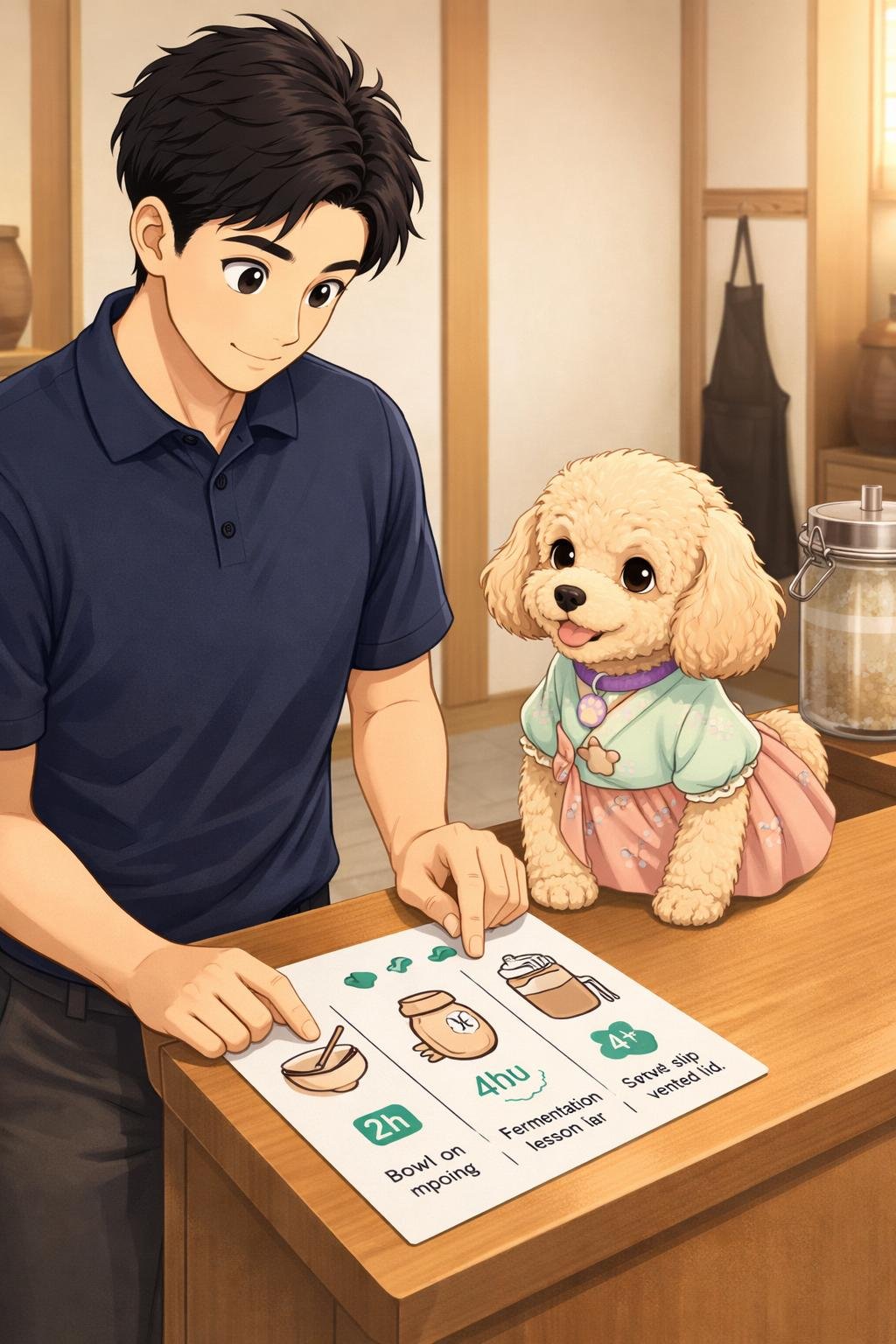
The first decision is not simply where to go. It is whether the workshop format fits your travel schedule.
Short cultural class
A short class usually introduces the main ingredients and lets participants mix a simple batch using rice that has already been steamed and cooled. It may include a tasting of finished makgeolli. This format is practical for travelers with limited time.
Detailed brewing class
A longer class may cover rice preparation, sanitation, fermentation management, straining, and traditional brewing terminology in greater depth. Some programs require more than one session, so check whether you must return on another day.
Brewing and food-pairing class
This format combines brewing instruction with prepared makgeolli and Korean dishes. A common cultural pairing is haemul pajeon, a savory green-onion pancake that may contain seafood. Pairing menus vary, so confirm ingredients if you have allergies or dietary restrictions.
Make-and-take class
Some workshops let you leave with an actively fermenting mixture. This can be memorable, but it is not always convenient for a traveler. The container may release gas, require refrigeration later, or need to remain upright for several days.
Ask exactly what you will carry away: an active mixture, a finished refrigerated drink, a nonalcoholic starter kit, or only a recipe and certificate.
Step 2: Book and Prepare
Booking methods differ by venue. Some accept reservations through an official website or travel platform, while others use telephone, email, or Korean messaging services. Do not assume that same-day participation is available.
Questions to ask before paying
- Is instruction available in English, or are translated materials provided?
- Does the listed duration include tasting and cleanup?
- Are ingredients, containers, and aprons included?
- Will I take home an actively fermenting batch?
- Can the venue store or finish the batch instead?
- Is tasting optional?
- What identification is required for alcohol service?
- Are there restrictions for minors or accompanying children?
- What payment methods are currently accepted?
Foreign-card acceptance and on-site payment policies vary. Confirm the payment method before arriving, especially if the reservation requires a deposit.
What to wear
Wear comfortable clothes that can tolerate small splashes of water or rice mixture. Closed-toe shoes are a sensible choice where participants stand near work surfaces or wet floors. Tie back long hair and avoid loose sleeves that may touch ingredients.
Some venues provide an apron, gloves, or a hair covering. Others expect participants to arrive ready for food handling, so check the class instructions.
Step 3: Arrive, Wash Up, and Learn the Ingredients
Try to arrive early enough to find the entrance, store your belongings, wash your hands, and hear the safety briefing. Late arrival can be particularly disruptive because the class may follow timed preparation stages.
The instructor will normally introduce the ingredients before mixing begins.
Rice
Traditional methods often use steamed rice rather than soft rice cooked for an everyday meal. The rice must usually be cooled before it is mixed with the fermentation starter. The type and preparation of rice affect texture and fermentation.
Nuruk
Nuruk is central to traditional Korean alcohol production. It is not simply interchangeable with instant yeast. Its microorganisms and enzymes help break down grain starches and support fermentation.
Nuruk may be made with wheat, barley, rice, or other grains depending on the product and method. Travelers with wheat, gluten, or grain allergies should never assume that a rice-based drink contains only rice.
Water
Water quality and quantity influence the mixture, but participants should follow the workshop’s measured method rather than adding extra water independently.
Optional ingredients
Some modern classes use fruit, herbs, flowers, sweeteners, or flavoring ingredients. These are not universal. Ask for the actual ingredient list if you have allergies, religious dietary requirements, or medically necessary restrictions.
Step 4: Mix the Makgeolli Base
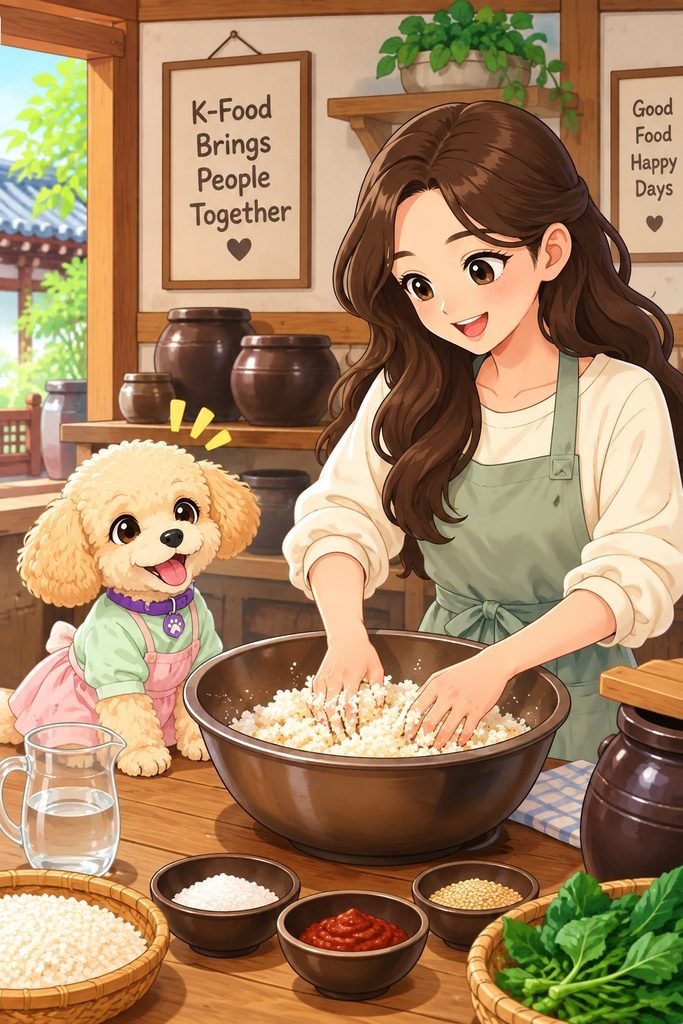
The main hands-on stage usually involves separating cooled rice grains and combining them evenly with nuruk and measured water. The exact sequence depends on the instructor’s method.
A typical beginner workshop may follow these general stages:
- Clean or sanitize hands, tools, and the fermentation container.
- Break apart clumps of cooled steamed rice.
- Crumble or prepare the measured nuruk.
- Combine the rice, nuruk, and water as instructed.
- Mix gently or firmly for the specified amount of time.
- Transfer the mixture to a clean fermentation container.
- Label the container with the relevant date or class instructions.
Do not substitute an online recipe for the instructor’s directions during class. Ingredient ratios, container design, fermentation temperature, and expected timing are connected.
Hygiene matters because unwanted contamination can alter the smell, flavor, and safety of the batch. Avoid touching your phone, hair, face, or personal items while handling ingredients. If you do, wash your hands again before continuing.
Nana represents the K-Nana Studio mascot in workshop visuals and remains in a clearly separate safe position. A real pet should never be assumed to have access to food-handling or alcohol-production areas; venue policies must be confirmed directly.
Step 5: Understand Fermentation and Take-Home Care
The mixture made during class needs time to ferment. During this stage, microorganisms convert available sugars and produce alcohol, acidity, aromas, and carbon dioxide.
Your venue should provide specific care instructions. These may cover:
- Where to keep the container
- The recommended temperature range
- Whether and how often to stir
- How fermentation gas is released
- When to strain the mixture
- When refrigeration begins
- How long the finished drink should be stored
- What signs mean the batch should not be consumed
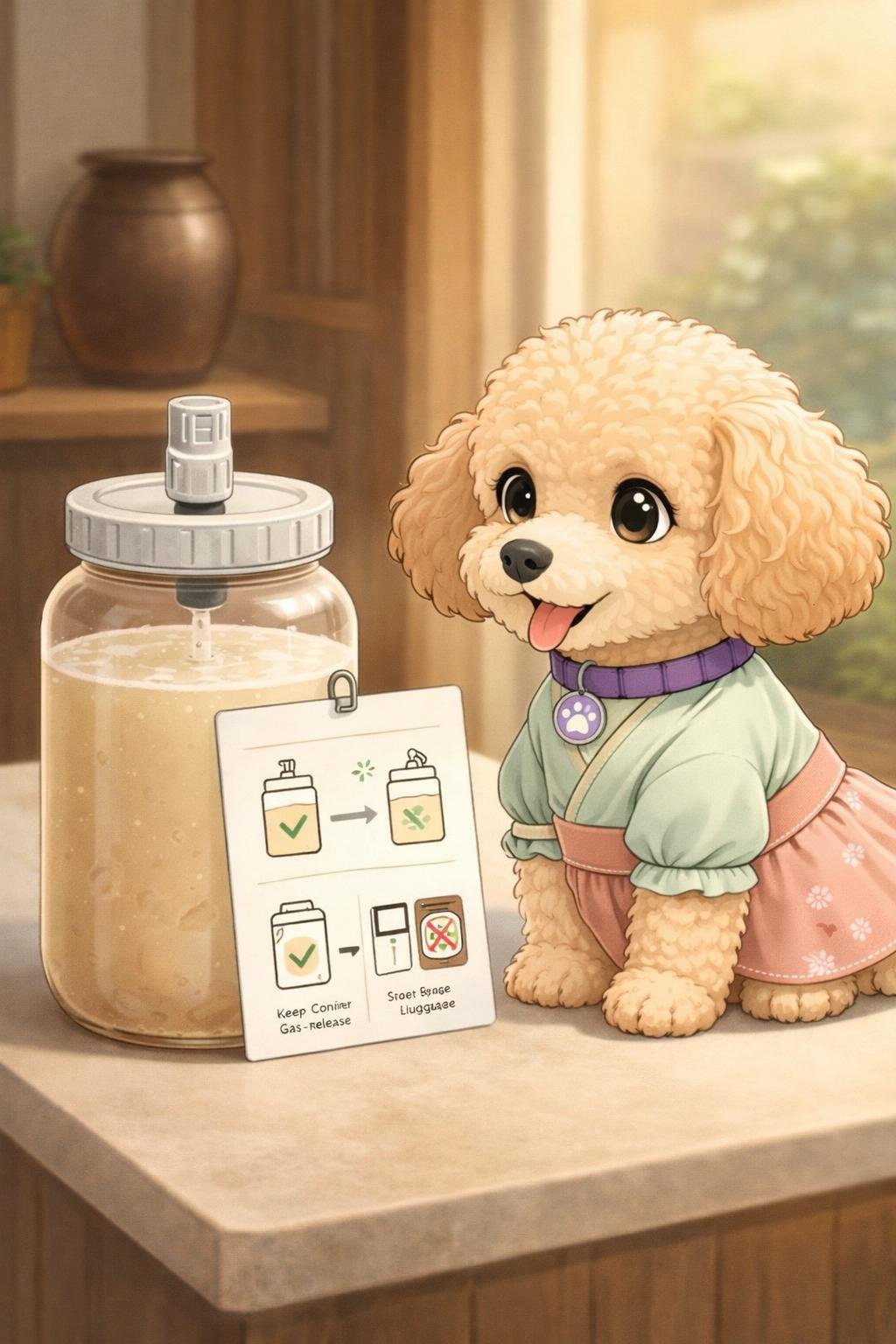
Never seal an actively fermenting batch in an airtight container unless the workshop has supplied a purpose-designed system and explicit instructions. Carbon dioxide can build pressure inside a closed container.
If the instructions are not clear in a language you understand, ask the instructor to write down the essential steps before you leave. Take a photo of the care sheet as a backup.
Consider your accommodation
A hotel or guesthouse may not allow food fermentation in rooms, and shared accommodation may have limited refrigeration. Fermentation can also produce aromas and leakage if the container is handled incorrectly.
Ask your accommodation before bringing back an active batch. A workshop that stores, finishes, or ships the product according to applicable rules may be more practical, but availability varies.
Do not plan to fly with an active batch
An actively fermenting container can leak, expand, or violate airline and baggage rules. Finished alcohol is also subject to liquid, baggage, customs, and destination-country restrictions.
Check current guidance from your airline, departure airport, Korea Customs Service, and the customs authority at your destination. Do not assume that a workshop container is suitable for checked or carry-on baggage.
Step 6: Taste Makgeolli Respectfully
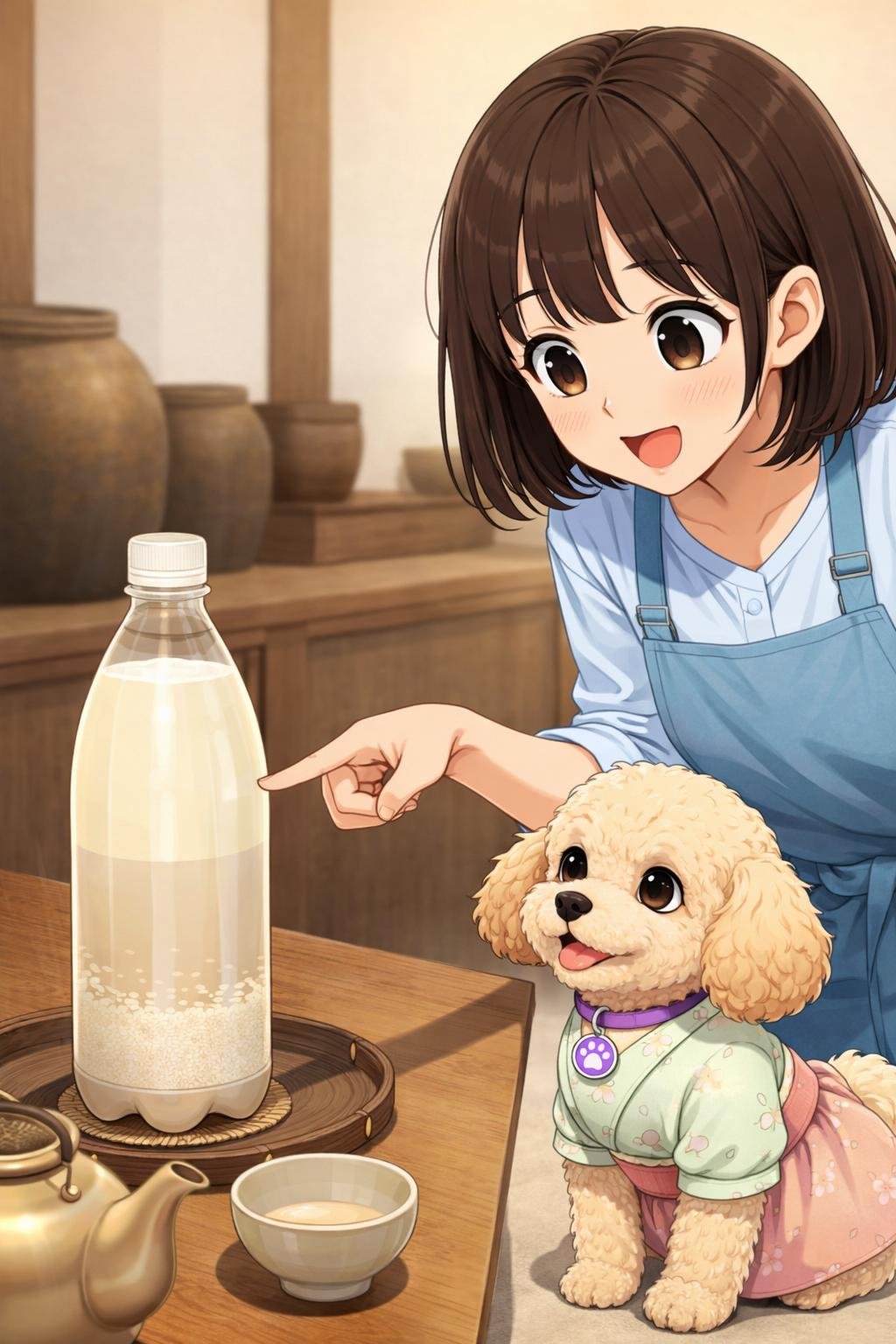
If tasting is included, the makgeolli served will normally be a finished batch prepared earlier. The instructor may invite you to notice its aroma, acidity, sweetness, texture, sediment, and level of carbonation.
Makgeolli is often gently mixed before serving because sediment settles at the bottom. However, shaking a carbonated container can cause foaming or overflow. Follow the host’s instructions for rolling, turning, opening, and pouring the bottle.
Basic tasting etiquette
- Wait until the instructor says the tasting may begin.
- Use the cup provided rather than drinking from a shared bottle.
- Pour carefully and avoid overfilling small cups.
- Do not pressure another participant to drink.
- Use two hands when giving or receiving a drink if the class introduces this custom.
- Take a small taste first, especially if the strength is unfamiliar.
You do not need to finish every serving. Non-drinkers can still learn about ingredients, brewing history, aroma, and food culture. Confirm before booking whether a nonalcoholic alternative is available rather than assuming one will be provided.
Afterward, visitors who prefer a quieter traditional drink experience may also enjoy learning the menu and etiquette at a traditional Korean tea house.
Alcohol, Age, and Safety Considerations
Makgeolli contains alcohol even when it tastes sweet, mild, or yogurt-like. The alcohol level varies by product and fermentation stage, so do not estimate strength from flavor alone.
- Bring identification if the venue requests age verification.
- Confirm current minimum-age and participation rules before booking.
- Do not drive after drinking.
- Skip tasting if you need to avoid alcohol for health, medication, pregnancy, religious, or personal reasons.
- Do not taste an unfinished batch unless the instructor specifically identifies it as ready and safe to sample.
- Keep workshop alcohol away from children.
A class may allow younger participants to observe or mix ingredients without tasting, but this is venue-specific. Never assume that a family-friendly listing means minors may participate in every stage.
Allergies and Dietary Restrictions
Rice is the most visible ingredient, but that does not make every makgeolli gluten-free or suitable for every diet. Nuruk can contain wheat, barley, or other grains. Flavored versions may contain fruit, herbs, sweeteners, dairy-derived ingredients, or other additives.
Food pairings can introduce additional allergens such as seafood, egg, soy, sesame, peanuts, or wheat. Shared tools and work surfaces may also create cross-contact risks.
If you have a serious allergy or medically necessary dietary restriction, contact the venue before booking and request the ingredient and cross-contact information directly. If the venue cannot provide information you can rely on, choose another activity.
Photography and Workshop Etiquette
Photography is often part of the fun, especially when the rice and nuruk are mixed by hand. However, permission varies by venue and instructor.
- Ask before photographing the instructor or other participants.
- Do not handle your phone and then return to the ingredients without washing your hands.
- Keep cameras, bags, and straps away from work surfaces.
- Do not photograph proprietary recipe sheets if the venue prohibits it.
- Avoid blocking demonstrations while recording video.
- Follow any restrictions inside an operating brewery or production area.
Accessibility and Comfort
Brewing classes may involve standing, repetitive hand mixing, lifting a container, or working at a fixed-height counter. Some venues may be located in older buildings with stairs or narrow entrances.
Accessibility details are not consistent across workshops. Before booking, ask about step-free access, seating, accessible restrooms, counter height, hand-mixing alternatives, and whether staff can assist with moving the finished container.
If strong fermented aromas, grain dust, or crowded shared tables may affect your comfort, ask about the room setup and class size.
Common First-Time Mistakes
- Assuming the class-made batch is ready to drink: fermentation normally continues after mixing.
- Booking without checking the take-home arrangement: an active batch may not suit a short trip or hotel stay.
- Assuming rice wine is gluten-free: nuruk and other ingredients can contain wheat or barley.
- Closing the container tightly: active fermentation produces gas and may create dangerous pressure.
- Ignoring temperature instructions: fermentation conditions affect the result.
- Planning to put the batch directly into luggage: leakage, pressure, liquid rules, and customs restrictions may apply.
- Expecting guaranteed English service: language support differs by class and date.
- Arriving after the demonstration begins: you may miss essential sanitation and mixing instructions.
- Treating tasting as unlimited drinking: the purpose is cultural and sensory learning.
K-Nana Family Guide
Dad: Understand what you are booking
Dad’s first question is whether the listing describes a demonstration, a hands-on class, or a multi-day course. He also checks whether the finished batch stays at the venue or leaves with the participant. That single detail can determine whether the experience fits a traveler’s schedule.
Mom: Check ingredients and aftercare
Mom confirms what type of nuruk is used, whether food pairings are included, and what allergy information is available. She also checks payment, clothing, storage, and fermentation instructions before committing to the class.
Daughter: Enjoy the cultural moment without interrupting it
Daughter focuses on the texture of the rice, the changing aroma, and the tasting comparison between different styles. She takes photos only with permission and washes her hands again after touching her phone.
Nana: Remember the container
Nana’s tip: Before leaving, know whether your batch needs air release, stirring, refrigeration, or venue storage.
Practical Makgeolli Workshop Checklist
- Confirm the class date, start time, and exact entrance.
- Check whether advance booking is required.
- Verify the teaching language and translated-material availability.
- Ask whether tasting is included and optional.
- Confirm minimum-age and identification requirements.
- Request ingredient and allergen information if needed.
- Check whether the class uses wheat- or barley-based nuruk.
- Wear comfortable clothes and secure long hair.
- Bring a bag only if the venue recommends one for the container.
- Ask what you will take away and how it must be stored.
- Confirm that your accommodation permits fermentation or food storage.
- Check airline and customs rules before attempting to transport alcohol.
- Save the venue’s contact details in case fermentation instructions are unclear.
- Do not drive after a tasting.
Frequently Asked Questions
Can foreigners join a Korean makgeolli brewing workshop?
Yes, many workshops accept international participants, but language support and booking methods vary. Confirm the teaching language and whether translated instructions are available for your chosen session.
Do I need a reservation?
Often, but not always. Ingredient preparation and class-size limits can make advance booking necessary. Check the venue’s current official reservation policy.
How long does a makgeolli workshop take?
Duration varies by format. A short introductory class may focus on mixing and tasting, while a detailed program may include rice preparation, lectures, food pairing, or a return visit. Use the duration published for the specific class.
Can I drink the makgeolli I make immediately?
Usually not. The newly mixed batch must ferment. If tasting is included, the venue will generally serve a finished batch prepared beforehand.
Can I join if I do not drink alcohol?
Possibly. You may still be able to participate in the brewing and cultural portions while declining the tasting. Confirm whether tasting is optional and whether the venue has any age or participation restrictions.
Is makgeolli gluten-free?
Not necessarily. Although rice is a principal ingredient, nuruk may contain wheat, barley, or other grains. Confirm the exact ingredients with the workshop or producer.
Can children participate?
Rules vary. Some venues may allow supervised cultural participation without tasting, while others restrict the entire workshop to adults. Check the current age policy before booking.
Can I take my batch back to my hotel?
Only if both the workshop and accommodation permit it and you can follow the storage instructions safely. Active fermentation may create gas, aroma, or leakage.
Can I take homemade makgeolli on an international flight?
Do not assume so. Active fermentation, alcohol limits, liquid rules, packaging requirements, and customs regulations can all affect transport. Confirm current rules with the airline, airports, Korea Customs Service, and your destination’s customs authority.
Will foreign credit cards be accepted?
Acceptance varies by venue and booking platform. Confirm available payment methods and any deposit requirements before the class.
Are photos allowed?
Policies vary. Ask before photographing instructors, participants, production spaces, or recipe materials. Keep phones away from ingredients and wash your hands after using one.
Final Takeaway
A Korean makgeolli brewing workshop offers a practical look at traditional rice alcohol, fermentation, and Korean drinking culture. The key first-time lesson is that mixing the ingredients is only the beginning; the batch may require several more days of careful handling.
Before booking, confirm the class language, ingredients, age rules, tasting format, payment method, and what happens to the unfinished batch. If you are traveling soon after the class, choose a format that does not require you to transport an active fermentation container.
References
- Korea Tourism Organization, VISITKOREA: Official tourism information and current listings for cultural and culinary experiences in Korea.
- Korean Food Promotion Institute: Educational information about Korean cuisine, traditional ingredients, and food culture.
- National Folk Museum of Korea: Cultural background on traditional Korean food, agriculture, customs, and alcoholic drinks.
- Ministry of Food and Drug Safety: Official Korean food-safety, labeling, and allergen information.
- Korea Customs Service: Current customs guidance for travelers carrying alcoholic beverages and other regulated goods.
Image Credits
- Image 01: K-Nana Studio original visual introducing the family’s makgeolli workshop experience.
- Image 02: K-Nana Studio original visual showing Dad and Nana reviewing the first workshop decision.
- Image 03: K-Nana Studio original visual showing Mom mixing prepared brewing ingredients while Nana remains in a separate safe mascot position.
- Image 04: K-Nana Studio original visual showing Daughter observing the cultural tasting experience while Nana remains separate from drinks and tableware.
- Image 05: K-Nana Studio original visual featuring Nana’s final reminder about fermentation-container care.
Disclaimer
This article provides general travel, cultural, and educational information. It is not professional brewing, food-safety, medical, legal, customs, or alcohol-service advice.
Prices, opening hours, reservation systems, ingredients, payment methods, teaching languages, age limits, participation requirements, accessibility, photography rules, alcohol-service policies, take-home arrangements, and house rules may vary or change. Confirm important current information with the relevant official source, workshop, accommodation, airline, or customs authority before visiting or transporting any product.